
 English
  Spanish
  Portuguese
  German
  Italian
  Japanese
  French
  Polish
  Russian
  Netherlands
  Hungarian
  Turkish
  Videos
  Thedink Pickleball

Two experienced pickleball players break down 12 essential pickleball tips that will transform how you approach the sport. From injury prevention to advanced footwork, these insights can help you avoid costly mistakes and accelerate your improvement.
The best pickleball tip you'll ever hear might be the simplest: learn from people who've already made the mistakes you're about to make.
That's exactly what the co-hosts of Pickleball Studio, brothers Chris and Aizec Olson, did in a recent episode, sharing 12 hard-won lessons they wish they'd known earlier in their pickleball journey.
Love pickleball? Then you'll love our free newsletter. We send the latest news, tips, and highlights for free each week.
1. Why Injury Prevention Is Your First Pickleball Tip
Here's something that catches a lot of newer players off guard: pickleball tips aren't just about technique. They're about sustainability.
The first and most critical lesson from the Pickleball Studio is that you cannot play pickleball at any serious level without a commitment to injury prevention.
The reality is blunt. Playing pickleball without proper conditioning is unsustainable unless you already have an extremely healthy, active lifestyle.
One of the hosts shared that he's watched countless friends, including himself, get sidelined by injuries that could have been prevented with basic gym work.
A torn ACL doesn't care how good your third shot drop is.
The solution isn't complicated. Find pickleball-specific workouts that focus on core stability and single-leg exercises.
Trainers like Connor Derekson, who works with professional pickleball players, have created routines specifically designed for the sport's demands.
The key difference between pickleball conditioning and general gym work is the emphasis on core stability and unilateral leg strength, not just heavy lifting.
Equally important: warm up properly before you play.
Don't just show up at the court and start hitting drives. Use stretch bands, do light hitting first, and ease into intensity. Your future self will thank you.
2. Getting Low and Wide: The Foundation of Every Good Pickleball Tip
If there's one pickleball tip that separates good players from great ones, it's this: you can basically never be too low. Seriously.
No one has ever watched a pickleball player and thought, "Man, they're getting too low." It's always the opposite.Watch Vivian David, the retired pro, reset at the kitchen line. She's practically on the floor. On the men's side, Christian Alan lives in a permanent squat.
His legs are constantly activated, and it's a big reason why he can handle speed-ups and hit rolls out of the air with such consistency.
Why does this matter?
When your legs are bent and your base is wide, you can move quicker, dodge balls more easily, and reach dinks without having to reset your feet.
You're already positioned to react. Compare that to standing upright: now you have to move, get low, and then hit. That's two extra steps you don't have time for.
Here's a practical pickleball tip that actually works: film yourself playing. You think you're getting low. You're not.
One player mentioned filming himself hitting 15,000 backhands over two weeks.
On day one, he watched the footage and thought, "I'm standing way too straight."The next day, he consciously tried to get lower. When he reviewed that footage, he was shocked to see he was standing almost exactly the same way.
Your body's perception of position is wildly inaccurate.The solution is simple but demanding: widen your stance and bend your knees.
Both things together create stability, keep you lower to the ground, and position you to move forward into the kitchen instead of backward away from it.
For more on mastering the foundational shots that complement this stance, see the 6 essential pickleball shots to master for 2026.
💡
Need some new pickleball gear? Get 20% off select paddles, shoes, and more with code THEDINK at
Midwest Racquet Sports3. Never Miss in the Net: The Most Basic Pickleball Tip That Changes Everything
This pickleball tip sounds obvious once you hear it, but it's transformative: never miss in the net. The point is guaranteed to be over.
If you miss high, you might give your opponent an overhead, sure. But you still have a chance to get back into the point.
The difference is psychological and strategic. At higher levels of play, missing in the net is the worst possible outcome because there's zero recovery.
Missing long or high gives your opponent a chance to make an error. They might shank the overhead. They might hit it long. But a net error? That's a dead point.
This pickleball tip extends to shot selection. If you're in a bad position and you're tempted to rip a drive, don't. Hit a high, safe shot instead.
Yes, it feels less satisfying. Yes, you won't get the dopamine hit of a clean winner. But you'll stay in the point, and staying in the point is how you win matches.
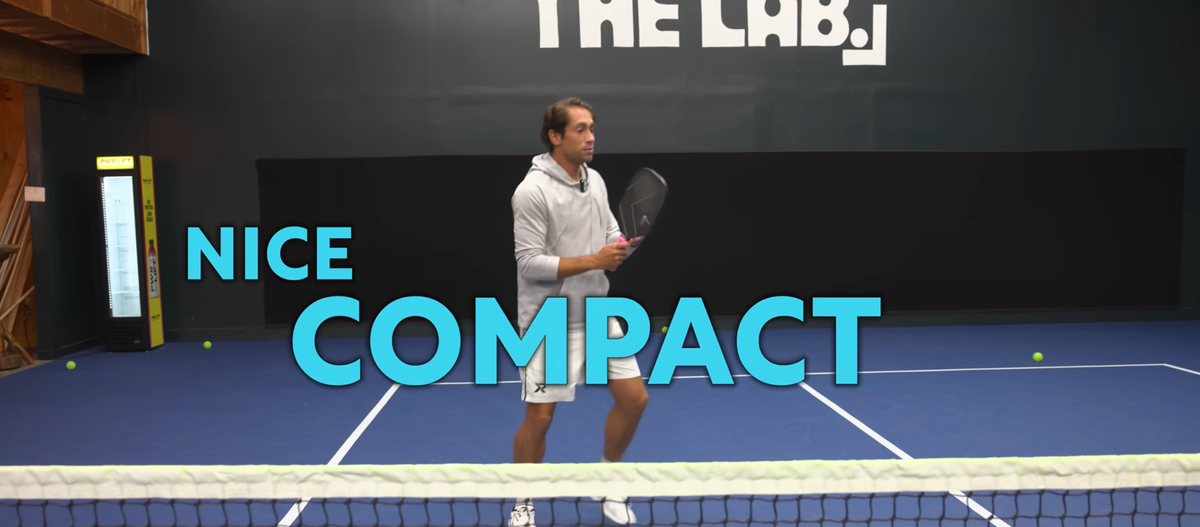
If You Keep Hitting Dinks into the Net, You’re Probably Not Following Through Enough
Playing tight at the kitchen line is a recipe for lost points piling up on your, and fast. The second you start overthinking your dinks is the exact moment they’ll betray you.
 The Dink PickleballThe Dink Media Team
4. Keep Your Weight Forward: A Pickleball Tip for Consistency
One of the most underrated pickleball tips involves something simple: keeping your weight on your toes and leaning forward.
This is especially critical during midcourt resets when you're moving through the transition zone.
When you're resetting a fast ball coming at you, your instinct might be to fall backward as you hit it.
That's a sign your base isn't wide enough and your weight isn't forward.Instead, stay on the balls of your feet, widen your stance, and lean into the shot. This keeps your resets lower, more consistent, and positions you to move forward into the kitchen instead of away from it.
It sounds like a small thing. It's not.
This single pickleball tip can transform your transition game because it changes your momentum and your court positioning in one motion.
Pair it with a simple 4-step system to win more pickleball games in 2026 for a complete tactical upgrade.
3 Pickleball Consistency Tips to Level Up Your Game
Want to become a more consistent pickleball player? A top pro just broke down the 3 pickleball consistency tips that separate amateurs from advanced players. Here’s what you need to know.
The Dink PickleballThe Dink Media Team

5. Spin Over Power: Why This Pickleball Tip Matters More Than You Think
Here's a pickleball tip that separates recreational players from competitive ones: you don't need to hit every ball as hard as you can. Especially on drives.
The instinct is understandable. You see your opponent unwinding, and you think,
"I'm going to pass them while they're vulnerable." So you swing hard.But the vast majority of the time, a 70 percent hybrid drive with shape and spin is way more effective than a full-power blast.
Players who study why professional pickleball players abandoned the slice shot in 2025 understand exactly why spin mechanics dictate so much of the modern game.
Why? Because spin creates problems. A drive with heavy spin dips below the net, forces your opponent to make a decision, and gives you options.
A drive hit at full power just gives them more pace to counter back at you. They might even catch you off guard with a counter-drive.This pickleball tip is especially important in tournaments, where the dopamine hit of a clean winner can cloud your judgment.
You'll see players at high levels hit the back wall or the net on drives because they're swinging too hard.
If they'd just dialed it back to 80 percent and picked a good spot, they'd be in a much better position.
The nice thing about this pickleball tip is that you don't have to change your technique.
Just swing easier and focus on placement and spin instead of raw power.
Develop a Spin Serve in Pickleball: 3 Essential Steps
The spin serve is one of the most devastating weapons in pickleball, capable of catching opponents off-guard at any level. Here’s how to conquer it in three essential steps.
The Dink PickleballThe Dink Media Team

6. Treat Speed-Ups as a Setup, Not a Finish
Early in your pickleball journey, speed-ups feel like winners. You hit one, and the point's over.
That works at lower levels because your opponents aren't expecting them.
But as you climb, this pickleball tip becomes critical: treat speed-ups as a setup for the next shot, not the finish.
At higher levels, people are always expecting speed-ups. They'll get a paddle on it 90 percent of the time.
So if you hit a speed-up expecting the point to be over, you won't be ready for the counter.
But if you're actively ready for the return, suddenly your hands feel faster and your reactions sharper. You're not actually faster; you're just prepared.
This pickleball tip extends to drilling. Practice speed-up patterns with a partner. Hit a speed-up cross to their forehand, then be ready for a backhand counter.
Drill 50 of these in a row so the pattern becomes automatic.
This habit will serve you at every level.
You can find structured pickleball drills that reinforce this in the 12 drills you need to play your best pickleball in 2026.
Hand Speed Drill: The 5-Step System to Win Net Battles
A hand speed drill isn’t just about moving your paddle faster—it’s about training your entire body to react with precision at the net.
The Dink PickleballThe Dink Media Team

7. Rolls Aren't About Your Wrist: A Pickleball Tip That Fixes Inconsistency
A lot of players try to hit rolls by snapping their wrist. That's wrong.
This pickleball tip is simple but counterintuitive: use your shoulder, not your wrist.
Keep your wrist locked and use your shoulder to lift the ball and rotate your forearm. It's a smooth, controlled motion, not a snap.
And here's the weird part: it feels slower, but the ball comes out better. You get more spin, better placement, and more consistency.Why does this work? Because your shoulder is a larger, more stable joint than your wrist.
When you lock your wrist and use your shoulder, you have more control over the ball's trajectory and spin.
When you snap your wrist, you're relying on a smaller joint to generate both power and control, which is why rolls become inconsistent.
This pickleball tip is one of those things that feels backward until you try it. Then it clicks.
Fix Your Forehand Speedup: Stop the Wrist Mistake
Almost every amateur player makes the same critical error on their forehand speedup. A pro coach reveals the exact wrist technique that separates winners from the rest.
The Dink PickleballThe Dink Media Team

8. Footwork and Court Positioning: The Pickleball Tip Nobody Wants to Train
Here's a pickleball tip that separates players who look good from players who are actually good: footwork and court positioning.
And here's the problem: nobody wants to train it because it's boring.
But footwork is everything. Good footwork makes you look mechanically sound. It keeps you on balance, on time, and in the right spot.
Players with great footwork look like they're playing at a higher level than they actually are because they're smooth, efficient, and never off balance.If you're serious about leveling up, the modern pickleball strategies to winning in 2026 break down exactly how court positioning plugs into every rally decision.
How the Split Step Transforms Your Pickleball Strategy
One specific pickleball tip within this category is the split step. When your opponent is about to hit the ball, you should split step and then move. Don't try to do it all in one motion. Split step first, then move to the next ball. This keeps you balanced and ready.
Why Filming Yourself Is the Best Pickleball Training Hack
Another practical pickleball tip: film yourself and watch where you actually are on the court. You might think you're covering the line. You're probably not. Until you see the footage, you won't realize how much space there actually is between you and where you think you are. This is the same principle professional players apply when they use video as a pickleball training tool to identify gaps and inefficiencies between sessions.
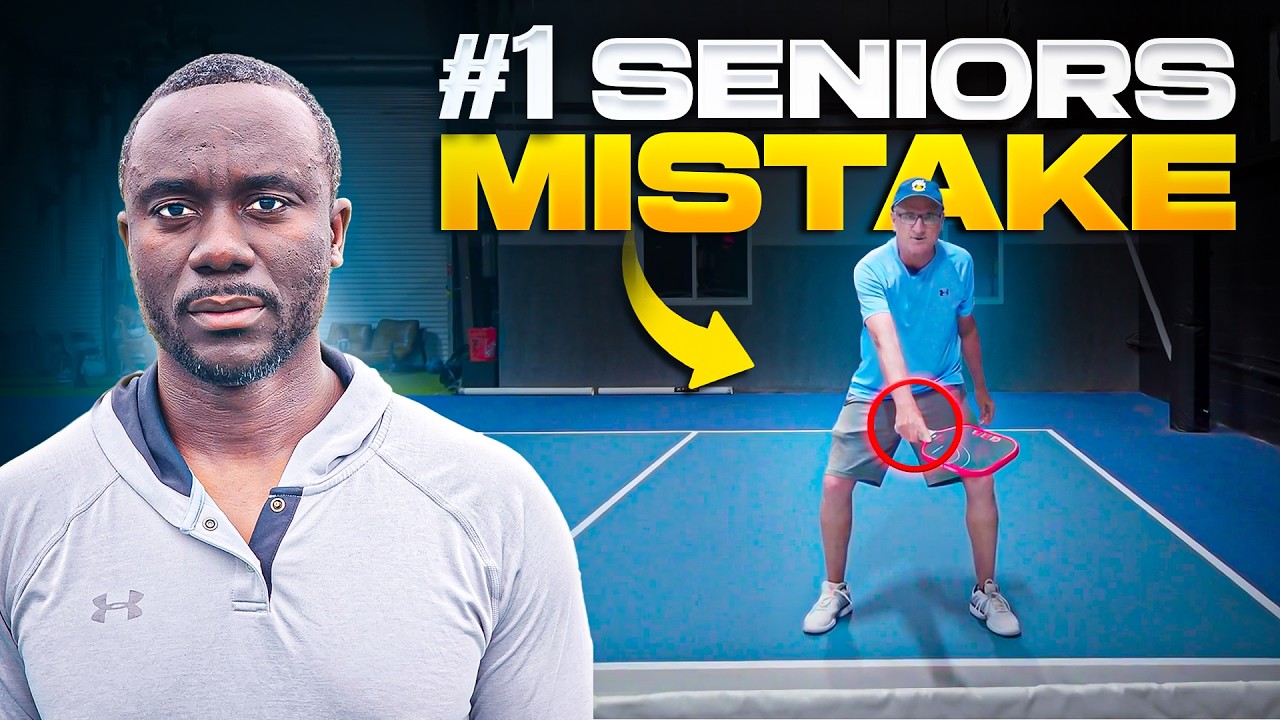
4 Essential Footwork Tips Every Senior Pickleball Player Must Master
Smarter positioning and simple footwork adjustments can help senior pickleball players improve performance without relying on speed
The Dink PickleballThe Dink Media Team
9. Master the Third Shot Drop: A Pickleball Tip for Breaking Through Levels
The third shot drop is the great equalizer.
If you can land it consistently, you buy yourself time to get to the kitchen and neutralize power players who want to keep you pinned at the baseline.
Most recreational players try to drive every third ball because it feels more aggressive. That's a habit worth breaking fast.
The key is trajectory.
You want the ball to arc downward as it crosses the net and die in the non-volley zone.A flat or rising ball hands your opponent an easy volley. Work this shot into every practice session and treat misses as data, not failure.
If you're below a 4.0 rating and haven't fully committed to this shot yet, the work you put in now will pay compounding dividends as the competition gets tighter.
Check out how to break 5.0 with the 5 pickleball shots you must master before 2026 for a complete shot-priority framework at every skill level.
Third Shot Drop Pickleball: 3rd Shot Guide
The 3rd shot pickleball play is the most important shot you’ll hit on every single rally. This step-by-step guide breaks down the mechanics, common mistakes, and drills to help 3.0 to 4.0 players master it fast.
The Dink PickleballThe Dink Media Team
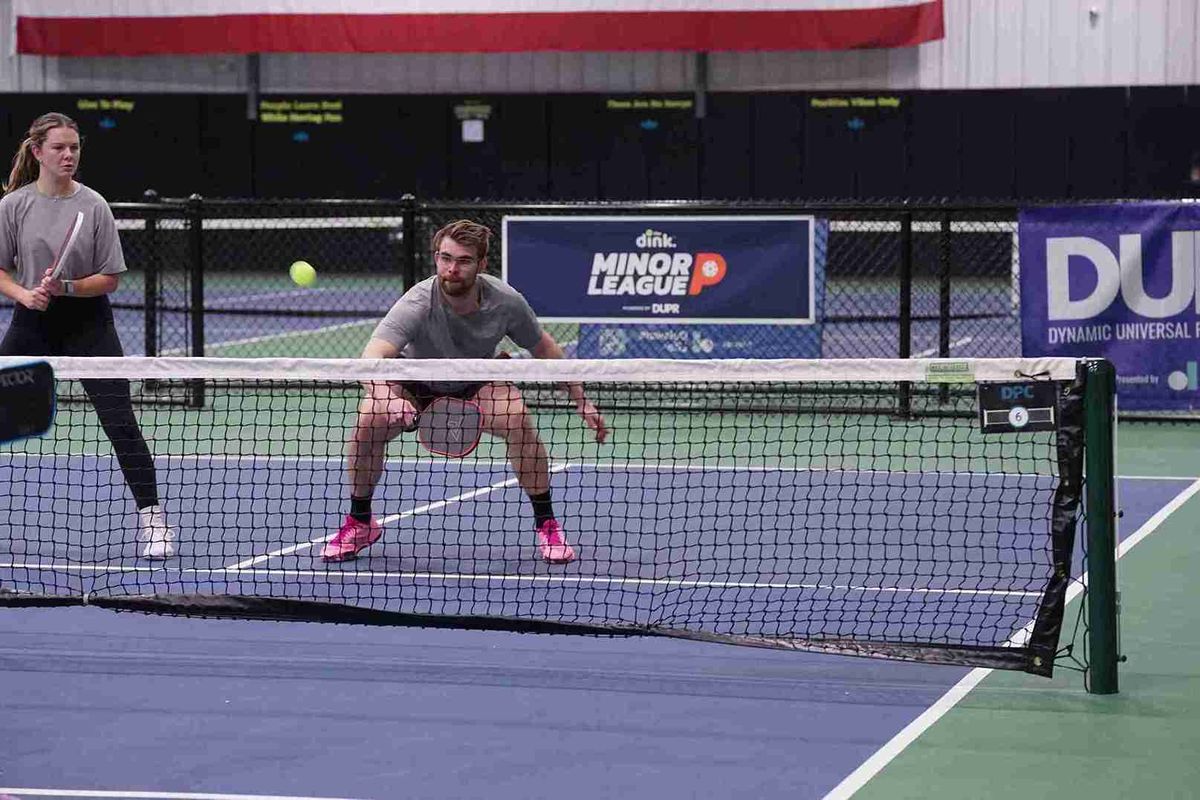
10. Read the Kitchen Line: A Pickleball Tip for Smarter Dink Exchanges
Dinking isn't passive. The best players are actively hunting for an opportunity every single time they step into a kitchen exchange.
The pickleball tip here is to stop thinking of the dink rally as a waiting game and start treating it as a chess match.
Watch where your opponent's paddle face is pointing. Watch their feet.
If they're leaning right, attack left. If they're caught flat-footed, push a deep crosscourt dink to force them wide.The moment you catch someone out of position, that's when you attack. Not randomly, not impatiently but surgically, with a target in mind.
Kitchen Line Aggression: When to Attack in Pickleball
Jack Munro, the #1 player on the APP tour in mixed and men’s doubles, breaks down the exact signals that tell you when your opponent is vulnerable and ready to be attacked.
The Dink PickleballThe Dink Media Team

11. Communicate With Your Partner: The Underrated Doubles Pickleball Tip
In doubles, communication is a tactical weapon. Most rec players treat talking to their partner as optional. Elite players treat silence as a liability.
Call out "mine" and "yours" on every ball that could go either way.
Poaching goes sideways when partners aren't on the same page about who's covering the middle.Before each game, agree on a stacking strategy, a middle-ball rule, and who owns the overhead when both of you could take it.
For a deeper look at doubles-specific pickleball strategy, pickleball strategy doubles frameworks are one of the highest-leverage areas you can develop.
Pickleball Doubles Communication: Calls Every Team Needs
Pickleball doubles communication is the hidden variable that separates teams that grind out wins from teams that implode on big points. Learn the exact calls, signals, and habits that keep you and your partner moving as one unit on the court.
The Dink PickleballThe Dink Media Team
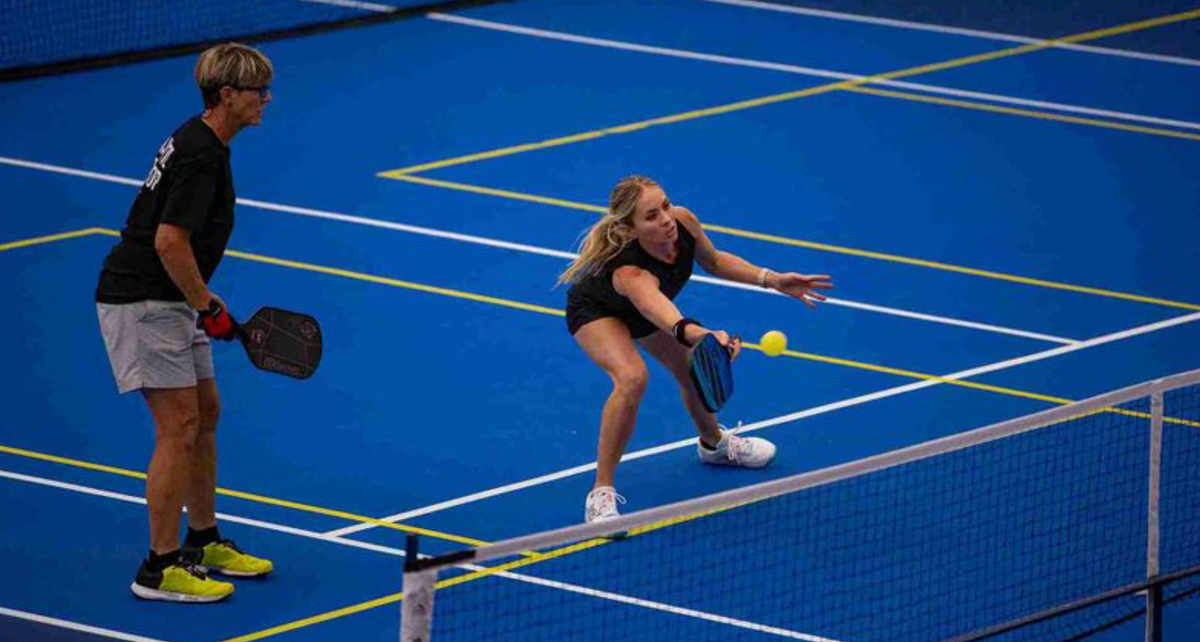
12. Play With Better Players: The Fastest-Growth Pickleball Tip Nobody Wants to Hear
The fastest way to improve your pickleball game is uncomfortable: play with people who are better than you.
Not slightly better. Noticeably better. People who make you feel like you're still learning the sport.
When you're the weakest player on the court, every single pattern you've been getting away with at your current level gets exposed.Your soft game, your positioning, your shot selection, everything gets pressure-tested in real time. That stress is where growth lives.
Find open play groups, skill-based leagues, or local clinics where the level is a step above where you are now.
If you're looking to push into more competitive formats, beginner pickleball drills are a solid bridge between casual rec play and structured competitive practice.
💡
Heads up: hundreds of thousands of pickleballers read our free newsletter.
Subscribe herefor cutting edge strategy, insider news, pro analysis, the latest product innovations and more.
Frequently Asked Questions
What's the most important pickleball tip for beginners?
The most important pickleball tip for beginners is to focus on injury prevention through proper conditioning and warm-ups. Many new players jump into the sport without building the strength and stability needed to play sustainably. A close second is learning to get low and maintain a wide base, which improves every other aspect of your game.
How can I improve my pickleball game quickly?
The fastest way to improve is to focus on the fundamentals: getting low, keeping your weight forward, and avoiding net errors. Film yourself playing so you can see what you're actually doing versus what you think you're doing. Then drill specific patterns with a partner, like speed-up sequences or reset positioning.
Why do professional pickleball players get so low?
Professional players get low because it gives them more options. When you're low, you can move quicker, reach dinks easier, hit rolls out of the air, and avoid jumping on speed-ups. It's also harder for your opponent to hit winners because you're already positioned to react.
Is power or spin more important in pickleball?
Spin is more important than power in most situations. A drive with heavy spin and placement is more effective than a full-power blast because it creates problems for your opponent and gives you more control. Power can be useful, but spin and placement win points.
Footwork should be part of every practice session, even if it's just 10 minutes. The more you practice footwork patterns and split steps, the more automatic they become during matches. Many players skip footwork because it's boring, but it's one of the biggest differentiators between good and great players.
Anuncie Aqui / Advertise Here
Sua marca para o mundo Pickleball! / Your brand for the Pickleball world!





 English (US) ·
  Portuguese (BR) ·