
 English
  Spanish
  Portuguese
  German
  Italian
  Japanese
  French
  Polish
  Russian
  Netherlands
  Hungarian
  Turkish
  Videos
  The Pickler

Tracking the pickleball is about more than simply watching the ball. Good tracking means reading your opponent’s paddle, following the ball as it travels across the court, and watching it all the way into your own paddle.
The better you become at tracking, the more time you have to get into position, improve your timing, and make a more controlled and intentional shot.
You can work on these skills during regular play, but a few simple drills can make tracking a more intentional part of your practice.
Two-Pickleball Partner Toss
To do this pickleball drill:
- Grab a partner and two pickleballs. Stand about fourteen feet apart, approximately the distance between the Kitchen lines.
- Get into your ready position and face your partner.
- Partner A should say “toss,” “go,” or another keyword of your choosing. When the word is said, both players toss their pickleball underhand toward each other at the same time.
- Catch the pickleball and move it to your tossing hand so you are ready to toss again.
- Continue tossing and catching the pickleballs at the same time. Focus on tracking the pickleball coming toward you rather than looking away to find your partner’s toss.
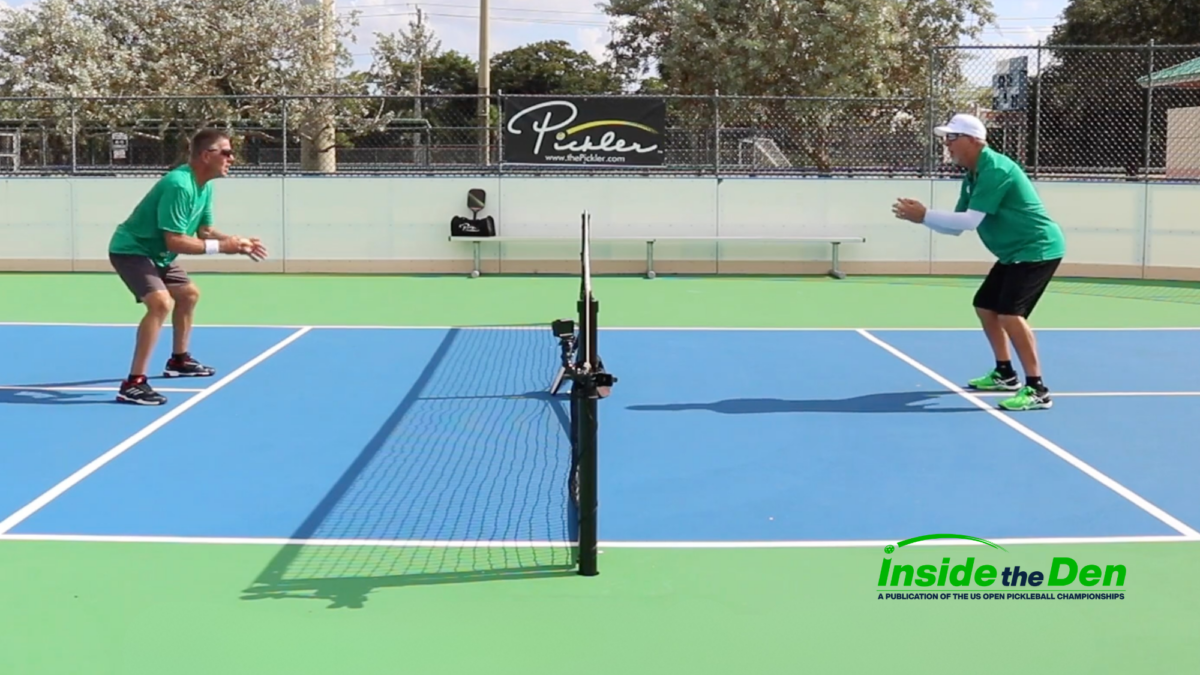
Why it works
The goal of this drill is to practice tracking the pickleball through its entire path. Keep your eyes on your pickleball! Watch it leave your partner’s hand, follow its trajectory through the air, and watch it all the way into your hand as you catch it. This mimics the process of tracking the pickleball from your opponent’s paddle through its flight and into your own paddle.
What you should focus on
Try not to take your eyes off the pickleball at any point. Resist the temptation to look toward your partner or their pickleball. Your goal is to train yourself to stay visually connected to your ball from the moment it leaves your partner’s hand until you catch it.
Next Progression to Challenge Yourself
Toss the pickleball with one hand and catch it with only one hand. You can also alternate which hand catches the pickleball and which hand throws it. These variations add another layer of hand-eye coordination and require you to stay focused on the ball while coordinating different movements.
As you become more comfortable, increase the speed of your tosses or move closer together to decrease your reaction time.
Partner Paddle Tracking Drill
To do this pickleball drill:
- Grab a partner and stand across the net from each other, starting at the Kitchen lines.
- Choose two simple keywords. For example, “hit” when you see the pickleball hit your partner’s paddle and “mine” when you see the pickleball hit your own paddle.
- Begin a cooperative rally. Every time the pickleball hits your partner’s paddle, say “hit.” Every time it hits your paddle, say “mine.”
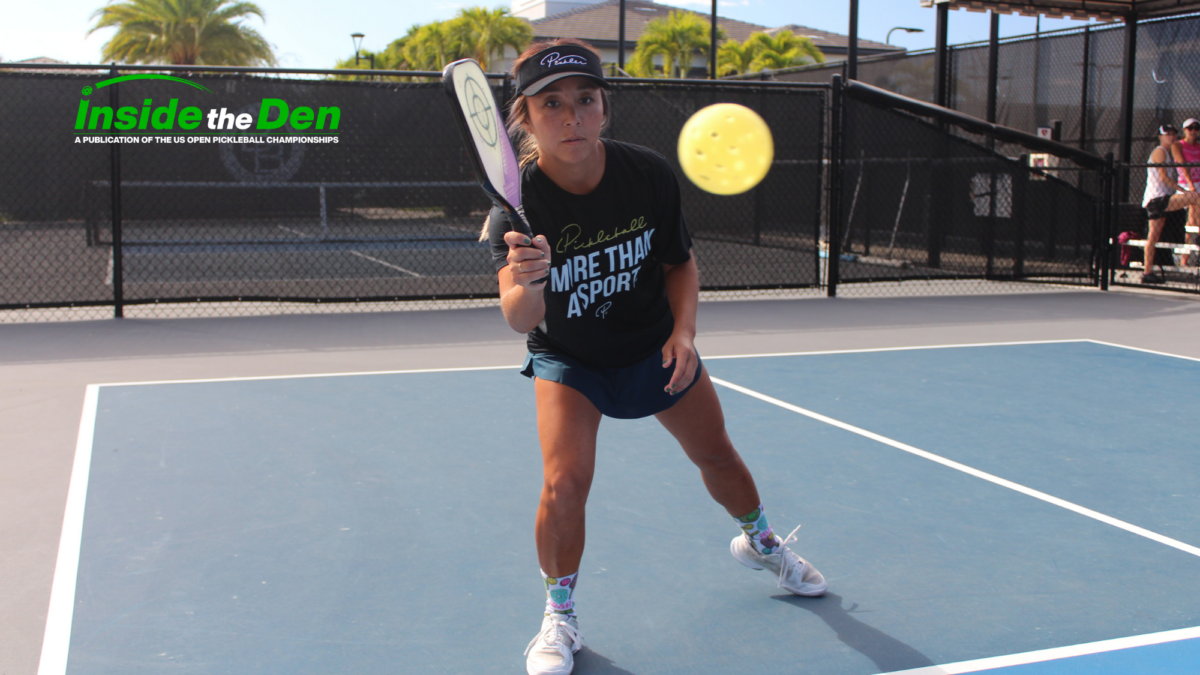
- Keep your eyes on the pickleball throughout the rally. Your goal is to see the exact moment the pickleball makes contact with each paddle.
- Pay attention to any delayed reactions. If you notice that you were slow to react to the pickleball, you may have taken your eyes or focus off the ball. Acknowledge it, refocus your attention on the pickleball, and try again. The goal is to recognize when your focus slips and build the habit of quickly bringing it back to the ball.
Why it works
This drill helps you develop the habit of staying visually connected to the pickleball through the entire rally. It also teaches you to tune out the other “noise” happening around you on the court.
What you should focus on
Watch the ball! Don’t worry about your opponent’s facial expression, body position, paddle preparation, untied shoe, or anything else happening around you. For now, your only job is to track the pickleball and see it hit the paddle.
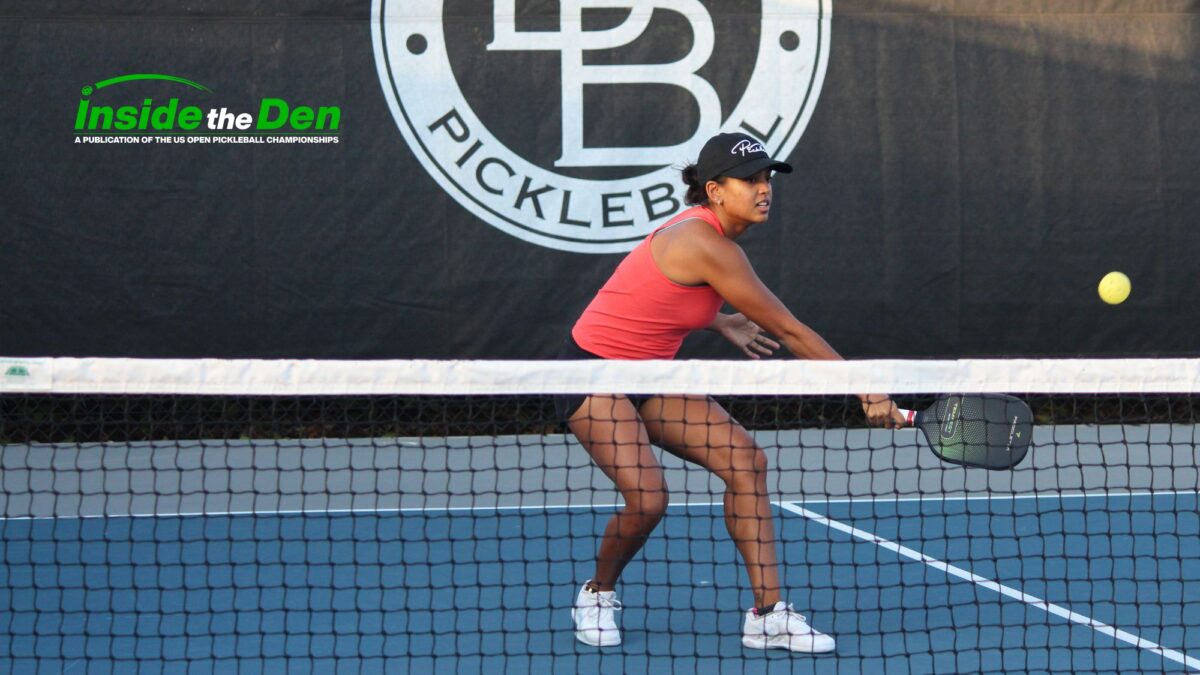
This may feel surprisingly difficult at first, especially during a faster rally. That’s the point. Before you can consistently read where a pickleball is going, you need to be able to maintain your visual focus on the ball itself.
Next Progression to Challenge Yourself
Once you can consistently call out “hit” and “mine” without losing track of the pickleball, start calling out its trajectory. Before the pickleball reaches your paddle, call out where it is going, such as “forehand,” “backhand,” “short,” or “deep.”
As you become more comfortable, have your partner vary the speed, direction, and depth of their shots. You can also move farther back from the Kitchen to give yourself a different view and more time to track the pickleball.
Better Tracking Starts With Better Focus
The goal is to build your tracking skills in stages: first, see the ball; then, follow its path; finally, use what you see to anticipate where it is going. The better you become at staying locked in on the pickleball, the more information you’ll have to make your next shot.
For more tips on how to improve your pickleball tracking, check out Keep Your Eye on the Ball: How to Get Better at Tracking the Pickleball.
The goal isn’t simply to see how many pickleballs you can track. With practice, you want to make tracking part of your natural game so you can read the ball earlier, prepare sooner, and make more confident shots.
Source: The PicklerAnuncie Aqui / Advertise Here
Sua marca para o mundo Pickleball! / Your brand for the Pickleball world!


 English (US) ·
  Portuguese (BR) ·