
 English
  Spanish
  Portuguese
  German
  Italian
  Japanese
  French
  Polish
  Russian
  Netherlands
  Hungarian
  Turkish
  Videos
  Thedink Pickleball

An illegal pickleball serve can end rallies before they start, and most players never call it. Here are the three violations you need to know in 2026.
You struggle to return a certain player's serve, and you can't figure out why.
The ball spins weird, dips early, or arrives on a line that feels nothing like a normal shot.
There's a real chance you're staring down an illegal pickleball serve, and nobody at your rec session is going to say a word about it.The rules around serving in pickleball are more specific than most players realize.
There are three distinct ways players serve illegally on a regular basis, and two of them are subtle enough that even experienced players miss them entirely.The breakdown below comes from Aylex Pickleball Academy on YouTube, where coaches walk through each illegal serve in real time, demonstrate what makes it illegal, and show the actual advantage it creates.
This is worth understanding whether you're trying to spot it in a match or make sure your own serve is clean.Love pickleball? Then you'll love our free newsletter. We send the latest news, tips, and highlights for free each week.
What Makes a Pickleball Serve Legal in the First Place?
Before the violations, know the baseline.
A legal serve has to satisfy three things at the moment of contact, according to the official USA Pickleball rulebook.
- Paddle contact happens below the server's waist.
- The paddle head sits below the wrist at contact.
- The paddle travels low to high, producing an upward arc.
Miss one of the three and you've hit an illegal pickleball serve.
The problem is that all three happen in about a quarter second, so unless you know the exact tell, they blend right into a normal motion.
Illegal Serve 1: The Manipulated Drop Serve
The drop serve is supposed to be the simplest shot in the sport. Hold the ball, release it, let gravity work, hit it after the bounce.
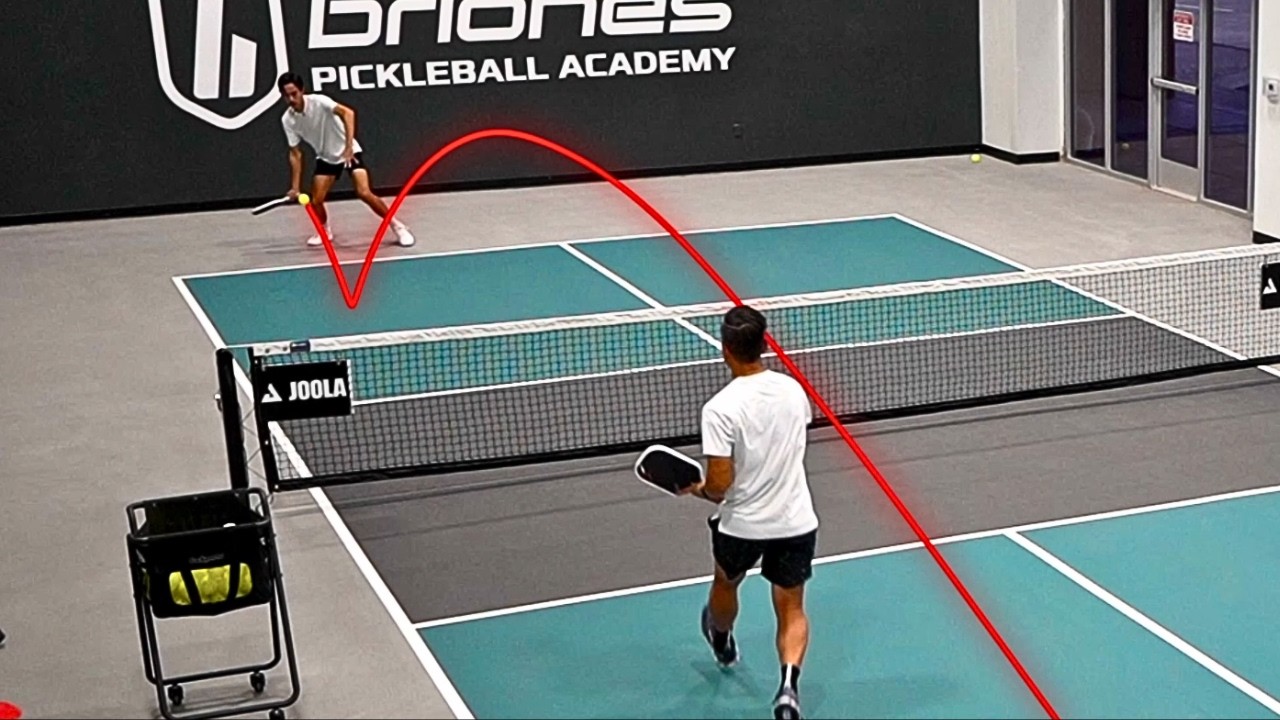
The rule is not ambiguous: you cannot add force or spin to the ball during the drop.What some players do is roll sidespin or topspin onto the ball as they release.
By the time it bounces up to contact, the ball is already rotating hard, which hands the server a head start on spin before the paddle ever arrives.
The most famous version was the chainsaw serve, popularized by Zane Navratil.
The ball came off the bounce with so much rotation it was nearly unreadable. That specific manipulation is now banned, but watered-down versions still show up every weekend.Watch the ball, not the paddle. A legal drop has the ball falling straight down from a relaxed, open hand.
Any rotation before the bounce is a red flag. These serve return mistakes get a lot more common when you're facing a ball carrying pre-contact spin.
💡
Need some new pickleball gear? Get 20% off select paddles, shoes, and more with code THEDINK at
Midwest Racquet SportsIllegal Serve 2: Adding Spin During the Volley Serve Toss
The volley serve is the traditional one, struck out of the air with no bounce.
You're allowed to toss the ball first, but the toss has to be a clean release with no flick, crank, or wrist rotation.
This rule exists for a reason.
Players were using a spinning toss to manufacture movement, rallies were ending before they started, and the game turned into a serving contest.Here's what an illegal toss looks like in practice:
- The server cranks or flicks the ball upward instead of releasing it.
- You can see the ball rotating as it rises.
- The served ball curves against the direction of the paddle swing.
A legal toss floats. The ball should look like it's hanging there for a beat before contact. If the toss looks like a miniature pitch, something's off.
Where you place your return gets much harder to execute when the ball is moving unpredictably off an illegal toss.
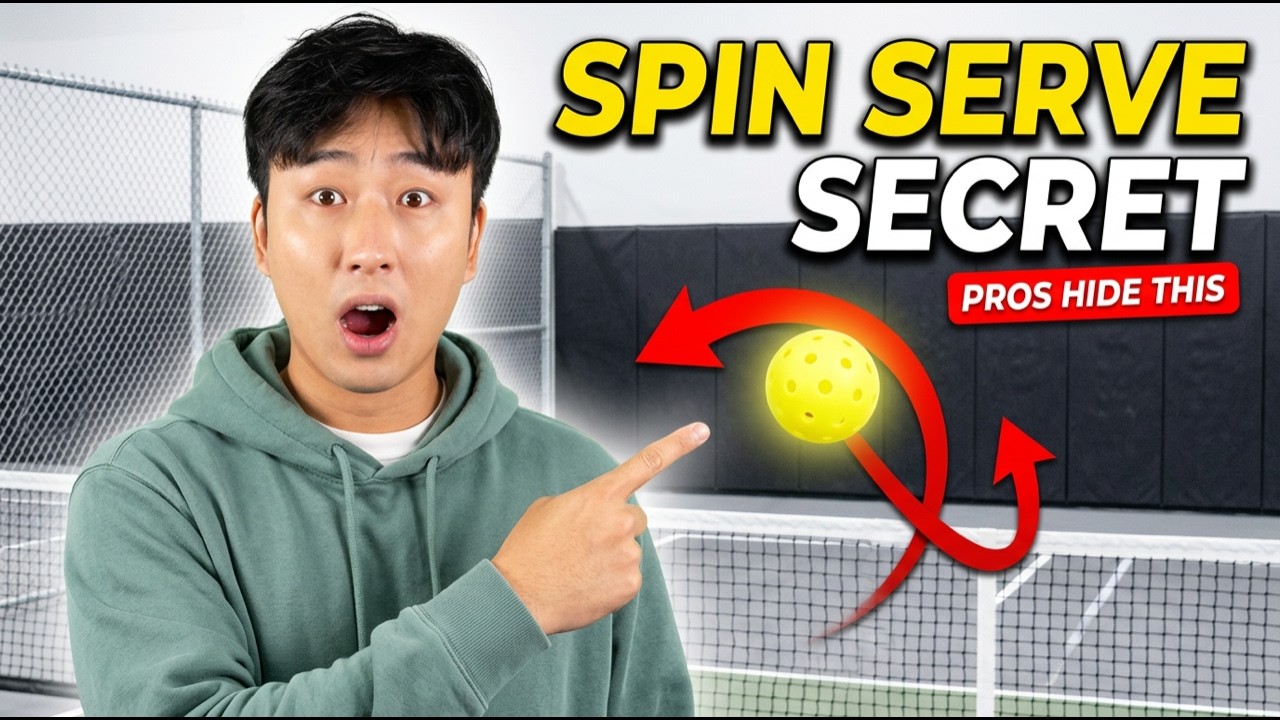
Develop a Spin Serve in Pickleball: 3 Essential Steps
The spin serve is one of the most devastating weapons in pickleball, capable of catching opponents off-guard at any level. Here’s how to conquer it in three essential steps.
 The Dink PickleballThe Dink Media Team
This is the one that catches good players. Everyone knows the waist rule. Almost nobody polices the paddle head rule.
When you serve from a traditional position, the paddle hangs naturally below your wrist.But when players sweep from the side of their body, the paddle head rises until the face is level with or above the wrist joint.
That's a violation even when contact happens below the waist.
Why This Illegal Pickleball Serve Is Worth More Than a Technicality
Here's the part that actually matters competitively. When the paddle head sits above the wrist on a lateral swing, you're no longer forced to hit upward.
You can drive flat, or even slightly down, through the ball. That kills the natural arc that makes serves readable.
A proper low-to-high motion gives the ball arc, and arc creates the predictable bounce your opponent reads.An elevated paddle head produces a flatter, faster ball, which is a real competitive edge gained through an illegal motion.
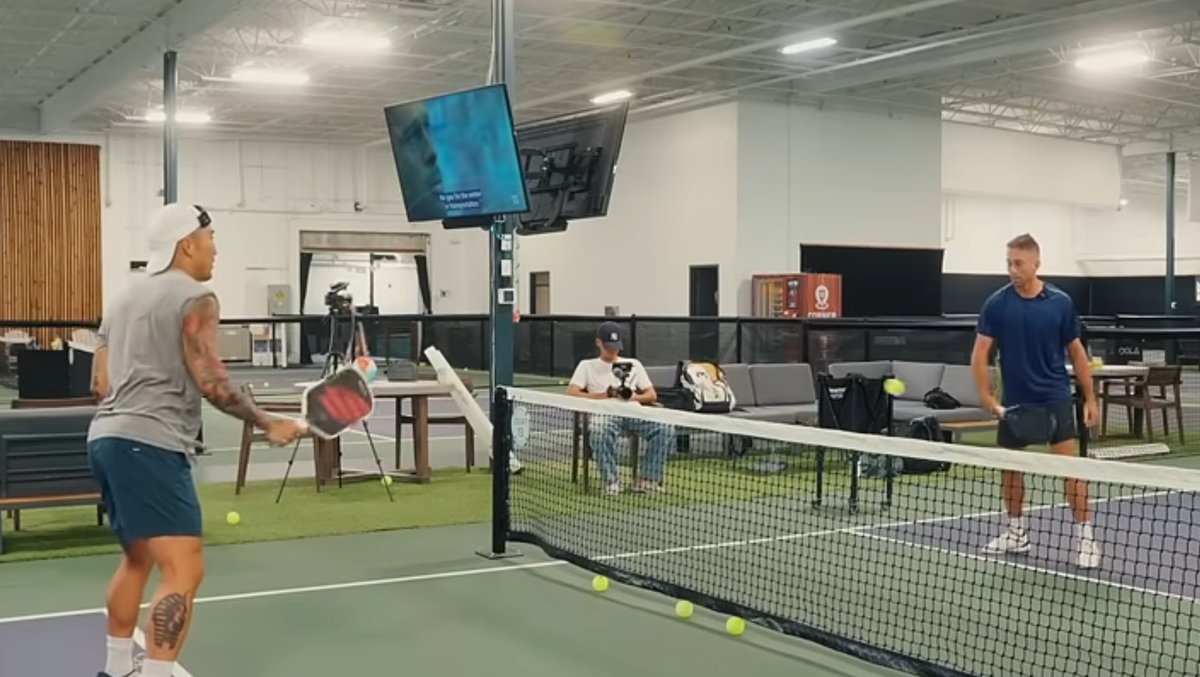
Stop Popping the Ball Up: Modern Pickleball Hand Speed and Paddle Positioning
Winning the kitchen today isn’t about swinging harder—it’s about creating space with your coil and controlling contact with smarter paddle positioning
 The Dink PickleballThe Dink Media Team
Why the Upward Arc Rule Matters More Than You Think
A lot of players assume spin on the serve is illegal. That's flat wrong.
You can hit topspin or slice all day. What can't happen is a paddle path that stops traveling upward through the contact zone.Here's where it gets specific:
- You can coil or load before the swing, even with some downward movement.
- At the moment of contact, the paddle must be moving upward.
- A chop or downward slice at contact, however subtle, is illegal regardless of what the paddle does after.
The illegal version looks like someone swinging down through the ball and stopping short.
The result is a heavily sliced serve with almost no arc, and it's nearly invisible in real time, which is exactly why it survives.
These serve mistakes usually come from this exact confusion. You think you're adding spin. You're actually chopping.Want a heavier ball without breaking anything? The goal is topspin created through an upward brush, not a downward cut.
This breakdown of a heavy serve shows the motion.
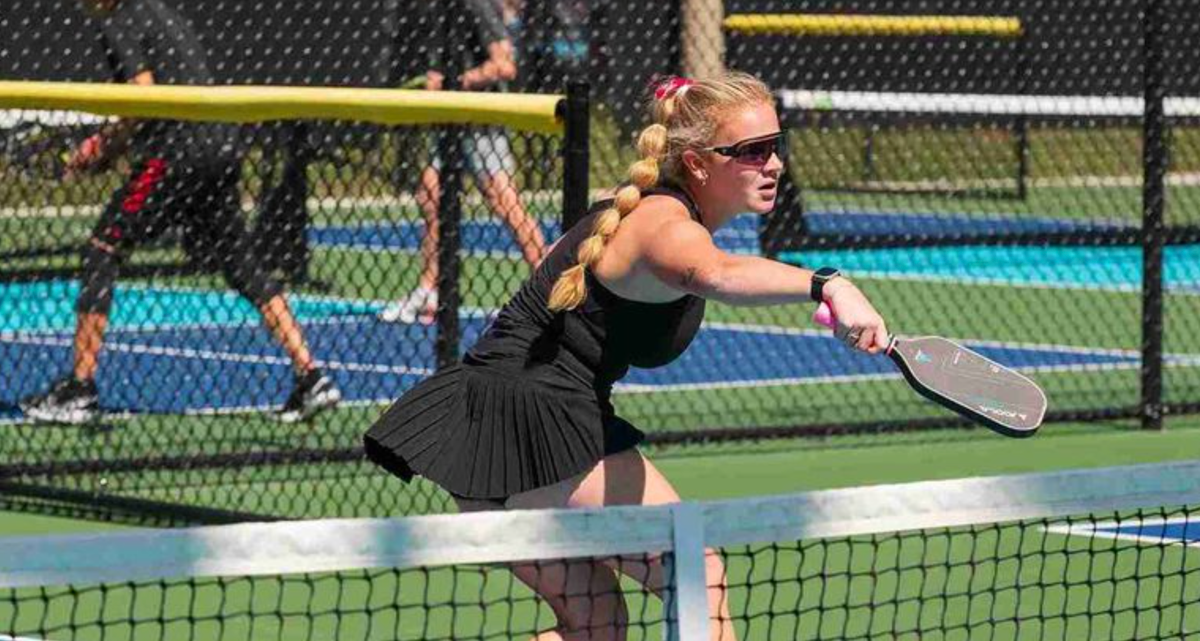
How to Hit a Dink Shot in Pickleball: Soft Hands, Low Arc
Knowing how to hit a dink shot in pickleball is the single fastest way to move from recreational player to someone opponents actually fear at the net. This guide breaks down grip, arc, stance, and placement so your dinking game stops being a liability and starts winning you rallies.
 The Dink PickleballThe Dink Media Team
Can You Actually Call These Violations in a Match?
Technically, yes. Any player can call a fault on an illegal serve. In rec play, that's where it gets uncomfortable.
Most players either don't know what they're watching or don't want the confrontation.That's how these violations survive unchecked, especially the paddle head and upward arc rules.
The smarter play is to understand what the serve is doing to the ball and adjust.
Fixing your return of serve to absorb unexpected spin is useful even if you never call a single fault.
At tournament level it flips. Referees are trained to spot this, and the paddle head rule gets called far more than players expect.
Playing up a level means facing opponents and officials who know the 2026 rule changes better than your Tuesday night group does.
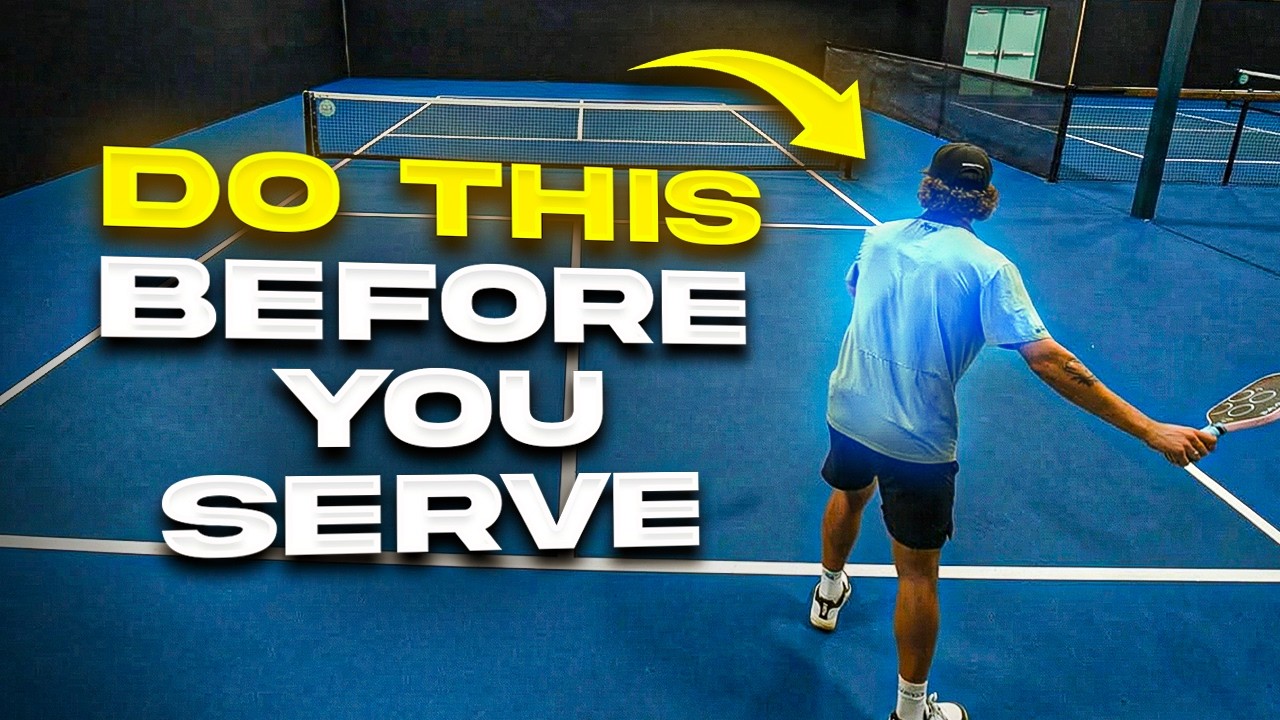
Same goes for the 2025 rulebook updates and the push-off foot fault everyone gets wrong.The Pickleball Serve Basics: Rules, Technique & Pro Tips from Michael Loyd
Fix your serve, and your entire game gets easier. You start points on offense instead of defense. Your opponent’s return is weaker. Your third shot is simpler. It all flows from that one shot you control completely.
 The Dink PickleballThe Dink Media Team
How to Check Your Own Serve Right Now
A four-step self-audit before your next session.
- Film from the side so you can see wrist and paddle head position at contact.
- Watch the ball on your drop. Unpredictable bounce means check your release.
- Trace your paddle path. It should move clearly upward through contact, never flat or down.
- Check your toss. If your hand does anything besides open and release, you're adding force.
Filming is underrated for this exact problem. Recording your play shows what your body is actually doing versus what you think it's doing.
Most players aren't cheating. They built the habit before they knew the rules were this specific.Now you know. Clean up the motion, start recognizing an illegal pickleball serve when it comes at you, and the entire serve exchange looks different.
These legal serve strategies give you a real edge without bending a single rule.
💡
Heads up: hundreds of thousands of pickleballers read our free newsletter.
Subscribe herefor cutting edge strategy, insider news, pro analysis, the latest product innovations and more.
Frequently Asked Questions
What is an illegal pickleball serve?
An illegal pickleball serve is any serve that violates one of the three contact rules: paddle head above the wrist, contact above the waist, or a swing path that isn't traveling upward at the moment of contact. Adding spin or force to the ball during a drop or during the toss of a volley serve is also illegal. These violations give the server an unfair advantage and can be called as a fault.
Is spin on a pickleball serve legal?
Yes, spin is legal on a pickleball serve as long as the paddle is moving upward through the contact zone. You can hit topspin or sidespin legally. What you cannot do is add spin to the ball before contact during the drop or toss, or swing downward through the ball at contact.
What was the chainsaw serve in pickleball?
The chainsaw serve was a drop serve technique made famous by pro player Zane Navratil where the server rolled the ball down the paddle during the drop, creating heavy spin before the ball even bounced. The resulting serve was extremely difficult to return. It is now illegal because the rules prohibit adding any force or spin to the ball during the drop.
Can you call an illegal serve on your opponent in recreational play?
Yes, any player can call a fault for an illegal serve in recreational play. In practice, many players don't call it because they don't recognize the violations or want to avoid conflict. Knowing the three rules, waist height, paddle head below the wrist, and upward arc, gives you the knowledge to make the call correctly.
What does the upward arc rule mean for pickleball serves?
The upward arc rule means the paddle must be traveling in a low-to-high direction at the moment it contacts the ball. The paddle can load or move downward before the swing, but through the actual contact point the motion must be upward. A server who chops or drives through the ball on a flat or downward path at contact is violating this rule regardless of what the paddle does before or after.
Anuncie Aqui / Advertise Here
Sua marca para o mundo Pickleball! / Your brand for the Pickleball world!



 English (US) ·
  Portuguese (BR) ·