
 English
  Spanish
  Portuguese
  German
  Italian
  Japanese
  French
  Polish
  Russian
  Netherlands
  Hungarian
  Turkish
  Videos
  Thedink Pickleball

Most mixed doubles points are lost on three decisions, not three shots. Here is the mixed doubles strategy two pros use to make the right call every time.
Your mixed doubles strategy rarely breaks down because of a bad shot.
It breaks down because two players made two different decisions about the same ball.
One of you went for it. The other went for it too. Or worse, you both backed off and watched it land.
Pros Mari Humberg and Kyle Koszuta (better known as That Pickleball Guy) sat down on a court in Arizona to settle three of the most confusing moments in the game.
Here is what they decided, and how to apply it the next time you take the court with a partner.
Love pickleball? Then you'll love our free newsletter. We send the latest news, tips, and highlights for free each week.
Decision 1: Who Takes the Middle Return in Mixed Doubles Strategy?
The right-side player should take the middle return roughly 80 percent of the time, but the real answer depends on your partnership.
That is the rule Koszuta keeps coming back to, and it is the foundation of a clean mixed doubles strategy.
Picture a deep, spinny return that lands right around the centerline. It is coming from the right side of the court. Whose ball is it?
"It depends on the partnership," Koszuta says. "It also depends on your strengths, my strengths."If your partner has a reliable third, give the ball up and let them hit it. This is one of the few moments where you are not glued together.
"If you're hitting a drop and you have great drops, I'm going to trust your drop," Koszuta explains.He stays back a beat longer, reads the shot, and only releases to the kitchen once he sees it is good.
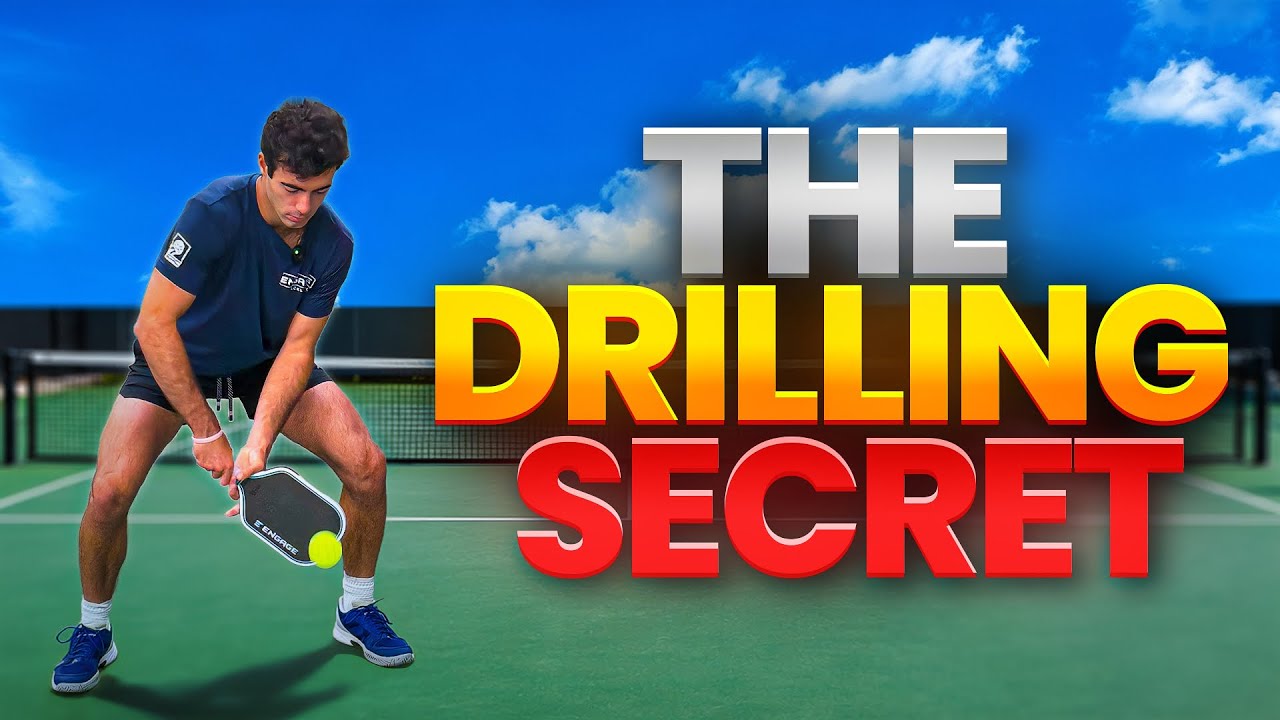
2 Pickleball Drilling Fixes That Transfer to Match Play
Hitting the same ball a thousand times feels productive, but it rarely shows up when the game speeds up. Here are the two pickleball drilling changes that turn practice reps into real match improvement.
 The Dink PickleballThe Dink Media Team
Knowing how to read and capitalize on your partner's third shot drop is half of this decision.
The return itself sets the whole point in motion, which is why your return of serve deserves more attention than most players give it.
A deep return buys your partner time. A short one hands the other team the middle before you have even decided who owns it.
If you and your partner constantly collide on the centerline, the fix is structural. Sort out your covering the middle rules before the match, not during it.
What "It Depends" Actually Means for Your Mixed Doubles Strategy
Default to the right-side player on the middle ball. Then adjust for three things:
- Shot strength: Whoever has the more dependable third shot from that spot takes it.
- Backhand versus forehand: A middle ball that sits in one player's forehand window is usually theirs.
- Movement habits: The more aggressive mover claims the gray-area balls, as long as the partner knows it.
Why Communication Is the Mixed Doubles Strategy Nobody Drills
The single biggest upgrade to your mixed doubles strategy costs nothing: tell your partner the plan before the first serve.
Humberg is blunt about the alternative.
"I think people need to stop eye rolling at their partners and communicate," she says.She sees it on every court, the silent blame after a missed ball, when one sentence beforehand would have prevented it.
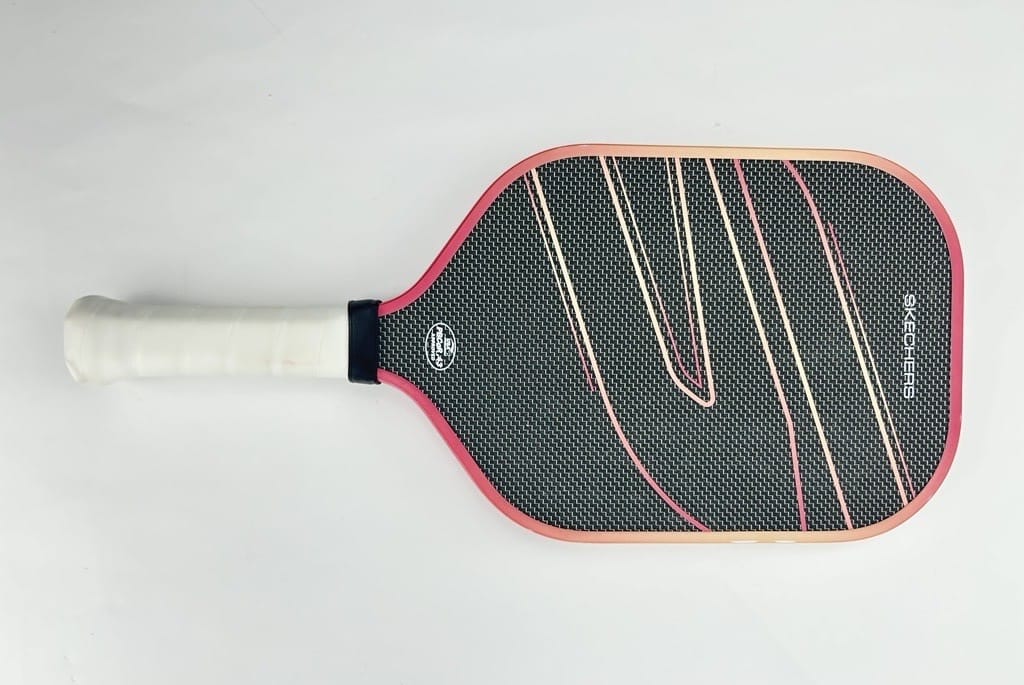
Skechers Enters the Pickleball Paddle Market
Other major shoe brands like adidas and Mizuno have gone the same route — can Skechers gain a foothold in the cutthroat paddle market?
 The Dink PickleballAlex E. Weaver
Koszuta sets expectations out loud before a new partnership ever plays a point.
His version sounds like this: "I'm going to be very aggressive with my movement at the kitchen line. I want you to be ready at all times. I'm going to be a step behind you and give you the space, but I'm ready right behind you if you need me."Now nobody is surprised. When he poaches, his partner already expected it. That is the difference between a poach that wins a point and one that leaves a hole.
If you are unsure when to go, our guide to poaching draws the line between aggressive and selfish.
Being a better doubles partner is mostly about removing surprises. Say what you are going to do, then do it.
You can also reinforce these communication habits through structured repetition.
The 12 drills you need to play your best pickleball in 2026 include partner-based reps that build this instinct fast.
💡
Need some new pickleball gear? Get 20% off select paddles, shoes, and more with code THEDINK at
Midwest Racquet SportsDecision 2: Should You Take Your Partner's Fourth Shot in Mixed Doubles Strategy?
Yes, when you can step in and apply pressure your partner cannot.
Helping on the fourth shot is not stealing, it is good mixed doubles strategy, and Koszuta wishes more rec players understood that.
"The common rec conversation is, that's my side, that's your side," he says. "And I hate that."Here is the situation. Your partner hit the return and is recovering. The other team feeds a ball back.
Instead of letting your partner scramble forward and flick up a weak shot under pressure, you slide over and take it as an aggressive fourth.
"When my partner comes over and applies pressure, I take a sigh of relief," Koszuta says. "That was better than me coming in and hitting that shot with no pressure."This is where a strong backhand flick earns its keep.
If your partner sees a ball sitting up in your wheelhouse, the right call is for you to attack it, even from what is technically their side.
A clever fourth shot turns a neutral rally into easy points at the kitchen line.
A sharp, well-timed fourth is one of the most underutilized weapons in recreational doubles.As CBS Sports has noted in its coverage of competitive pickleball, aggressive transition play is reshaping how recreational players approach doubles, which tracks with exactly what Koszuta is describing here.
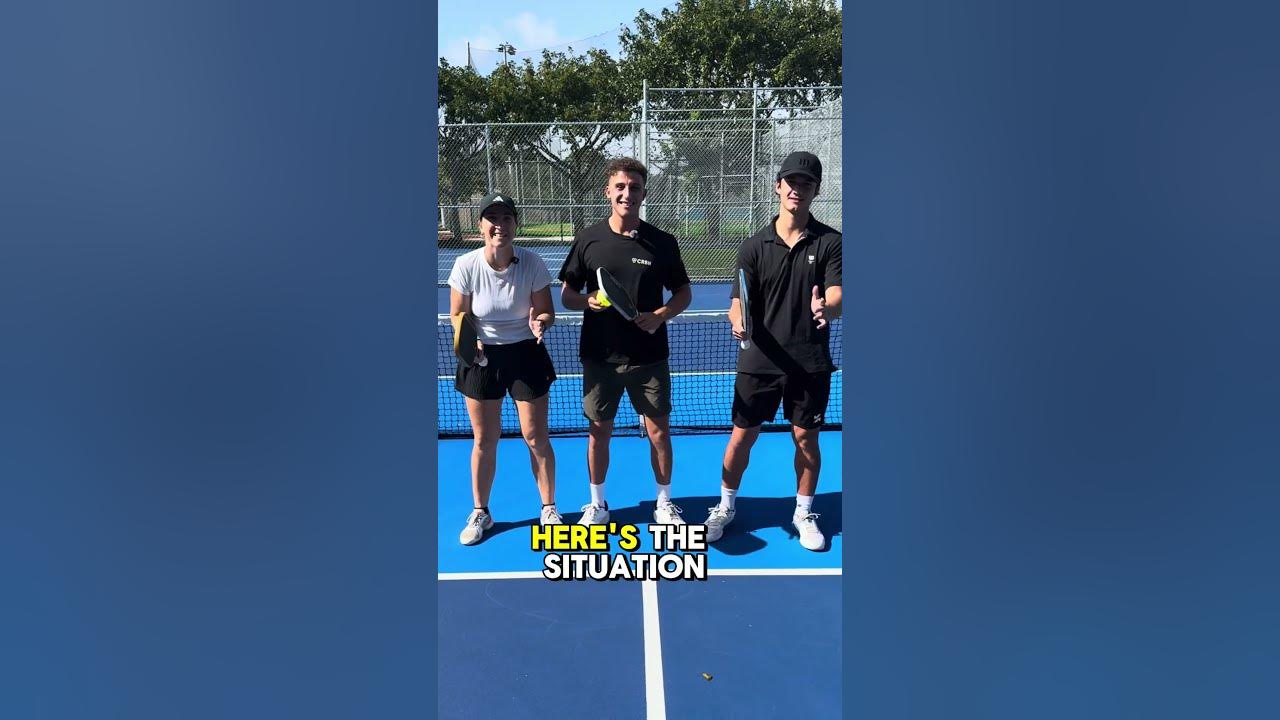
Mixed Doubles Pickleball: The Pro Pattern That Works
A mixed doubles strategy doesn’t have to be complicated. Top PPA Tour pros Mari Humberg and Ryan Fu break down a simple three-shot pattern that immediately improves your ability to involve your partner and escape targeting.
 The Dink PickleballThe Dink Media Team
How to Help on the Fourth Without Breaking Your Mixed Doubles Strategy
The fear is obvious: if I cross over, who covers the court I just left? The answer is that your partner rotates with you.
You move as a unit, not as two people guarding fixed territory.
Smart court positioning in mixed doubles means the open space shifts, but it never sits unguarded for long.
Read your partner's contact early so you know if pressure is even available.- Commit fully or not at all. A half step into the middle is worse than staying home.
- Talk through it afterward so the rotation becomes automatic next time.
These principles connect directly to the simple 4-step system to win more pickleball games in 2026, which covers unit movement in more depth.
Decision 3: Who Handles the Middle Dink in Mixed Doubles Strategy?
Take the middle dink when it keeps you inside the pattern that is already working, and leave it alone when grabbing it pulls you out of position.
The crosscourt dink is the most common pattern in mixed doubles, and your mixed doubles strategy should respect that.
The pattern usually runs between the two players dinking crosscourt. When a ball drifts into the middle, the temptation is to jump on it.
Sometimes that is right. Sometimes it quietly costs you the point.
Koszuta's warning is the most useful part of the whole conversation.
"One of my biggest mistakes is trying to do too much," he says. "You may actually go away from the thing that is your best chance of winning."If you have the stronger forehand dink in a crosscourt battle, stay in it. Taking the middle just to be busy hands the rally back to the other team.
Studying dinking patterns helps you recognize which exchanges you are winning before you decide to abandon them.
The exception is skill. Ben Johns is so good that he takes a huge amount of court, and so do most of the top players you watch on tour.
They get away with it because of their skill set, not because covering more ground is automatically smart.
Borrow the principle, not the greed. For context on how Johns approaches doubles partnerships, see who Ben Johns could play men's doubles with in 2025.
A Quick Definition: What Is a Middle Dink?
A middle dink is any soft shot that lands in the center of the kitchen, in the seam between you and your partner.
Because either player can reach it, it is the most common source of confusion at the net.
The team that has pre-decided who takes it wins the scramble before it starts.
Understanding the geometry of kitchen-line positioning is what separates 4.0 players from 4.5s.According to ESPN's pickleball coverage, the kitchen battle has become the defining skill gap between recreational and competitive doubles players, and the middle dink decision is exactly where that gap shows up.
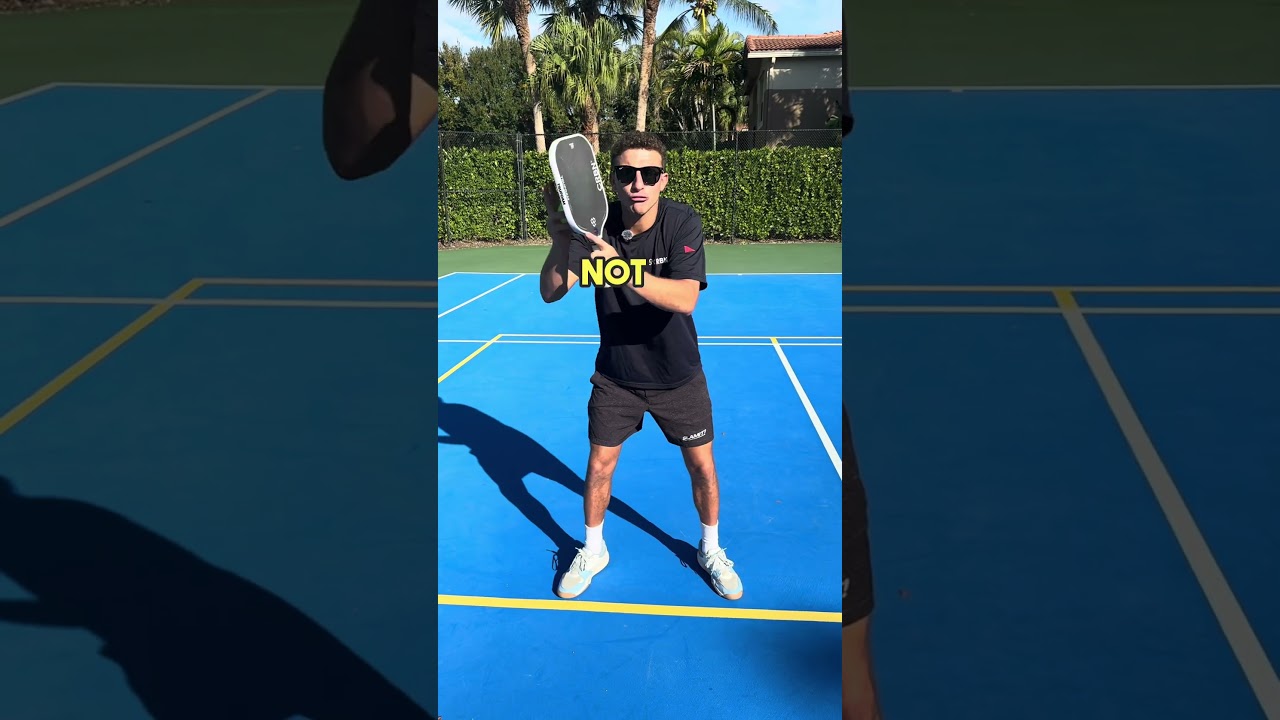
Master Middle Coverage: 3 Pro Tips for Pickleball
Tanner Tomassi explains why mastering footwork, paddle control, and anticipation are the keys to dominating the middle in pickleball
 The Dink PickleballThe Dink Media Team
Build Your Mixed Doubles Strategy Around Your Strengths
Every one of these three calls bends toward the same idea: build your mixed doubles strategy around what you and your partner actually do well.
The women's game makes this obvious. Anna Leigh Waters wins because she relentlessly plays her strengths and forces opponents into hers.
You are not Anna Leigh Waters, and that is fine. The reader version of this is simpler.
Find the pattern that is working, find the ball you hit best, and stop talking yourself out of both.
The pros competing in 2026 have made this a defining principle of elite doubles play.The four key strategies to winning in modern pickleball are all built on this same foundation.
If you want a broader set of plays to build on these three, our mixed doubles tips cover the rest of the court.
💡
Heads up: hundreds of thousands of pickleballers read our free newsletter.
Subscribe herefor cutting edge strategy, insider news, pro analysis, the latest product innovations and more.
Frequently Asked Questions
Who Should Take the Middle Ball in Mixed Doubles Strategy?
The right-side player takes the middle ball roughly 80 percent of the time, since that ball sits in their forehand and they are usually moving toward it. Adjust based on whose third shot is more reliable from that spot. The key is deciding before the point, not fighting over it mid-rally.
Is It Rude to Take Your Partner's Shot in Mixed Doubles?
No, as long as you communicated the plan first. Stepping in to apply pressure on a ball your partner would hit defensively is a smart play, not a selfish one. The problem is never the poach itself, it is poaching without warning so your partner is caught out of position.
How Do You Communicate With Your Mixed Doubles Partner During a Match?
Set expectations before the first serve, then use short verbal cues like "mine," "yours," or "switch" during points. Tell your partner how aggressive you plan to be at the kitchen so nothing surprises them. Replacing the silent eye roll with one clear sentence prevents most positioning errors.
Should the Man Cover More Court in Mixed Doubles?
Often yes, but only when his skills justify it and his partner knows the plan. Taking extra court works for pros because of their shot quality, not because covering more ground is automatically correct. Grabbing balls that pull you out of a winning pattern hurts your team more than it helps.
What Is the Most Common Pattern in Mixed Doubles?
The crosscourt dink between the two players is the most common pattern you will see. Recognizing it lets you decide in advance who handles middle dinks and which crosscourt battles you want to stay in. Winning that pattern usually decides the point.
Anuncie Aqui / Advertise Here
Sua marca para o mundo Pickleball! / Your brand for the Pickleball world!





 English (US) ·
  Portuguese (BR) ·