
 English
  Spanish
  Portuguese
  German
  Italian
  Japanese
  French
  Polish
  Russian
  Netherlands
  Hungarian
  Turkish
  Videos
  Thedink Pickleball

Touch separates average players from high-level competitors, and most people practice it completely wrong. Here are the 3 pickleball touch drills that will transform your game.
If you've ever watched a professional pickleball match, you've probably noticed something: the best players make the game look effortless.
They hit soft shots that land exactly where they want. They reset hard serves with surgical precision.
They move through the transition zone without losing control.
That's not luck. That's pickleball touch, and it's the single biggest gap between recreational and competitive players.
Ava Ignatowich, a professional player on the PPA Tour, recently broke down the exact drills she uses to develop unreal touch on the court.
Here's the thing: most people practice touch completely wrong.
They either don't practice it at all, or they treat it like a casual warm-up instead of a skill that demands serious, deliberate work. Ignatowich's approach is different.
She's built a system of three pickleball touch drills that lock in the motion, build muscle memory, and translate directly to match situations.
Love pickleball? Then you'll love our free newsletter. We send the latest news, tips, and highlights for free each week.
1. The 50-Ball Drill: Building Your Foundation
The first pickleball touch drill is called the 50-ball drill, and it's deceptively simple.
You and a partner start in the midcourt and kitchen line respectively, then rally 50 consecutive dead balls.
That's it. No power, no winners, just soft shots back and forth.
The purpose here is to lock in the motion and feel. Ignatowich emphasizes that you're not trying to hit perfect shots or keep the ball low.
You're just hitting nice, dead shots over and over again, focusing on one thing: keeping your head still at the point of contact.
This is where most players fail. They look up mid-swing to see what their opponent is doing, which destroys consistency.
After you complete 50 dead balls, you transition into a rally where your partner tries to put the ball away.
Now you're hitting perfect resets under pressure, going from zero to 100.
This progression is crucial because it takes the feel you just developed and forces you to apply it in a realistic game scenario.
The beauty of the 50-ball drill is that it works fast.
Ignatowich promises that if you do this consistently for a week, you'll never miss another drop shot.
That's not hyperbole. It's the result of training your hands and your mind to trust the motion, even when the pressure is on.
2. Drop Volleys Under Pressure: The Kitchen Line Test
The second pickleball touch drill is more intense, and honestly, a little unconventional.
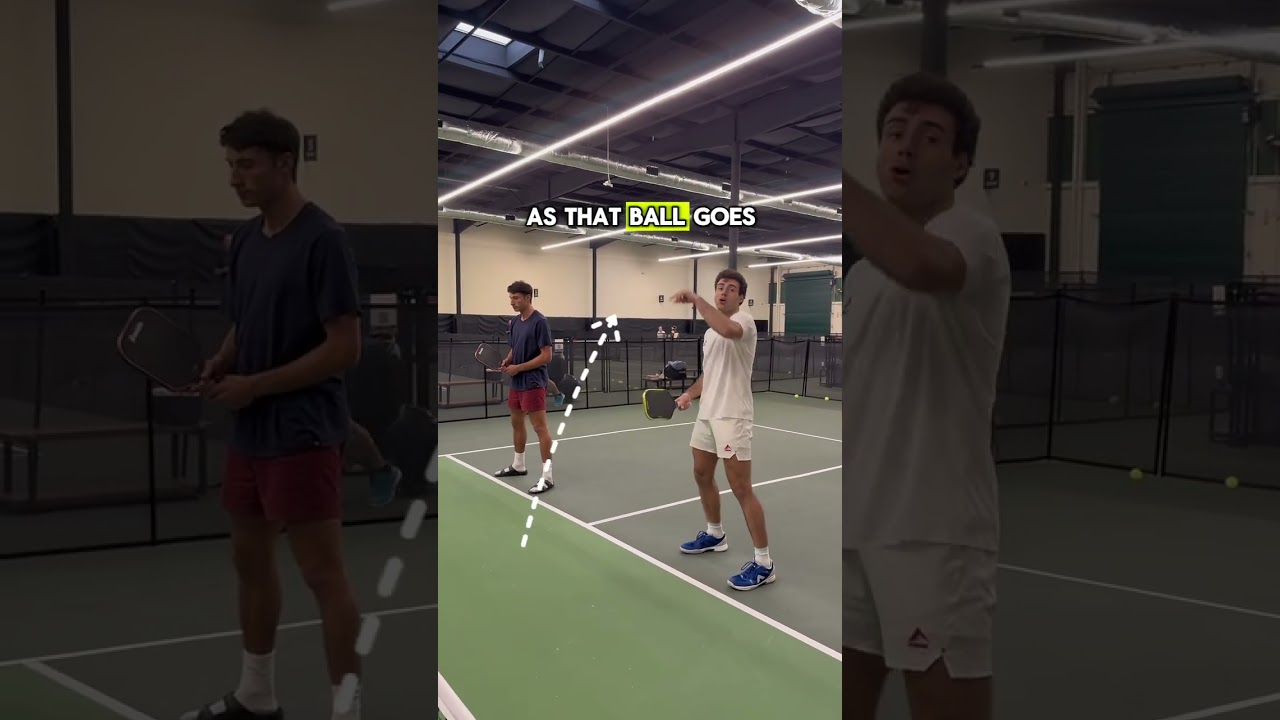
You stand in the middle of the kitchen (not behind the kitchen line), and your partner serves the ball at you as hard as they can from the baseline.
Your job is to drop it back into the kitchen.
This drill trains two things simultaneously: reaction time and touch under pressure.
Most players never practice this combination, which is why they panic when a hard serve comes at them at the net.
💡
Need some new pickleball gear? Get 20% off select paddles, shoes, and more with code THEDINK at
Midwest Racquet SportsIgnatowich demonstrates this drill with her partner Drew, and the difference in execution is striking. A professional can absorb a hard serve and drop it softly.
A newer player struggles because they haven't trained their hands to stay loose and responsive under that kind of pressure.
The key detail here is grip. Ignatowich emphasizes loosening your grip at contact. A tight grip kills touch.
You need to absorb the ball's energy, not fight it.
This is a fundamental principle that applies to every soft shot in pickleball, but it's especially critical when you're defending against a hard serve at the net.
If you're a newer player and you're worried about getting hit, you can dial back the serve intensity.
But the drill's real value comes from practicing with actual pressure. That's what separates this from casual warm-up drills.
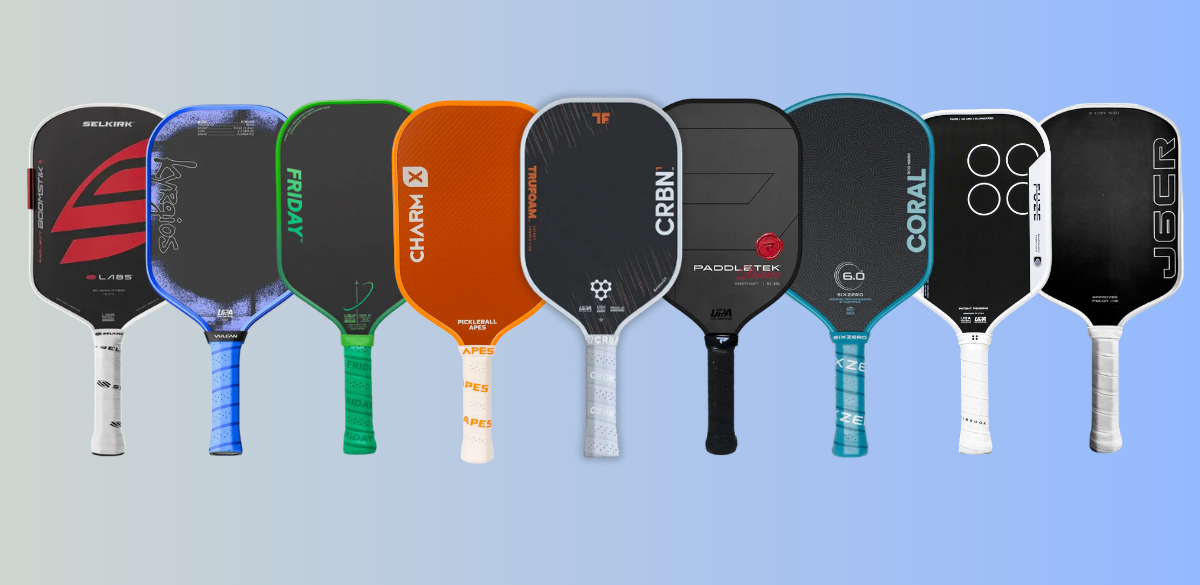
9 Power Paddles that Are Excellent at Dinking
Based on a unique blend of lab-tested power and consistency metrics, these paddles are proven to give you an edge in all three zones of the court.
 The Dink PickleballAlex E. Weaver
3. 7-Eleven Crosscourt: Precision Over Power
The third pickleball touch drill is a variation on a classic: 7-Eleven, but played fully crosscourt.
If you're not familiar with 7-Eleven, here's how it works: the baseline player has to reach seven points, and the net player has to reach 11 points (because it's easier to win at the net).
When you play it crosscourt, you eliminate the ability to win with power.
You can only win with touch and precision.This constraint is genius. It forces you to develop accuracy and control because power isn't an option. You're not trying to hit winners.
You're trying to place the ball exactly where your opponent can't reach it, which requires a completely different mindset than baseline rallies.
Ignatowich recommends playing this drill on both sides of the court, so you develop touch on your forehand and backhand equally.
The crosscourt constraint also teaches you court positioning and angles in a way that regular rallies don't.
You start thinking about geometry instead of just hitting the ball hard.
7 Pickleball Drills That Work for Every Level
Pro player Michael Loyd shares 7 pickleball drills designed to build real consistency and fix the weaknesses keeping you stuck.
The Dink PickleballThe Dink Media Team

Why Touch Matters More Than You Think
Here's the broader context: touch is what separates average players from high-level competitors.
You can have great footwork, solid fundamentals, and a powerful serve, but if you can't control the ball in soft situations, you'll plateau.
The kitchen is where points are won and lost in modern pickleball, and the kitchen demands touch.Ava Ignatowich has spent years on the PPA Tour, competing against the best players in the world. These three pickleball touch drills aren't theoretical.
They're battle-tested methods that work because they address the specific skills you need: feel, consistency, and pressure management.
- The 50-ball drill builds your foundation.
- The kitchen line drill trains you under pressure.
- The 7-Eleven variation teaches you precision.
Together, they create a complete system for developing the soft hands that separate pros from everyone else.
11 Concrete Tips to Go From 3.5 to 4.5 in Pickleball
The difference between 3.5 and 4.5 players comes down to consistency, court awareness, and smarter shot selection
The Dink PickleballThe Dink Media Team
How to Actually Practice These Drills
You don't need fancy equipment or a private court. You need a partner, a ball, and 20 to 30 minutes.
- The 50-ball drill takes about 10 minutes.
- The kitchen line drill takes another 10.
- The 7-Eleven variation can go as long as you want, but 10 to 15 minutes is plenty.
The key is consistency. Ignatowich emphasizes that these drills only work if you actually do them regularly. One session won't change your game.
But a week of consistent practice? That's when you'll notice the difference. Your hands will feel softer. Your resets will be more reliable.
Your confidence at the net will spike.
Most players skip the touch work because it's not flashy. There's no highlight reel moment in a 50-ball drill. But that's exactly why it works.
While everyone else is trying to hit winners, you're building the foundation that makes winners possible.💡
Heads up: hundreds of thousands of pickleballers read our free newsletter.
Subscribe herefor cutting edge strategy, insider news, pro analysis, the latest product innovations and more.
Frequently Asked Questions
How long does it take to see results from these pickleball touch drills?
Ava Ignatowich claims you'll notice improvement within a week of consistent practice. Most players see meaningful changes in their drop shots and resets within two to three weeks. The key is doing the drills regularly, not just once or twice.
Can I practice these pickleball touch drills alone?
No, you need a partner for all three drills. The 50-ball drill and kitchen line drill specifically require someone to hit balls to you. The 7-Eleven variation is a competitive drill that requires an opponent. If you don't have a regular partner, consider joining a local pickleball club or finding someone at your court who wants to improve.
What's the difference between touch and control in pickleball?
Touch refers to your ability to hit soft shots with precision, especially in the kitchen and transition zone. Control is broader and includes your overall ability to place the ball where you want it. Touch is a specific skill within the larger umbrella of control. These drills focus specifically on developing touch.
Should I practice these drills before or after regular play?
Ignatowich recommends doing these drills as part of your warm-up or as a dedicated practice session, not after you're already fatigued from playing. Your hands need to be fresh so you can focus on the feel and motion. If you're doing them after play, keep the session short and focus on quality over quantity.
Do these pickleball touch drills work for all skill levels?
Yes, but the intensity varies. Beginners can dial back the serve speed in the kitchen line drill. Intermediate players can use the drills as written. Advanced players can increase the difficulty by adding movement or playing longer rallies. The fundamental principles apply across all levels.
Anuncie Aqui / Advertise Here
Sua marca para o mundo Pickleball! / Your brand for the Pickleball world!






 English (US) ·
  Portuguese (BR) ·