
 English
  Spanish
  Portuguese
  German
  Italian
  Japanese
  French
  Polish
  Russian
  Netherlands
  Hungarian
  Turkish
  Videos
  Thedink Pickleball

Most players think a low pickleball return of serve is the smart play. It is actually one of the most damaging habits in recreational play, and one simple fix solves all three problems it creates.
The pickleball return of serve is one of the most misunderstood shots in the game.
Most players assume the low, skimming return is smart play because it looks aggressive and feels like it puts pressure on the other team.
It does not. It actually creates three separate problems that hurt you before the rally even gets going.This breakdown comes from Better Pickleball on YouTube, where coach CJ walks through exactly why the low return fails most players and what one simple change fixes all three issues at once.
Love pickleball? Then you'll love our free newsletter. We send the latest news, tips, and highlights for free each week.
Why Players Think Low Is Better
The logic makes sense on the surface. A low ball over the net looks harder to attack, and players associate a tight net clearance with power and precision.
The problem is that the return of serve is not supposed to be an attacking shot.
Your job on the return is to give the serving team a difficult third shot while buying yourself time to get to the kitchen line.A low return does neither. It actually works against you in three specific ways, and once you see them clearly, you will never look at this shot the same way again.
Problem 1: You Are Bringing the Net Into Play
Every shot you hit has a margin of error. Your target might be dead center, but your actual contact point will vary above, below, left, or right of that target.
When your target is just above the net tape, the bottom of your margin of error lands in the net. You are making the net a real variable on every single return.
Think about it this way. If you aim for a spot that is one paddle-width above the net, you are essentially bringing the net into play with every swing.Any slight dip in contact and the ball does not make it over.
On the return of serve, a missed return gives a point directly to the serving team. This is not a situation where a miss just resets the rally.It costs you a point outright, which makes a net error one of the most punishing mistakes you can make on this shot.
If you want to understand how return of serve fixes can stop unforced errors, this margin of error concept is the foundation.Give yourself room above the net and you eliminate a huge source of free points you are giving away.
💡
Need some new pickleball gear? Get 20% off select paddles, shoes, and more with code THEDINK at
Midwest Racquet SportsProblem 2: A Low Return Tends to Land Short
This is the problem most players never notice they are creating. When you focus on keeping the ball low, you shorten your swing arc and flatten your contact.
That ball clears the net and then runs out of energy. The result is a short return that dies near the non-volley zone.A short return is an invitation. The serving team steps into the court and hits the third shot drop from a comfortable position instead of from behind the baseline.
When that happens, your job at the kitchen line gets dramatically harder. You have less time to react and their angles get much wider.
Depth is not a bonus on this shot. It is the entire point of it.
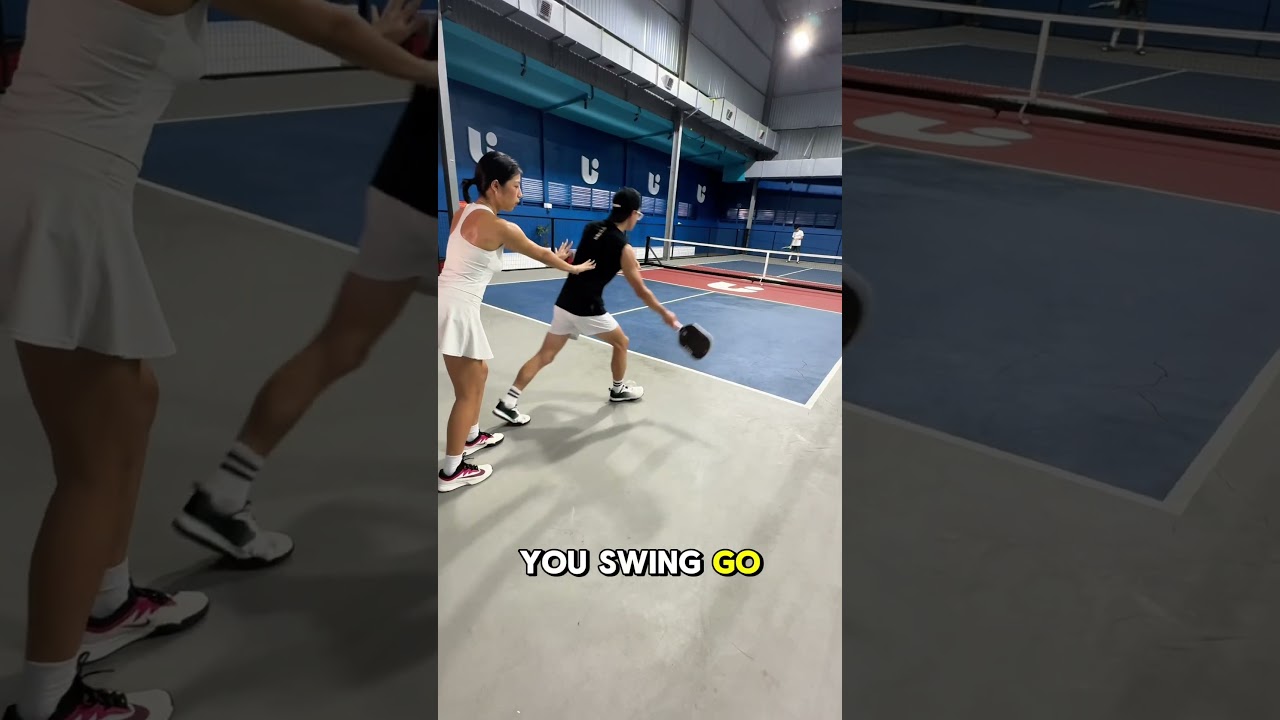
Pickleball Return of Serve Fixes That Stop Unforced Errors
Unforced errors on the return of serve almost always trace back to the same two problems: grip pressure and a missing load. Fix those two things and your return gets cleaner fast.
 The Dink PickleballThe Dink Media Team
Problem 3: You Do Not Have Enough Time to Get to the Kitchen
This one hits hardest for players over 50, but it punishes every level of player. When the return lands short and low, the serving team moves up and strikes early.
You are still five steps from the kitchen when that ball is in the air.
CJ shows this with a live drill. After a low return, he moves toward the non-volley zone and stops when his partner is ready to strike.He is nowhere close to the line at contact.
Getting stuck in the transition zone means hitting at an awkward height, losing the volley, and eating a drop at your feet.
If you want to understand why that zone is so dangerous, take a look at why rushing the kitchen creates its own problems.
The answer is not to sprint. The answer is a return that buys you the time.
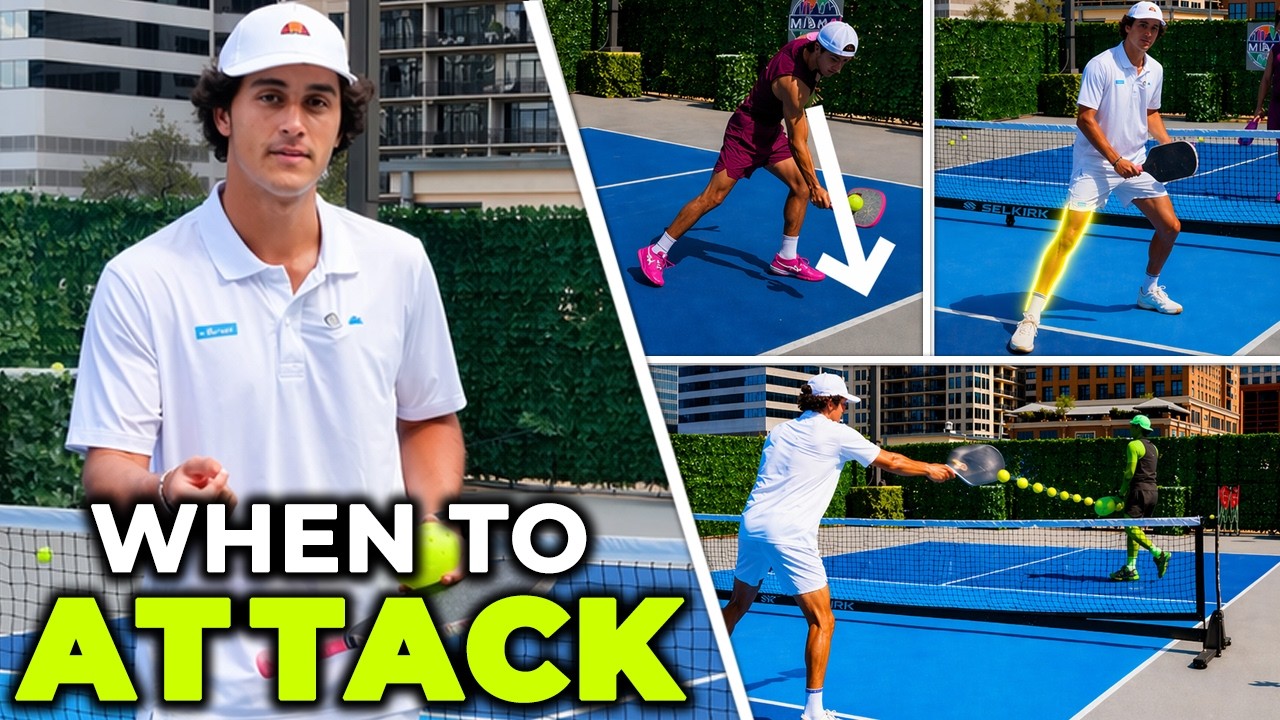
Kitchen Line Aggression: When to Attack in Pickleball
Jack Munro, the #1 player on the APP tour in mixed and men’s doubles, breaks down the exact signals that tell you when your opponent is vulnerable and ready to be attacked.
 The Dink PickleballThe Dink Media Team
What Is the Right Fix?
One adjustment: raise where the ball crosses the net.
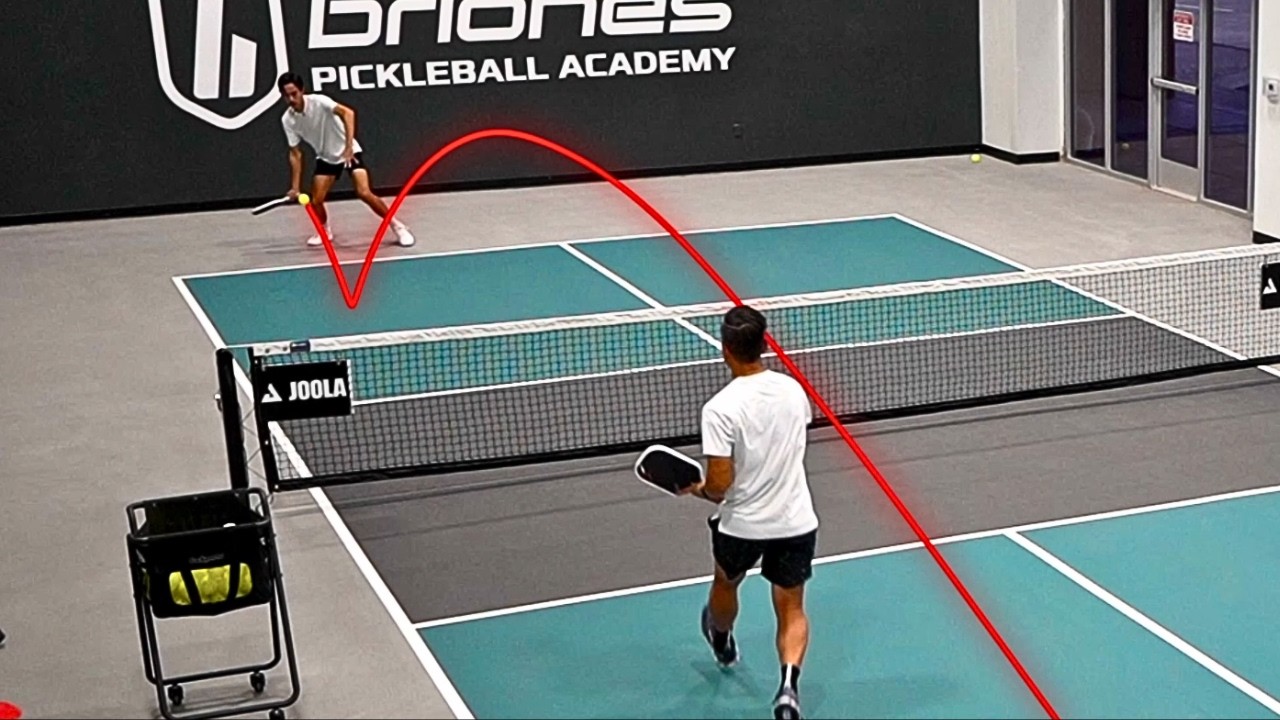
Instead of skimming the tape, aim for the ball to cross roughly three feet above it. Coach CJ calls this "dot number 2," the point in the ball's arc as it passes the net.
Two things happen automatically at that pickleball return of serve height.
- The ball travels deeper because the arc carries it further before it drops.
- Your margin of error grows, so your error rate falls off a cliff.
And the serving team cannot punish it. Because of the two-bounce rule, they are required to let your return bounce before they hit it.
There is no tactical downside here. The fear that a high ball gives them a free attack is simply wrong on this shot, and the rule protects you completely.
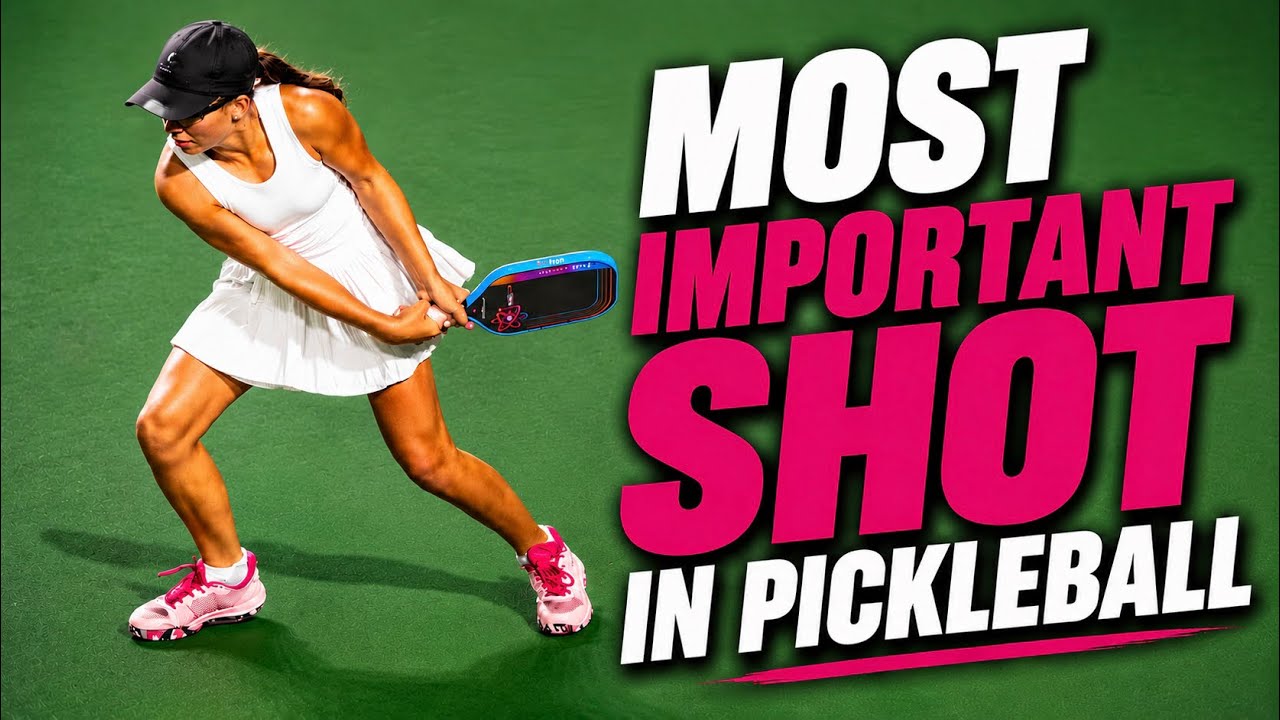
Pickleball Return of Serve: The Most Important Shot
The pickleball return of serve is often overlooked, but it’s arguably the most critical shot in the game. PPA pro Kelly Goodnow explains why a deep, controlled return sets up your entire point.
 The Dink PickleballThe Dink Media Team
How Do You Actually Make This Change?
Here is a simple way to build this into practice immediately.
- Pick a new visual target. Find a spot three feet above the tape and aim there every time. Some players picture a second, invisible net floating above the real one.
- Extend your swing through contact. A higher arc means swinging up and through the ball, not across it. This also adds topspin, which drops the ball deep instead of floating it long.
- Watch the bounce, not the crossing point. If the ball keeps landing short of the service line, your dot number 2 is still too low.
- Move the instant you make contact. The higher arc gives you extra time, so start your split step as your opponent strikes the third shot.
This is a mindset shift, not a technical overhaul. You are replacing one target with a better one.
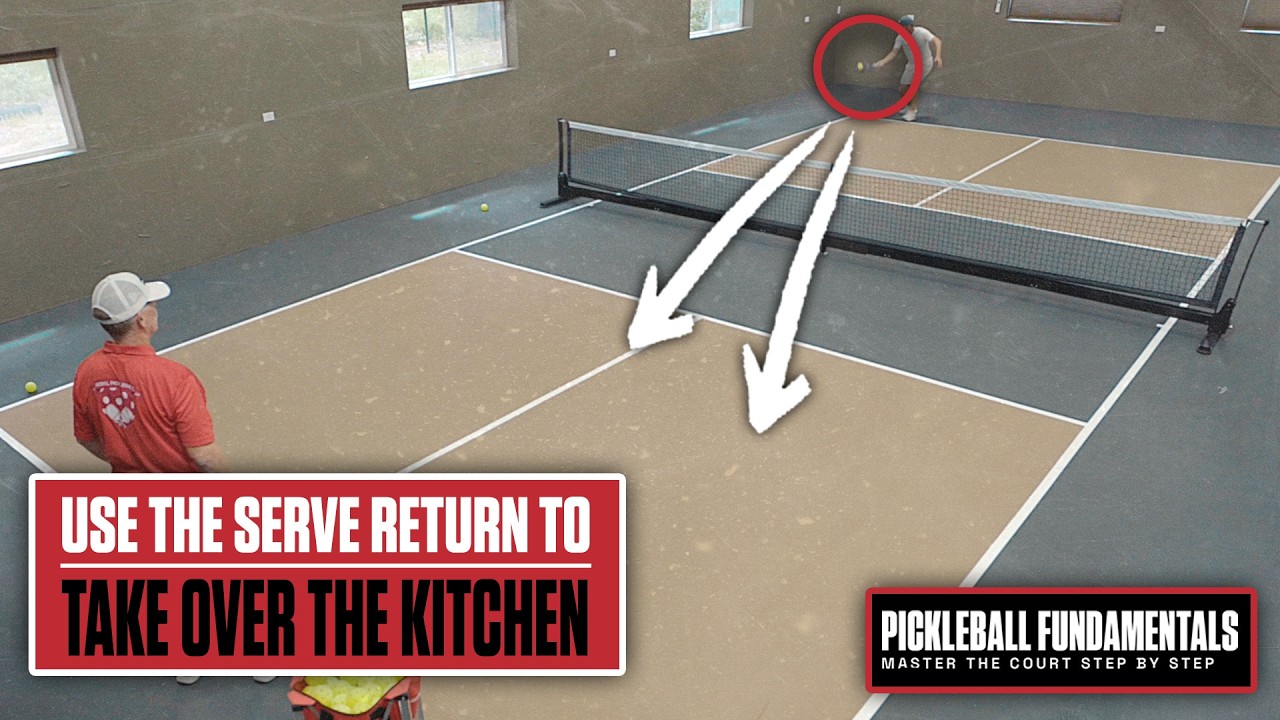
Pickleball Return of Serve: Master It in 5 Steps
The pickleball return of serve is one of the most underrated shots in the game, but mastering it can give you a massive positional advantage. Learn the essential footwork, positioning, and strategy to transform your returns into a weapon.
 The Dink PickleballThe Dink Media Team
Does Hitting Higher Mean Giving Up Control?
No. A higher crossing point does not mean a slow or sloppy ball.
You can still hit with pace and intention, and the depth that comes with the arc makes the return more effective, not less.The idea that low equals controlled is one of the most persistent myths in recreational pickleball, and pickleball misconceptions like this quietly cost players points every session.
A ball crossing three feet above the net with a real swing lands near the baseline with pace.
That is a far uglier ball to handle than a short, low floater that invites the serving team forward.You also want to be strategic about where the return lands, not just how high it crosses.
Check out these three return of serve placement spots that win more points.
Right height plus right placement is what separates a good return from a great one.
Why Can’t I Control Pickleball Shots? Grip and Angle Fixes
If you keep asking why you can’t control pickleball shots, the answer usually starts with your grip and paddle angle, not your swing. Fix those two fundamentals and your shot control improves almost overnight.
 The Dink PickleballThe Dink Media Team
Common Mistakes to Avoid When Making This Change
A few things tend to go wrong when players first try to raise their return arc.
- Swinging too hard to compensate. You do not need more power to hit higher. A relaxed, upward swing path does the job. Tension in your arm actually reduces arc control.
- Aiming too high and sailing long. Three feet above the net is a guideline, not a ceiling. If you are consistently hitting long, dial back the swing slightly but keep the upward path.
- Forgetting to move after contact. Some players get so focused on the return adjustment that they stand and watch it instead of moving. Contact the ball, then go.
- Using the same approach on all shots. This higher arc tip is specific to the return of serve. Other shots at the kitchen require different height management. Learn the three height targets for pickleball shot selection so you are applying the right target at the right moment.
It also helps to clean up your serve return mistakes across the board, and if the return still gives you trouble after raising your arc, the culprit may be your footwork before contact.
Returning serve is not supposed to be glamorous. It is supposed to be reliable and deep.Fix your pickleball return of serve height and you get fewer errors, more time at the kitchen line, and a serving team stuck behind the baseline.
Now go make it happen.
💡
Heads up: hundreds of thousands of pickleballers read our free newsletter.
Subscribe herefor cutting edge strategy, insider news, pro analysis, the latest product innovations and more.
Frequently Asked Questions
How high should a pickleball return of serve cross the net?
Your return of serve should cross the net approximately three feet above the net tape. This height gives you a larger margin of error while still allowing the ball to land deep near the baseline. It is far more effective than trying to skim the net.
Why does a low return of serve land short in pickleball?
When players focus on keeping the ball low over the net, they naturally flatten out their swing and reduce their follow-through. That produces a ball with less carry, which causes it to drop short before reaching the baseline. A higher arc automatically carries the ball deeper into the court.
Can the serving team attack a high return of serve?
No. Because of the two-bounce rule, the serving team must let your return bounce before they can hit it. They cannot step in and volley a high return out of the air.
This means there is no real penalty for hitting the return higher, and plenty of benefit.
What is the two-bounce rule in pickleball?
The two-bounce rule requires that both the serve and the return of serve must bounce before either team can volley. The serving team must let the return bounce, and the returning team must let the serve bounce. This rule is why a high return of serve cannot be attacked out of the air by the serving team.
How does a deeper return of serve help you get to the kitchen line faster?
A deep return forces the serving team to stay back near the baseline to hit their third shot. That gives you more time between your return contact and their third shot, which means more time to move from the baseline up to the non-volley zone. A short return speeds up the timeline and leaves you caught in the transition zone.
Anuncie Aqui / Advertise Here
Sua marca para o mundo Pickleball! / Your brand for the Pickleball world!




 English (US) ·
  Portuguese (BR) ·