
 English
  Spanish
  Portuguese
  German
  Italian
  Japanese
  French
  Polish
  Russian
  Netherlands
  Hungarian
  Turkish
  Videos
  Thedink Pickleball

Overthinking pickleball shots is a timing problem, not a caution problem, and it shows up as late feet and last-second paddle changes. Here are the three clearest signs it's happening to you, plus the fixes that speed your decisions back up.
Overthinking pickleball shots is the fastest way to make a good player look shaky in the middle of a rally. You know the shot. You've hit it a hundred times in drills.
Then the ball actually comes, your brain opens a committee meeting about drive versus drop, and the paddle shows up half a beat late.
Here's the thing: hesitation never looks like hesitation from the outside. It looks like a pop-up. A ball in the net. A reset that floats and gets crushed.The real problem happened a full second before the miss, which is why fixing your shot decisions matters more than fixing your swing.
Love pickleball? Then you'll love our free newsletter. We send the latest news, tips, and highlights for free each week.
What Does Overthinking Pickleball Shots Actually Look Like?
Overthinking pickleball shots means your decision is still running when the ball reaches your paddle.
It isn't caution. It's a timing problem wearing a disguise.Sport psychologists have a name for the version of this that shows up under pressure: reinvestment.
That's the idea that consciously monitoring a movement you've already automated can interfere with running it cleanly, and it's one of the two main explanations in the research on choking under pressure (the other being plain old distraction).
In plain English, you learned the drop with your body and now you're trying to run it with your head.
A broader review of attentional focus research suggests something useful here: pointing your attention at the effect you want (the ball landing soft in the kitchen) may work better than narrating your own mechanics.That's not pickleball-specific evidence, and nobody's proven it fixes your fifth shot.
But it lines up with what most 4.5s figure out eventually, which is that the mental side of your game is a skill, not a personality trait.
So what does it look like in real matches? Three signs, and you've probably shown at least one this week.
Sign 1: You're Still Choosing When the Ball Gets There
The clearest sign of overthinking pickleball shots is that your decision and your contact happen at the same moment. Good players decide at the bounce.
Overthinkers decide at the paddle, and the shot comes out as a compromise between two plans.
The third shot is where this lives. USA Pickleball's own coaching material notes that the drop-versus-drive call depends on the height and quality of the return, your balance, your court position, and where your opponents are standing.
All of that information exists before you swing. If you're still weighing it mid-swing, you're reading inputs that already expired.The tell is physical. Your feet stop moving forward, your paddle face changes angle late, and the ball either sails or dumps.
That's why making the third shot decision quicker tends to help more than another hour of drop reps, and why so many players keep missing drops they can hit perfectly on a ball machine.
How to Stop Overthinking Pickleball Shots Before the Bounce
Give yourself a hard deadline: decide by the time the ball crosses the net. Not at the bounce, not at contact. As it crosses.
Practically, that means reading two things and nothing else: ball height and your own position. Ball above net and you're at the line?
Attack. Ball below net and you're in no-man's-land? Reset. That's the whole read, and it's the same logic behind the 1-2 checklist for pro-level shot selection.Build a simple decision matrix for attacking versus resetting and you stop re-deciding every point.
💡
Need some new pickleball gear? Get 20% off select paddles, shoes, and more with code THEDINK at
Midwest Racquet SportsSign 2: You Can Hear Your Own Swing Thoughts
The second sign of overthinking pickleball shots is narration.
If you can hear a voice saying bend your knees, low to high, soft hands, don't pop it up, you're running four instructions on a shot that takes a third of a second.Honestly, one of those cues is probably right.
The problem is the stack. Swing thoughts compete for the same attention you need for tracking the ball, and the ball doesn't wait.This is exactly why watching the ball through contact works so well as a reset: it isn't really a technique tip, it's a way to crowd out the noise with one external target.
Want a reality check on what elite players are actually thinking during a dink rally?
It's less than you'd expect.Top 6.0 players tend to hold one simple intention and repeat it. Not a checklist. An intention.
One Cue Beats Five When You're Overthinking Pickleball Shots
Pick a single cue per session. That's it.
If your drops are floating, your cue is land it before the line. If you're popping up dinks, your cue is paddle in front.One cue, all match, even when it's not the thing going wrong on that particular point.
Players who chase a new fix every game end up stuck in the same rut all season, and consistency comes from repeating a small number of things well rather than from perfect coverage.
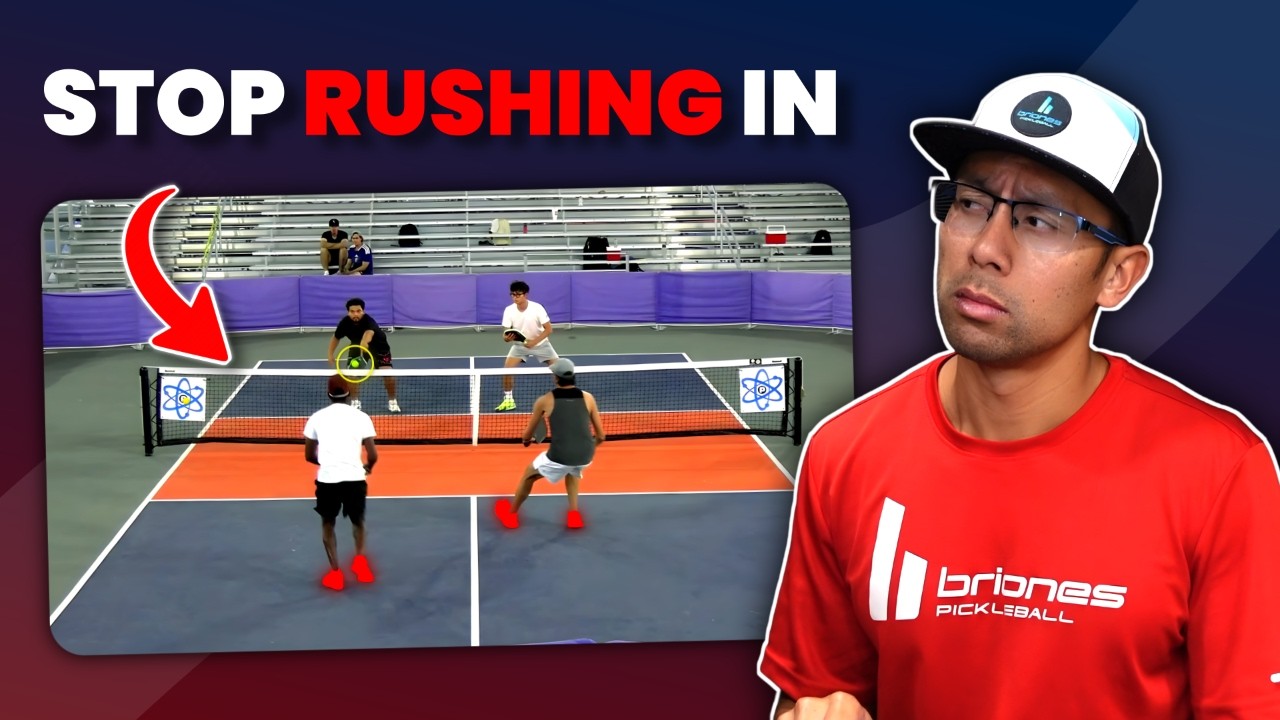
5 Shots That Fix 3.0 Pickleball Mistakes Fast
Most 3.0 pickleball mistakes happen in the first five shots of every rally. Fix these five specific problems and you will win more matches at your next tournament.
 The Dink PickleballThe Dink Media Team
Sign 3: You Reset Everything, or You Speed Up Everything
The third sign of overthinking is that your shot selection collapses into one gear. Some players go full turtle and reset balls they should be putting away.
Others swing out of their shoes at every ball above the tape because deciding feels worse than committing to chaos.
Both are the same bug. When the decision load gets heavy, your brain picks a default and applies it everywhere.USA Pickleball's guidance for newer players gets at the honest version of this: avoid the forced kill shot when the attacking window isn't clearly there, watch your opponent's paddle position, and stop your feet before contact when you can.
That's not "be passive." That's picking the right gear on purpose, which is the whole idea behind controlled aggression.
The fix is narrowing your menu. Two options per ball, max. Attack or reset. Roll or hold.When you cut the menu, the decision gets fast, and fast decisions leave your hands free to do what they already know how to do.
If your defensive option is the shaky one, the reset shot is worth more practice time than another drive.
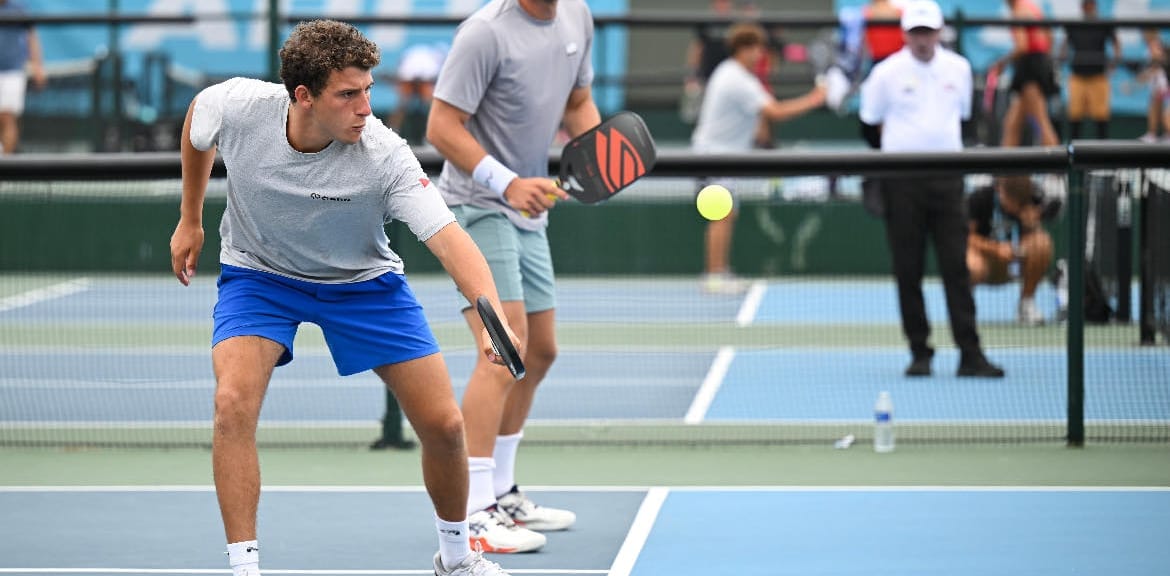
Mental Warfare: What Elite 6.0 Pickleball Players Think During Every Dink
What separates good from great in pickleball is the split-second mental shift that happens the moment the ball leaves the paddle
 The Dink PickleballThe Dink Media Team
So How Do You Stop Overthinking Pickleball Shots During a Real Match?
You don't stop thinking. You move the thinking earlier and make it smaller. Three things that work:
- Set the plan between points, not during them. Ten seconds of "we're going crosscourt and waiting" beats ten seconds of mid-rally math. Getting your head right before the match is a real part of this.
- Have a reset ritual for bad points. Overthinking snowballs off mistakes. A short, repeatable mental reset after an error keeps one missed drop from becoming five.
- Practice under a little discomfort. Skills that only appear in clean drilling tend to vanish in games, which is the argument behind the 70% rule for match-proof practice. Add score, add pressure, add a partner who speeds balls up.
Add one more if you're playing a match that matters: breathe out before you serve or return.
Brief attention-settling routines have been linked to short-term benefits in tasks that need fine motor control, though the research is inconsistent and none of it is pickleball-specific.
It costs you nothing to try. Players who stay calm under pressure aren't thinking less than you. They're thinking sooner.How to Stay Focused During a Pickleball Match
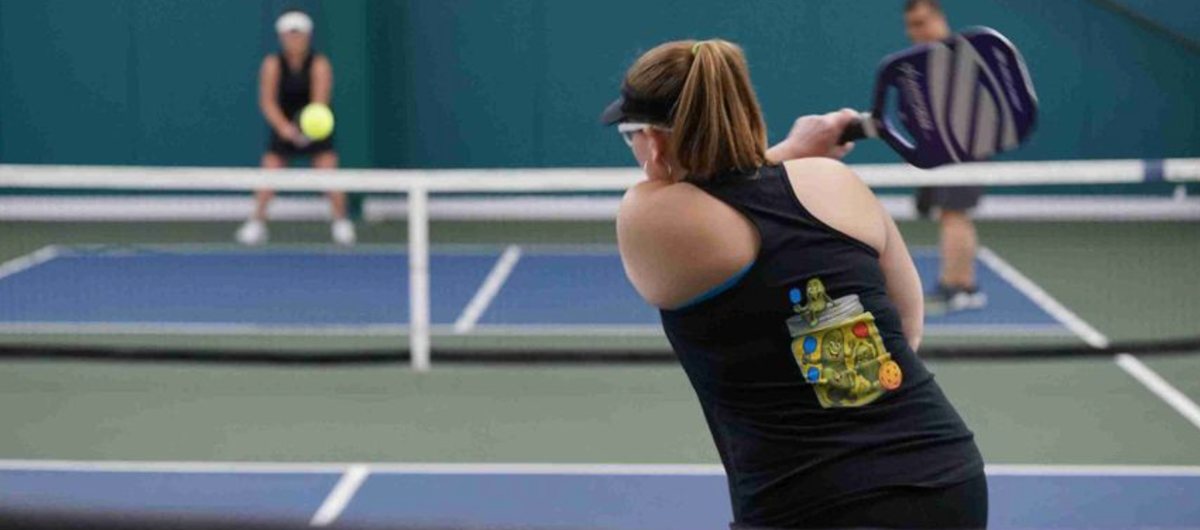
Learning how to stay focused during a pickleball match is the difference between players who choke under pressure and players who thrive. These 5 in-game mental techniques give you the tools to stay locked in from the first serve to the final point.
 The Dink PickleballThe Dink Media Team
Key Takeaways
- Overthinking pickleball shots is a timing problem: your decision is still running when the ball arrives.
- Decide as the ball crosses the net, using two inputs only: ball height and your court position.
- Run one swing cue per session instead of a stack of four.
- Cut your shot menu to two options per ball so committing beats calculating.
- Set your plan between points and keep a short reset ritual for mistakes.
💡
Heads up: hundreds of thousands of pickleballers read our free newsletter.
Subscribe herefor cutting edge strategy, insider news, pro analysis, the latest product innovations and more.
Frequently Asked Questions
Is overthinking pickleball shots just a beginner problem?
No. It's most common in the 3.5 to 4.5 range, where players know enough options to have a real decision to make. Beginners often don't hesitate because they only have one shot in the toolbox. More options means more chances to freeze.
How do I know if I'm overthinking pickleball shots or just playing bad?
Look at where the breakdown happens. Bad technique misses the same way every time. Overthinking produces inconsistent misses on shots you hit cleanly in drills, usually with late feet and a last-second paddle change.
Does drilling more fix hesitation?
Only partly. Drilling builds the shot, but hesitation is a decision problem, so you also need reps at deciding. Live games with a score, or drills where your partner varies the feed, force the choice under time pressure the way a match does.
Should I just play aggressively to stop hesitating?
Not as a blanket rule. Defaulting to aggression is its own version of the same problem. USA Pickleball's coaching guidance treats shot choice as situational, based on ball height, balance, and opponent position, so the goal is deciding faster, not swinging harder.
What's the single fastest fix?
Pick one cue and one two-option menu before you step on court, then hold both for the whole session. Most players feel the difference in a game or two because they stop re-deciding on every ball.
Anuncie Aqui / Advertise Here
Sua marca para o mundo Pickleball! / Your brand for the Pickleball world!




 English (US) ·
  Portuguese (BR) ·