
 English
  Spanish
  Portuguese
  German
  Italian
  Japanese
  French
  Polish
  Russian
  Netherlands
  Hungarian
  Turkish
  Videos
  Thedink Pickleball

With pickleball playing up a level, you grow fast while feeling like a beginner again. Target the right skill gap, track unforced errors instead of the score, and use a between-point reset routine to keep frustration from wrecking your shot selection.
Playing up a level in pickleball is the fastest way to improve and the fastest way to feel like you've forgotten how to hold a paddle. Both things are true at once.
You walk onto the court with players a half-step better than you, and suddenly your third shot drop sits up, your hands feel slow, and the score gets ugly before you've settled in.Here's the thing: that discomfort is the point.
But there's a difference between productive discomfort and getting steamrolled for 45 minutes until you never want to book that court time again.
These three tips keep you in the first category.
Love pickleball? Then you'll love our free newsletter. We send the latest news, tips, and highlights for free each week.
So What Does Playing Up a Level in Pickleball Actually Mean?
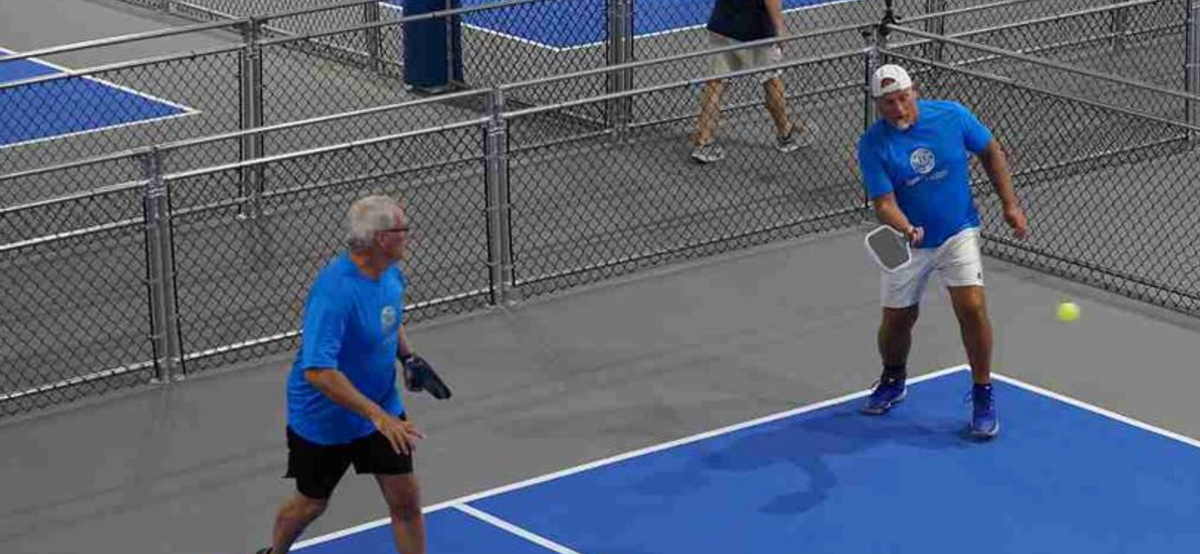
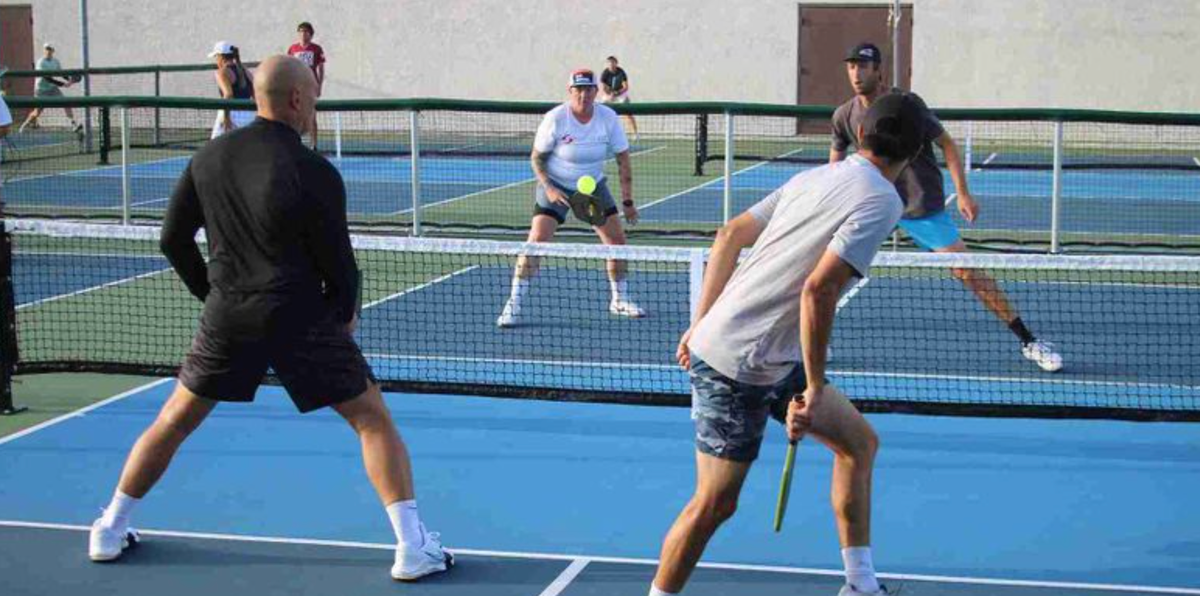
Playing up a level in pickleball means competing against opponents rated roughly 0.25 to 0.5 above your current level, whether that's a DUPR number, a club label, or just the group everyone knows is the good group.
It's not playing pros. It's playing the people who beat you 11-7 instead of 11-2.Playing up is a training tool, not a promotion. You're not claiming to be a 4.0.
You're borrowing a 4.0 environment to expose what's actually broken in your game, which is usually shot selection, not power.
And the exposure is immediate. At your own level you can get away with a floaty return.
One level up, that same return comes back at your feet or straight into the kitchen line where you can't do anything with it.
Tip 1: Why Is Playing Up a Level in Pickleball a Half-Point Problem?
Pick opponents who are better than you, not better than you can comprehend. The most useful gap is small.
Guidance from Pickleball US puts the sweet spot at 0.2 to 0.5 above your current rating, which is exactly the band where you can still win points and occasionally steal a game.Jump two full levels and the learning stops. You're not solving problems anymore, you're just retrieving.
There's no pattern to read because every ball arrives before you've finished your split step, and the only skill you're practicing is scrambling.
How Do You Find the Right Half-Step Up?
Start with the group one rung above your regular rec crew. If you're comfortably winning at 3.5, the 3.5-plus and 4.0 open play is your room.
The tell is simple: you should be losing most games but not every point.
A quick honesty check helps here. Most players misjudge their own level by about half a point in whichever direction flatters them.Know your real number before you decide what "up" means, otherwise you'll end up in a 4.5 game wondering why nothing works.
💡
Need some new pickleball gear? Get 20% off select paddles, shoes, and more with code THEDINK at
Midwest Racquet SportsTip 2: Stop Scoring the Game and Start Scoring Yourself
The single best defense against discouragement is changing what you measure.
If the scoreboard is your only feedback, playing up a level in pickleball will always feel like failure, because you're supposed to lose. That's the whole design.
So track something you control. Unforced errors are the cleanest metric in the sport.
Picklepedia's level-by-level error ranges put 3.5 to 4.0 players around four to six unforced errors per game, dropping to two to four at 4.5 and above.Count yours. If you gave away five in a game against better players, that's a win regardless of the score.
Other things worth counting instead of points:
- Third shots that landed in the kitchen, not just ones that didn't get attacked. Drops are a target skill, not a hope skill.
- Times you reset instead of counterattacked when you were out of position.
- Points where you got to the line and stayed there rather than backing up into no man's land.
What Should You Track When Playing Up a Level in Pickleball?
Track error count, not point count. One game, one number. It takes zero effort, it's honest, and it moves in the right direction long before your win rate does.
The reason this works is that error reduction is what actually produces rating gains at the amateur level.
Hitting harder rarely does. The players who climb are the ones who stop donating points, which is also the thing better opponents punish you for fastest.
How to Find Your Pickleball Level for Open Play
Showing up to the wrong open play session wastes your time and kills your confidence. Here’s exactly how to find your pickleball level and get into the right games.
 The Dink PickleballThe Dink Media Team
Tip 3: Build a Reset Routine Before You Need One
Have a between-point routine ready on day one, because frustration shows up faster when you're playing up.
DUPR's coaching guidance calls it Release, Reset, Refocus: let the last point go, do something physical to break the loop (turn away, adjust your grip, breathe out), then pick one specific intention for the next rally.Sounds soft. It isn't.
Frustration doesn't just feel bad, it changes your shot selection, and always in the same direction: revenge speed-ups, low-percentage drives, and swinging at balls you should be dinking.That's how a competitive 11-8 turns into 11-3.
Why Does Playing Up a Level in Pickleball Feel So Discouraging?
Because the feedback loop inverts. At your own level, good decisions get rewarded with points.
One level up, good decisions get rewarded with a longer rally that you still lose, and your brain reads that as failure when it's actually progress.
Give it a time frame and the frustration shrinks.
Six weeks of one or two sessions playing up, alongside your normal drilling, is enough to feel the difference.Anything shorter and you're judging a training block by its first week. Come back to your usual group after that stretch and the ball looks slow.
That's the payoff, and it arrives suddenly rather than gradually.One more thing worth saying: don't play up every single session.
Two-thirds at your level where you can practice executing patterns, one-third above it where you find the holes.
All hard games with no reps is a great way to stall out and hate the sport for a month.
The 6-Second Mental Reset for Getting Past a Bad Pickleball Mistake
You miss a shot. You’re frustrated or angry. You’ve got about 6 to 8 seconds to assess what went wrong and get over it before the next point starts.
 The Dink PickleballThe Dink Media Team
Key Takeaways
- Playing up a level in pickleball works best against opponents rated 0.2 to 0.5 above you, not two full levels above.
- Measure unforced errors per game instead of the score; four to six is a solid target for 3.5 to 4.0 players.
- Use a between-point reset routine (release, reset, refocus) to stop frustration from wrecking your shot selection.
- Keep roughly a two-thirds to one-third split between your level and the level above.
- Expect six weeks before the improvement feels obvious.
💡
Heads up: hundreds of thousands of pickleballers read our free newsletter.
Subscribe herefor cutting edge strategy, insider news, pro analysis, the latest product innovations and more.
Frequently Asked Questions
How often should I be playing up a level in pickleball?
One or two sessions a week is plenty. The rest of your court time should be at your own level, where you can actually execute patterns and build consistency rather than just surviving points. Constant blowouts wear down confidence faster than they build skill.
Will playing up hurt my DUPR rating?
It can dip slightly in the short term, but DUPR weights opponent strength, so losing close games to higher-rated players costs you far less than you'd expect. Wins against that group move your number significantly. Track the trend over three to six months, not individual match swings.
What if the better players don't want me in their game?
Be useful and be brief. Show up warmed up, don't apologize after every error, and communicate with your partner instead of going silent. Most groups mind a discouraged player far more than a losing one.
Should I drill more or just play up more?
Drill more. Playing up exposes weaknesses; drilling fixes them. Use the hard games to build your problem list, then spend your practice time on the two or three shots that keep failing.
How do I know it's working?
Rally length and error count, in that order. When points against better players start lasting eight or nine shots instead of three, and your unforced errors drop into the low single digits, you're no longer playing up. You're just playing.
Anuncie Aqui / Advertise Here
Sua marca para o mundo Pickleball! / Your brand for the Pickleball world!




 English (US) ·
  Portuguese (BR) ·