
 English
  Spanish
  Portuguese
  German
  Italian
  Japanese
  French
  Polish
  Russian
  Netherlands
  Hungarian
  Turkish
  Videos
  Thedink Pickleball

Getting attacked at the kitchen isn't bad luck—it's because you're giving your opponents attackable balls. Learn the three mistakes that lead to kitchen attacks and the drills that will transform your game.
You're at the kitchen line, dinking back and forth, and suddenly your opponent crushes a ball past you.
Sound familiar? Getting attacked at the kitchen isn't bad luck—and it's not because your opponent is too good.
Kitchen attack pickleball situations happen because you're giving them an opportunity. Every single time you get attacked, one of three things has happened.
Understanding these mistakes is the first step toward neutralizing your opponents and taking control of the net.
Love pickleball? Then you'll love our free newsletter. We send the latest news, tips, and highlights for free each week.
The Three Mistakes That Lead to Kitchen Attacks
According to Tyler from Universal Rackets, there are exactly three reasons why you're getting attacked at the kitchen. The first is a floating dink.
When your dink floats above the net tape, you've essentially handed your opponent a gift. They didn't earn that attack — you gave it to them.
The second mistake is wrong shot selection. You're trying to attack from a spot below the net, which is a fundamental error.
After you hit that ball, your opponent will counter easily, and you won't be able to do anything about it.
The third culprit is flat feet. If you're not moving to the ball, you can't hit a good shot.
When you have flat feet, you're giving your opponents opportunities for angles you simply can't cover. This is where footwork becomes absolutely critical.
Why Floating Dinks Are Costing You Points in Kitchen Attack Pickleball
The simplest way to stop getting attacked is to stop giving your opponents attackable balls.
If your dink never floats above the net tape, your opponent will have nothing to work with.
You need to force them to reset their shots instead of attacking.
The main reason you're floating your dink is because you're swinging upward instead of forward.
When you hit the dink, think "push," not "hit."Most players force their arm and wrist to hit the ball up, which creates that telltale float. Instead, open your paddle face and swing forward.
Here's the key: it's not your upward swing that gets the ball over the net. It's your open paddle face.You want to swing as forward as possible by opening your paddle face.
This pushes the ball forward, makes it go low over the net, and forces your opponent to reset the ball.
The whole goal of dinking is to neutralize your opponent.
When your opponent makes contact above the net, they can be aggressive and hit down into the court.
When they make contact below the net, it forces them to either hit a neutral ball or give you a popup.
Dinking neutralizes your opponent because it forces them to hit up instead of hit down.
💡
Need some new pickleball gear? Get 20% off select paddles, shoes, and more with code THEDINK at
Midwest Racquet SportsThe Attackable or Unattackable Dink Challenge
Want to fix your floating dinks? Try the attackable or unattackable dink challenge. Self-feed or dink with your opponent, and every single time you hit the ball, say out loud whether it's "attackable" or "unattackable."
Anything that floats above the net is attackable. Your opponent can make contact out of the air or from above the net.
Anything unattackable forces your opponents to make contact down low — and even better, it forces them to reach.Here's what you're aiming for: try to hit around 70% unattackable dinks before moving to your next exercise.
Do this straight ahead, then diagonal, then the other side straight ahead, and finally the other side diagonal.
Try to hit at least seven out of 10 unattackable dinks.
By saying it out loud, you're forcing yourself to make adjustments.
You'll feel what it's like to really push the ball forward and go low over the net, versus popping the ball up and going high.
If you pop the ball up again, you're either swinging upward, swinging too vertical, or holding your paddle too tight.
Open up your paddle face and push the ball forward.
Practice doesn't make perfect — practice makes permanent.If you can implement this drill, when you go out and play, you'll have the confidence that comes from repetition.
You won't have to think about it because you've practiced it all the time. That's the real edge against kitchen attacks in pickleball.
Pickleball Dinking Technique: The Complete Beginner’s Guide
This guide breaks down everything you need to know about proper dinking form, grip, stance, and drills to dominate at the kitchen line.
 The Dink PickleballThe Dink Media Team
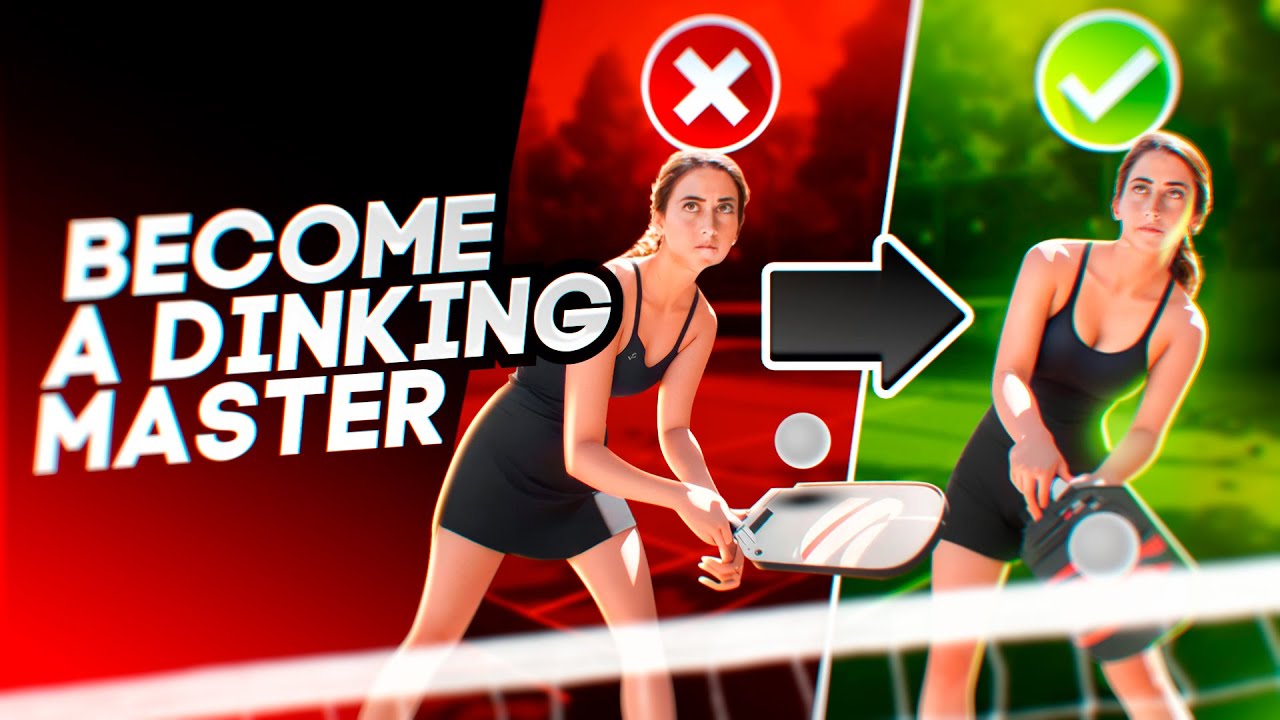
Red Light, Green Light: When to Attack and When to Reset
The next thing you need to master is knowing when to be aggressive.
Tyler calls this the red light, green light approach, and it's a game-changer for your kitchen attack pickleball strategy.
If you're still figuring out how to break 5.0, this framework is non-negotiable.
Green light means you're making contact above the net into the court.
Red light means you're making contact below the net — up over the net at your opponent's feet. Anywhere down there, you need to reset the ball.
Anywhere up top, you need to smash the ball down.
Players hesitate in the red zone and go for the wrong shot, which is one of the three mistakes we mentioned earlier.
But here's what really frustrates coaches: players will work hard, dink, dink, dink, and finally pop a ball up. Then what do they do?
They tap it back softly. They're afraid.When you get a high ball, you won the lottery. Smash it with everything you've got and go for the green light. Fire on all cylinders.
Block the ball back when it's low, attack when it's high.
If you can have a clear plan on only taking green light balls and saying that out loud when you drill and when you play, it's going to make you think way more clearly.
You're going to give yourself way more time because you're going to know what to do. You're not going to second-guess yourself.
You're going to hit more balls out in front and you're going to win more points.
How to Reset When Attacked at the Kitchen in Pickleball
Knowing how to reset when attacked kitchen pickleball firefights erupt is what separates 4.0 players from 4.5s. Master these techniques and you’ll stop giving away free points under pressure.
 The Dink PickleballThe Dink Media Team
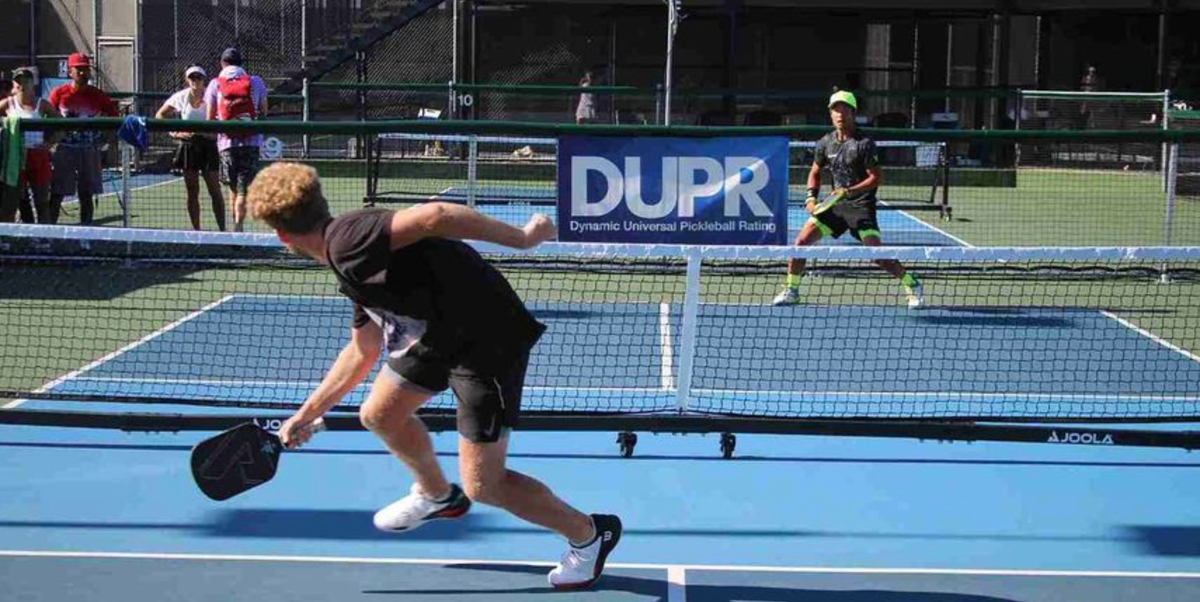
Here's the thing: this is what separates intermediate players from better players. You have to be light on your feet.
About 80% of pickleball players take an intro lesson and learn that when you're at the kitchen, your weight should be in your heels with a solid foundation.
You're not moving left or right — you're stationary. Why? Because beginners tend to move back or fall into the kitchen.
So intro lessons teach stability to prevent that habit. But here's where most players get stuck: they stop there.
After you graduate from accidentally hitting balls into the kitchen and falling backward every single time, you need to get more on your toes and forward.
You need to be light on your feet instead of relying on your heels. Your heels should never be touching the ground except when you plant to hit a shot.
Try this: stand on your heels and try to move left or right.
It's super difficult to push off. Now go on your toes, drop your center of gravity, and get into an athletic stance. Now try moving left or right. It's way easier.The one thing with pickleball is you don't want to reach. The moment you reach is the moment you're going to pop the ball up. This is the kiss of death.
If you're flatfooted and reaching, your opponent is going to angle you out wide every single time, and you're going to get more popups.
How to Improve Pickleball Footwork: 5 Pro Drills
Pickleball footwork drills are the fastest way to close the gap between your shot-making ability and your actual on-court results. Here are five drills that competitive players use to move faster, recover quicker, and stop giving away free points.
 The Dink PickleballThe Dink Media Team
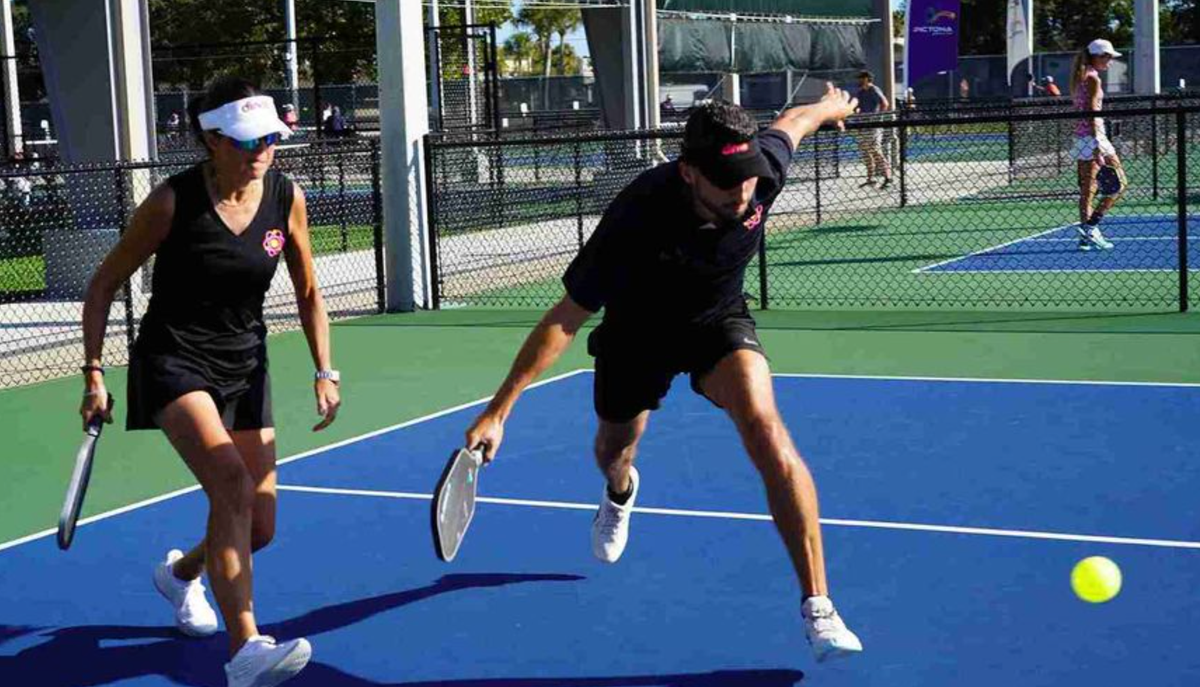
The best drill to fix your footwork is the catch and throw drill. Get a ball and catch it with two hands.
You can't catch the ball and reach with one hand — you have to get your body to it. Self-feed, move out, catch.
Self-feed, move out, catch. Keep moving. These kinds of simple wall drills translate directly to live play.
Why does this work? You can't catch with two hands and reach. You have to get your body to the ball.
You can do this to yourself against a wall or with your partner. The key is that it forces you to move your feet before your hands.
Here's the critical principle: it's always feet then hands, not hands then feet.Players go wrong because they go hands and then feet. You need to get your foot out to the ball before you get your hand to it.
If you can get your foot out to the ball before your hand, you will never reach again and you'll always be able to make contact out in front.
The second drill is the horizontal paddle drill. Hold your paddle horizontal with one hand on the tip and one on the frame.
Dink with your partner or toss yourself balls. This forces you to not be able to reach. It forces you to get your foot to the ball.
You're not going to be able to reach anymore.
Do both of these drills and they're going to force you to be light on your toes. They're going to force you to get your feet there before you reach.
They're going to force you to cover more angles. And you're not going to pop many balls up because you won't be reaching.
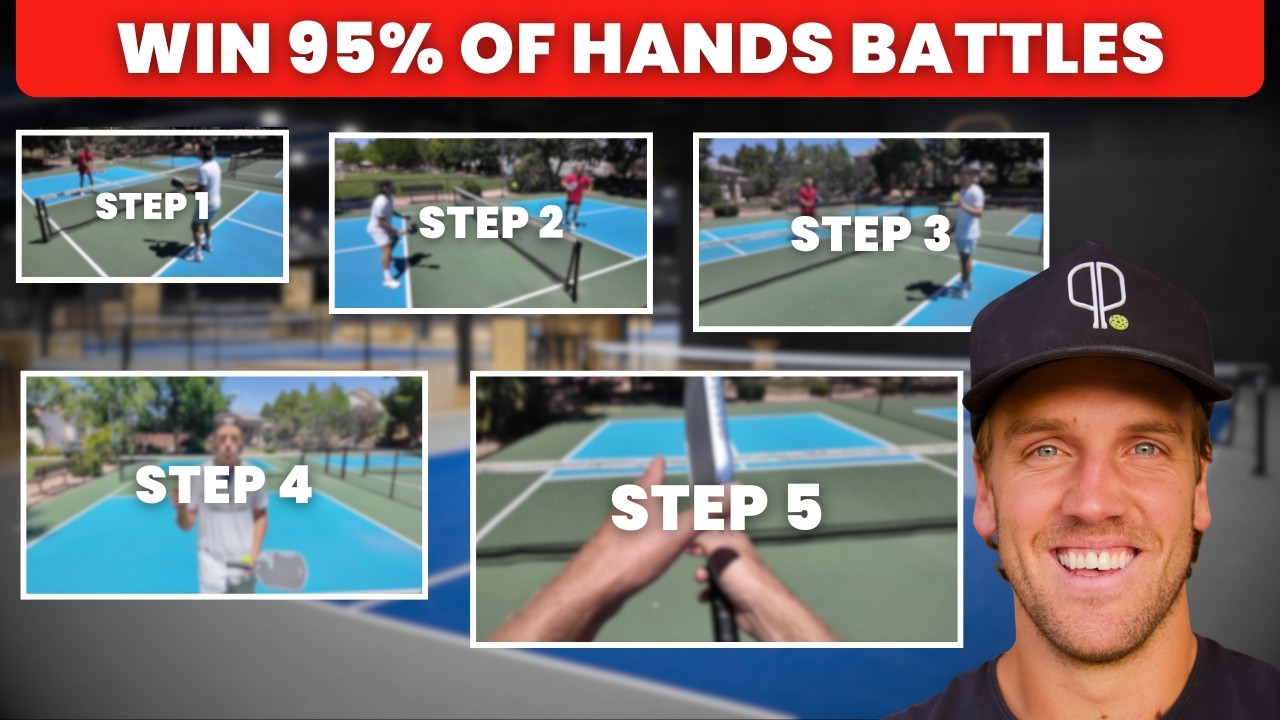
Hand Speed Drill: The 5-Step System to Win Net Battles
A hand speed drill isn’t just about moving your paddle faster—it’s about training your entire body to react with precision at the net.
 The Dink PickleballThe Dink Media Team
The Mindset Shift That Changes Everything in Pickleball
If you can keep your dinks low, reset or attack based on whether the ball is above or below the net, and have active feet while you're dinking, you're never going to pop your shots up again.
You pop your shots up because you do too much with your paddle and your grip. You pop things up because you do too little with your feet.
Players that do more with their feet and less with their paddle will get a light bulb moment.
A pickleball mindset shift happens when you finally realize: I've got to do less.This is the kind of breakthrough that breaks you through the plateau.
Here's the truth: any type of pickleball issue is a footwork problem. It's not a new paddle problem. It's not because your opponent is a banger.
It's not because of x, y, and z. It is a footwork problem. If you can get your feet to the ball and do less with your paddle, you're going to pop less balls up.
Players don't get to the ball right or they make the wrong decisions, and then their arm and paddle try to compensate. You don't do that. You keep it short.
You keep it precise. Your paddle is your paintbrush. Your paddle is an extension of your body. Everything else follows.
Think of pickleball like painting or yoga.
It's an art, not a heavy metal punch. It's just less is more.When you finally understand that your footwork is the foundation of everything else, your entire game transforms.
Pair that with mastering these 6 essential shots and you'll have a complete picture of what elite net play actually looks like.
💡
Heads up: hundreds of thousands of pickleballers read our free newsletter.
Subscribe herefor cutting edge strategy, insider news, pro analysis, the latest product innovations and more.
Frequently Asked Questions
What does it mean when a dink is "attackable" in kitchen attack pickleball?
An attackable dink is a shot that floats above the net tape, allowing your opponent to make contact out of the air or from above the net. These are the balls that get smashed back at you. The goal is to hit unattackable dinks that force your opponent to make contact below the net.
How do I know when to attack versus reset at the kitchen?
Use the red light, green light system. Green light means the ball is above the net — attack it. Red light means the ball is below the net — reset it. This simple framework removes hesitation and gives you more time to react.
Most pickleball issues stem from poor footwork, not paddle problems. When you don't move your feet to the ball, you have to reach, which causes popups. When you're light on your feet and move to the ball, your paddle work becomes natural and precise.
What's the difference between the catch drill and the horizontal paddle drill?
The catch drill forces you to move your feet to the ball because you can't catch with one hand and reach. The horizontal paddle drill prevents you from reaching by limiting your paddle mobility. Together, they train your body to prioritize footwork over arm extension.
How long does it take to stop floating dinks?
With consistent practice using the attackable or unattackable dink challenge, most players see improvement within a few sessions. The key is repetition — practice makes permanent, so drill this regularly until it becomes muscle memory.
Anuncie Aqui / Advertise Here
Sua marca para o mundo Pickleball! / Your brand for the Pickleball world!







 English (US) ·
  Portuguese (BR) ·