
 English
  Spanish
  Portuguese
  German
  Italian
  Japanese
  French
  Polish
  Russian
  Netherlands
  Hungarian
  Turkish
  Videos
  Thedink Pickleball

Most players only know one or two pickleball dink types, and it costs them at the kitchen line. Here are the four dinks you need and how to hit each one correctly.
If your dinking game only has one mode, you are going to get exposed at the kitchen line.
Opponents will force you wide, rush you into short hops, and pull you out of position until you pop one up.
That is not a shot selection problem. It is a shot variety problem.Most players default to whatever dink feels comfortable and repeat it until it breaks down.
The fix is a complete toolkit of four distinct dinks, each with a specific purpose and a specific moment where it beats everything else.This breakdown comes directly from a detailed instructional video by PlayPickleball.com on YouTube, covering each dink with technique, shot selection, and the common mistakes players make on every one.
There is also a bonus dink at the end that the pros are starting to use more frequently.
Love pickleball? Then you'll love our free newsletter. We send the latest news, tips, and highlights for free each week.
Dink Type 1: The Forehand Topspin Roll Dink
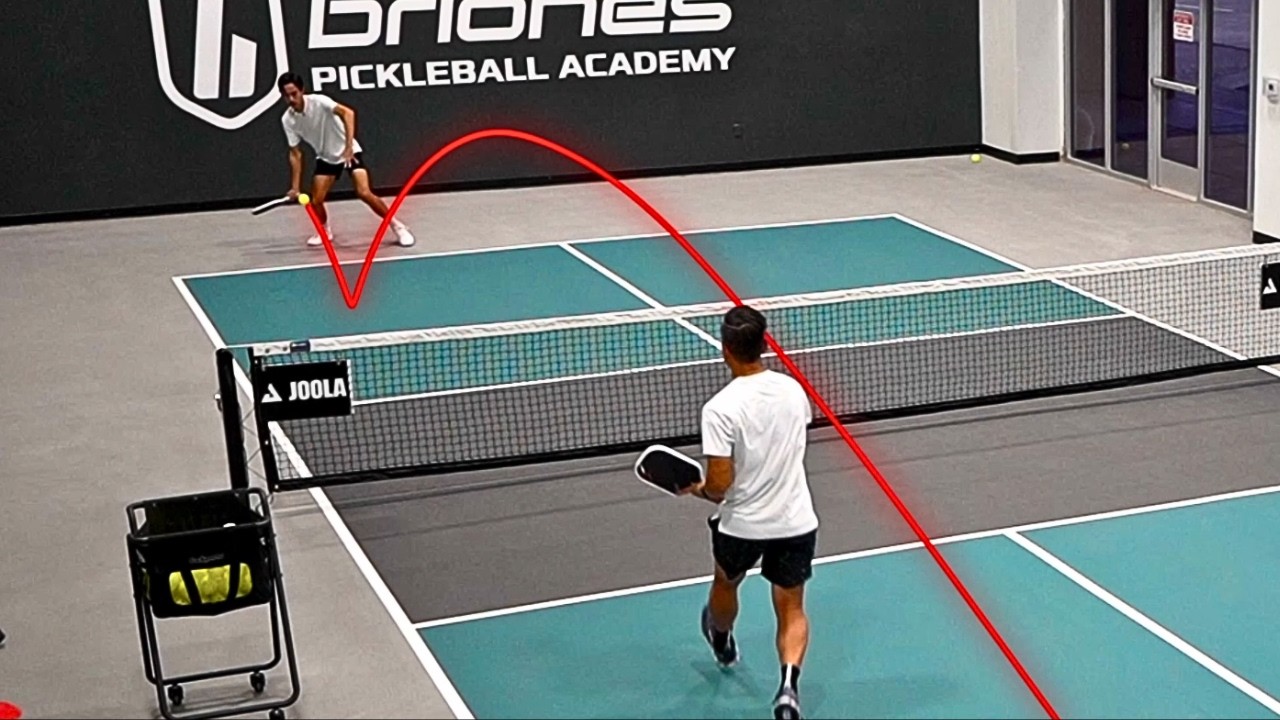
The forehand topspin roll dink is your primary offensive dink when you are set up well.
You see it most often in crosscourt patterns, right side to right side, and when it is hit correctly it forces your opponent into an uncomfortable, low contact point.Shot selection matters first. You can only hit this dink when the ball lands in your contact zone, specifically in front of your paddle-side leg.
The moment the ball gets outside your body, topspin becomes nearly impossible to generate with any control.
The other key is letting the ball reach its apex before you swing.
Trying to rip topspin off a short hop is a losing battle because the ball is jumping up into your paddle instead of sitting for you.Back off the line if you need to, let it peak, then swing.
How to generate real topspin:
- Press your paddle face flat against the top of the net and practice the brushing motion before adding the ball
- Contact the bottom half of the ball, not the back of it, to brush upward through contact
- At higher levels, hit the side-bottom of the ball to create a sidespin component that makes the ball skid off the court
- Finish on the same side of your body if you are struggling to brush cleanly instead of rolling over the top
- Use your non-paddle arm for balance so your swing stays controlled
There is no massive backswing here. The power comes from the brush, not a big arm swing.
If your topspin keeps failing, the most common culprit is contacting the back of the ball instead of the bottom of it.
Dink Type 2: The Forehand Slice Dink
The forehand slice dink is a defensive lifesaver that gets underused at every level below 4.5.
When you are pulled wide, late to the ball, or simply unable to let it apex, this is the shot that keeps you in the point.
Pro players like Georgia Johnson use the forehand slice as their primary forehand dink. So do not treat it as a fallback.The biggest mistake players make on this shot is chopping down at the ball. That sends it straight into the net.
You need an open paddle face, meaning it is slightly tilted toward the sky, and you need to guide the ball over the net rather than slap at it.
Key mechanics for the forehand slice dink:
- Weight on your outside foot throughout the shot
- Open paddle face from contact through follow-through
- Push through toward your target instead of rotating sideways
- Use your whole arm to carry the ball, not a wristy chop
- Apply enough lift to clear the net, especially when stretched wide
The crosscourt dink battle is exactly where this shot earns its keep.
When you are off balance and a roll dink is not available, the slice gets you back to neutral without giving your opponent a ball to attack.
💡
Need some new pickleball gear? Get 20% off select paddles, shoes, and more with code THEDINK at
Midwest Racquet SportsWhat Happens When You Only Have One Dink?
A player with one dink type is predictable. A predictable dink is an attackable dink.
If your opponent knows every ball is coming back the same way, they can camp on it and wait for the right moment to speed up.Variety forces your opponent to make decisions rather than just react.
That is where winning dink battles actually happens, not from hitting one great shot, but from making your opponent uncomfortable with multiple different looks.
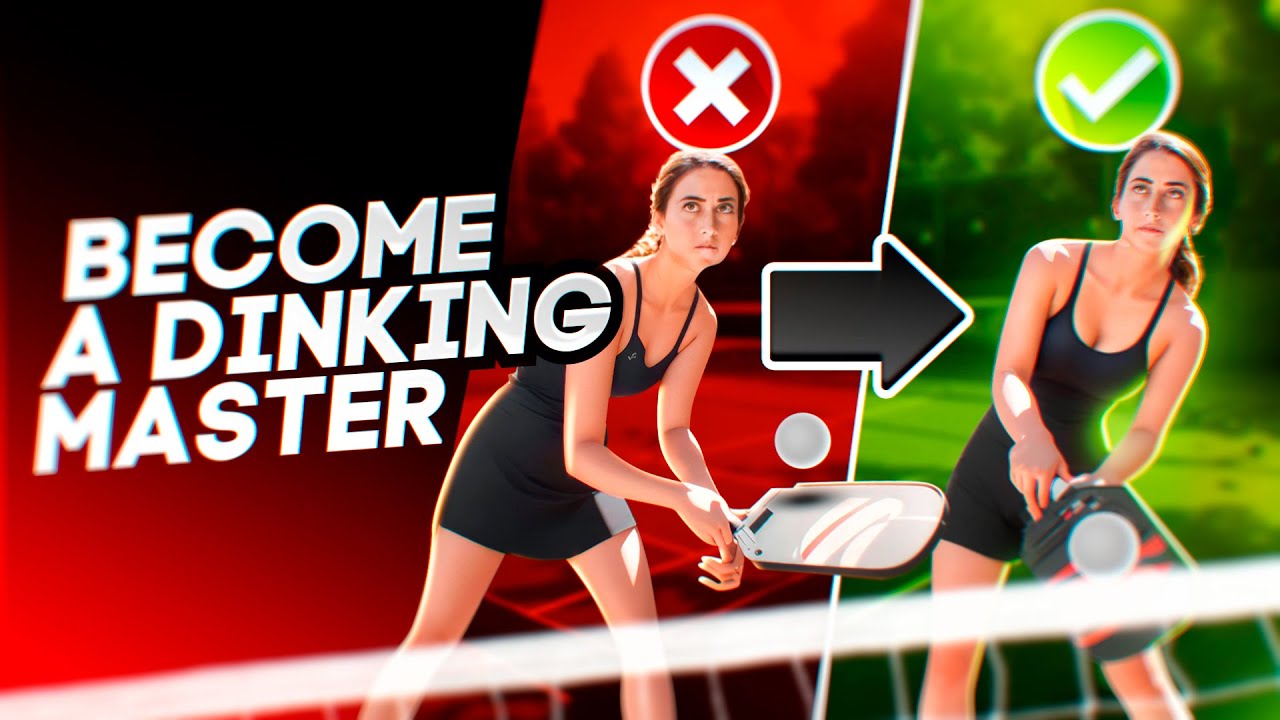
Pickleball Dinking Technique: The Complete Beginner’s Guide
This guide breaks down everything you need to know about proper dinking form, grip, stance, and drills to dominate at the kitchen line.
 The Dink PickleballThe Dink Media Team
Dink Type 3: The Two-Handed Backhand Roll Dink
The two-handed backhand roll dink is the most physically demanding dink on this list, and it is also the most aggressive.
When it works, it puts serious pressure on whoever is receiving it.
When it does not work, it usually goes up and becomes a ball that gets attacked right back at you.The foundation of this shot is your stance.
If you are not willing to get genuinely low, almost as if you are sitting in a chair, do not attempt this shot in a match until you build the habit in drilling.Your hip depth determines your contact point more than anything else.
On the grip: your non-dominant hand chokes up on the paddle and does most of the work. Your dominant hand is essentially a guide.Some players even place a finger on the face of the paddle for extra feel and stability during the brush.
The wrist motion here is what separates a clean roll dink from a scoop.
You want a small amount of wrist lag that releases into an upward brushing motion, almost like you are waving the paddle forward and then snapping through.
It is not a big swing. It is a compact, low-to-high motion.One tactical note: when you hit this shot, recover toward the middle of the court immediately.
Players who get locked into hitting the two-handed roll dink forget to reset their positioning and leave a massive gap in the center that opponents can exploit with a single redirected dink.
Common two-handed backhand dink mistakes are worth reviewing before you take this shot into match play.
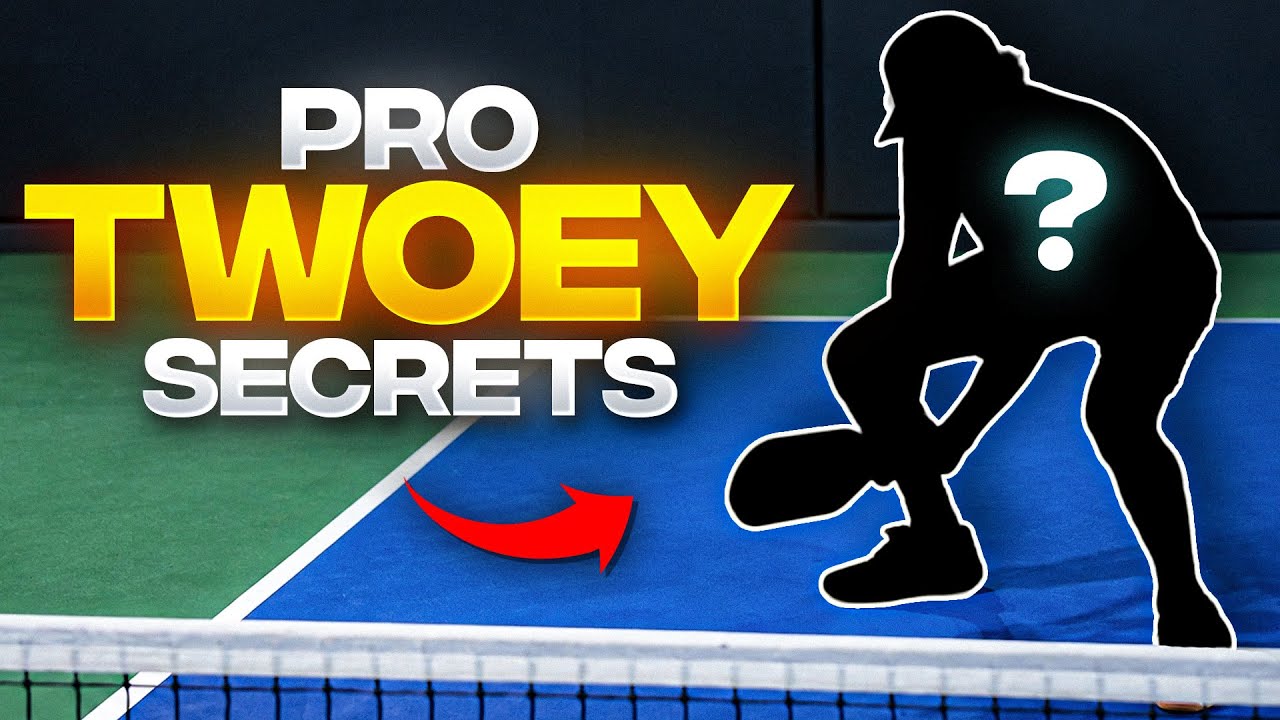
Two-Handed Backhand Dink: Fix These 5 Mistakes
Most players hit the two-handed backhand wrong because they focus on form over footwork and forget which hand actually controls the shot. Jack Monroe breaks down the exact technique that makes his two-handed backhand one of the most consistent and deceptive in the world.
 The Dink PickleballThe Dink Media Team
Dink Type 4: The Backhand Slice Dink
The backhand slice dink functions exactly like the forehand slice: it gives you more reach, more flexibility when out of position, and a consistent reset when the two-handed roll dink is not available.
Single-handed reach extends your coverage significantly compared to two hands.
When a ball gets behind you or drifts wide, the backhand slice can retrieve it where the two-hander cannot.
The wrist position is everything on this shot and it trips up a lot of players. You want a flexed wrist that stays flexed throughout the entire motion.A straight wrist leads to a karate chop, and a karate chop sends the ball into the net every time.
Think of the swing path as a Nike swoosh shape.
You come down and then curve upward through contact. That upward curve is what produces the loft that carries the ball over the net.Without it, you are just chopping down and hoping.
Using your opposite arm as a counterbalance also makes this shot significantly more consistent.
Hands come together at the start of the swing and separate as you follow through. That keeps your body stable instead of letting your arm pull you off balance.
Slicing in general requires this kind of full-body coordination, not just arm movement.
For anyone working on stopping popup dinks, the backhand slice is often the shot that prevents the popup from happening in the first place, because it keeps you from reaching and jamming on balls outside your contact zone.
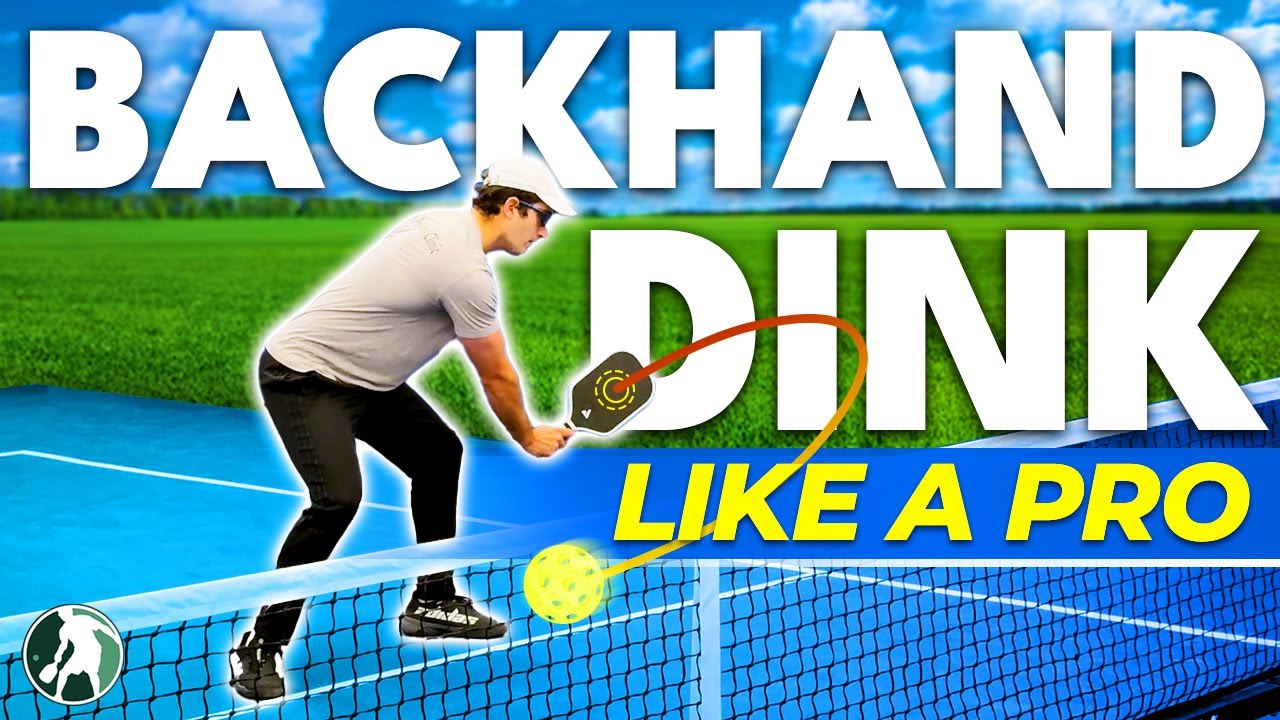
Perfect the Backhand Slice Dink with These 3 Essential Tips
When you’re locked in a tight dinking battle, this shot is your insurance policy
 The Dink PickleballThe Dink Media Team
The Bonus Dink: The Scoop Dink
The scoop dink is the shot the pros are adding to their dink toolkit and it solves a very specific problem: redirecting a crosscourt dink back to the same side of the court without telegraphing it early.
You see this most in mixed doubles.
When a ball sits up in the middle or your partner gets a dead dink that would normally go crosscourt, the scoop lets you redirect it back to the opposite side and change the entire pattern of the point.The mechanics are simple but the grip matters.
Continental grip, the hammer grip where the knuckle rides along the top of the handle, gives you the easiest access to this shot.
You open the paddle face slightly, add a subtle inward wrist curl, and then swing around and under the outside of the ball as it comes to you.
That outside-of-the-ball contact is the key.
You are not pushing the ball straight. You are curving around it so it redirects back to the side you came from, even when you are stretched out wide.
Building dink consistency means having a shot like this available so you are never just trading crosscourt dinks indefinitely.It is also worth noting that this shot pairs well with an understanding of mixed doubles strategy, because the scoop dink changes patterns in a way that advantages the team using it when opponents are not expecting the redirect.
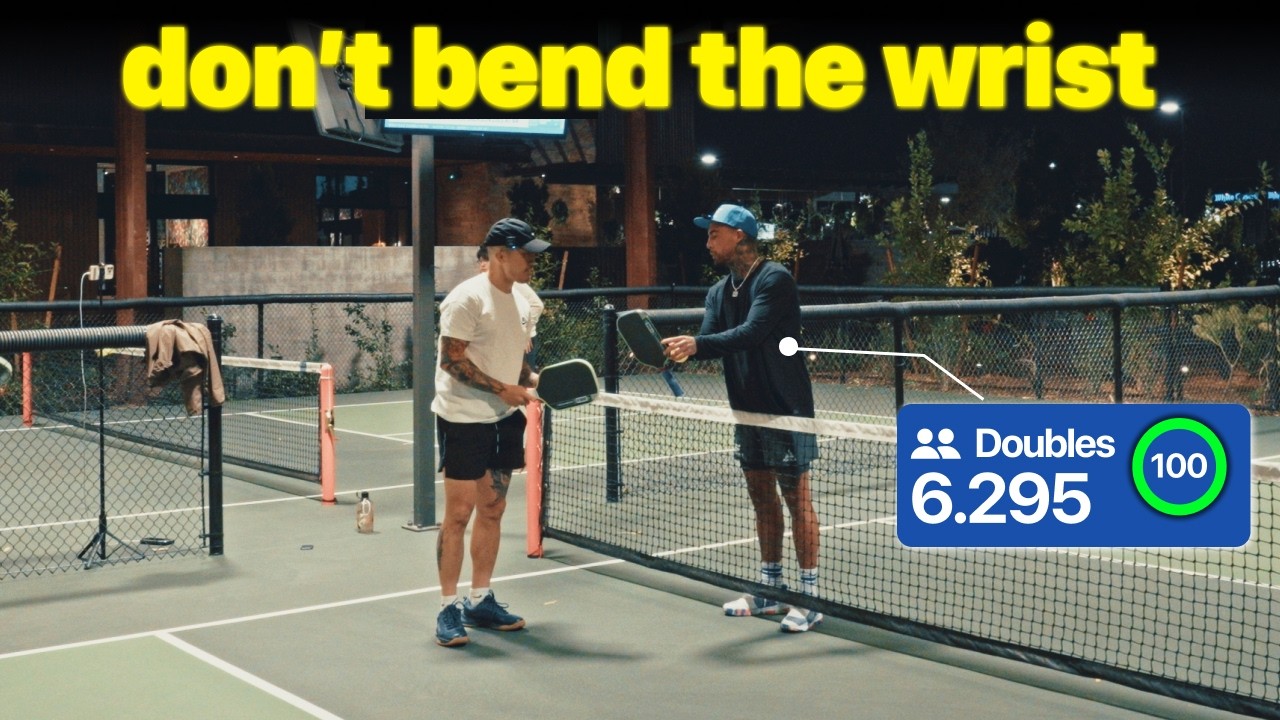
Tyson McGuffin Tip Down Dinking Technique: Fix Your Dinking
The tip down technique is one of the most overlooked defensive tools in pickleball. Tyson McGuffin swears by it, and once you understand why, you’ll never defend the same way again.
 The Dink PickleballThe Dink Media Team
How Do You Drill Every Pickleball Dink Type?
Drill each one separately before combining them.
Spend time letting balls apex before you swing, work on stance depth for the two-handed backhand, and groove the Nike swoosh path on both slice shots.Lateral movement drills pay off here too, because most of these dinks require you to get into position before the shot is even possible.
Once each pickleball dink type feels grooved on its own, start drilling crosscourt exchanges where you switch between them based on ball position.That trains your brain to read the situation and pick the right shot automatically.
A focused two-step method will get you there faster than repetitive open drilling.
💡
Heads up: hundreds of thousands of pickleballers read our free newsletter.
Subscribe herefor cutting edge strategy, insider news, pro analysis, the latest product innovations and more.
Frequently Asked Questions
What is the most important pickleball dink type to learn first?
Start with the forehand slice dink because it works in the widest range of situations. It does not require perfect positioning, it gives you more reach, and it is forgiving when you are late to the ball. Topspin dinks come next once your contact point control is solid.
When should I use topspin instead of slice on a dink?
Use topspin when the ball apexes cleanly in front of your body and you have time to let it peak. Use slice when you are stretched wide, late, or off balance. Topspin applies pressure; slice buys you time and resets the point.
Why does my two-handed backhand dink keep popping up?
The most common cause is contacting the ball too close to your body or catching it before it reaches apex. Get lower in your stance and give yourself space so the ball falls into your contact zone rather than jumping up at you. A flexed back knee at contact makes a significant difference.
What is the continental grip and why does it matter for the scoop dink?
The continental grip is where the base knuckle of your index finger sits on the top bevel of the handle, like you are holding a hammer. It naturally opens the paddle face and gives your wrist the rotation range needed to wrap around the outside of the ball on the scoop dink.
How do I stop choking on my backhand slice dink?
Keep your wrist flexed from start to finish and make sure your follow-through goes upward, not sideways. The upward finish is what gets the ball over the net. Most players who struggle with this shot are cutting across the ball instead of swinging through and up along the Nike swoosh path.
Anuncie Aqui / Advertise Here
Sua marca para o mundo Pickleball! / Your brand for the Pickleball world!



 English (US) ·
  Portuguese (BR) ·