
 English
  Spanish
  Portuguese
  German
  Italian
  Japanese
  French
  Polish
  Russian
  Netherlands
  Hungarian
  Turkish
  Videos
  Thedink Pickleball

Pickleball elbow is a chronic injury that won't disappear with rest alone. These four focused training fixes will help you get stronger, reduce pain, and stay on the court.
Pickleball elbow is one of the most common and frustrating injuries keeping players off the court.
You get that text to come play, and you already know your elbow is going to make the decision for you.
The pain sits right at the outer part of your elbow, and no matter how much you rest it, it keeps coming back. That cycle is exhausting, and it does not have to be your normal.This breakdown comes from That Pickleball Trainer - Connor Derrickson on YouTube, and it covers four specific focus points you can start building into your weekly routine right now to get rid of elbow pain and build an arm that holds up on the court.
Love pickleball? Then you'll love our free newsletter. We send the latest news, tips, and highlights for free each week.
What Is Pickleball Elbow, Really?
Pickleball elbow is the same condition as tennis elbow, medically called lateral epicondylitis.
It affects the outer part of your elbow and involves repeated stress on the tendons connecting your forearm muscles to the bone at that joint.
This is not an acute injury. It did not happen in one bad swing or one hard drive that caught the wrong angle.It builds up over time through repetitive motion, and it is commonly associated with a lack of foundational strength in the arm, grip, and shoulder.
That distinction matters, because it changes how you approach fixing it.
If you want more background on the condition itself, this breakdown of pickleball elbow and exercises that fix it is worth reading alongside this article.
Why Is Resting Your Elbow Making It Worse?
Most players hear "elbow pain" and reach straight for the old RICE protocol: rest, ice, compression, elevation.
The catch is that RICE was designed for acute soft tissue injuries, and the researcher who originally published it later walked back parts of its effectiveness.
Two weeks completely off does not resolve a chronic issue like pickleball elbow. Come back after that rest, and the same pain tends to show up almost immediately.The root contributors, weak tendons, poor grip strength, and limited shoulder mobility, are still sitting there untouched.
A day or two of reduced load while acute symptoms settle is standard practice, but after that, loading the joint with intention is what gives the tissue a reason to adapt.
💡
Need some new pickleball gear? Get 20% off select paddles, shoes, and more with code THEDINK at
Midwest Racquet SportsFix 1: Build Strength Through Functional Compound Movements
The first fix is adding heavy, functional compound movements to your training routine.
These are exercises where your grip and forearm are actively loaded as part of a larger movement pattern.
Think heavy rows, deadlifts, and farmer carries.
These are not just back and leg exercises. Every one of them demands that your hand and forearm grip, hold, and stabilize under real load.If you have never trained your grip this way, your tendons are almost certainly underprepared for the volume of swings and volleys pickleball demands.
Here are the compound movements to prioritize:
- Bent-over dumbbell rows and barbell rows, going heavy with good form
- Deadlifts, which load your grip from the floor under serious resistance
- Farmer carries, where you walk while holding heavy weights in each hand
These movements build the kind of grip and forearm strength that protects your elbow during play.
If you are also thinking about how strength training connects to your on-court performance, check out these pickleball tips that build real game improvement.
How to Prevent Pickleball Elbow
Knowing how to prevent pickleball elbow can keep you on the court longer and out of the physical therapy waiting room. Here’s what the research says about the exercises, technique fixes, and equipment changes that actually work.
 The Dink PickleballThe Dink Media Team
Fix 2: Use Eccentric Loading to Target the Joint Directly
Eccentric loading means training the muscle during the lengthening phase of a movement, which places a high demand on tendons and ligaments.
This type of training is one of the most effective tools for rehabilitating chronic tendon issues like pickleball elbow.
A simple example is a slow, controlled pushup. You lower yourself down as slowly as possible, taking five to ten seconds on the way down, before pushing back up.
The downward portion is the eccentric phase, and that is where the real tendon work happens.
You can apply the same concept to wrist curls, reverse wrist curls, and forearm pronation and supination movements.
Go slow, go heavy relative to your level, and focus on full control throughout the movement.This kind of targeted joint work is what separates players who actually get better from players who just take time off and hope for the best.
You have to give the tissue a reason to adapt and get stronger.
5 Pickleball Exercises for Seniors to Protect Every Joint
Protect your knees, hips, shoulders, and elbows with these 5 research-backed pickleball exercises for seniors. Learn how targeted joint conditioning can prevent common court injuries, improve lateral agility, and keep you playing pain-free.
 The Dink PickleballThe Dink Media Team
Fix 3: Work on Scapular Mobility
Your elbow does not exist in isolation, and mobility problems higher up the chain are often a direct contributor to elbow pain.
One of the biggest culprits is limited scapular mobility.
Your scapulae, the shoulder blades, need to move freely up, down, and around your rib cage during overhead and lateral movements.
When they are restricted or stuck, other joints have to compensate. That often means the elbow absorbs more load than it should on every swing.Adding scapular mobility work to your routine is straightforward. Wall slides, scap push-up variations, and banded pull-aparts all train the scaps to move properly.
Spending ten minutes on this type of work a few times per week can significantly reduce the stress your elbow is dealing with during play.
A 10-Minute Hip Mobility Pickleball Routine Trusted by Top Pro Hayden Patriquin
Whether you’re recovering after a tough match or looking to add mobility work to your daily routine, this sequence is designed to get your hips firing and your body feeling loose.
 The Dink PickleballThe Dink Media Team
Fix 4: Open Up Your Overhead Mobility
If you cannot get your arms fully overhead without your lower back arching or your ribs flaring out, your elbow is absorbing stress it was never meant to handle.
This is one of the most overlooked contributors to pickleball elbow in recreational players.
When your lats are tight and shoulder range is limited, your body finds a way to get the paddle where it needs to go. That workaround often runs through your elbow.
Lat stretches, overhead reach work, and thoracic spine mobility drills all help here. You do not need to spend an hour on this.
Ten to fifteen minutes of consistent overhead mobility work several days a week will make a meaningful difference over time.
Here is a quick summary of all four focus points:
- Functional compound movements: Rows, deadlifts, and carries to build grip and forearm strength
- Eccentric loading: Slow, controlled exercises that directly strengthen tendons around the elbow
- Scapular mobility: Keeping the shoulder blades moving freely to reduce elbow compensation
- Overhead mobility: Stretching the lats and opening shoulder range so your elbow is not picking up the slack
These four areas work together. Skipping one of them leaves a gap that the injury will find.
If you are also noticing that your game suffers when you are not moving well, these pickleball tips for seniors on turning experience into an edge touch on how physical preparation shapes how you play, not just how you feel.
A 10-Minute Hip Mobility Pickleball Routine Trusted by Top Pro Hayden Patriquin
Whether you’re recovering after a tough match or looking to add mobility work to your daily routine, this sequence is designed to get your hips firing and your body feeling loose.
 The Dink PickleballThe Dink Media Team
How Do You Build This Into Your Week?
The goal is consistency over intensity, especially when you are managing symptoms.
You do not need to overhaul your entire training schedule on day one.
Start with two to three sessions per week that include compound movements and eccentric loading.
Add ten minutes of scapular and overhead mobility work on your off days or before you play. Keep it simple and keep showing up.
If you want structure to follow right away, Connor Derrickson has a free one-week pickleball elbow durability program that covers grip strength, elbow work, and shoulder stability.It is worth using as your starting framework while you build these habits.
Getting your body ready to train harder also helps on the court. A proper physical warm-up before play reduces the acute stress on your elbow with every session.
This six-step pickleball warm-up from a top 10 pro is a solid routine to build into your pre-play habit.
How to Build Stamina for Pickleball (4-Week Plan)
Building stamina for pickleball requires more than just logging extra court hours, it takes a structured cardio and movement plan. This 4-week guide gives you the exact training framework to outlast your opponents and play stronger in every game.
 The Dink PickleballThe Dink Media Team
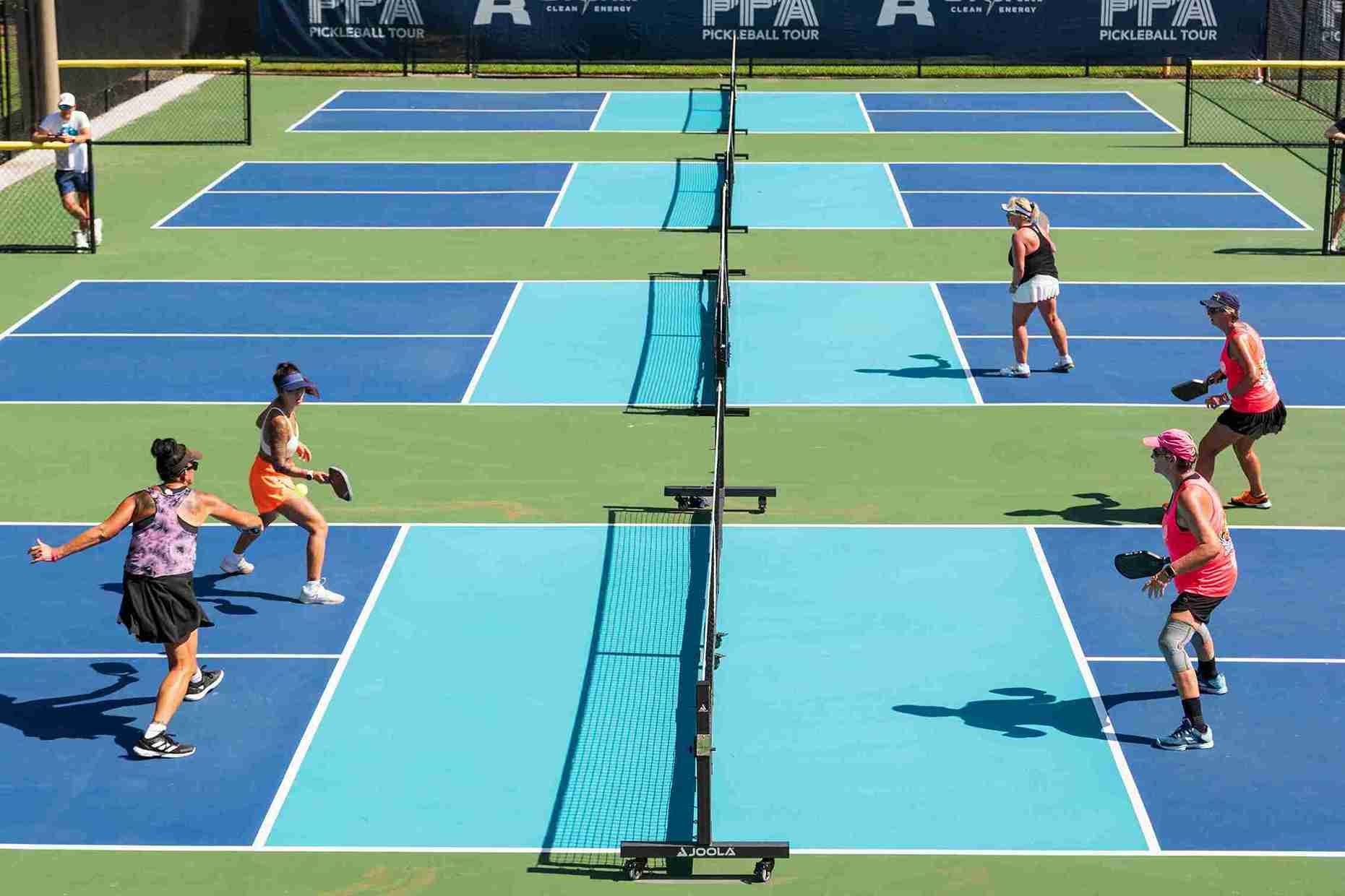
What Else Should You Be Doing on the Court?
While you are rehabbing, your technique on the court matters. Poor mechanics can keep stressing the same tissue you are trying to heal.
The biggest offender is overswinging.
If you are using too much arm on your drives and volleys, the elbow ends up doing work it should not, and this simple drill to fix your overswing can tighten things up.
Wrist position plays a role as well.
Excessive wrist lag on contact puts direct strain on the lateral elbow structures, so what wrist lag really does to your swing is worth understanding if your elbow keeps flaring up.Poor footwork forces your upper body to compensate with more arm. These three footwork drills that make the game feel slower are a good place to start.
The goal is a version of your game where your elbow is not the weakest link in the chain.
That means training it directly, supporting it with better mobility, and cleaning up the mechanics that keep overloading it.
Pickleball elbow is beatable. But it takes more than two weeks on the couch and a bag of ice.
Start loading, start moving, and give your elbow the strength it needs to handle this sport.
💡
Heads up: hundreds of thousands of pickleballers read our free newsletter.
Subscribe herefor cutting edge strategy, insider news, pro analysis, the latest product innovations and more.
Frequently Asked Questions
What is pickleball elbow and how is it different from tennis elbow?
Pickleball elbow and tennis elbow are the same condition, called lateral epicondylitis, which affects the tendons on the outer side of the elbow. Both are caused by repetitive arm movements over time rather than a single injury. The term pickleball elbow simply reflects how commonly it shows up in pickleball players specifically.
Should I rest completely if I have pickleball elbow?
A day or two off to let acute pain settle is fine, but complete extended rest is not the solution for a chronic injury like pickleball elbow. The tissue needs progressive loading to heal and get stronger, not just time off. Taking two weeks away and returning without any rehabilitation work almost always means the pain comes right back.
What exercises help fix pickleball elbow the fastest?
Eccentric loading exercises, like slow controlled wrist curls and pushup negatives, are among the most effective for tendon rehabilitation. Combined with heavy compound movements like rows and deadlifts for grip strength, they address the root cause of the injury. Consistency with these over several weeks is what creates real change.
Can poor shoulder mobility cause elbow pain in pickleball?
Yes, limited shoulder and scapular mobility directly increases the load placed on the elbow during play. When your shoulder cannot move through its full range freely, your elbow compensates on every shot. Improving overhead mobility and scapular movement reduces that compensation and takes stress off the elbow.
How long does pickleball elbow take to heal?
With consistent strength and mobility work, most players begin to notice real improvement within four to eight weeks. Lateral epicondylitis is a chronic condition, so the timeline depends heavily on how consistently you are training the affected area rather than just avoiding pain. Players who load the joint with intention recover faster than those who only rest.
Anuncie Aqui / Advertise Here
Sua marca para o mundo Pickleball! / Your brand for the Pickleball world!




 English (US) ·
  Portuguese (BR) ·