
 English
  Spanish
  Portuguese
  German
  Italian
  Japanese
  French
  Polish
  Russian
  Netherlands
  Hungarian
  Turkish
  Videos
  Thedink Pickleball

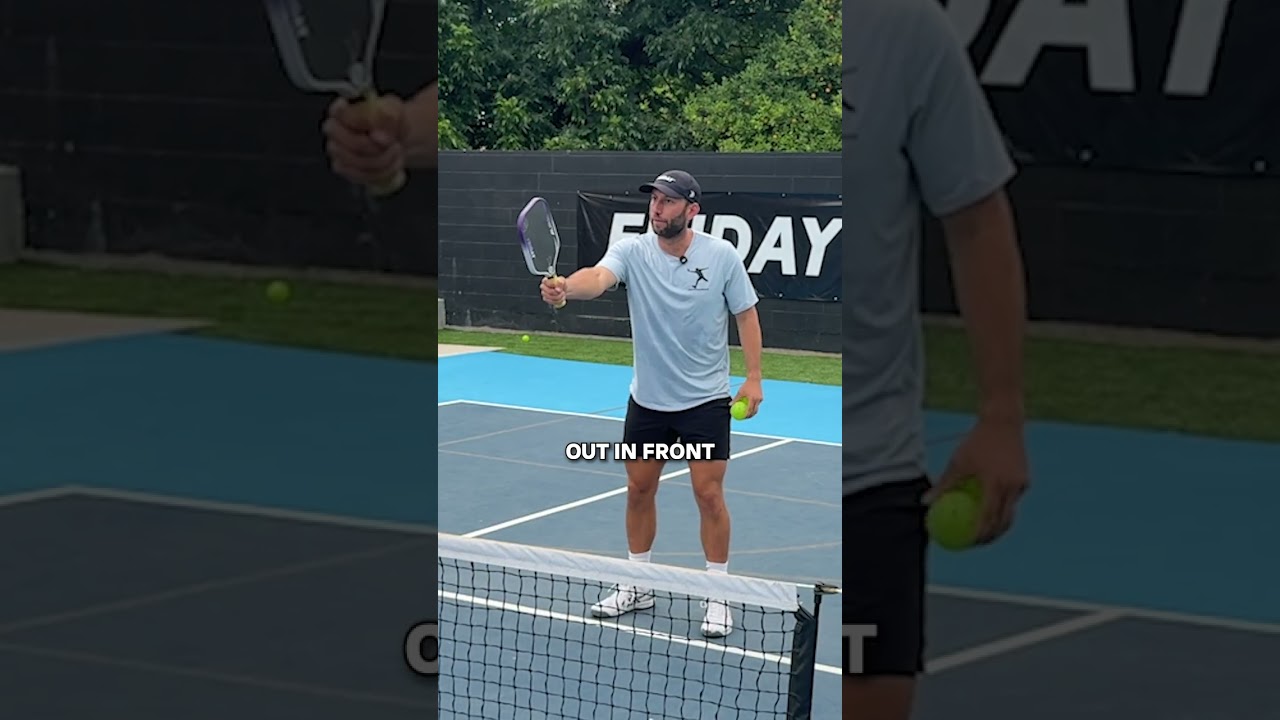
Fast hands pickleball players aren't just reacting faster. They're using compact mechanics and smart anticipation to stay ahead of every exchange. Here's exactly how to build both.
If you keep losing hands battles at the kitchen line, the problem almost certainly isn't your reaction time.
It's your mechanics. Specifically, you're probably using too much swing, reaching for the ball, or sitting in the wrong ready position between shots.
Any one of those mistakes makes everything feel faster and more chaotic than it needs to be.This breakdown comes directly from Connor Garnett on YouTube, where the world-ranked number 10 pro walks through the exact four-part system he used to develop his own explosively fast hands.
Here's what it actually takes.
Love pickleball? Then you'll love our free newsletter. We send the latest news, tips, and highlights for free each week.
The Real Reason Your Hands Feel Slow
Most players think fast hands is about speed. It isn't. It's about eliminating wasted motion so the speed you already have can actually show up.
When you snap your wrist back, reach out past your contact zone, or drop your paddle below your wrist, you're adding extra steps your body has to complete before you even start hitting.
That delay is what gets you beaten, not your athletic ability.Connor Garnett is direct about this: fast hands comes down to two things. Get the mechanics right first, then build your anticipation.
Skip the first part and the second part never works properly.
Here's how to fix both.
Key 1: Rotate With Your Palm and Knuckles, Not Your Wrist
The single biggest mechanical mistake at the kitchen line is being too wristy.
When you snap your wrist back on contact, you destroy your timing and kill the push-through power coming from your elbow.
The fix is straightforward. On the forehand volley, your palm drives toward the ball. On the backhand volley, your knuckles lead.
That's it. No wrist snap, no big arm swing, no loading up.Garnett uses a specific analogy here that works: imagine you're pushing a bowling ball sitting on a shelf. You push through it steadily. You don't swat at it.
That consistent, compact push is exactly the motion you want on every volley, whether it's a forehand or backhand.Think of it as keeping everything in a tight zone in front of your body. Volley mistakes almost always trace back to that wrist moving independently of the rest of the arm.
Eliminate that, and your contact point becomes consistent shot after shot.
💡
Need some new pickleball gear? Get 20% off select paddles, shoes, and more with code THEDINK at
Midwest Racquet SportsKey 2: Let the Ball Come Into Your Zone
Reaching for the ball is one of the most common habits players develop after getting comfortable at the net.
It feels proactive. It's actually killing your power and your consistency.When you extend too far out in front, you lose the ability to use your body for power.
You're relying entirely on your arm, which is weaker and slower than a combined body rotation.
Here's the nuance Garnett points out that most coaches skip:
- On a two-handed backhand, the contact point is slightly closer to your body, similar to a forehand.
- On a one-handed backhand, the contact point moves slightly more in front because you're using more shoulder rotation and less body twist.
- On the forehand, contact happens close to your body where you can drive through with rotation.
In every case, a small hip and shoulder twist is what generates pace.
If you feel like your volleys have no punch, the fix is almost always getting the ball into your zone rather than chasing it with your arm.This also connects directly to getting jammed at the kitchen. When you're already extended, a ball to your body becomes nearly impossible to handle.
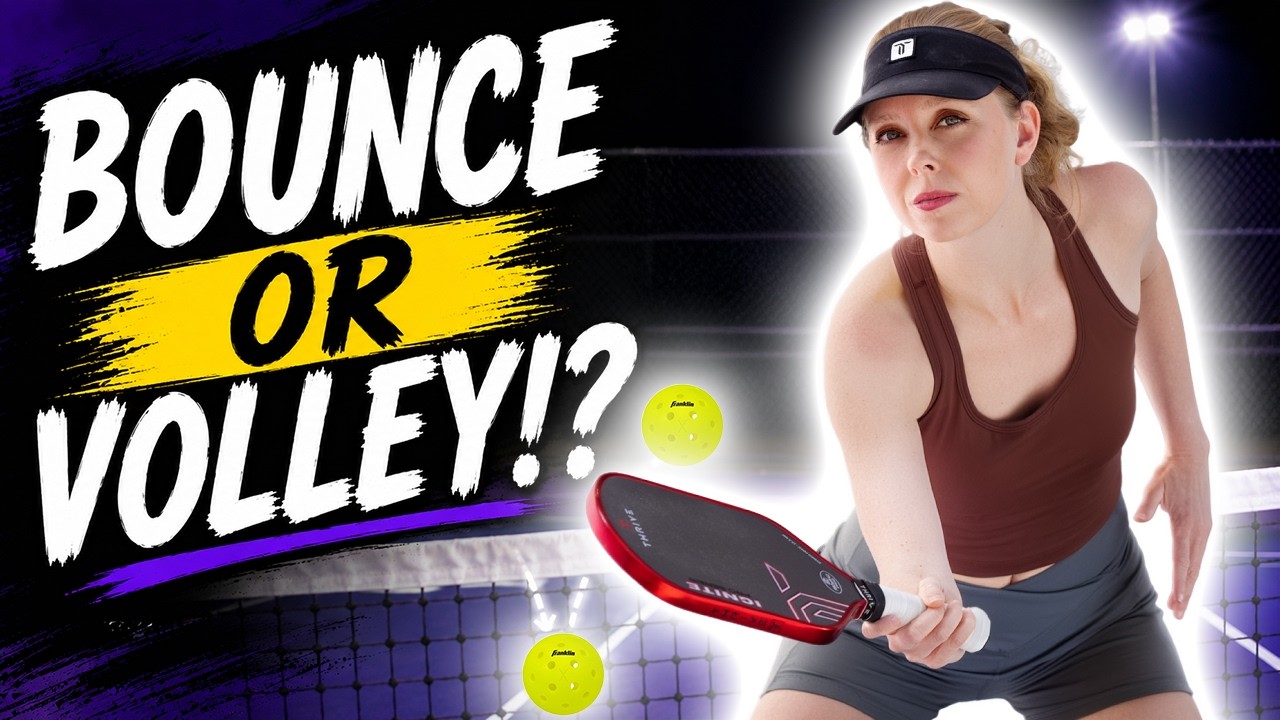
Kitchen Positioning in Pickleball: Stop Reaching for Dinks
Kitchen positioning is one of the most misunderstood fundamentals in pickleball. Cori Elliott’s latest coaching breakdown reveals why recreational players stay stuck and how to move your feet instead of reaching.
 The Dink PickleballThe Dink Media Team
Key 3: Nose Over Toes for Real Countering Power
If your fast hands feel weak, this is probably the missing piece. Body lean is where your countering power actually comes from at the kitchen line.
Garnett uses two simple phrases to cue this: "nose over toes" or "eyes over thighs." Both mean the same thing.Get a slight forward lean so your bodyweight is behind the shot instead of sitting back on your heels.
When you lean back even slightly, your volleys lose pace.When you're forward, you can push through the ball with authority and keep it from sitting up for your opponent.
This lean also helps you stay low and balanced while you're moving.
Garnett makes a key point here: you want to be moving continuously in a low base, not stopping and starting between shots.Constant, balanced movement with a forward lean keeps you ready no matter where the next ball goes.
Understanding grip pressure also matters here. A death grip on your paddle when you're leaning in will stiffen your arm and slow your response.
Keep the hand relaxed so your push-through stays fluid and controlled.
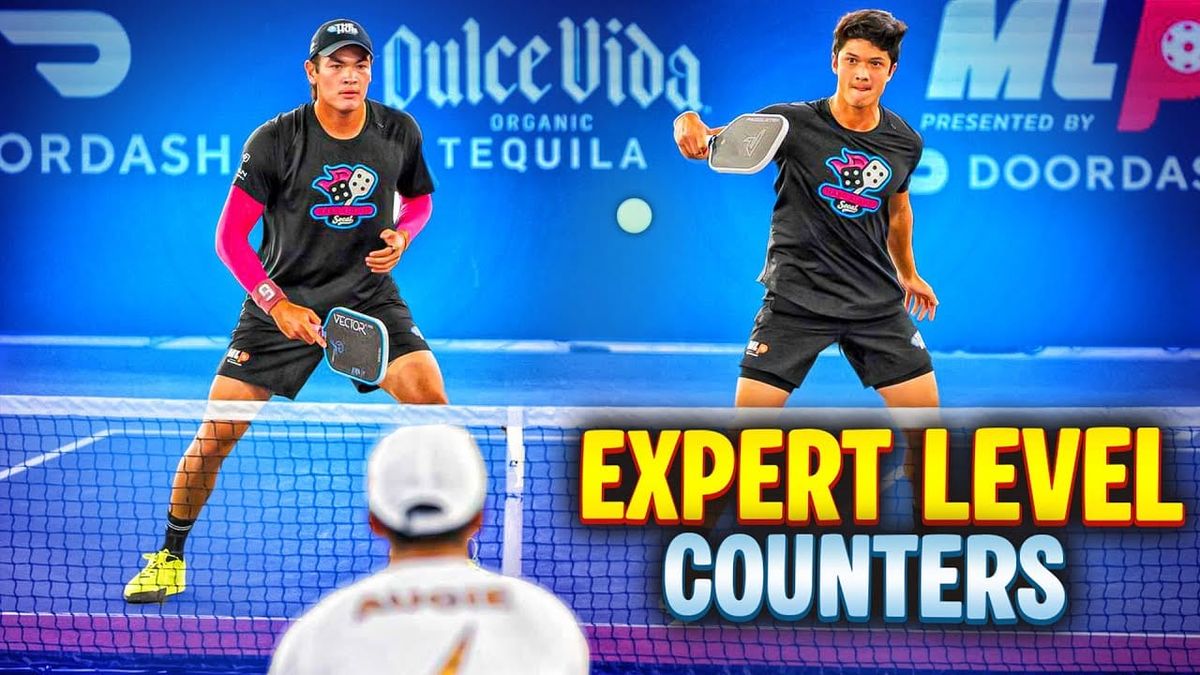
The 3-Zone Counter Technique for Winning Hands Battles at the Kitchen
Counters are point-winners. They’re aggressive shots that put your opponent on their heels. But they only work if you’re positioned correctly and thinking ahead.
 The Dink PickleballThe Dink Media Team
What Does a Good Ready Position Actually Look Like?
Your ready position is not passive.
It's one of the most active decisions you make during a hands battle, and getting it wrong is the same as giving your opponent a head start.Think of your paddle position in terms of a clock face.
Garnett sits at roughly 11 o'clock, slightly shaded toward the backhand side, so he can cover more of the court with his stronger side.
Players like Gabe Tardio sit closer to 10 o'clock because they prefer to take almost everything with a backhand.
The universal rule, regardless of where you sit, is that your paddle should always be facing the direction the ball is most likely coming from.That means your finish on each shot should put you naturally back into your ready position for the next one.
Here's what that looks like in practice:
- You hit a cross-body forehand. Your paddle naturally finishes facing the direction that ball is returning from. That's your ready position for shot two.
- You hit a ball straight ahead. You finish facing directly forward, paddle up, ready for the return in that same triangle.
- If your paddle drops below your wrist after the shot, you're setting up the classic chicken wing response on the next ball. That's the pattern that gets you jammed.
A lot of players understand finish positions conceptually but skip practicing them.
The wall practice drills that reinforce this habit are worth building into your regular routine.
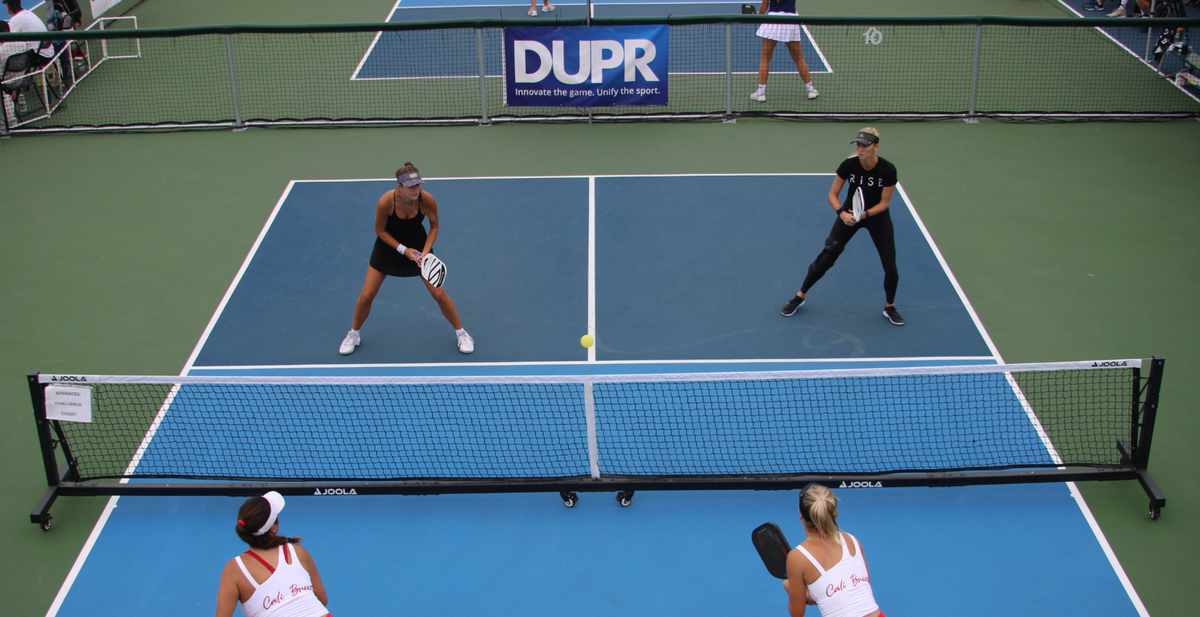
Split Step Pickleball: The Ready Position Most Players Skip
The split step in pickleball is a small hop that puts your body in the perfect ready position just before your opponent strikes the ball. Most recreational players skip it entirely, and that single habit is costing them more points than any other technique gap.
 The Dink PickleballThe Dink Media Team
How Does Anticipation Actually Work?
Anticipation is not guessing. That's the most important thing to understand here, and it's where most players get this completely wrong.
Real anticipation happens in the prep work between shots, not during the shot itself.You position your paddle in the most likely spot for the next ball before it's hit.
Then once the ball actually leaves your opponent's paddle, you stop anticipating and start reacting.
The practical reality is that balls follow momentum.
If you hit the ball straight ahead, it's probably coming back in a triangle directly in front of you. If you hit cross-court, the return angle is predictable.
Use that information to set your ready position, then clear your mind and react to what you actually see.
The reaction time drills that actually move the needle all share a common structure: force your brain to wait for real information instead of committing early.
Garnett demonstrates this with a two-ball toss drill where his partner holds two balls and only releases one, forcing the receiver to stay patient and read rather than guess.
The players who look impossibly fast at the kitchen line are almost never moving faster than everyone else.They're moving less, later, and more accurately because their prep work was already done.
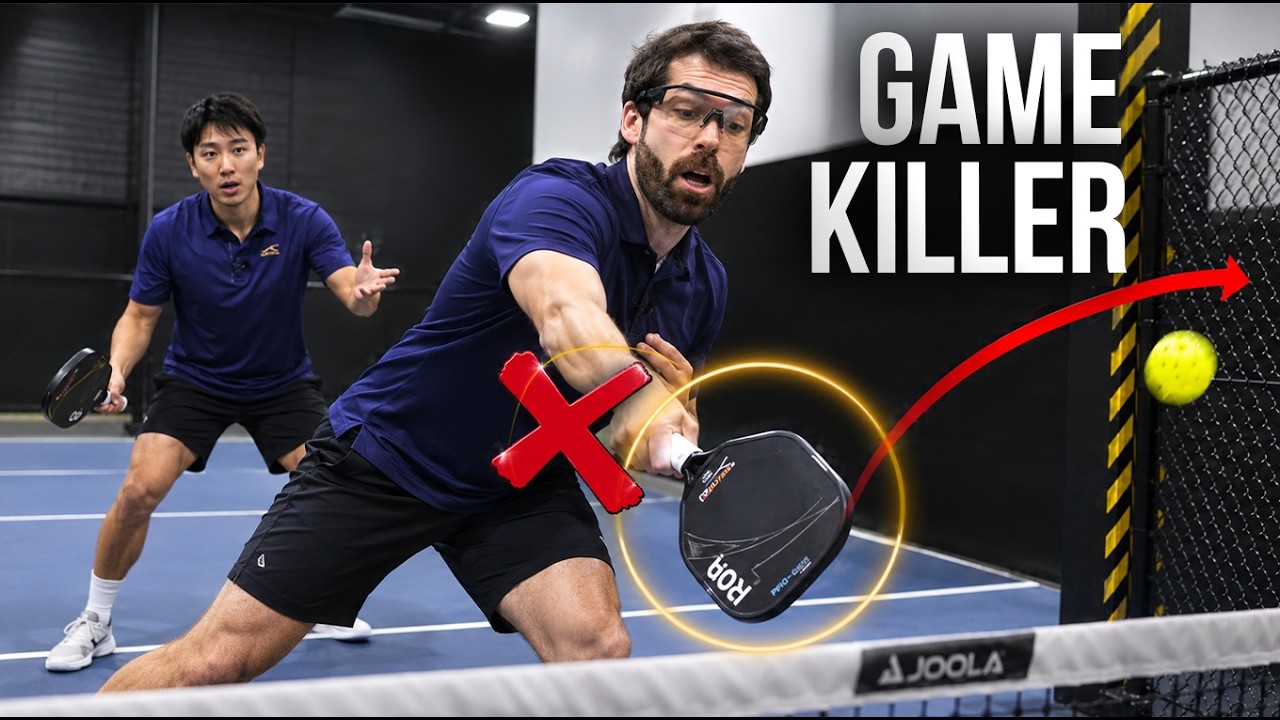
Anticipation in Pickleball: 3 Steps to Stop Reacting Late
Anticipation in pickleball is the skill that separates players who always look rushed from players who always look ready. Here are the three steps coaches use to build it.
 The Dink PickleballThe Dink Media Team
The Drill That Kills the Panic Response
Garnett calls this the "panic remover," and it's the most direct way to rewire bad anticipation habits.
Here's how it works: your partner holds two balls, goes through the same tossing motion, but only releases one.Your job is to wait until you see which ball is actually moving before you commit your paddle.
Players who guess will be caught moving in the wrong direction regularly.Players who wait will feel how much time they actually have.
The progressive drilling approach is what separates players who understand these concepts from players who actually use them in a match.
Run this drill until waiting feels natural, then take it into live play.Pair this with controlled volley-to-volley exchanges where you and a partner deliberately keep the pace at chest level. The goal isn't to hit hard.
It's to build a shared tempo that trains your body to stay compact and balanced instead of ramping up the panic with every exchange.
For more on keeping your hands disciplined under pressure, the breakdown on blocking hard shots gives you a complementary framework for when your opponent is the one trying to speed things up.
And if your wrist is still creating lag even after working on your mechanics, there's a specific fix worth checking out that addresses exactly how that habit forms and how to break it.
The full system works because it removes the two biggest sources of slowness from your game: unnecessary swing and reactive guessing.Fix those two things and your hands won't just feel faster. They'll actually be faster, because nothing is getting in the way anymore.
For an even closer look at how Connor Garnett applies these principles on the backhand side specifically, the two-handed backhand breakdown goes deeper into his technique.
And if you want to see how this kind of kitchen line control connects to shot selection under pressure, the 1 to 10 shot selection scale gives you a decision-making framework that makes every fast hands situation easier to manage.
💡
Heads up: hundreds of thousands of pickleballers read our free newsletter.
Subscribe herefor cutting edge strategy, insider news, pro analysis, the latest product innovations and more.
Frequently Asked Questions
What actually makes pickleball hands fast at the kitchen line?
Fast hands in pickleball come from compact mechanics, not raw speed. Keeping your swing small, letting the ball travel into your contact zone, and maintaining a forward-facing ready position all reduce the time between seeing the ball and hitting it back. Eliminating wrist snap and big arm swings is the single fastest way to improve.
How do I stop guessing during a fast hands exchange?
Stop trying to anticipate the shot itself and focus on your prep work between shots instead. Set your paddle to face the most likely incoming direction, then wait until you see the ball leave your opponent's paddle before you commit. The two-ball toss drill Garnett recommends trains this patience directly.
Where should my paddle be between volleys?
Your paddle should be facing the direction that ball is most likely returning from, based on where you just hit it. Think of it as a clock: most players sit around 11 o'clock, slightly favoring the backhand side. Finishing each shot in a way that returns you naturally to that position is the key habit to build.
Why do my volleys feel weak even during fast exchanges?
You're probably reaching for the ball instead of letting it come into your zone, or you're leaning back on contact. A slight forward lean, what Garnett calls "nose over toes," puts your body weight behind every volley. Power in fast hands exchanges comes from body position, not arm speed.
Is a one-handed backhand volley or two-handed backhand volley better for fast hands?
Both work, but the contact point differs slightly. A two-handed backhand makes contact closer to the body, similar to a forehand. A one-handed backhand contacts the ball slightly more in front because it relies more on shoulder rotation.
Neither is universally better, but your ready position and swing compactness matter more than which grip you choose.
Anuncie Aqui / Advertise Here
Sua marca para o mundo Pickleball! / Your brand for the Pickleball world!



 English (US) ·
  Portuguese (BR) ·