
 English
  Spanish
  Portuguese
  German
  Italian
  Japanese
  French
  Polish
  Russian
  Netherlands
  Hungarian
  Turkish
  Videos
  Thedink Pickleball

Most pickleball players repeat the same four mistakes every single match without knowing it. Fix these pickleball problems and your game will improve faster than any new shot ever could.
Most pickleball players have the same four problems.
They show up at every skill level, they repeat every single game, and they quietly cost you points you should be winning.
These are not obscure flaws. They are the biggest gaps between how amateurs play and how pros play, and every single one of them is fixable with the right focus.This breakdown comes from Cracked Pickleball on YouTube, who laid out all four in detail with actionable fixes you can take straight to the court.
Love pickleball? Then you'll love our free newsletter. We send the latest news, tips, and highlights for free each week.
Problem 1: Your Strokes Are Too Big
Mute a pro match, watch two shots, and you'll know the player's skill level immediately. That's not an exaggeration.
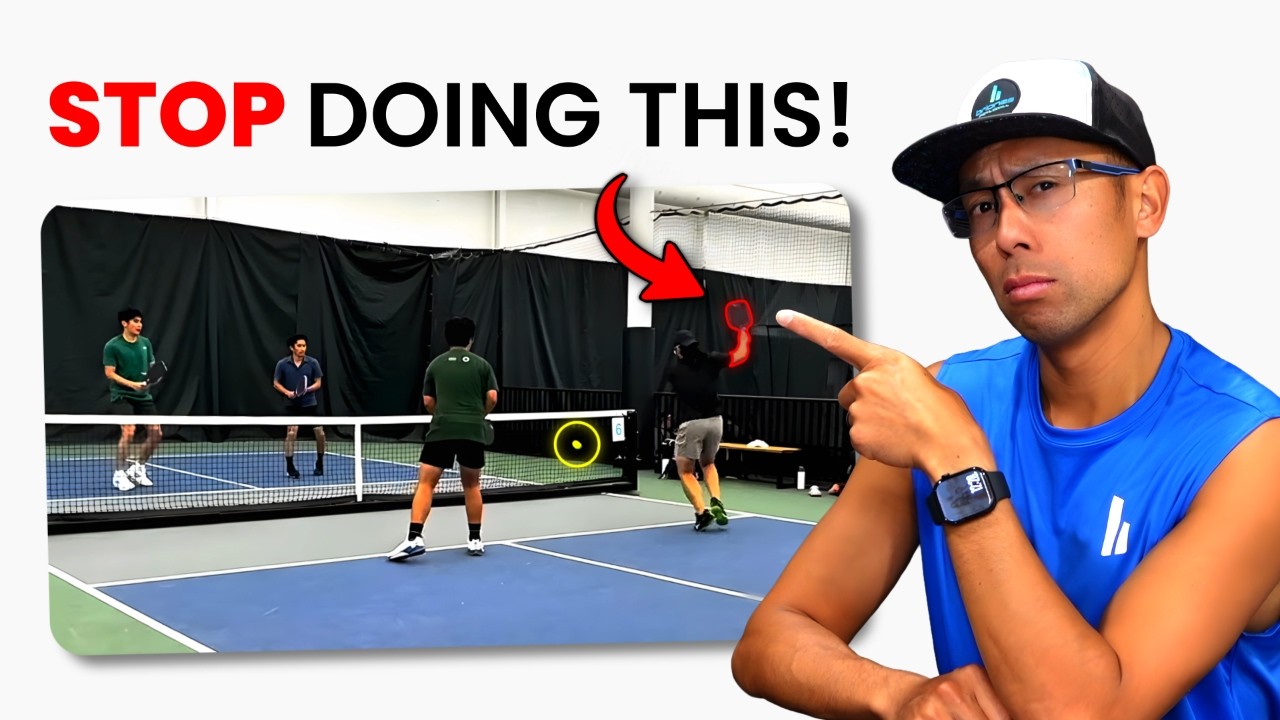
Pro strokes are compact, efficient, and deliberate, while amateur strokes are full of big backswings, loopy follow-throughs, and wrist movement that creates inconsistency.
Every extra inch your paddle travels is another opportunity for something to break down.
Think about a mid-court reset.
An amateur stands tall, brings the paddle way behind the body, swings through with a big follow-through, and uses the wrist to compensate.
A pro stays low, keeps the paddle in front, and barely moves it. Those tiny movements do two things.
Your contact becomes far more reliable because the paddle isn't traveling a long distance to reach the ball, and you give yourself more time to decide which shot to hit.
The fix is simple: find the shortest possible path from your starting paddle position to contact.Stop taking the paddle back to your body and then swinging forward. Just keep it out in front and move directly to the ball.
If it feels too simple, you are probably doing it right.
At the kitchen line, this matters even more. Three things happen when your swing is compact at the net:
- Faster recovery: a short swing gets you back to ready position before the next ball arrives
- Better disguise: your opponent cannot tell whether you are dinking soft or attacking hard
- More control: the paddle stays in front where you can direct the ball intentionally
A simple checkpoint: your paddle should never cross behind your hips when you are at the kitchen line. If it does, you are doing too much.
If you want to see how this connects to driving specifically, read about generating power from the right part of your body.
What About Power on Groundstrokes?
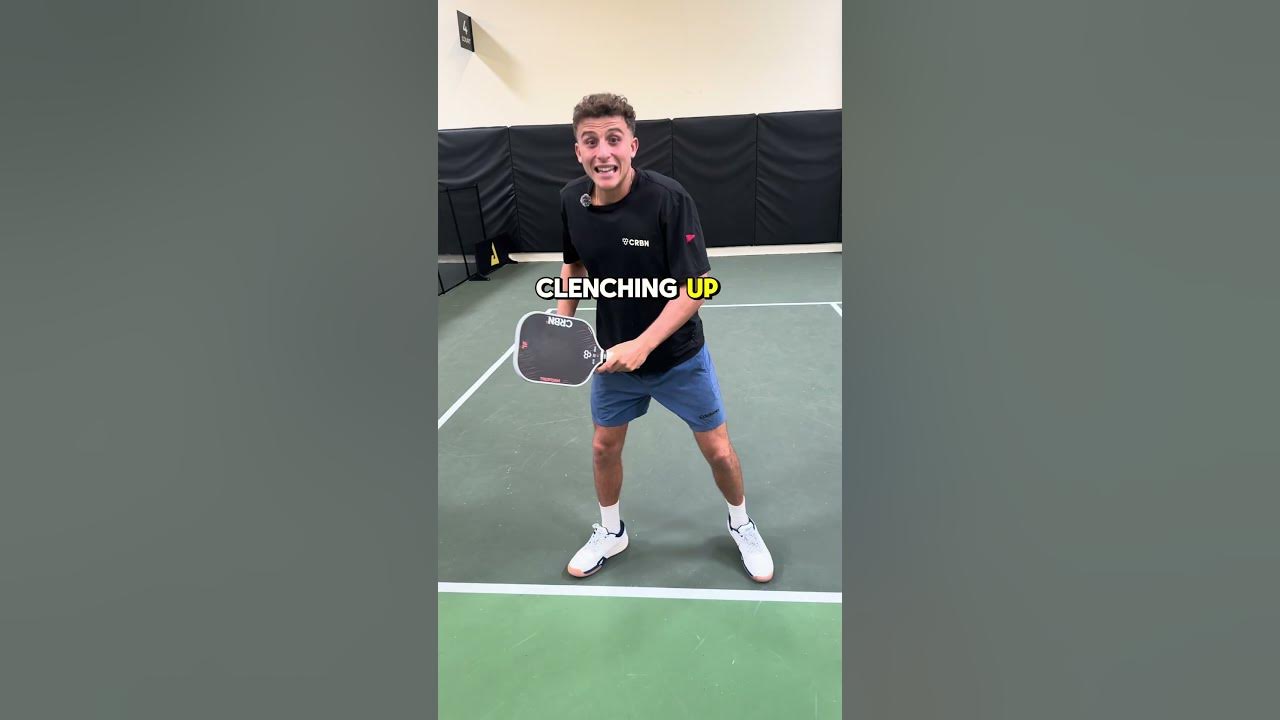
When you are hitting drives from the back of the court, power should come from your lower body, not your arm.
Most amateurs generate their drive power from the upper half of their body.
Pros press through their back foot first, then rotate their hips, and let the paddle follow that chain of movement.
Before you even engage your paddle on a drive, feel your back foot pressing into the ground.That press is the start of the power chain. Without it, you are just swinging your arm and leaving real pace on the table.
💡
Need some new pickleball gear? Get 20% off select paddles, shoes, and more with code THEDINK at
Midwest Racquet SportsLook at the wear pattern on a pro's paddle versus an amateur's.
- On a pro's paddle, contact is clustered around the sweet spot almost every time.
- On an amateur's paddle, marks are scattered all over the face and edges.
That random contact is why the same shot produces five different results on five different hits. You are not doing anything differently.
Your contact point is just moving around on the paddle face.The fix is a specific focus cue: try to see the holes in the ball as it comes toward you. Not just "watch the ball."
Actually try to pick out the individual holes.
That level of visual focus slows the ball down in your perception and keeps your eyes locked through contact instead of glancing up early at where you want the ball to go.
Two ways to drill this right now:
- Hit against a wall and focus only on making contact in the dead center of your paddle every rep. No power, no spin. Just centered contact.
- Grab a partner and dink back and forth with the same goal. Keep the swing small and try to hit the sweet spot every time.
These drills are boring. They also work.
Check out these wall drills you can do without a partner to build the habit fast, or run the 12 drills we'd build a whole season around.
3 Pickleball Consistency Tips to Level Up Your Game
Want to become a more consistent pickleball player? A top pro just broke down the 3 pickleball consistency tips that separate amateurs from advanced players. Here’s what you need to know.
 The Dink PickleballThe Dink Media Team
Footwork is the most underrated part of pickleball.
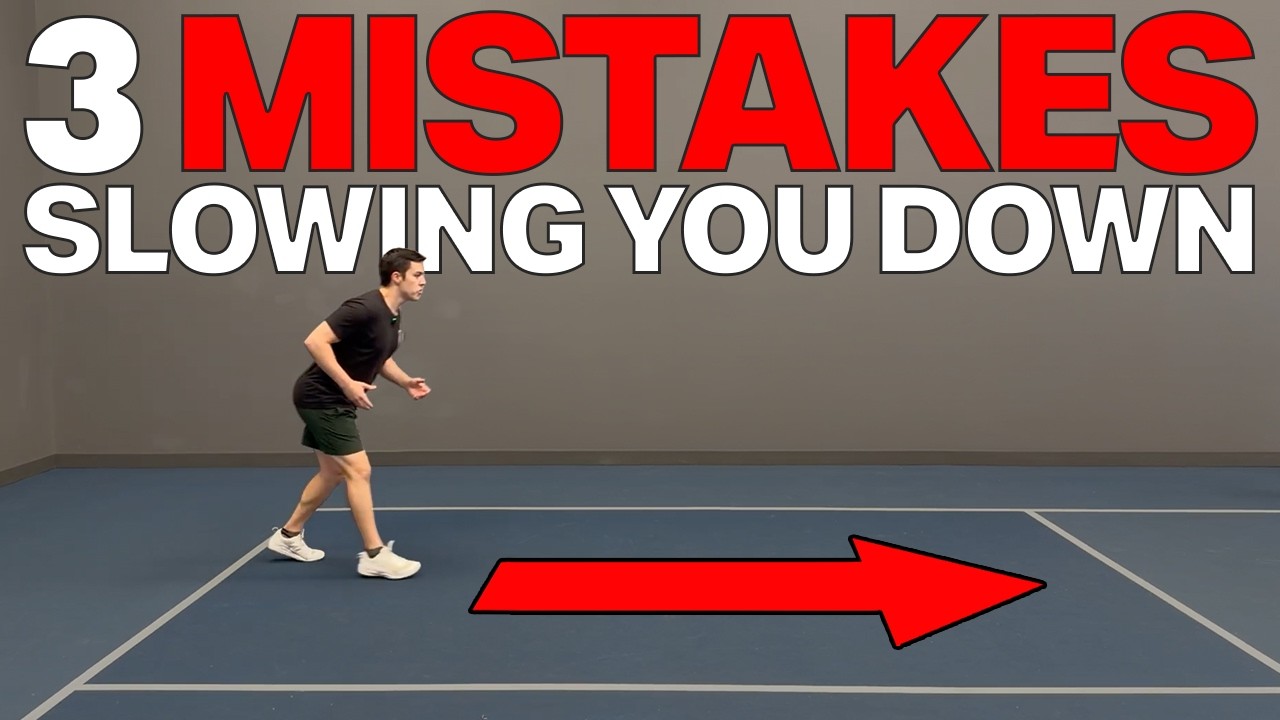
Players skip it because it is exhausting, it is not flashy, and you are not literally hitting the ball when you work on it.But bad footwork is the root cause of bad contact, late shots, and poor decision-making.
When your feet are right before you hit, everything after the swing becomes easier. When your feet are wrong, you are fighting your own body through every shot.Here are the five components of pro-level footwork:
- Balance: feet shoulder-width apart, weight on your toes, slight bend in the knees. Your heels should be liftable at any moment. Pros are never flat-footed.
- Split step: the moment your opponent makes contact, you execute a small hop that lands you in that balanced, ready position. This happens every single time they hit the ball.
- Shuffle: for short lateral movement, shuffle rather than turn and run. It is faster from a balanced position and keeps you stable through contact and into recovery.
- Lunge to reach: when a ball is almost beyond your reach, get low, lunge with your outside foot, stabilize on that quad and knee, make contact, then shift your weight back and re-enter the shuffle. It is a controlled desperation move.
- Pivot and reach: for balls moving past your body, turn your chest toward the ball, bring your opposite foot out, stay low, and reach. Then snap immediately back to ready position.
The pivot and reach should be a backup, not a habit. Good footwork earlier means you rarely need it.
Worth noting for anyone drilling this: USA Pickleball's official rulebook governs every foot placement around the non-volley zone, and the 2026 edition changed language players still get called on.Your shoes matter here more than most players admit.
A dead outsole kills the split step, which is why we bother ranking the best men's pickleball shoes every year.
If you want to improve your pickleball footwork and build it into muscle memory, this footwork drill fixes lateral movement fast.
3 Pickleball Footwork Mistakes That Are Losing You Points
Most players lose points to their feet, not their paddle. Coach Ty Woody shares the pickleball footwork fixes that cover the court in two to three steps.
 The Dink PickleballThe Dink Media Team
Problem 4: You Are Not Making Decisions Like a Pro
Decision-making does not show up in warm-ups.
You can be technically equal to your opponent and still lose 11 to 4 if they are making smarter choices on every point.Pros think about three things that most amateurs completely ignore.
Are You Actually Using the Serve as a Weapon?
Most amateurs just try to get the serve in. Pros aim at specific targets every time.
The most common and most effective target is the backhand, because most players are significantly weaker there than on the forehand.
Other useful serve targets include the body, which forces your opponent to make an uncomfortable decision about whether to take it forehand or backhand.Serving hard matters less than you think if you have no target in mind.
Picking up on opponent weaknesses works the same way.
Watch how someone grips their paddle. Watch their body language when a ball comes to their backhand.Watch whether they flinch when you speed up to their right shoulder. Find the weakness and target it relentlessly.
If you want to sharpen your serve targeting specifically, these three return placement spots show how the same logic applies from both sides of the net.
On third shots, pros are not just hoping something good happens.
They hit with intention, whether driving or dropping, to set up an easier ball on the next exchange.
A drive goes to the spot where the opponent has shown weakness, not just down the line hoping for a clean winner.A drop goes to the quieter opponent, the one less likely to attack aggressively, so you can work your way forward safely.
Read more on fixing your third and fourth shots to put this into practice.
How to Aim Your Pickleball Serve Without Changing Your Swing
Your pickleball serve is the only shot where your opponent has zero influence over the outcome. Here is how to stop wasting it and start winning points from the very first ball.
 The Dink PickleballThe Dink Media Team
Stealing the Patterns Pros Use Every Match
The fourth separator is pattern recognition. Pros have seen thousands of rallies and know what shot is coming before it gets there.
You can steal a few of those patterns right now.
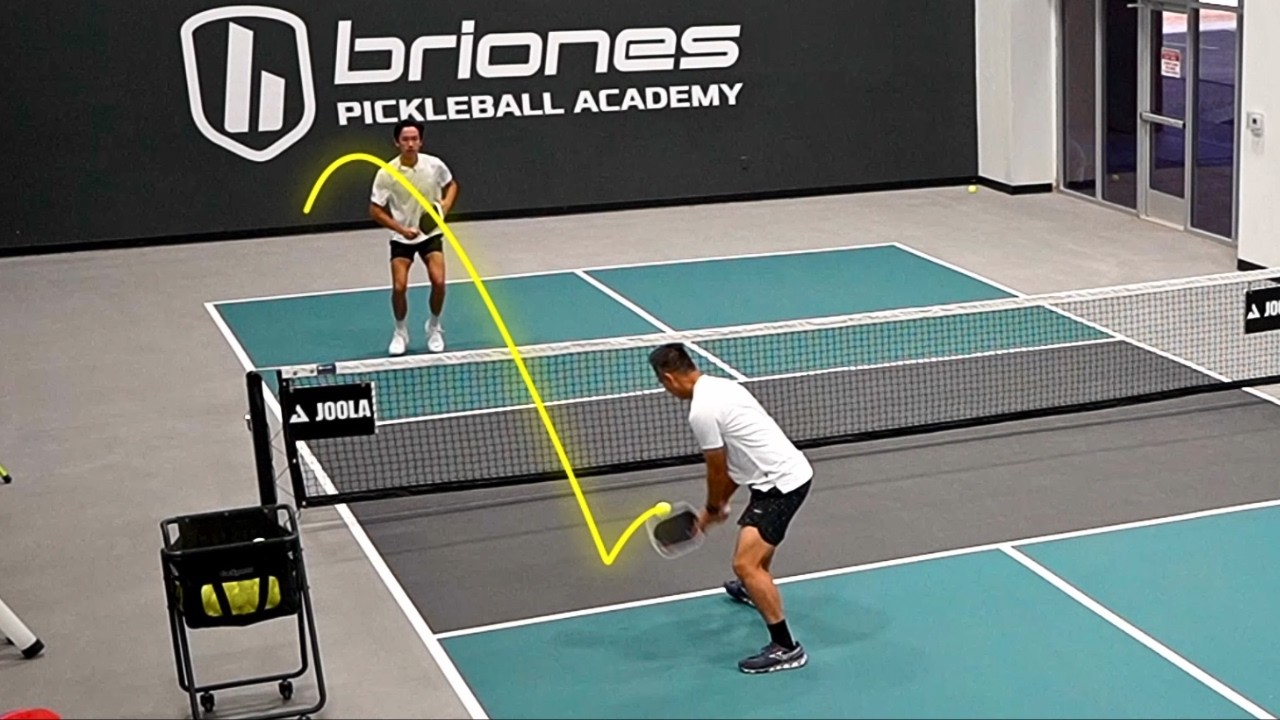
The front-back dink method is the simplest setup at the kitchen. Hit a shorter dink that lands in the back third of your opponent's kitchen to bring them in slightly.Then push a deep dink directly at their feet, forcing them to back up.
When players hit while moving backward, the paddle naturally rises. That means pop-ups. Bring them in, push them back, collect the pop-up.
The Erne bait works by being intentionally repetitive. Keep dinking to the same opponent down the line until they build a rhythm and get comfortable.
Then, when their hips start turning into that pattern, step outside the kitchen or jump it completely and put the ball away early.If you want to master this specific play, here is Jack Sock's guide to hitting the Erne.
On speed-ups, the best target is the backhand shoulder. It's the most awkward position to defend because the natural motion from there pops the ball up.
Tyson McGuffin calls it the one-two punch.
Finally, learn to read returns before they happen.
Forehand groundstrokes naturally push cross-court, and backhand groundstrokes naturally push down the line.
Once you know that, you can move to your third shot position before the ball even reaches your opponent. That's how pros prep so early.
They aren't reacting. They're predicting.
Key Takeaways
Every pickleball problem on this list repeats at every skill level, and none of them require a new paddle or a new shot.
- Shorten your strokes. Paddle in front, never behind the hips at the kitchen line.
- Center your contact. See the holes in the ball, drill for the sweet spot.
- Fix your feet first. The split step is non-negotiable on every opponent contact.
- Decide with intention. Target the backhand, run patterns, predict the return.
Compact strokes, centered contact, intentional footwork, and smarter decisions aren't advanced concepts.
They're the foundation. Fix them one at a time and the results show up faster than you expect.
That's also why participation data keeps climbing while average skill lags behind it: the sport is adding millions of players a year, according to the SFIA Topline Participation Report, and most of them never address a single one of these four gaps.If you want a faster path through all of it, this 4-step system and these three mistakes most players never stop making are worth your time.
Frequently Asked Questions
Why does my pickleball contact feel inconsistent even when I think I'm watching the ball?
Watching the ball is not specific enough as a focus cue. Try to actually see the holes in the ball as it approaches you. That level of detail keeps your eyes locked through contact instead of drifting to your target before you hit.
What is a split step in pickleball and when should I do it?
A split step is a small hop you take the moment your opponent makes contact with the ball. It lands you in a balanced, low, ready position so you can move immediately in any direction. You should be doing this every single time your opponent hits, not occasionally.
Should I always target my opponent's backhand?
It is the most common weakness at recreational levels, so it is the right place to start. If they handle it well, move on to high balls at the right shoulder or lobs. Find what makes them uncomfortable and go back to it whenever you need a point.
How do I know if my strokes are too big?
Use the hip plane as your checkpoint. At the kitchen line, if your paddle is crossing behind your hips on any swing, the stroke is too big. In the mid-court, if you are pulling the paddle back behind your body before moving forward to the ball, that is also too much.
What is the front-back dink method?
It is a dinking pattern where you hit a shorter dink to bring your opponent slightly into the kitchen, then follow it with a deep dink at their feet to force them backward. Players moving backward tend to pop the ball up, giving you an attackable ball.
Anuncie Aqui / Advertise Here
Sua marca para o mundo Pickleball! / Your brand for the Pickleball world!




 English (US) ·
  Portuguese (BR) ·