
 English
  Spanish
  Portuguese
  German
  Italian
  Japanese
  French
  Polish
  Russian
  Netherlands
  Hungarian
  Turkish
  Videos
  Thedink Pickleball

Most players treat the kitchen line like a rule. The modern kitchen line, sitting about 3 feet back, gives you better weight transfer, cleaner fourths, and makes you far harder to attack.
If you are treating the kitchen line pickleball players talk about as the exact spot you must stand, you are already at a disadvantage.
The line painted on the court is not a position. It is a boundary, and too many rec players glue themselves to it like it is the only safe place on the court.These four benefits come from Jilly B Pickleball on YouTube, where she breaks down what she calls the "modern kitchen line," a position roughly 3 feet behind the non-volley zone line that changes the way you play every single shot.
Here is what you need to know.
Love pickleball? Then you'll love our free newsletter. We send the latest news, tips, and highlights for free each week.
What Is the Modern Kitchen Line?
The modern pickleball kitchen line is not an official court marking.
It is a positional concept: standing roughly 3 feet behind the non-volley zone line instead of pressing your toes up against it.Think of it as a home base that gives your body room to move forward.
The best players in the world use this positioning instinctively, and it connects directly to using the kitchen line as a target, not a rule.It also sits at the center of the four key strategies winning modern pickleball in 2026.
Benefit 1: Your Bounce Speed Up Actually Works
Here is the core problem with hitting a bounce speed up from the pickleball kitchen line: your weight has nowhere to go.
When you are pressed against the line and try to generate force, your body is already at the wall.
No forward motion, no weight transfer, and the ball comes out flat and weak.
Move back 3 feet and you have space to step into the ball with your full body behind it. Jilly B is direct about it: every shot on the court should be hit with your weight moving forward.To make that happen, you sometimes have to start back. That is not a mistake. That is the setup.
If you want the mechanics, how to hit a forehand speed up in pickleball comes down to the weight transfer piece most players skip entirely.
The Pickleball Kitchen Line Dink Test
The practical cue is simple. Hit your dink, then ask yourself one question: did I like that dink, and is my opponent in trouble?
- Yes: move forward and attack.
- No: step back to the modern pickleball kitchen line and reset your weight.
That dance on and off the line is not random.
It is reactive positioning based on shot quality, and it belongs in the same bucket as the shots you need to master before 2026.
💡
Need some new pickleball gear? Get 20% off select paddles, shoes, and more with code THEDINK at
Midwest Racquet SportsBenefit 2: You Become a Much Less Tempting Attack Target
Glued to the pickleball kitchen line, you are an easy speed up target.
Your reaction window is smaller, your counter options are limited, and you have no room to generate a clean response.
Watch any top player who senses an attack coming. They take a step back, and it is deliberate.That space buys reaction time and gives them room to load forward into the counter instead of stabbing at it from a frozen position.
Moving back is not enough on its own, though.
Your feet cannot get stuck. Once you absorb the attack, your weight still needs to finish moving forward through the shot.Back to get space, forward to strike. That rhythm is exactly why countering a drive in pickleball gets easier with a gap behind you.
What Changes When You Back Off the Pickleball Kitchen Line
Three things shift the moment you give yourself that cushion:
- Reaction time increases because you have a longer flight path to read.
- Counter mechanics improve because you can step into the ball.
- Your opponent sees more risk in attacking you and often picks a safer shot instead.
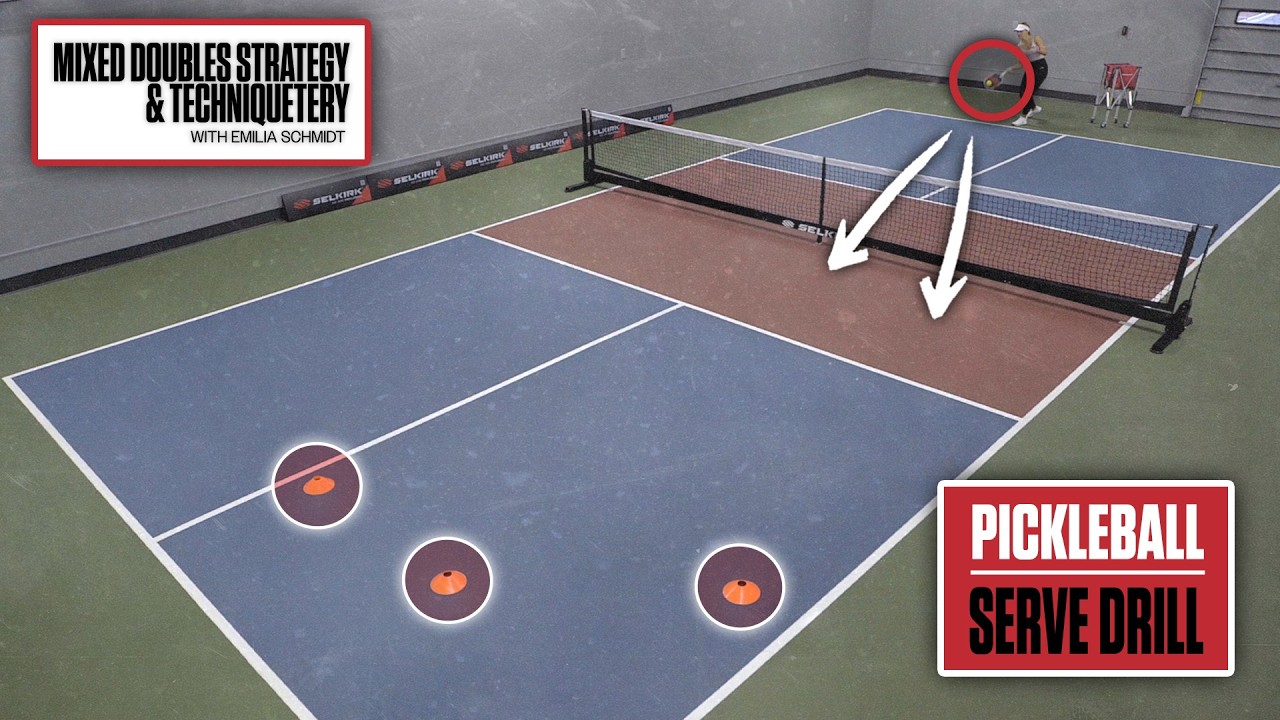
The 3-Target Pickleball Serve Drill for Consistency and Deception
Great servers look identical on every serve and still hit three different targets. This pickleball serve drill from Selkirk TV builds both habits at once.
 The Dink PickleballThe Dink Media Team
Why Are You So Easy to Lob Right Now?
Camped at the line, every lob is a problem.
You have to switch from forward pressure to backpedaling, and that transition is brutal under pressure.
Move back off the pickleball kitchen line and your overhead becomes dramatically easier.
You have time to position, you move through the ball going forward, and you can go around it for a forehand overhead instead of scrambling for a backhand.
Jilly B shows it cleanly: the same lob that causes chaos from the painted line is a comfortable put-away from 3 feet back. The difference in distance is small. The difference in outcome is huge.Your angles improve too. Pressed against the non-volley zone line, your swing arc is compressed, and a few feet back lets you swing through with full extension.
Seniors benefit most from this shift.
The lob defense fixes for seniors all point to the same truth: positioning before the lob arrives matters far more than your reaction after it does.
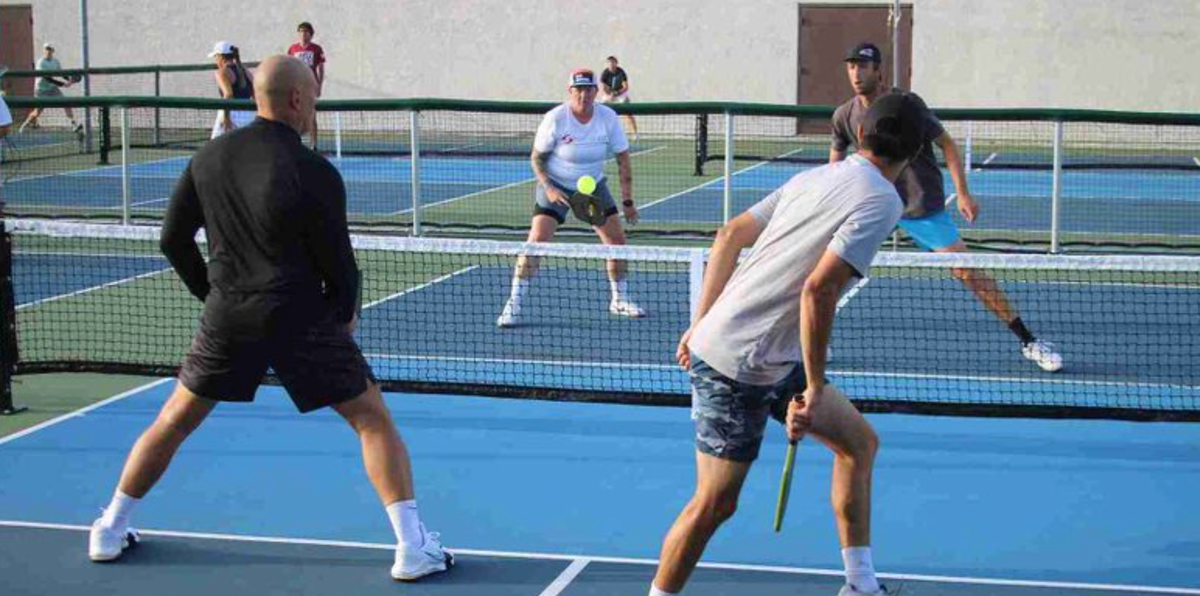
Reading a Lob in Pickleball: 4 Signs It’s Coming
Reading a lob in pickleball comes down to four tells you can spot before your opponent’s paddle ever touches the ball: an open paddle face, a taller stance, a sliding back foot, and your own compromised balance. Catch two of them and one drop-step turns a scramble into an easy overhead.
 The Dink PickleballThe Dink Media Team
Benefit 4: Your Fourths Stop Falling Apart
The fourth shot is one of the two most important shots in pickleball, and being glued to the pickleball kitchen line is destroying it for most players.
Here is what happens when a great drop lands at your feet while you stand on the line.
The ball bounces, your weight goes backward, and you are now hitting while moving away from the net.That is one of the worst mechanics you can bring to a critical shot. Your partner sees it and gets poached on immediately.
Starting from the modern kitchen line solves it. The ball still drops short, but your forward step into it is natural.
You are not fighting your own momentum. You are using it.
Most of the time, why your fourth shot keeps failing comes back to weight transfer and starting position.Jilly B offers a workaround for players without elite footwork: just cheat it.
Start back, and you make the correct weight direction the default instead of something you have to earn.
The same principle runs through fixing your thirds and fourths from the other side of the court.
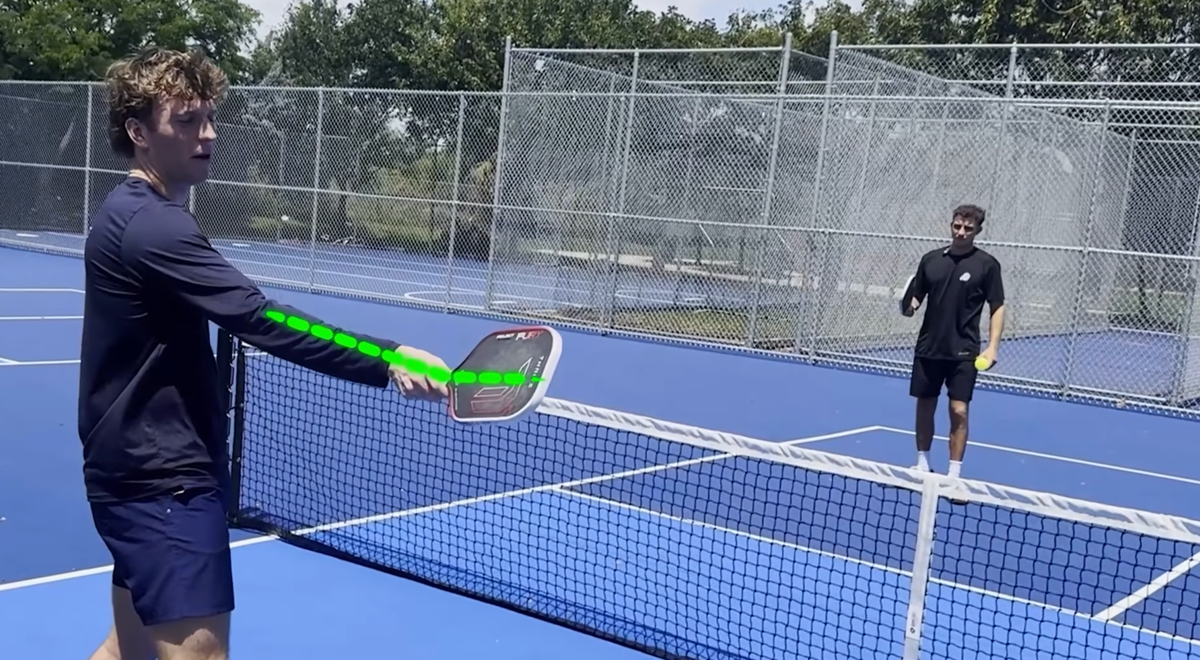
Fourth Ball Pressure: The Shot Changing Pickleball in 2026
Fourth ball pressure is the shot that separates elite players from the rest. This aggressive midcourt technique applies relentless pressure on opponents and makes it nearly impossible to establish net control.
 The Dink PickleballThe Dink Media Team
Bonus Benefit: Aerial Attacks Get Sharper Too
Playing off the line does not mean you stop attacking in the air. It means your aerial attacks improve.
With space behind you, you close on attackable balls instead of standing frozen and waiting. That closing motion adds pace and angle a static position never can.
So being off the line and taking more balls in the air are not competing ideas.
The space gives you the option to go get the ball rather than waiting for it to arrive at your feet.To build on it, the fourth shot volley sweep technique pairs perfectly with forward-closing movement, and it shows up among the 6 essential shots to master for 2026.
Worth connecting: your split step after the return of serve is probably landing near the modern kitchen line already.Very few rec players hit a return clean enough to reach the painted line before contact.
Own it consciously.
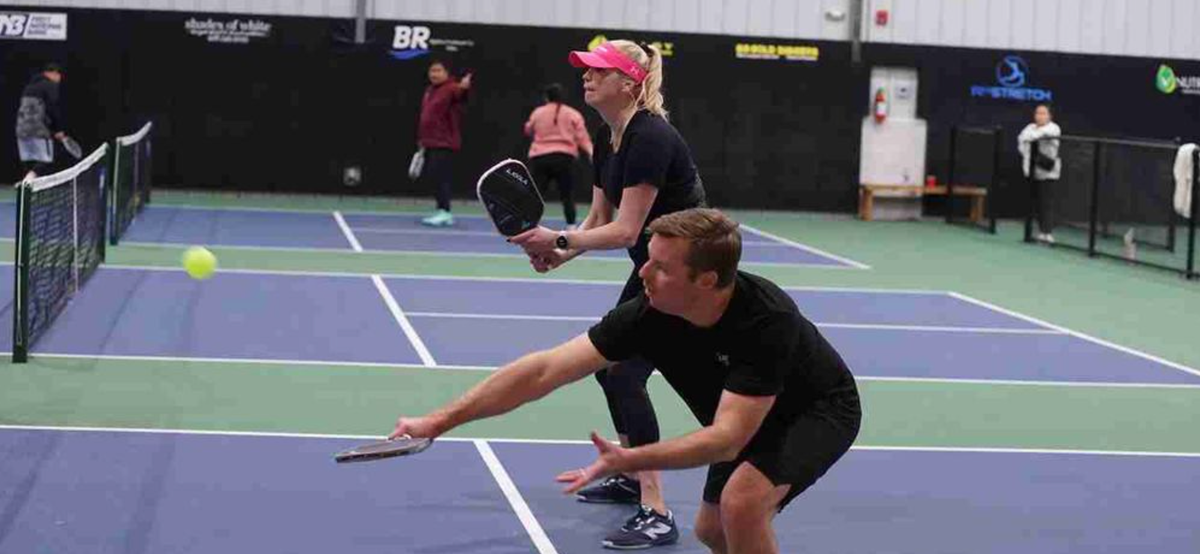
Pickleball Lessons for Beginners: Sharpen Your Game Faster
Pickleball lessons for beginners speed up the parts of the game self-taught players get wrong for years: legal serve mechanics, kitchen discipline, and shot selection. Here’s how to pick a coach and make the reps stick.
 The Dink PickleballThe Dink Media Team
How to Use the Pickleball Kitchen Line Shift in Your Game
The fastest way to feel the difference is a drilling session. Hit attacks glued to the line, then hit attacks from 3 feet back.
The difference in power and comfort is immediate.
Build it into the 12 drills you need to play your best pickleball in 2026 and it stops being a thought and starts being a habit.
Your Pickleball Kitchen Line Decision Framework
Use this every time you hit a dink:
- Good dink, opponent in trouble: move forward and look to attack or close.
- Bad dink, you might be in trouble: step back and prepare your counter.
- Cross-court exchanges: stay slightly further off the line since the ball travels farther.
- Ball directly in front of you: move forward and hunt the pop up aggressively.
Watch for your opponent's head dropping as they let a ball bounce. That is your cue to close. Their attention is on the ball, not on you.
This pairs cleanly with a simple 4-step system to win more pickleball games in 2026, and the footwork drill that fixes lateral movement matters here because the positioning only pays off if your feet can get you there in time.Still worried this conflicts with taking balls out of the air? These two ideas go together. Space behind you creates the conditions for better aerial attacks.
You are not giving up the net. You are giving yourself the room to take it on your own terms.
Understanding how to volley in pickleball gets much easier once your starting position gives your feet somewhere to go.It also helps to know how the 2026 rule updates treat the non-volley zone before you change anything about your positioning.
Stop thinking of the painted line as where you should be. Think of it as the front boundary of a zone.
The modern pickleball kitchen line is your home inside that zone, and it makes nearly every shot you hit better.
💡
Heads up: hundreds of thousands of pickleballers read our free newsletter.
Subscribe herefor cutting edge strategy, insider news, pro analysis, the latest product innovations and more.
Frequently Asked Questions
What is the modern kitchen line in pickleball?
The modern kitchen line is a positional concept where you stand approximately 3 feet behind the non-volley zone line instead of pressing directly against it. It gives your body room to move forward when you hit, which improves almost every shot you make from that area. It is not an official court marking but a strategic home base used by elite players.
Does standing back from the kitchen line make me easier to drop on?
No, and this is one of the most common misconceptions. A few feet of space does not change your ability to reach a well-placed drop, and it dramatically improves your weight transfer on every shot you hit from that area. You are also giving yourself the space to close on attackable balls in the air, which actually puts more pressure on your opponent.
How does playing off the kitchen line help my counter attacks?
When you have a small gap behind you, you absorb the attack with backward momentum and then drive forward through your counter. That forward finish is what gives the counter pace and direction. Players stuck on the line have nowhere to go and end up jabbing at the ball with no body behind it.
When should I move back to the modern kitchen line versus staying forward?
Move back any time you hit a dink you do not love or sense your opponent is about to attack. Move forward when your dink was clean and your opponent looks like they are in trouble. Reading your own shot quality is the trigger, and that decision process becomes faster the more you practice it deliberately.
Does this work for recreational players or only pros?
This is specifically designed for recreational players who do not have professional level footwork. The modern kitchen line is a way to cheat the correct weight direction without needing elite movement skills. If anything, it helps average players more than it helps pros, because pros already get there naturally through footwork.
Anuncie Aqui / Advertise Here
Sua marca para o mundo Pickleball! / Your brand for the Pickleball world!


 English (US) ·
  Portuguese (BR) ·