
 English
  Spanish
  Portuguese
  German
  Italian
  Japanese
  French
  Polish
  Russian
  Netherlands
  Hungarian
  Turkish
  Videos
  Thedink Pickleball

Most 4.0 players are practicing the wrong things. These five 4.0 pickleball drills target your real weaknesses and turn your strengths into weapons.
If you've been hovering at 4.0 for months, the problem probably isn't effort. It's that your practice isn't targeting the right things.
Most players at this level either grind on shots they're already decent at or play open games and hope improvement happens by osmosis. It doesn't work that way.These five drills come from Cam Luhring Pickleball on YouTube, where Cam, a PPA Tour competitor and 6.0 DUPR rated pro, breaks down exactly what he'd focus on if he were coaching a 4.0 player.
The goal is simple: make your weaknesses reliable and your strengths dangerous.
Love pickleball? Then you'll love our free newsletter. We send the latest news, tips, and highlights for free each week.
Drill 1: Build a Reliable Two-Handed Backhand Drive
The two-handed backhand drive is one of the most misunderstood shots at the 4.0 level. Players either avoid it or muscle it with their arms instead of their core.
There are three mechanical fixes that change everything about this shot.
- Keep your front arm straight. Bent arms collapse the swing and kill power before you even make contact.
- Swing from your core, not your arms. Your arms are just a lever. The rotation is where the real force comes from.
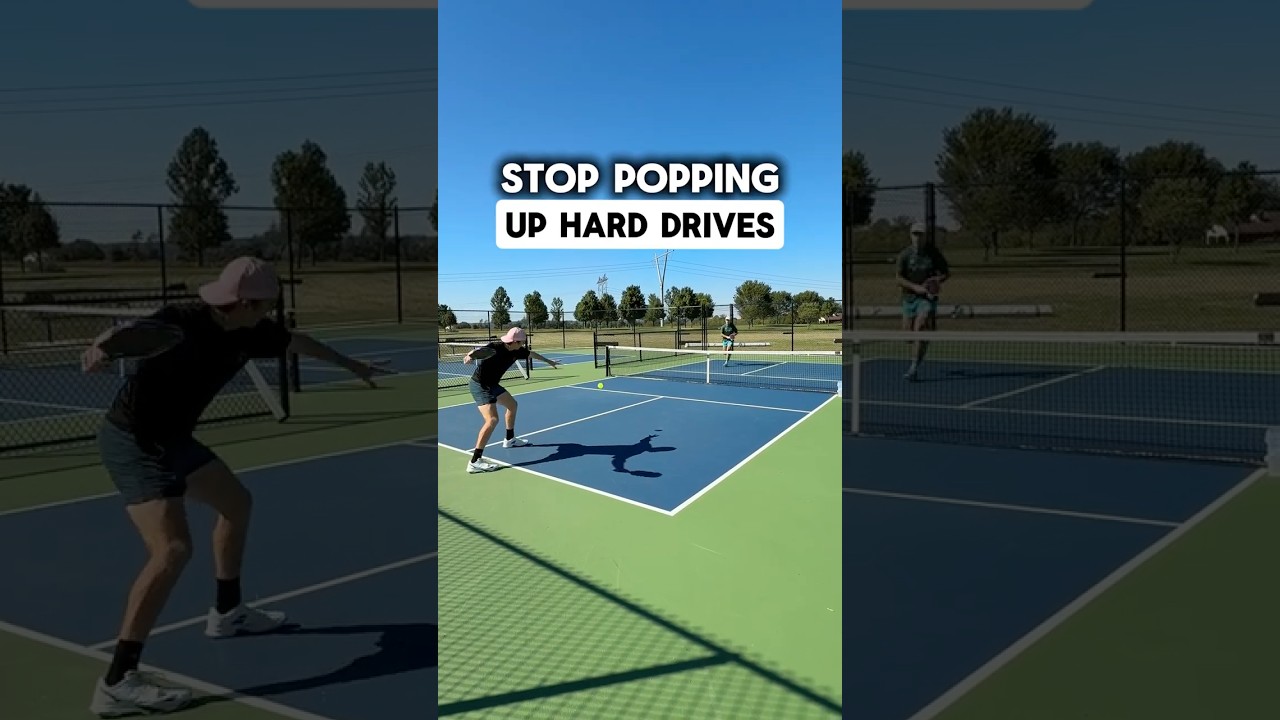
- Lean into the ball. This keeps the shot low over the net. If you're consistently missing long or high, your front shoulder is probably popping up through contact.
Extended arms are the key to getting your core involved.
If your hands are too close to your body at contact, you physically cannot generate the power this shot is capable of producing.
If the ball keeps flying on you, check your extension first. Most 4.0 players are collapsing the elbow on the front arm and don't even realize it.Want more on fixing your two-handed backhand?
There are five common mistakes worth studying before your next session, and this drive belongs in the same practice block as the 12 drills you need to sharpen the rest of your game.
Drill 2: Make Your Topspin Third Shot Drop Actually Dangerous
The third shot drop separates reactive 4.0 players from players who control points. The goal here isn't just to get the ball in the kitchen.
It's to drop with enough topspin that you're genuinely threatening the returner.
Think of the ball like a clock face. You start your swing at 6 o'clock and brush up toward 12.The brushing motion comes from your shoulder and forearm, not a wristy flick.
Self-feed a ball and go as aggressive as you can while still landing in the kitchen. That's the sweet spot you're trying to find and then repeat.
The most common mistake: grip pressure that's too tight. When you tense up, the ball sails. Cam recommends staying at a 3 or 4 out of 10 on grip pressure.A relaxed hand gives you feel, and feel is what gets the ball to land short.
If this shot is inconsistent, the third shot drop tweak that gets you to the kitchen faster is worth reading before you go drill it.
It also explains why pros have largely abandoned the slice in this spot.
💡
Need some new pickleball gear? Get 20% off select paddles, shoes, and more with code THEDINK at
Midwest Racquet SportsWhat Does a Good Reset Actually Feel Like?
A proper reset feels like the ball is almost floating back to the kitchen in slow motion. If the ball is punching off your paddle with pace, something is wrong.
Three things to lock in for your reset:
- Stay low. If the ball is at shoulder height, let it go. That ball is going out. You should only be resetting balls coming at your feet or below your knees.
- Keep a loose grip. Tight grip equals a ball that travels too far. Relaxed grip equals a ball that dies back into the kitchen.
- Drop your paddle tip down. Topspin shots jump unpredictably when they land. If your paddle face is upright, you're working with almost no surface area. Drop the tip so the face opens up and you get full contact on the sweet spot.
The paddle tip detail is one most 4.0 players have never been taught.
It's a small adjustment that makes the reset dramatically more consistent against heavy topspin attackers.For a deeper look at why resets fall apart, this breakdown of reset failures covers what's going wrong mechanically.
How to Reset When Attacked at the Kitchen in Pickleball
Knowing how to reset when attacked kitchen pickleball firefights erupt is what separates 4.0 players from 4.5s. Master these techniques and you’ll stop giving away free points under pressure.
 The Dink PickleballThe Dink Media Team
Drill 4: Speed Up Selection Is a Skill, Not Just a Decision
Raw power is not the problem most 4.0 players think it is. Speed up location is the problem.
The most common mistake is attacking from the middle of the court.
When you speed up from the middle, you have zero angle to work with. Your opponent only needs to cover the middle and their own body.There's nowhere for your attack to go.
Instead, look for balls near the sideline. A ball near the sideline opens up three real options:
- Speed it down your own sideline
- Attack through the middle of the court
- Roll it cross court to pull your opponent off the court entirely
That cross court roll is underused and underrated at the 4.0 level. If the player diagonal from you is cheating toward the middle, that angle opens wide.
The other critical mindset shift: always expect the ball to come back. Don't watch your speed up. Move immediately to cover the most likely response.Speed ups work best when they're part of a combination, not a single desperate attack.
The two-step forehand speed up guide breaks down the mechanics if you want to clean up the actual swing before worrying about placement.
Also worth studying: the stoplight rule for shot selection, which helps you decide in real time when to attack and when to hold.Placement is also where the four key strategies of modern pickleball come into play.
3 Pickleball Speed Up Patterns Every 5.0 Player Uses
Most players speed the ball up hoping to end the point right there. Here are three pickleball speed up patterns that force a predictable response so you can finish on the very next shot.
 The Dink PickleballThe Dink Media Team
Why Your Return of Serve Is Costing You More Than You Think
The return of serve is one of the highest leverage shots in pickleball, and most 4.0 players treat it as an afterthought.
The first fix is a concept Cam learned from years of Division 1 tennis: beat the bounce.By the time the ball lands on your side, you should already be set up and ready to swing. Not still moving, not still reading the ball. Set up and ready.
Beating the bounce does three things for you:
- Keeps you balanced through contact
- Helps you drive through the ball instead of poking at it
- Gives you enough time to actually reach the kitchen line after the return
If your return is landing short, you're probably getting to the ball late.
A short return gives the serving team an easy third shot and pins you in the transition zone.The second fix is accelerating through the follow-through. Cam asked Jack Sock directly how he generates so much power on his swing.
Sock's answer was acceleration at contact, not a bigger backswing. Focus less on your loop and more on how fast your paddle is moving when it meets the ball.The three most common return of serve problems are worth reviewing alongside this drill.
For the actual drill: set up cones in the back third of the court.You need to land five returns past those cones, and you're allowed to miss two. Once you hit the target consistently, move the cones back.
Add a physical punishment for missing, whether that's sprints, burpees, or push-ups. It sounds simple, but having something on the line changes how you practice.
If your returns are keeping you in the transition zone and you can't get to the kitchen, this look at transition zone mistakes explains exactly why that's happening.
Breaking through 4.0 doesn't require playing more. It requires practicing smarter.
Fix the backhand drive mechanics, develop a topspin drop that actually threatens, learn what a real reset feels like, attack from the right spots, and get your return deep enough to get to the kitchen every time.Those five things, drilled with real intention, are what separate players who stay stuck from players who move up.
For more on breaking out of 4.0 pickleball, there are six more skills worth adding to your training plan.
And if you want to understand the habit that separates a 4.0 player from the next level, that's a good read to pair with these drills.
💡
Heads up: hundreds of thousands of pickleballers read our free newsletter.
Subscribe herefor cutting edge strategy, insider news, pro analysis, the latest product innovations and more.
Frequently Asked Questions
What is the most important drill for breaking through 4.0 pickleball?
Return of serve quality is probably the highest impact area for most 4.0 players because a weak return immediately puts you in a defensive position. Landing returns deep in the back third of the court gives you time to reach the kitchen line and neutralizes the serving team's third shot advantage. Practice the cone drill with a miss penalty to build that consistency under pressure.
Why does my two-handed backhand drive keep going long or high?
The most common cause is your front shoulder popping up through contact, which opens the paddle face and sends the ball sailing. Keep your front arm extended and lean into the ball instead of pulling away from it. Swinging with your core instead of your arms also keeps the shot flatter and more controlled.
How do I keep my third shot drop from flying out of the kitchen?
Grip pressure is usually the issue. If you're squeezing the paddle at a 7 or 8 out of 10, the ball has nowhere to go but long. Drop your grip pressure to a 3 or 4 out of 10 and brush up from 6 to 12 o'clock with your shoulder and forearm.
The shot should feel relaxed, not muscled.
What does "beat the bounce" mean in pickleball?
"Beat the bounce" means you are fully positioned behind the ball before it lands on your side of the court. It is a return of serve concept where your footwork is done before the bounce, so you can swing through the ball with balance instead of scrambling to reach it. Getting there early is what allows you to drive a deep return and still have time to move to the kitchen line.
Why should I avoid speeding up from the middle of the court?
Speeding up from the middle gives your opponent almost nothing to worry about because they only need to cover the center and their body. Attacking from near the sideline opens up multiple angles including a speed up down the line, through the middle, or a cross court roll that pulls them off the court. Always attack from a position that creates a real problem for your opponent, not just pace.
Anuncie Aqui / Advertise Here
Sua marca para o mundo Pickleball! / Your brand for the Pickleball world!





 English (US) ·
  Portuguese (BR) ·