
 English
  Spanish
  Portuguese
  German
  Italian
  Japanese
  French
  Polish
  Russian
  Netherlands
  Hungarian
  Turkish
  Videos
  Thedink Pickleball

These pickleball tips for seniors focus on one thing: where you stand before the ball arrives. Better court positioning beats faster feet every single time.
Most pickleball tips for seniors start with your paddle.
This one starts with your feet, because where you stand before the ball arrives decides far more points than any grip tweak ever will.Here's the thing. Court positioning is the one part of your game that gets easier as you get smarter. Twenty-five-year-olds cover bad positioning with raw speed.
You cover it with anticipation, and anticipation wins the long rallies. That's why most strategies built for senior players start with the map, not the swing.So the best pickleball tips for seniors aren't about moving faster. They're about moving less, and moving sooner.
Love pickleball? Then you'll love our free newsletter. We send the latest news, tips, and highlights for free each week.
Why Do Pickleball Tips for Seniors Always Start With Where You Stand?
Because position shrinks the court. Stand in the right spot and a ball you'd have chased for four steps arrives at your chest.
That's the whole trade: good court positioning converts speed into geometry.Start with the piece of real estate that governs everything, because it anchors everything else in your grip, footwork and net play.
The non-volley zone (the kitchen): a 7-foot strip running from the net on each side, marked by a line. You can stand in it whenever you want.What you can't do is volley while touching it, or let your momentum carry you into it after a volley. Either one is a fault, per the 2026 USA Pickleball Official Rulebook.
That 7-foot strip is why positioning yourself at the kitchen matters more than anything else you do.
Toes an inch behind the line, paddle up, and you're playing the ball at its highest point instead of digging it off your shoelaces.
If the non-volley zone rules still make you hesitate, fix that first. Hesitation at the line is what keeps most players eight feet too deep.
The 5 Pickleball Tips for Seniors That Fix Your Court Positioning
These pickleball tips for seniors are ranked by how much they give back per unit of effort. None of them ask for the kind of court speed you had at 30.
💡
Need some new pickleball gear? Get 20% off select paddles, shoes, and more with code THEDINK at
Midwest Racquet SportsTip 1: Split Step Like You Actually Mean It
Land your split step right as your opponent strikes the ball, not after.
USA Pickleball's positioning guidance lists it alongside following the ball and staying connected to your partner, and it's the one recreational players skip constantly.Why does it work? A tiny hop resets your weight onto the balls of both feet just before you need to move. Flat feet are stuck feet.
If your ready position is costing you points, this is usually why.Pair it with cleaner footwork and you'll reach balls you've been conceding for years, without adding a single step of pace.
Tip 2: Move Like You and Your Partner Are Tied Together
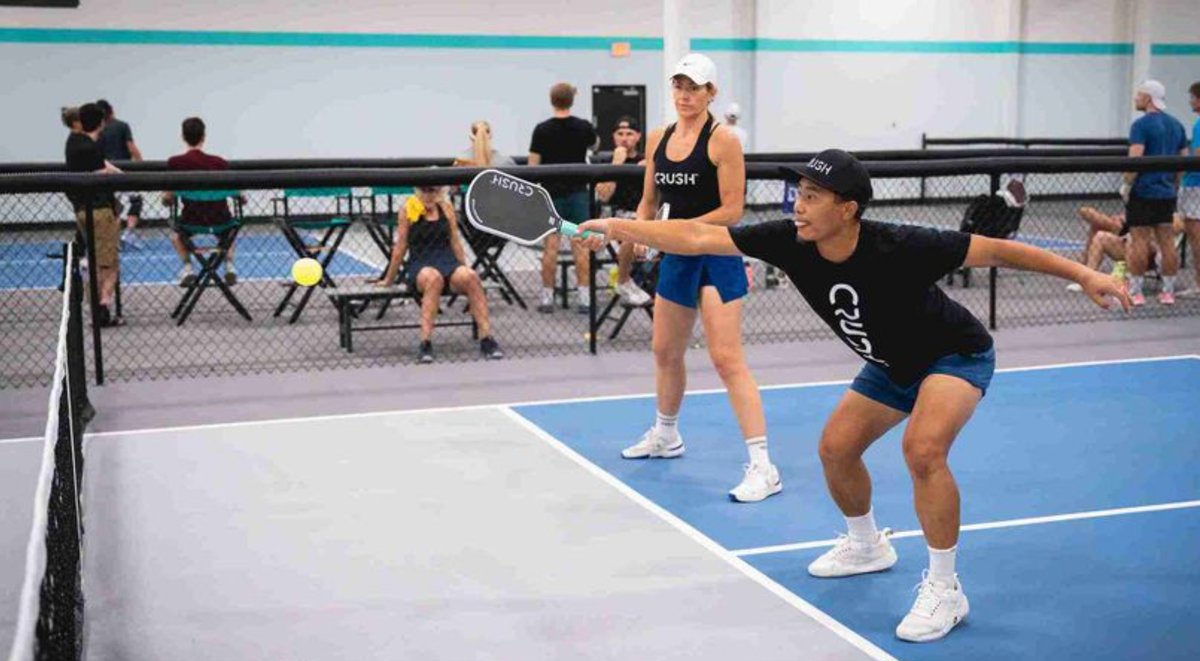
Stay roughly 6 to 8 feet apart and move as one unit.
That spacing comes straight from USA Pickleball's guidance, and it exists for a simple reason: the gap between partners is where good opponents aim.
When your partner slides wide to chase a ball down the line, you slide with them. Not to their spot, just the same direction, same time.
Proper spacing at the kitchen line turns two players into one wall. Drift out of sync and you've opened a four-foot middle lane for anyone with a decent drive.This is also where a little teamwork pays off: call the middle ball early, every time, so nobody freezes.
Pickleball Tips for Seniors: Play Smarter, Move Less
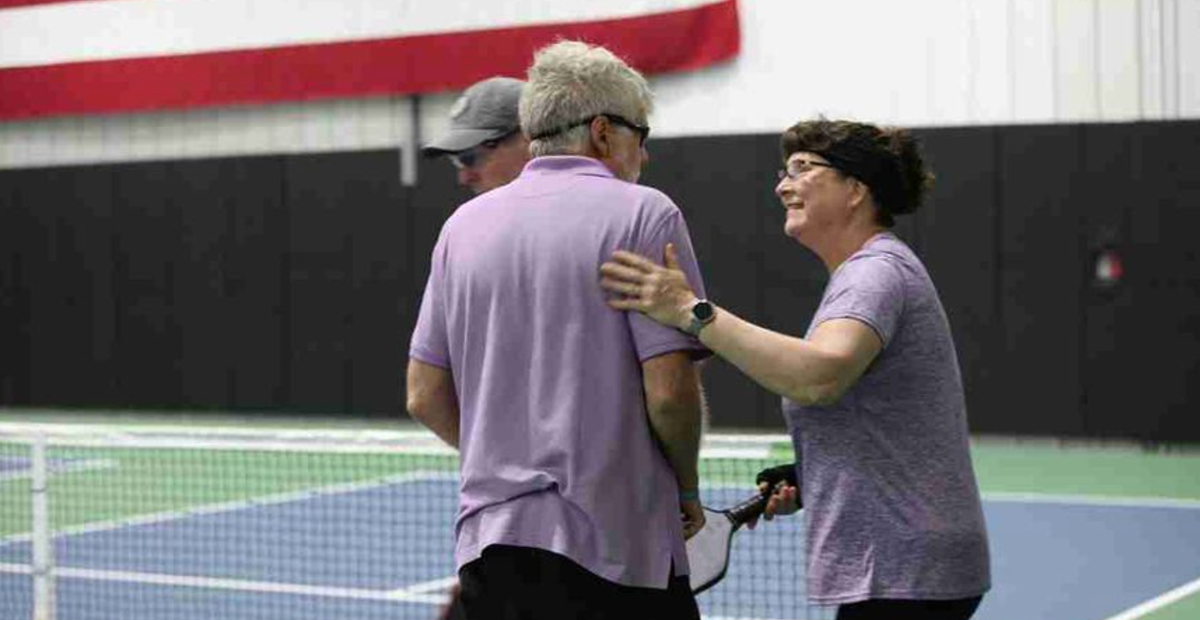
The most useful pickleball tips for seniors have nothing to do with getting faster. Injury data points somewhere else entirely: to court position, shot selection, and knowing when to let a ball go.
 The Dink PickleballThe Dink Media Team
Tip 3: Don't Sprint After Your Serve
The two-bounce rule does the deciding for you, and it quietly shapes how you should be returning serve too.
Your serve has to bounce, and the return has to bounce, before either team can legally volley.
Charging the kitchen right after you serve just means you'll be caught mid-court with a ball at your ankles, which is textbook bad positioning.So do the opposite of what feels aggressive. Serve, take one or two steps in, and hold. Let the return land, hit your third shot, then advance.
That patience is the difference between arriving balanced and arriving lunging, and it's one of the habits that separates steady players from the mistakes senior players should actually avoid.Plenty of senior pickleball strategy lives right here, in the two seconds most players rush.
On the other side of the ball, where you return serve from sets up the same advantage in reverse: deep return, walk in behind it.
Tip 4: Stop Living in No-Man's Land
Be behind the baseline or up at the kitchen. The stretch in between is a place you pass through, not a place you park.
Honestly, this is the most common positioning error at every level, and it punishes seniors hardest because a ball at your feet demands a low, fast squat.
Use the two-position reset strategy to move in stages: advance, split step, absorb whatever comes, advance again.
Understanding when to play it safe versus attack from the midcourt is what separates players who get stuck there from players who cross it in two trips.The traffic light trick is a useful shortcut if you want a simple mental cue.
Pickleball for Seniors: Tips and Strategies That Work
Pickleball for seniors isn’t about running down every ball. It’s about strategy, positioning, and knowing exactly where to be before the point even starts.
 The Dink PickleballThe Dink Media Team
Tip 5: Turn and Run, Never Backpedal
When the lob goes up, turn your shoulders and run to the ball. Never shuffle backward with your eyes up.
This is the positioning habit worth building first, ahead of anything you'd work on in a fitness routine off the court.
Falls and rapid direction changes show up repeatedly in pickleball injury data, and one review of U.S. emergency department visits found that among players aged 60 to 79, falls were roughly twice as likely as in the comparison age group.That doesn't mean lobs are dangerous, and it doesn't mean you should play scared.
It does mean the backpedal is worth trading for a turn-and-chase, which keeps your weight forward and your court coverage honest.If the ball gets behind you, let it go or let your partner take it.
Learning how the offensive lob works also makes you better at reading when one is coming, and steady balance on the court makes the turn itself cleaner.
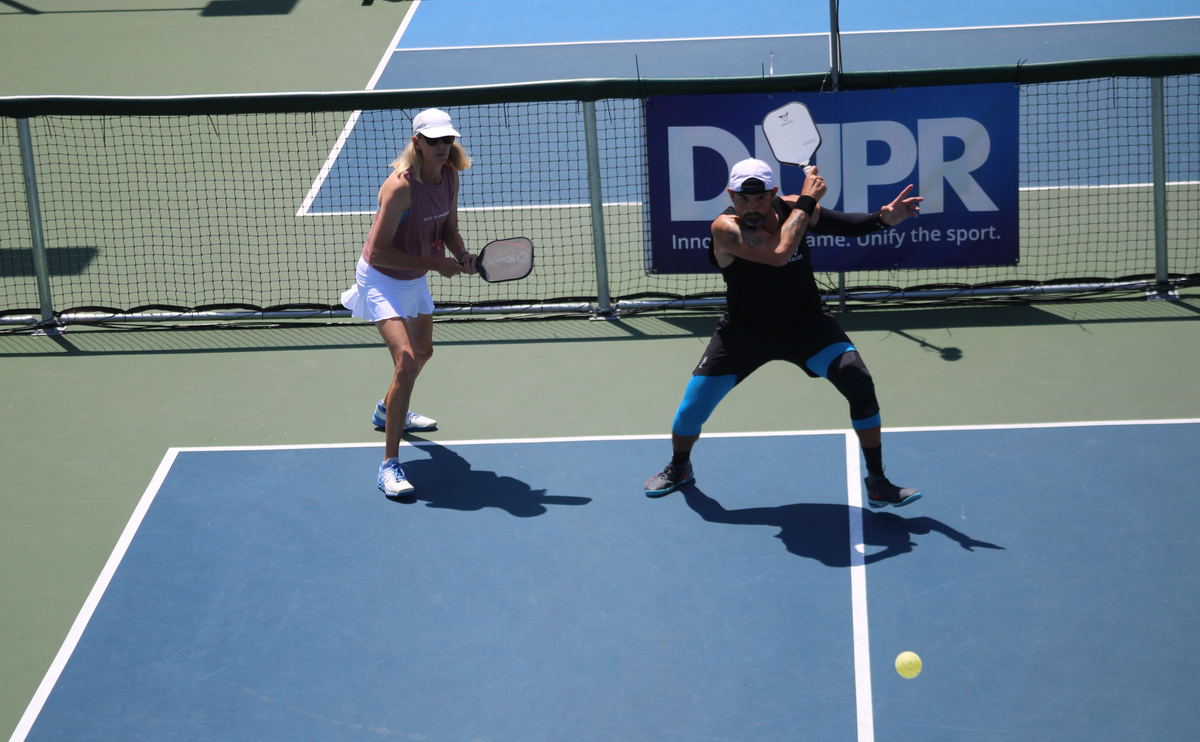
Senior Pickleball Strategies Every Player Should Master
Senior pickleball strategies aren’t about playing less, they’re about playing smarter. Here are five essential tactics that help older players win more points, stay injury-free, and outlast opponents who rely on pure power.
 The Dink PickleballThe Dink Media Team
What Do These Pickleball Tips for Seniors Look Like in a Real Point?
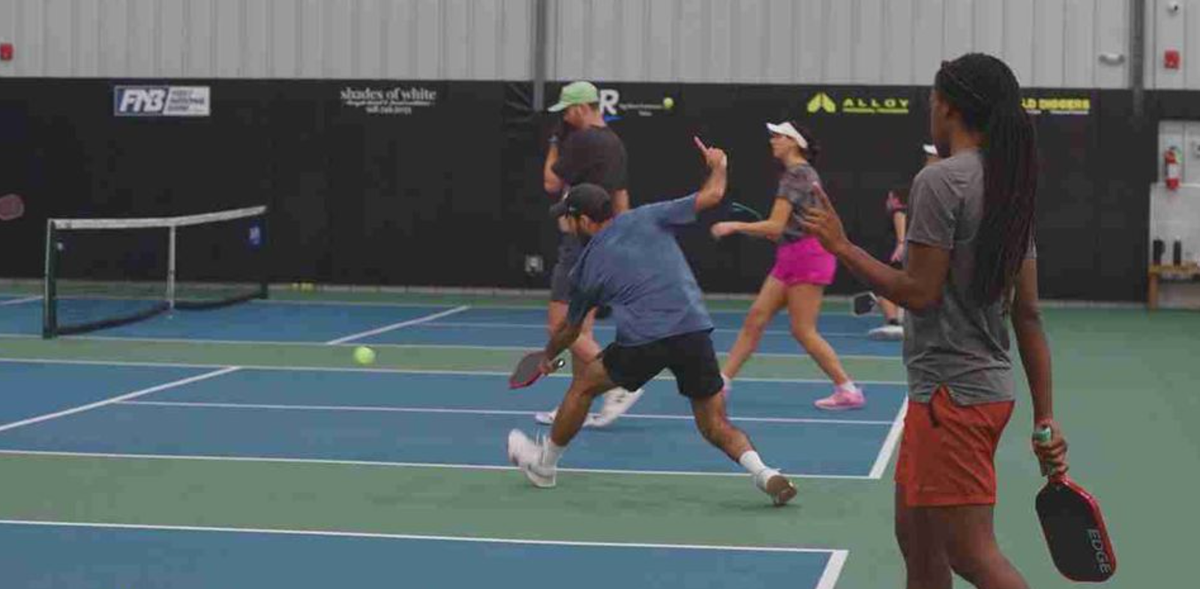
Like this. Your partner serves from the right. You're both a step inside the baseline, not charging.
The return lands deep, and because you both know what to do with a return of serve, nobody panics.Your partner hits a third shot drop, and you both move to the kitchen line together, splitting once on the way.
You arrive at the line with 7 feet of kitchen in front of you and your partner 6 feet to your left.
They dink cross-court, your partner leans that way, you slide with them.
The opponent tries the middle, finds no gap, and pops one up. Short hop, paddle already up, put it away.
Nobody sprinted. Nobody lunged.That's the whole point of recognizing your court position before you pick a shot, and it's why these pickleball tips for seniors beat any drill that just asks you to move quicker.
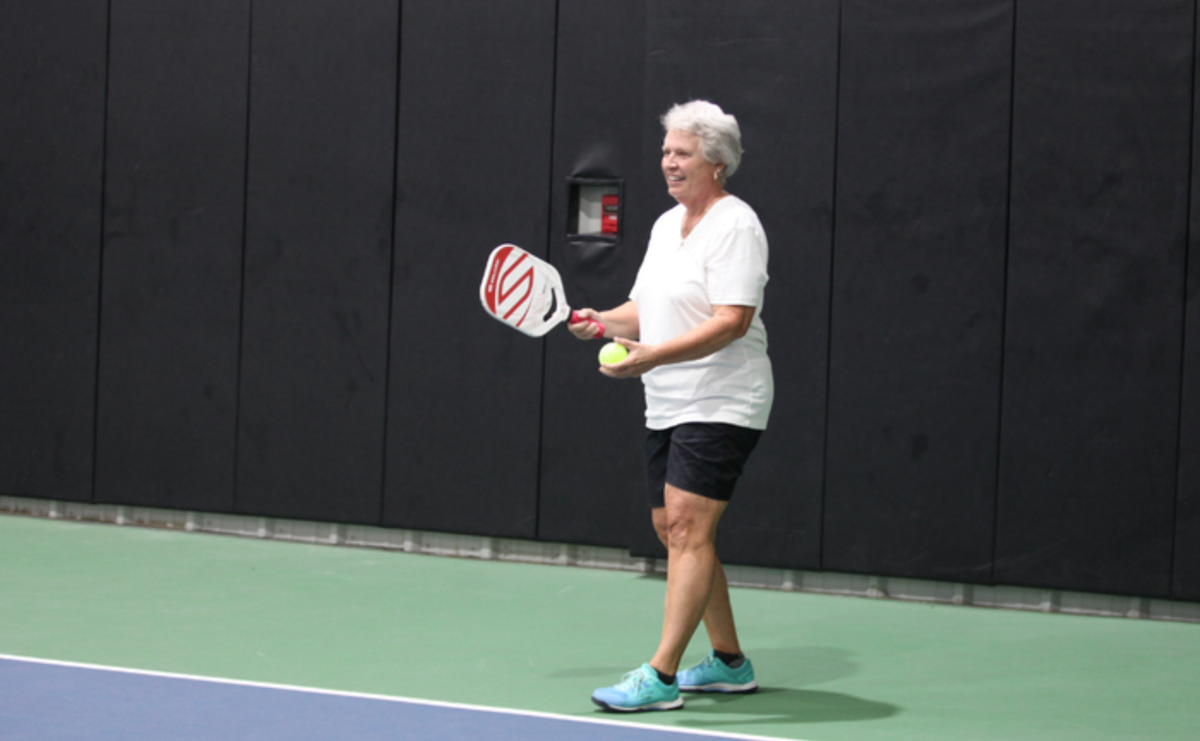
Pickleball Footwork Tips for Seniors: Save Your Knees
Most pickleball footwork tips for seniors get sold as knee insurance, which is the wrong frame. The real win is arriving earlier so your knees never have to bail you out of an emergency reach.
 The Dink PickleballThe Dink Media Team
Key Takeaways
- Court positioning beats court speed. Standing in the right place removes steps you'd otherwise have to sprint.
- The kitchen is 7 feet deep. You may stand in it, but volleying while touching it or its line is a fault.
- Split step as your opponent contacts the ball, not after. Flat feet are stuck feet.
- Hold 6 to 8 feet of spacing with your partner and move as one unit to close the middle.
- Never backpedal for a lob. Turn your shoulders and run, or let it go.
💡
Heads up: hundreds of thousands of pickleballers read our free newsletter.
Subscribe herefor cutting edge strategy, insider news, pro analysis, the latest product innovations and more.
Frequently Asked Questions
What are the best pickleball tips for seniors playing doubles?
Stay connected to your partner and get to the kitchen line together. Hold roughly 6 to 8 feet of spacing, move in the same direction at the same time, and call middle balls early. Most doubles points at the recreational level are lost through the gap between two partners, not past them.
How far back from the kitchen line should I stand?
As close as you can get without touching it. Toes a few inches behind the line lets you volley balls at their highest point. Standing a foot or two back is the most common self-inflicted disadvantage in recreational play, because it turns every ball into a low dig.
Do pickleball tips for seniors work differently in singles?
The principles hold, but the coverage does not. In singles you cover the whole 20-foot width, so recovering toward the middle after every shot matters more than parking at the line. Doubles positioning is far more forgiving on the legs.
What's the fastest way to fix bad court positioning?
Pick one habit and drill it for two weeks. The split step gives back the most for the least effort, because it fixes reaction time without asking you to move faster. Add partner spacing next, then work on crossing the transition zone cleanly.
Should older players avoid the transition zone entirely?
No, but don't linger there. The midcourt is a place you move through on the way to the line, not somewhere to settle. Advance in stages with a split step between each one, and you'll spend far less time reaching for balls at your feet.
Anuncie Aqui / Advertise Here
Sua marca para o mundo Pickleball! / Your brand for the Pickleball world!




 English (US) ·
  Portuguese (BR) ·