
 English
  Spanish
  Portuguese
  German
  Italian
  Japanese
  French
  Polish
  Russian
  Netherlands
  Hungarian
  Turkish
  Videos
  Thedink Pickleball

Speed is not the only way to win in pickleball. These 5 pickleball adjustments helped a 65-year-old player consistently beat opponents half his age.
You don't need to be the fastest player on the court to win at pickleball. What you need is to stop playing the other player's game and start playing yours.
If you're over 50 and watching younger players run you ragged, the problem is not your fitness. It's your strategy.The good news is that strategy is completely fixable.
These five adjustments come from Cliff Pickleball on YouTube, built around real work with a 65-year-old student named John, a solid 4.5 player who was losing to younger opponents because he was trying to outrun them instead of outsmart them.
Love pickleball? Then you'll love our free newsletter. We send the latest news, tips, and highlights for free each week.
Why Speed Is a Trap for Players Over 50
Most players over 50 make the same mistake: they try to play like they are 25.
They chase every ball, swing hard, and sprint to the kitchen. Then they wonder why they are always one step behind. The answer is simple.
You are playing their game, not yours.
When John first came in for coaching, he had real skills. Clean hands, solid dinks, a quality drive. But he was losing because he was reacting instead of reading.That distinction is everything.
Here are the five adjustments that turned his game around.
Adjustment 1: Move Earlier, Not Faster
The single biggest thing you can do is stop waiting for the ball to leave the opponent's paddle. By that point, you are already late.
Most players watch the ball. That sounds right, but it puts you permanently in reaction mode. Instead, watch the player.Watch their paddle angle, their shoulder, the height of the incoming ball.
Here is what those cues tell you:
- Ball arriving high: they are likely going to drive it
- Ball arriving low: they are probably going to dig or drop it
- Paddle pulled back early: a drive or speed-up is coming
- Open paddle face: expect a soft shot or lob
When you read those signals correctly, you start moving before contact. That means you never need an explosive first step. You are already there.
John went from chasing balls to arriving early, simply by shifting his eyes from the ball to the player. That one change alone made him look like a different athlete.This kind of positioning awareness is one of the most overlooked skills in recreational pickleball.
💡
Need some new pickleball gear? Get 20% off select paddles, shoes, and more with code THEDINK at
Midwest Racquet SportsAdjustment 2: Protect the Middle with Smarter Positioning
Standing in the center of the court to protect the middle is wrong. It leaves both sidelines exposed and gives smart opponents a blueprint to beat you.
The real move is to shift with the ball. Here is how it works:
- Ball is cross-court from you: shift toward the middle
- Ball is in front of you: protect your line and stay connected to your partner
- Think of you and your partner as one unit, not two players guarding separate zones
When you shift with the ball, you eliminate unnecessary movement.
You do not need to sprint three steps to cover the middle because you are already positioned there before the shot comes.For players over 50, fewer steps means less physical wear and the same or better court coverage. That is a trade you take every single time.
If you want a deeper look at how court coverage breaks down by mistake type, this piece on covering your partner without leaving gaps is worth your time.
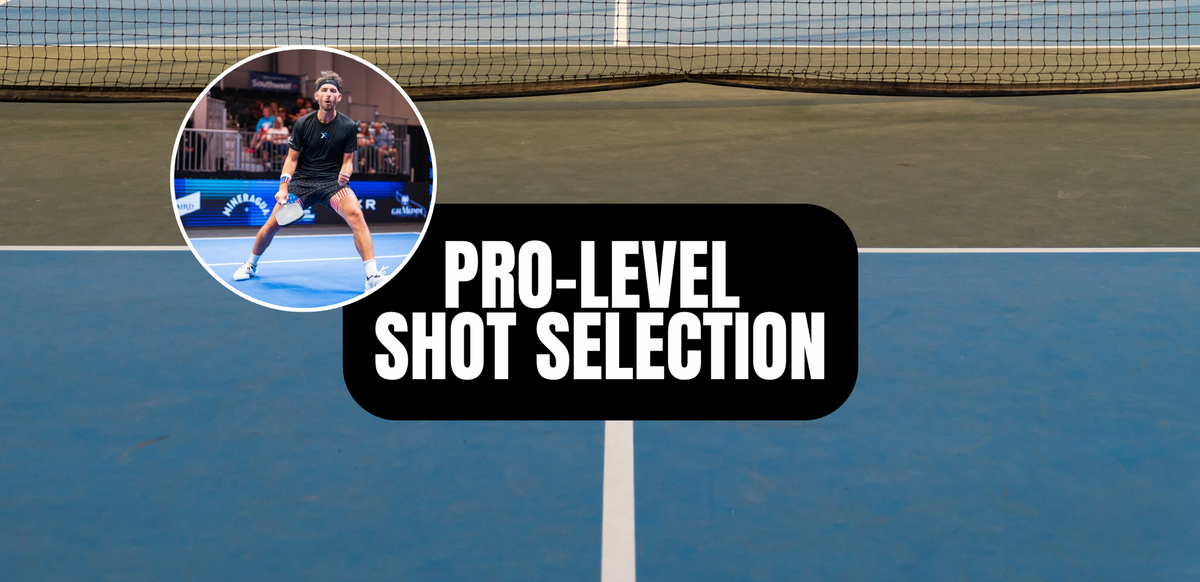
Pickleball Shot Selection: Ball Height & Court Positioning
Advanced pickleball means constantly analyzing the height of the ball and the court positioning off all four players in real time – and keeping this one rule sacred: just because you can hit a more aggressive shot doesn’t mean you should
 The Dink PickleballEric Roddy
Adjustment 3: Use Depth to Buy Time
A deep return and a deep serve are not just offensive tools. They are time management tools.
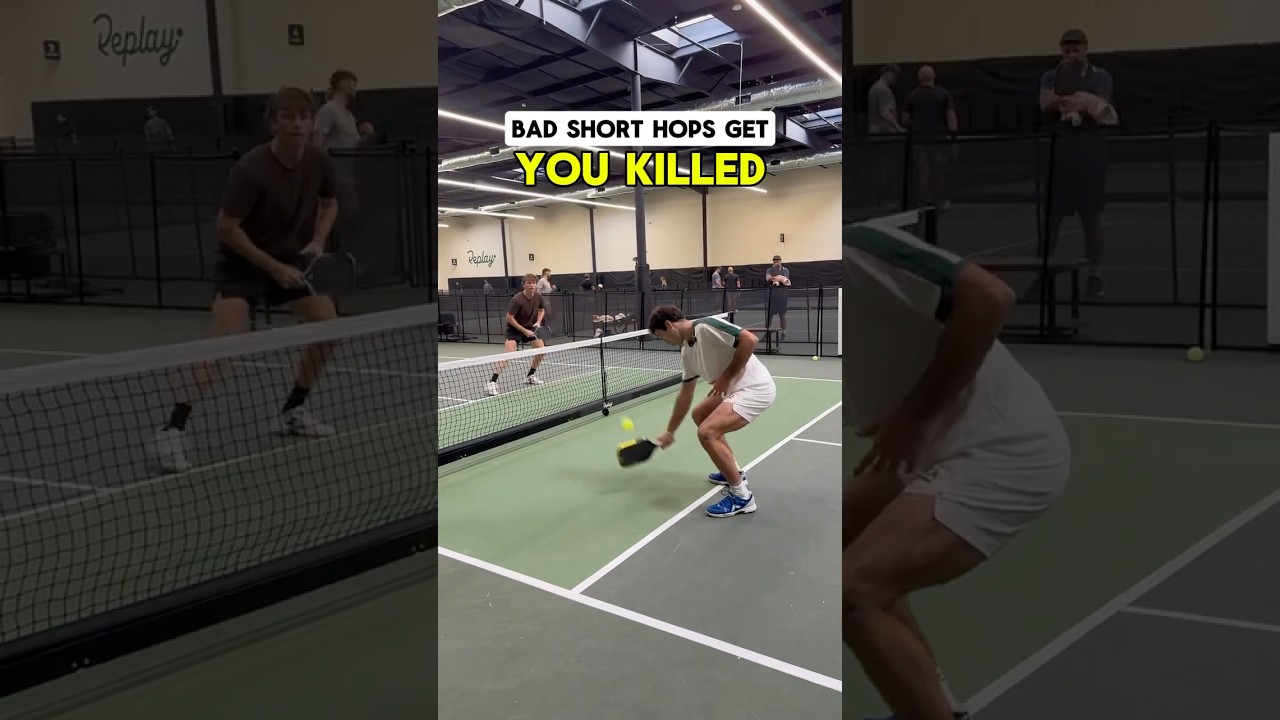
John was hitting short returns. That meant the serving team arrived at the kitchen line before he did, and a 65-year-old was sprinting just to get into position.That is completely backwards.
Here is what changes with a deep return:
The serving team stays back further from the kitchen. That gives you time to walk forward, not run, while they are still dealing with a ball deep in their court.
Their next shot becomes harder because they have to hit up from near the baseline.A deep dink or reset does the same thing. You push your opponent back, and now you are waiting at the kitchen while they scramble forward.
Depth buys time. Time is your best friend when you are over 50.
If your return is consistently landing short, check out these tips on building a return that creates offense.
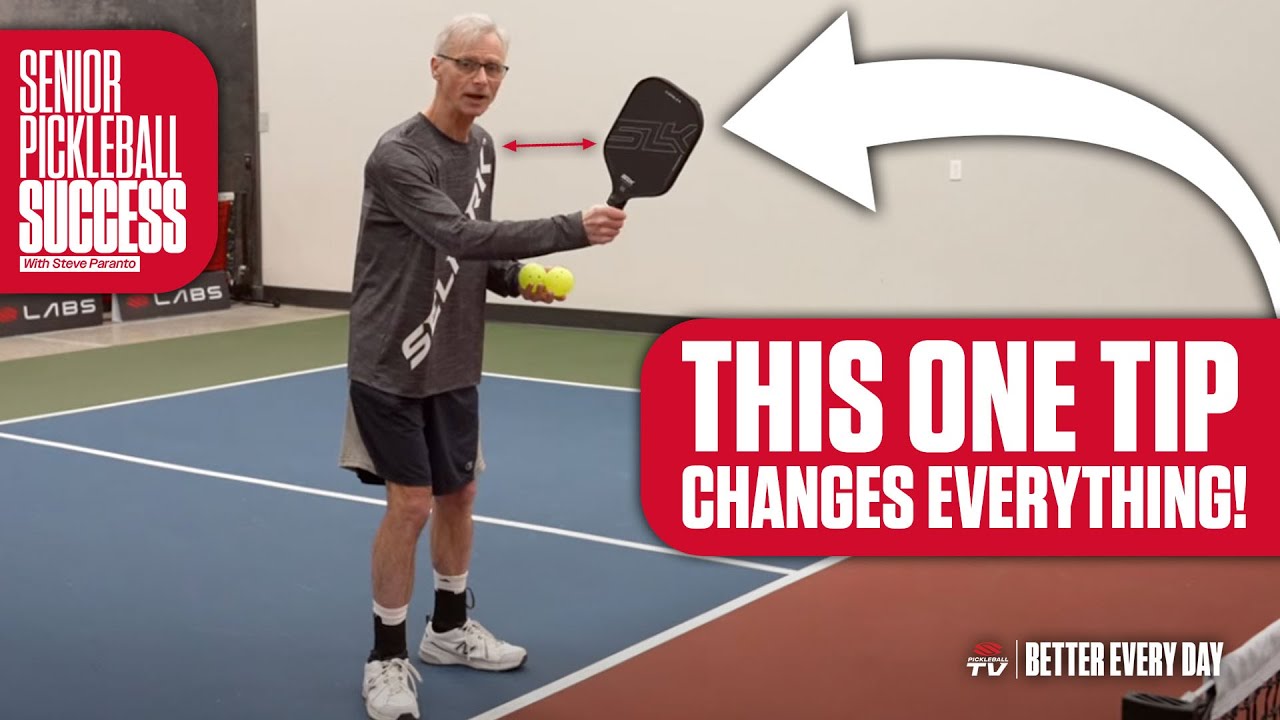
How Early Preparation Buys Time & Slows Down Pace of Play in Pickleball
When you’re prepared early, you’re not rushed. When you’re not rushed, you make better decisions. When you make better decisions, you win more points.
 The Dink PickleballThe Dink Media Team
Does Attacking the Body Actually Work Better Than Going for the Lines?
Yes, and the reason is simple: the body is a much bigger target than an open corner.
Adjustment 4 is to attack the body, not the open court.When you get an attackable ball, the instinct is to aim for that wide open space on the far side of the court.
But that is a small, moving target, especially when your opponent is already in motion.
The body never moves. Here is where to aim:
- The right hip on a right-handed player
- The dominant shoulder, which creates an awkward, jammed swing
- The feet while your opponent is transitioning or moving laterally
When you attack the body, you create confusion. In doubles, your opponents momentarily freeze because neither player is sure who should take it.
That half-second window is all you need to finish the point.
You do not need to hit harder. You need to hit smarter. This is the exact principle behind hitting a body shot in pickleball, and it works at every level.
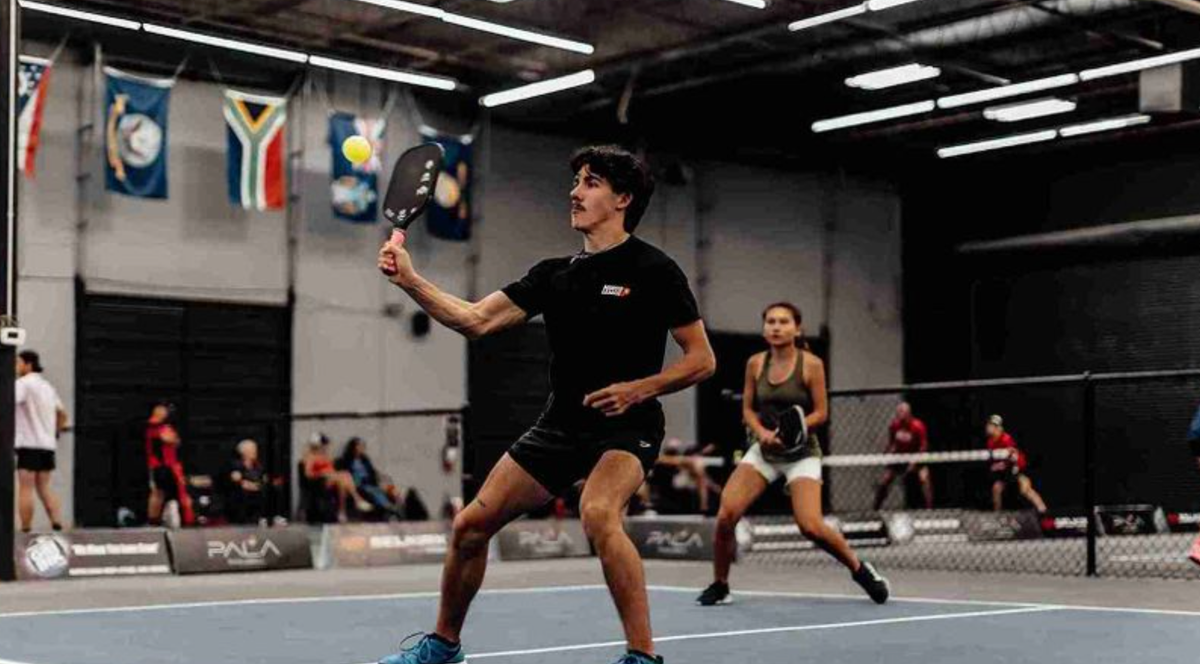
How to Hit a Body Shot in Pickleball: Complete Bodybag Guide
Learning how to hit a body shot in pickleball starts with understanding the rule, not just the aim. This guide breaks down the mechanics, the timing, and the line between smart targeting and a foot fault waiting to happen.
 The Dink PickleballThe Dink Media Team
Adjustment 5: Recover Before You Watch Your Shot
Your job is not finished when you hit the ball. It is finished when you are ready for the next one.
This is the habit that separates players who win from players who watch.
You hit a great shot, you admire it for a second, and then you realize your opponent got it back. Now you are scrambling.After every single shot, do these three things immediately:
- Return your paddle to neutral position
- Recover your balance
- Reestablish your position on the court
Then read the next shot. In that order, every time. This sequence needs to become automatic, which means you need to drill it.
John used to stand and watch after every attack. Once he drilled the recover-first habit, his defense improved almost immediately because he was simply in position more often.
Building this kind of defensive consistency does not require better reflexes. It requires better habits.
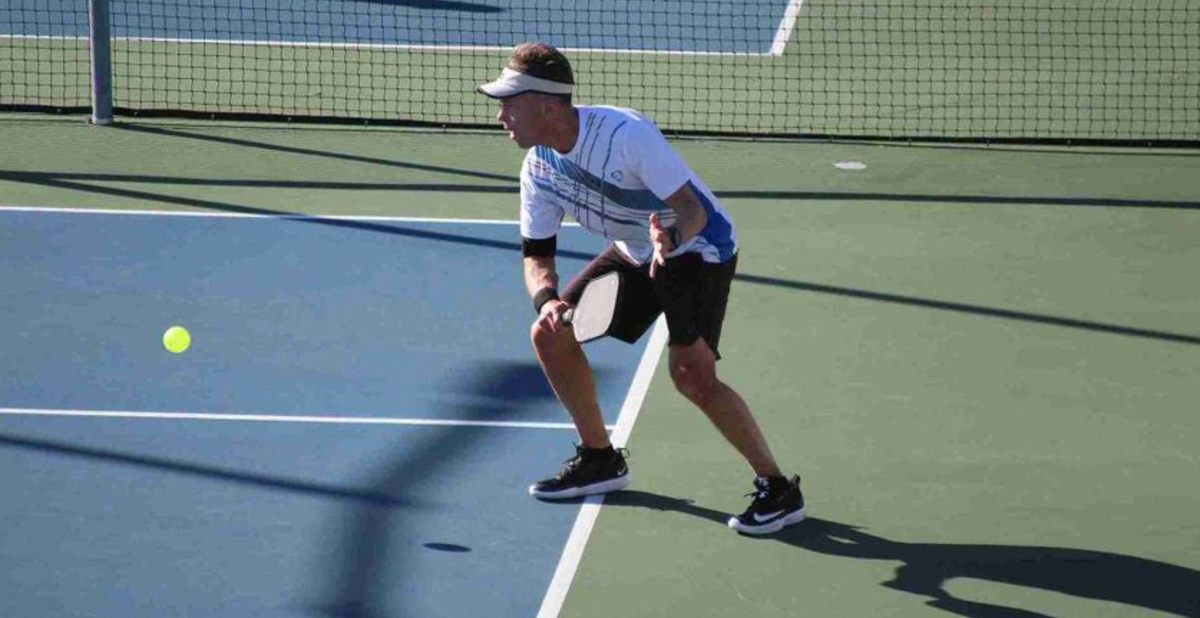
Recovery Position After a Pickleball Attack: Full Guide
Recovery position after attack pickleball strategy is what separates players who win one rally from players who win the whole game. Here’s exactly how to get back in position after you pull the trigger, stay balanced, and keep the pressure on.
 The Dink PickleballThe Dink Media Team
How Should You Actually Drill These Adjustments?
Knowing the adjustments is one thing. Ingraining them is another. Here is the exact 45-minute structure used with John, broken into three 15-minute blocks.
Block 1: Read and Call (15 minutes)
Have a partner feed you different shots: drives, drops, lobs, dinks. Before they make contact, call out what you think is coming. You are training your eyes to read the shooter, not the ball.
This directly reinforces Adjustment 1.
Block 2: Two-Shot Patterns (15 minutes)
Run short combinations that connect multiple adjustments at once. Good patterns include:
- Wide ball, then attack the middle
- Deep return, then soft block
- Body speed-up, then finish with placement
This trains you to think in sequences instead of isolated shots. Pickleball is not a single-shot game. It rewards players who set up their attacks one or two balls in advance.
Block 3: Control Game to 11 (15 minutes)
Play a live game but cap your power at 70 percent. This forces you to win with placement, pattern recognition, and positioning rather than raw pace. It is one of the most underrated drills in pickleball because it makes smart play the only option.
If you want to pair these drills with a focused look at kitchen line control, the breakdown of what makes Tyra Black so hard to beat at the kitchen is genuinely useful.
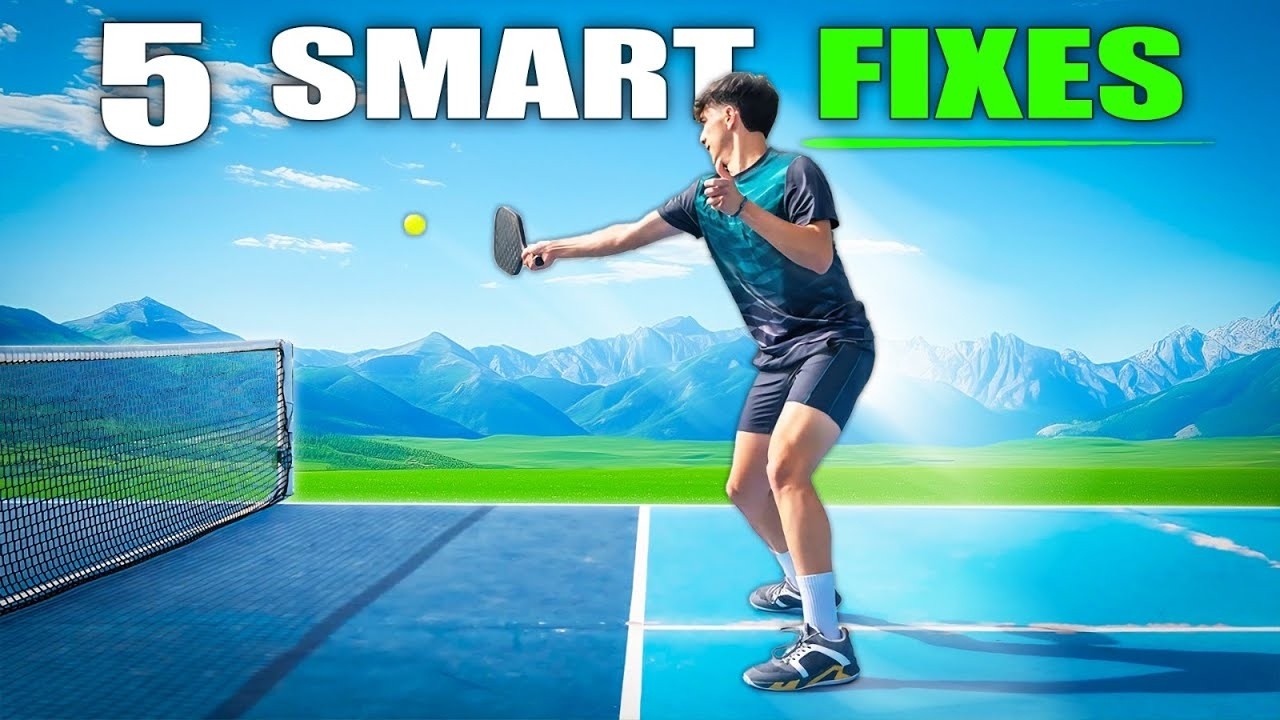
5 Pickleball Drills That Will Transform Your Game in 2026
Five simple yet powerful pickleball drills can completely reshape how you play. These mechanics focus on consistency, footwork, and positioning to help you see immediate results on the court.
 The Dink PickleballThe Dink Media Team
What Happens When You Put It All Together
John walked off the court after that session a different player. Not faster, but smarter.
He was reading shots before they happened, shifting with the ball, hitting deep returns, attacking the body, and resetting his position after every shot.
The younger players he was losing to did not get slower. John just stopped giving them the race they wanted.
Speed fades. Positioning, anticipation, and pattern recognition do not. If you are over 50, those are the skills worth building.They are also skills that only improve with time and repetition, which means the older you get, the more of an edge you can build.
You may not be the fastest player on the court. But you can absolutely be the player who sees the game first. And in pickleball, the player who sees it first wins.For more on how these habits connect to breaking through rating plateaus, check out the guide on moving from 4.0 to 4.5.
And if unforced errors are still costing you points in the meantime, this breakdown of the three main causes and their fixes is a good place to start cleaning things up.
💡
Heads up: hundreds of thousands of pickleballers read our free newsletter.
Subscribe herefor cutting edge strategy, insider news, pro analysis, the latest product innovations and more.
Frequently Asked Questions
Can older pickleball players really compete with younger, faster opponents?
Yes, and they do it regularly through smarter positioning, earlier movement, and better pattern recognition. Speed is just one way to win, and it is not the most reliable one at any age. Players who read the game well and move efficiently before the ball is struck can neutralize athletic advantages consistently.
What does it mean to move earlier instead of faster in pickleball?
Moving earlier means starting your footwork before your opponent makes contact with the ball, based on cues like paddle angle and shoulder position. Most players wait until the ball is in the air, which puts them permanently in chase mode. Reading the shooter instead of the shot is what allows you to be in position without needing explosive speed.
Where should you aim when attacking in pickleball?
Aim at the body, specifically the right hip, dominant shoulder, or feet of a right-handed opponent. The body is the largest consistent target on the court and creates confusion in doubles because neither partner is sure who covers it. Going for open court looks tempting but requires precision that breaks down under pressure.
How deep should your pickleball return be?
Your return should land within the last few feet before the baseline to keep the serving team pinned back. A short return lets the serving team reach the kitchen before you do, forcing you to sprint into position. A deep return gives you time to walk in while your opponent is still dealing with a ball deep in their court.
Why is recovering after every shot so important in pickleball?
Because the rally does not end when you hit the ball. If you stop and watch your shot, even for half a second, you are out of position for the reply. Getting your paddle back to neutral, recovering your balance, and resetting your position immediately after every shot is what keeps you in the point.
Anuncie Aqui / Advertise Here
Sua marca para o mundo Pickleball! / Your brand for the Pickleball world!




 English (US) ·
  Portuguese (BR) ·