 English
 Spanish
 Portuguese
 German
 Italian
 Japanese
 French
 Polish
 Russian
 Netherlands
 Hungarian
 Turkish
 Videos
 Thedink Pickleball


Popping up your pickleball block hands your opponent a free putaway. Learn the miss-deep mindset and two-handed shovel push that top players use to neutralize attacks.
Every time you try to hit a perfect pickleball block from the midcourt, you risk sending a pop-up straight back at a waiting opponent.
You know the feeling: the ball comes at your chest, you swing up to guide it softly into the kitchen, and it floats high into the air.Then comes the overhead, and the point is over. The problem usually is not your hands. It is your goal.
These fixes come from Richard Pickleball on YouTube, who borrowed the method from the highest-level women in the game and from his partner Jack Munro.
Here is how to stop trying to be perfect and start becoming a wall when you are stuck in midcourt trouble.Love pickleball? Then you'll love our free newsletter. We send the latest news, tips, and highlights for free each week.
Why Does My Pickleball Block Keep Popping Up?
Your pickleball block pops up because you are trying to hit a perfect reset off a ball that is already attacking you.
When a ball comes down at you in the midcourt and you swing up to guide it, any mishit sends it floating high.
That floating ball is exactly what your opponent wants.
One slightly off-center contact and you have given away an easy putaway, which is the same chain reaction behind four fixes to stop popping the ball up in pickleball.The fix starts with a mindset change: miss deep, not high.
A ball that lands long or goes back at your opponent’s body is far less dangerous than one that sits up above the net.
Most players think the goal of a defensive shot is to land it softly in the kitchen. That is the wrong goal when you are behind in the point.
What Is a Mini Counter Block?
A mini counter block is a short, firm push that sends the ball back at your opponent without trying to win the point.
You are not flicking your wrist or swinging up.
You are simply extending through the ball with your shoulder and pushing it a little over the net.
Think of it as a defensive counter, closer in spirit to consistent pickleball counters than to a reset.Your paddle stays loose in your wrist, and the motion comes from the shoulder.
That loose grip is worth protecting for more than touch, since a 2025 study of recreational players linked a consistently tight baseline grip to a higher rate of acute upper-body injuries.The swing path matters more than the power. Instead of swinging up on the ball, you swing out toward your opponent.
Here is the sequence that works:
- Get low and set your paddle in front of you.
- Keep your wrist loose and do not snap it.
- Extend with the shoulder straight toward your opponent.
- Aim at the body, not at a perfect spot.
When your opponent has to block or counter the ball you just sent at them, the next ball usually comes back slower and easier for you. That is when you reset.
💪
Ready to level up? Get the best discounts from Pickleball Central, automatically applied to your cart.
The Two-Step Plan: Push First, Reset Second
This is really two separate shots, and treating them that way is what keeps you in the point.
The first ball is about survival, and the second ball is about taking back control.
- On the first ball, you push it at your opponent and accept that you are not winning the point. On the second ball, you now have a softer, easier ball to work with.
- That second ball is where you choose your option. If it is high, you reset it into the kitchen using the same shape as a perfect midcourt reset.
If it is low, you might even come in and counter it.
Players who run this plan tend to get back into points far more often than they expect, and it pairs well with how to survive overhead returns in pickleball.
How to Beat a Higher-Rated Pickleball Player
Beating a higher-rated pickleball player is possible when you stop playing their game and start playing yours. This underdog game plan breaks down the exact tactics, mental frameworks, and shot patterns that close the rating gap on the court.
 The Dink PickleballThe Dink Media Team
How Do You Handle a Dead Ball Sitting in the Midcourt?
When the ball sits up dead off the bounce, the same rule applies: push it at their body and miss deep instead of high.
The common mistake is swinging up to hit a perfect shot and watching it float.
A dead ball feels like an invitation to do something fancy. Resist that urge.Stay on your backhand whenever you can. A backhand block gives you a more stable, compact contact point and keeps your paddle out in front of you.
If your opponent moves to one side, shift your feet so you can still take it on the backhand.
Taking a small step toward the middle as they swing is a smart habit, and it starts with recognizing your court position.
The only spot this leaves you vulnerable is the wide ball, which you may have to short hop. That is still a better trade than getting beamed down the middle.One rules note worth remembering: any pickleball block you take out of the air at the kitchen line still counts as a volley, so your feet matter as much as your hands.
How to Attack Dead Dinks in Pickleball
Knowing when and how to attack dead dinks in pickleball is the fastest way to upgrade your kitchen game. This guide breaks down exactly how to identify attackable dinks and execute the right shot every time.
 The Dink PickleballThe Dink Media Team
Why Two Hands Beat One on a Pickleball Block
Two hands give you far more control over the paddle face, which is exactly what you need to keep a pickleball block low.
With one hand, you have to manipulate the paddle face with your wrist, and that is where mistakes sneak in.
With two hands, your backhand hand turns the paddle face while your arms simply push forward. Your off-hand is your steering wheel, and your arms are the engine.This is what Richard calls the shovel push, a method he credits to his partner Jack Munro and to the top women on tour.
The best women in the sport have built elite two-handed backhands, and you will see them block cross court from the right, block through the middle from the left, and slide into counters.
Here is how the two-handed face adjusts to the ball:
- Ball up high: keep the paddle face flat and push through.
- Ball down low: open the face slightly and lift.
- Ball out wide: use a short swing and push it away from your body.
- Need a soft ball: drop to one hand briefly for touch.
Two hands also help you absorb pace. With one hand, you need real shoulder strength to hold the paddle steady against a hard shot.
With two hands, you barely need any, because your backhand hand does the stabilizing.That is a big advantage when someone is cranking balls at your chest, and it is the same logic behind learning to defend with two hands like the top pros.
Why You Need a Two-Handed Backhand in Pickleball
If you really need any further convincing at this point, let me direct your attention to Ben Johns.
 The Dink PickleballEric Roddy
What If You Only Have a One-Handed Backhand?
You can still run this plan with one hand, and the key is extending from your shoulder without engaging your wrist. It is harder, but it works.
Stay backhand, keep the wrist loose, and push the ball right toward your opponent. Do not try to guide it into a tiny window.A one-handed pickleball block is harder to keep low because you cannot fine-tune the paddle angle as easily, which is the same problem covered in this breakdown of hand speed and paddle positioning.
That is why Richard prefers two hands, but he is clear that one hand is better than trying to hit a perfect reset.
How (and Why) to Hit the One-Handed Backhand in Pickleball
It's an unconventional shot in pickleball, yes. But done properly — and practiced relentlessly — it can become a devastating and unpredictable weapon when the time is right.
 The Dink PickleballThe Dink Media Team
Push in One Direction and Open the Face Only When You Can
Pushing in one direction is far easier than redirecting the ball across your body.
When you try to take a ball one way and send it another, your arms get awkward and your timing falls apart.
The easiest push is straight toward your opponent. You extend away from your body in one clean line, the same compact motion that wins kitchen line hands battles.You open the paddle face only when the incoming ball is slow or you are on it early.
When your opponent’s ball is weaker, you have time to add a little touch and aim for the kitchen.
When the ball is fast and heavy, keep the face flat and push through. You are not trying to be precise, you are trying to survive.
Richard starts with two hands on nearly every pickleball block and drops to one only when he needs a very soft ball.
That habit keeps your base solid while giving you touch when you actually want it.
3 Pickleball Drop Shots Every Solid Player Needs to Know
Most players have one drop. The best have three. Here is how to hit the push, slice, and topspin pickleball drop shot, and exactly when to use each.
 The Dink PickleballThe Dink Media Team
How Often Can You Win These Points?
More often than you think. When Richard first tried this method, he expected to get back into the point maybe 20 or 30 percent of the time.
In real games, it has been closer to 70 or 80 percent. That is the payoff of treating the first ball as a push and the second ball as the reset.The confidence boost is real too. When you are not terrified of getting attacked, you stop flinching and start playing.
For more on staying calm, read about when to play safe vs when to attack.
And if you want to build the habit of earning your own attacks, holding your dinks is a good next read.
Push & Block: How to Play Smart Defense at the Kitchen Line
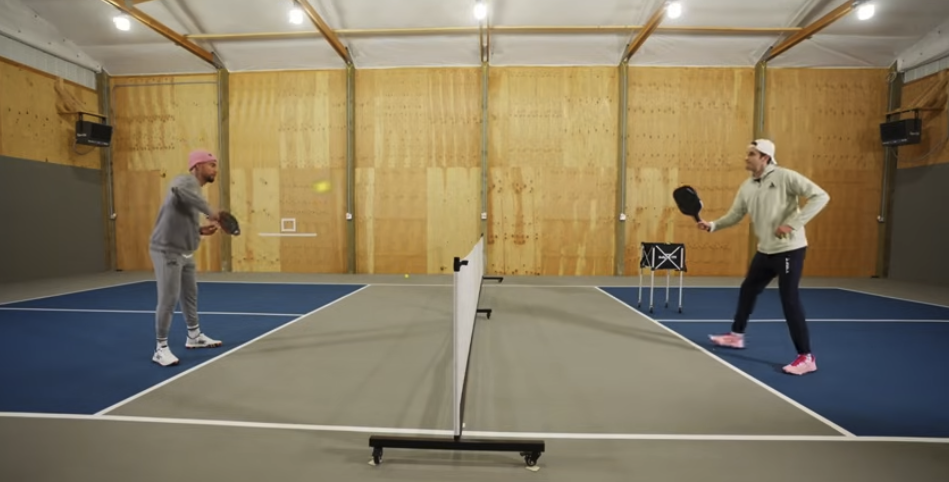
Rather than fight fire with fire when you're outmatched at the kitchen line, the sounder approach is to calm things down and get back to neutral footing.
 The Dink PickleballAlex E. Weaver
A Quick Drill to Build the Wall
The best way to train this is to have a partner feed you dead balls and hard attacks while you practice the push-then-reset sequence. Start slow and build pace as your contact gets cleaner.
Here is a simple progression:
- Partner feeds a ball just above the net and you push it at their body.
- Partner blocks or counters, and you reset the second ball into the kitchen.
- Add a dead ball off the bounce and repeat on the backhand.
- Go live and look to counter when the second ball sits low.
If you want more structured work, try these 5 pickleball practice drills for any skill level or the one pickleball reset drill that actually works.
And remember that this is a defensive plan built on a stable base, so good court positioning makes it far easier.
14 Pickleball Wall Drills That Build Real Game Skills
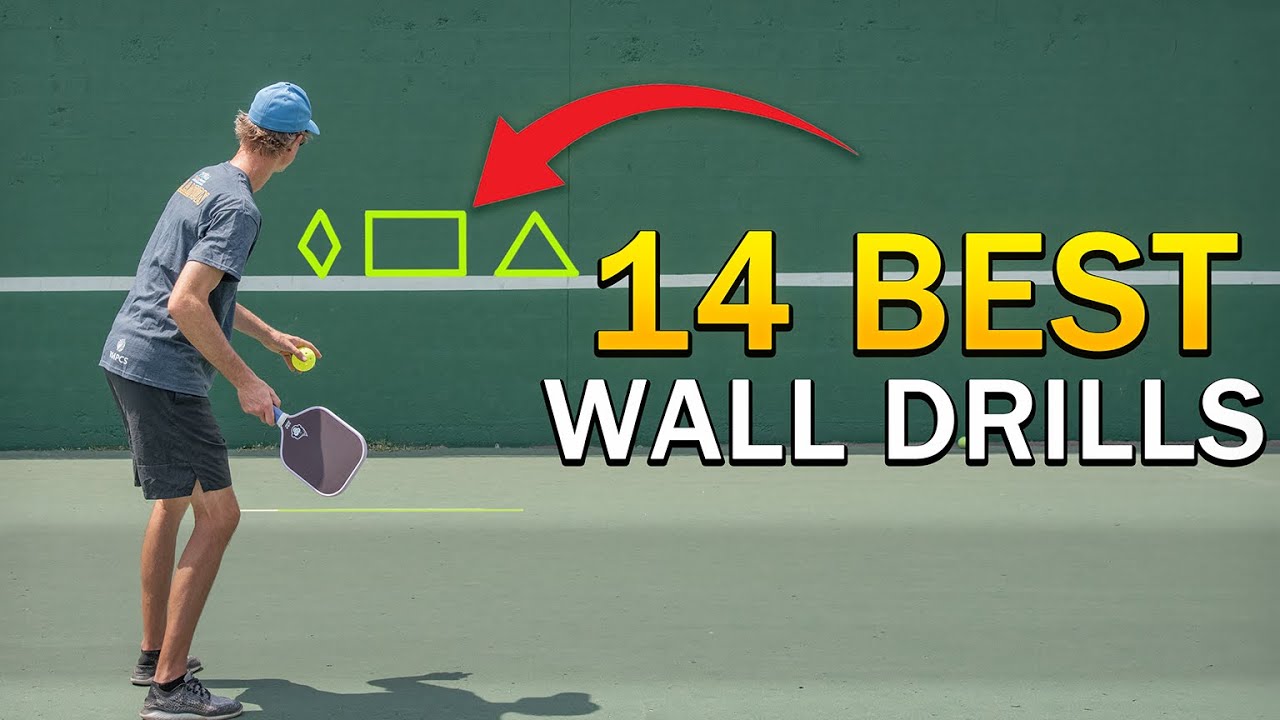
A wall and a ball are all you need to sharpen your pickleball game. These 14 pickleball wall drills build the dinking, volleying, and hand speed that show up when it counts.
 The Dink PickleballThe Dink Media Team
The Mindset Shift That Ties It Together
The biggest change is accepting that you are behind in the point and playing like it. Stop trying to hit a perfect shot from a bad spot.
Make your opponent hit a tough ball. Then take control on the next shot.Players who struggle with this often play too cautiously or too perfectly.
If that sounds familiar, you may also see yourself in the common trap all rec players fall into, and a six-second mental reset will help you shake off the one that got away.
💡
Heads up: hundreds of thousands of pickleballers read our free newsletter.
Subscribe herefor cutting edge strategy, insider news, pro analysis, the latest product innovations and more.
Frequently Asked Questions
What is a pickleball block?
A pickleball block is a short, compact defensive shot where you absorb an opponent's attack and redirect it with a firm push instead of a swing. It is used in the midcourt or at the kitchen line to neutralize speed-ups and drives.
Why do my blocks pop up?
Blocks pop up when you swing up on the ball or try to hit a perfect reset off a ball that is already attacking you. Swing out toward your opponent and aim to miss deep instead of high.
Should I block with one hand or two?
Two hands give you better paddle face control and make it easier to absorb pace without relying on shoulder strength. One hand works too, but you must extend from the shoulder and keep your wrist loose.
Where should I aim my block?
Aim at your opponent's body, especially the chest area, when you are under pressure. This gives them less time and usually produces a slower ball you can reset.
Can I counter after a block?
Yes, if the second ball comes back low and slow, you can counter it or come in and attack. If it comes back high, reset it into the kitchen and rebuild the point.
Anuncie Aqui / Advertise Here
Sua marca para o mundo Pickleball! / Your brand for the Pickleball world!






 English (US) ·
 Portuguese (BR) ·