
 English
  Spanish
  Portuguese
  German
  Italian
  Japanese
  French
  Polish
  Russian
  Netherlands
  Hungarian
  Turkish
  Videos
  Thedink Pickleball

Pickleball counter errors come from too much motion, not slow hands. Learn 5 pro fixes from Zane Navratil covering head stability, elbow position, ground-up power, footwork, and smart shot selection to win more hands battles at the kitchen line.
Your pickleball counter is missing because of excess motion, not because your hands are slow.
That is the first thing pro Zane Navratil spotted when he ran a hands battle with content creator Paul Lee.
Paul described the exact problem most 4.0 players feel at the kitchen.
He could not tell when to reach for a one-handed counter and when to set up with two hands, and he had a habit of jumping up on the ball.
If that sounds like your game, the good news is that every one of these is a fixable mechanical issue. Here are five fixes that turn a leaky counter into a weapon.
Love pickleball? Then you'll love our free newsletter. We send the latest news, tips, and highlights for free each week.
Fix 1: Stop Your Head From Moving to Clean Up Your Pickleball Counter
The single biggest reason your pickleball counter sprays wide is a moving head, because almost all of your hand-eye coordination depends on keeping it still.
"The vast majority of our hand eye coordination actually comes from keeping a very stable head," Zane explained while watching Paul's first few exchanges.
Think about balancing on one foot. The moment your head whips around, you wobble. Lock onto one focal point and you can hold it all day.
Watch the best hands players and you see it.
Zane pointed to Hayden Patriquin, Jada, and Ben Johns, who almost look like they are Irish dancing with their feet while their heads stay perfectly quiet.
The feet move. The head does not. These are the same players who dominate hands battles week after week on tour.This is also where reaction time quietly improves. A still head sees the ball earlier, so you are not actually reacting faster, you are starting sooner.
It is the simplest fix in this list, and it costs you nothing to start using it today.Pair this fundamental with the 6 essential pickleball shots to master for 2026 and you will notice the difference immediately.
Should You Counter With One Hand or Two?
Use one hand when the ball is far away or in front of you, and two hands when it arrives in the slot beside your body.
Zane breaks the decision into three simple zones, and getting this right is the difference between a clean two-handed backhand counter and a chicken wing.
This zone-based decision model is one of the most practical frameworks for winning at the kitchen line.Here is the three-zone rule he gave Paul:
- Reaching wide: go one hand. You simply have less reach with two hands on the paddle.
- In the slot, beside your hip: go two hands. This is your most powerful and controlled pickleball counter.
- In front of your body: go one hand again. It is very hard to generate power with two hands jammed in front of you.
The trap Paul fell into is the one most players know well. He would commit to one hand or two and then freeze when the ball forced the other choice.
As Zane put it, that decision has to live in your muscle memory, and that is not an easy thing to build.
If the one-hand side is your weak link, our breakdown of the forehand counter walks through the grip and contact point in detail.
Getting this choice right is the foundation every other fix in this article builds on.💡
Need some new pickleball gear? Get 20% off select paddles, shoes, and more with code THEDINK at
Midwest Racquet SportsFix 2: Pull Your Elbows In and Fix Your Pickleball Ready Position
Paul's power leaked because his ready position sat too far out in front, which forced his whole body to bail him out on every ball.
When your paddle and elbows are stretched away from you, there is too much real estate to cover, and coming back across to the other wing becomes a scramble.
Zane's fix was immediate: pull the elbows in toward the body. Compact, confident, stable, and suddenly there is real pop on the ball.
Paul felt it right away.
"As soon as you told me to not move, I felt like I had no power," he said. "Once I brought the elbows in, then I felt like I could be stable, but also have that power."That is the whole point. Stability and power are not opposites in a pickleball counter, they come from the same compact base.
This compact shape is the foundation of every good hands battle habit, and it is exactly what separates players who win exchanges from players who flinch through them.
A tight, controlled ready position is also the fastest way to stop getting burned by speed-ups you should be handling clean.Our look at how to defend with two hands like the top pros covers why this shape is non-negotiable at the advanced level.
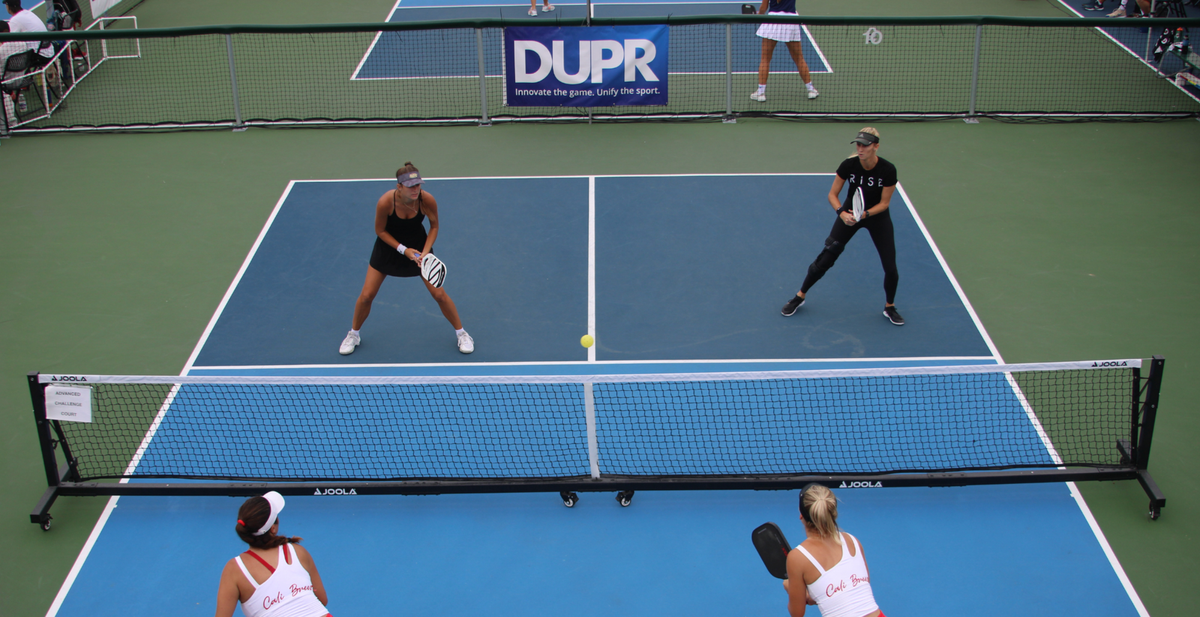
Split Step Pickleball: The Ready Position Most Players Skip
The split step in pickleball is a small hop that puts your body in the perfect ready position just before your opponent strikes the ball. Most recreational players skip it entirely, and that single habit is costing them more points than any other technique gap.
 The Dink PickleballThe Dink Media Team
Fix 3: Find Your Pickleball Counter Power in the Ground, Not Your Arms
The power on a two-handed counter comes from the ground up, which is why Zane was so focused on Paul's habit of jumping and elevating his left foot.
Lift that foot and you disconnect from the only thing that actually drives the ball: the floor.
To feel it, Zane had Paul hit soft counters using only his core. No arms. Stay down, coil the torso, and let the rotation supply the pace.
"This isn't how we're actually going to hit this ball in a real game," Zane said, "but I want you to focus on the coil and staying down."In a live point you coil and use the arms together. The drill just isolates the engine so you stop muscling the ball with your shoulders.
It feels strange at first if you are used to reaching forward with your arms. That awkwardness is the sign it is working.
Ground-up power is the mechanical principle behind every elite kitchen exchange you have ever watched.The same principle shows up in our guide to the two-handed backhand volley and in the modern pickleball strategies winning in 2026.
Pickleball Counterattack: Paula Rives’ Pro Technique
PPA pro Paula Rives breaks down the pickleball counterattack, the shot that turns defense into offense. Learn the footwork, positioning, and anticipation needed to neutralize aggressive bangers.
 The Dink PickleballThe Dink Media Team
What Drills Build a Reliable Pickleball Counter?
The fastest way to drill a reliable pickleball counter is rapid, repeated reps that force the one-hand versus two-hand decision under time pressure.
Zane's go-to is what he calls the six-ball drill.
He holds six balls and feeds them in quick succession. You coil and uncoil on each one, and the catch is built into the speed:
- Keep the backswing tiny. Take too big a swing and you cannot recover for the next ball. As Zane said, "your goose is cooked."
- Reset after every hit. The drill trains your paddle to come straight back to the compact ready position.
- Let the decision happen on its own. Six fast balls do not give you time to think, so the one-hand or two-hand choice gets baked into muscle memory.
For a structured progression you can build a session around, our 12 drills to play your best pickleball in 2026 stacks reps the same way.
If you want a partner-free version, wall drills do the same job.
Our guide to simple wall drills covers speed-up-then-block-and-counter patterns you can run solo in a garage.
For an even deeper breakdown of fast-hands progression, the five-step hand speed drill builds on the same rapid-rep framework and is worth bookmarking alongside the six-ball drill.
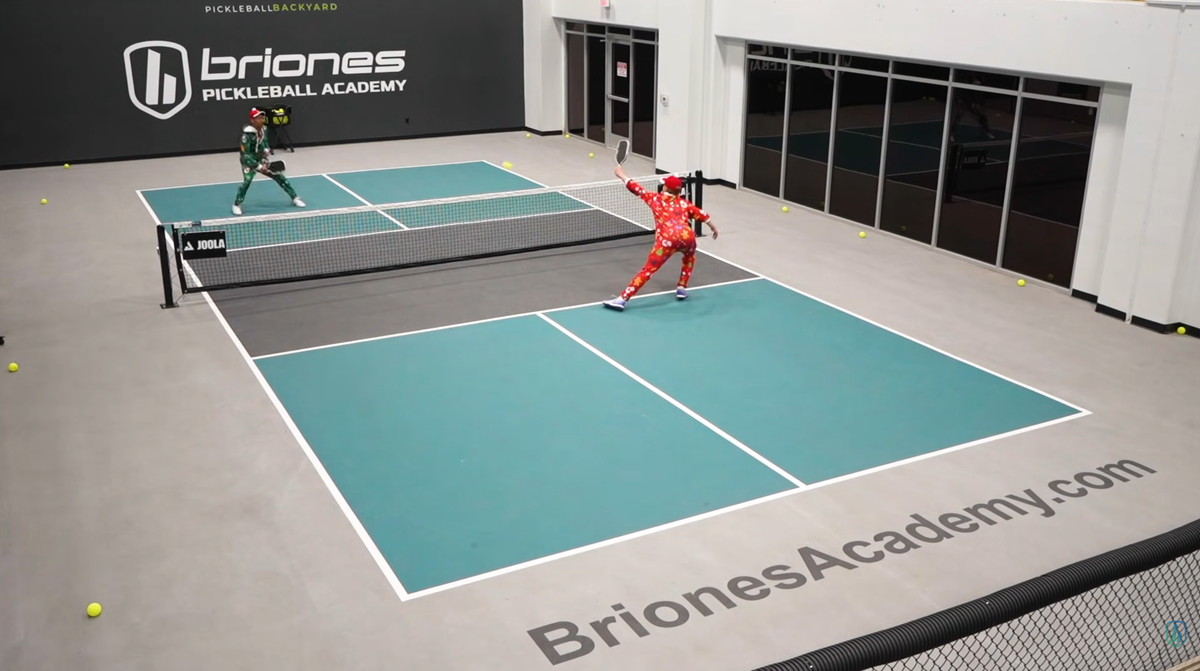
The 12 Pickleball Drills You Need for Your Best Game in 2026
You can’t just show up and hit balls – you need a plan, and that plan should build progressively from simple to complex
 The Dink PickleballThe Dink Media Team
Fix 4: Slide to the Ball While Keeping Your Head Level
When you have time, slide your feet over to the ball instead of leaning, and keep your head level the entire way.
Zane praised Paul for taking his off hand off the paddle and sliding into position rather than reaching, which is the move that keeps a counter under control.
He pointed to Christian Alshon as the model. "Christian does such a good job of staying super stable through his head the entire time," even on his forehand.
The feet do the traveling so the head and eyes never have to.
Sliding, not leaning, is the footwork habit that separates a controlled pickleball counter from a desperate lunge.This is also a positioning issue, not just a footwork one. Where you stand before the ball arrives decides whether you can slide or whether you are forced to lunge.
Our look at off-ball positioning in firefights covers that side of the equation.
To understand the full picture of how footwork connects to kitchen control, how to improve your pickleball footwork is an essential companion read.
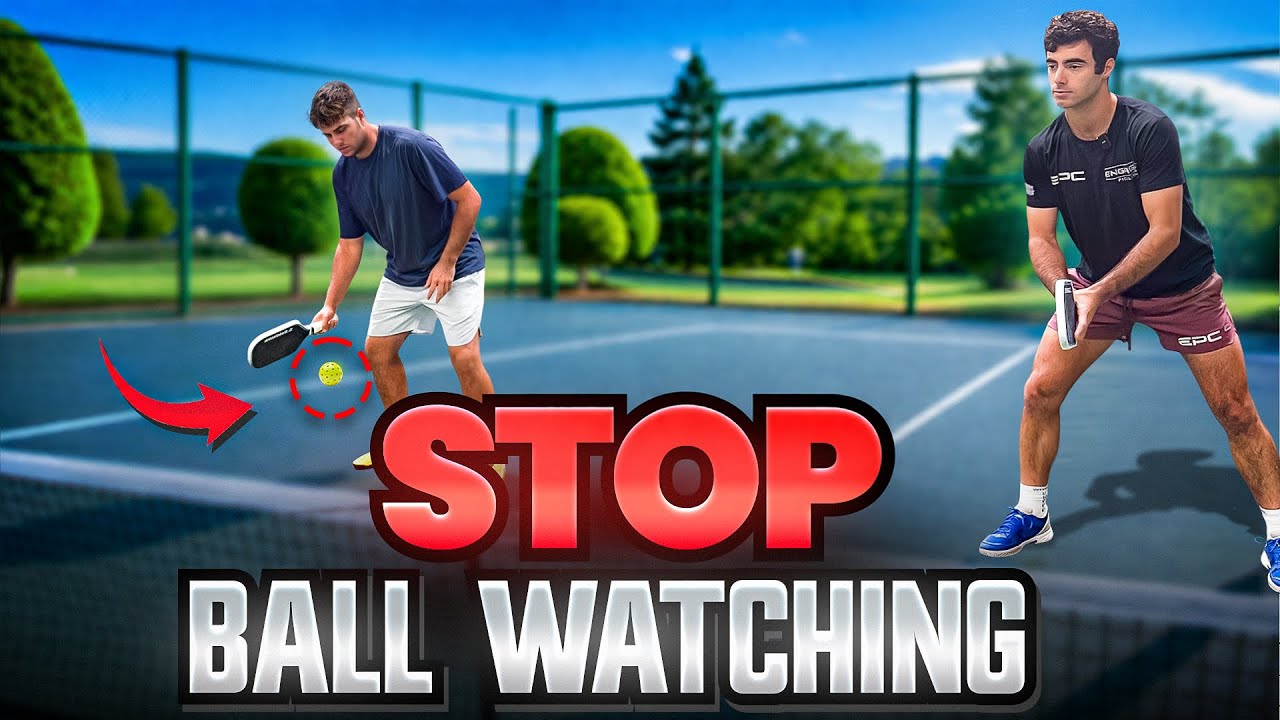
Off-Ball Positioning in Pickleball: Stop Ball Watching
Most pickleball players think the point is decided by whoever hits the ball, but at higher levels, off-ball positioning is what actually controls the court. Master this skill and you’ll transform how you play at the net.
 The Dink PickleballThe Dink Media Team
Fix 5: Know When Not to Counter
A great pickleball counter also means recognizing the ball you should not counter at all.
If a ball pops above the net and gets past you, forcing a counter is how easy points leak away. Reset it or let it be an overhead instead.
That read on the incoming ball is its own skill.
Sharpen it with our guide to anticipation and shot recognition, and when the ball does float high, the overhead smash guide covers two finishing variations for those moments when countering is the wrong call entirely.
Spin matters here too. The same coil that powers your counter can shape it, and Zane has his own take in our piece where Zane explains using spin.
Understanding when not to counter is what turns a defensive player into a smart one.Pair clean counters with a sharp speed-up and you control the net, and defending those exchanges gets easier when you learn to defend with two hands like the pros.
For more on building out your full kitchen arsenal in 2026, the 5 shots you must master before 2026 is worth reading back to back with this one.
💡
Heads up: hundreds of thousands of pickleballers read our free newsletter.
Subscribe herefor cutting edge strategy, insider news, pro analysis, the latest product innovations and more.
Frequently Asked Questions
Why do my pickleball counters keep flying out?
Usually because your head is moving and your ready position is too far in front of your body. Lock your eyes on one focal point, pull your elbows in, and keep your backswing compact. Most spray errors disappear once the motion gets smaller.
When should I use a two-handed pickleball counter versus one hand?
Use two hands when the ball is in the slot beside your hip, where you get the most power and control. Switch to one hand when you are reaching wide or when the ball jams you in front of your body, since two hands lose reach and power in both spots.
Where does power on a pickleball counter come from?
From the ground up through the coil of your core, not from your arms. Keep both feet planted, avoid jumping or lifting your back foot, and rotate your torso into the ball. The arms add to that rotation in a live point, but the engine is your lower half.
What is the best drill to improve my pickleball counter?
A rapid feed drill like Zane Navratil's six-ball drill, where balls come in quick succession so you cannot take a big swing. It forces a compact reset and trains the one-hand versus two-hand decision. Solo wall drills accomplish the same thing if you do not have a partner.
How do I stop jumping up when I counter?
Drill soft counters using only your core rotation while consciously keeping both feet down. Once your body learns it can generate power without leaving the ground, the jump tends to fade on its own. The coil-only drill Zane uses with Paul is the fastest way to rewire that habit.
Anuncie Aqui / Advertise Here
Sua marca para o mundo Pickleball! / Your brand for the Pickleball world!





 English (US) ·
  Portuguese (BR) ·