
 English
  Spanish
  Portuguese
  German
  Italian
  Japanese
  French
  Polish
  Russian
  Netherlands
  Hungarian
  Turkish
  Videos
  Thedink Pickleball

Most pickleball players plateau at the 3.0-4.0 level because they're making the same five critical pickleball mistakes over and over. Enhance Pickleball breaks down exactly what those mistakes are and how to fix them.
Most pickleball players find themselves trapped in the 3.0-4.0 range, and the frustrating part is that the ceiling feels impossible to break through.
The good news? Pickleball mistakes holding you back aren't mysterious or complicated. They're repeatable, fixable patterns that once corrected, can unlock the next level of your game.
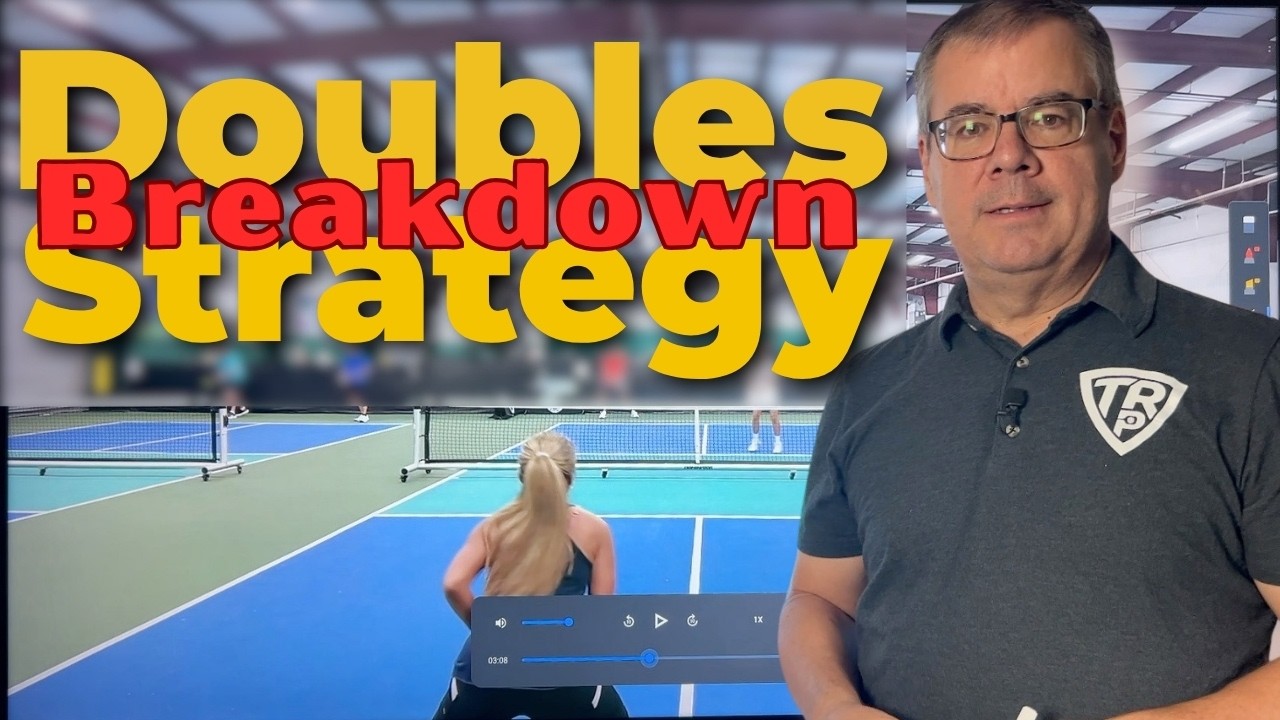
Enhance Pickleball, a YouTube channel with over 305,000 subscribers, recently broke down the five most common pickleball mistakes that keep intermediate players stuck. Understanding these mistakes and how to address them could be the difference between stagnating and finally climbing out of that 3.0-4.0 prison.
Love pickleball? Then you'll love our free newsletter. We send the latest news, tips, and highlights for free each week.
Mistake #1: Not Moving Forward with Your Third Shot
Here's the thing about the third shot: it's not just about hitting the ball. It's about what you do immediately after.
The biggest pickleball mistake most 3.0-4.0 players make is waiting to see if their third shot lands before moving forward.
They hit a drop, pause, then shuffle toward the kitchen line. By then, it's too late. Your opponent has already dictated the point.
The correct approach is counterintuitive.
You need to assume your third shot is good and move forward with the ball.If you hit it badly, you can take a quick step back to defend. But if you wait first, you've already lost positioning advantage.
Kennedy, who appears in the Enhance Pickleball videos, demonstrates this perfectly.
💡
Need some new pickleball gear? Get 20% off select paddles, shoes, and more with code THEDINK at Midwest Racquet Sports
She moves forward immediately after her third shot and reaches near the kitchen line by the time her opponent hits the next ball.
The key is the split step right before your opponent makes contact. This wide, athletic stance with bent knees lets you react to whatever comes back.
Your partner's third shot matters too. Watch what they're doing. If they hit a solid third, move in together.
If it looks shaky, stay back. This synchronized movement is what separates 3.0 players from 4.0 players.
Mistake #2: Approaching the Kitchen Line Unprepared
Once you've moved forward, you need a game plan. Most intermediate players just run aimlessly toward the net without any tactical mindset.
That's a pickleball mistake that gets punished immediately.
There are two distinct ways to approach the kitchen line, and knowing which one applies to your situation changes everything.
- Defense mode happens after you hit a drop. Your opponent has time to hit an aggressive shot, so you get low, bend your knees, and prepare to reset. You're in a reactive, defensive posture.
- Offense mode occurs when you've hit such a good drop or drive that your opponent is forced into a weak position, maybe popping the ball up. Now you're hunting. You do your split step, and the moment you see that popup, you pounce forward to attack.
The problem is that most 3.0-4.0 players don't consciously choose between these two modes. They just arrive at the kitchen and hope for the best. That's not strategy; that's luck.
The split step is your anchor point.Whether you're in defense or offense mode, you need to be on your toes, ready to react.
This athletic position is what allows you to either reset a hard shot or capitalize on a weak return.
Advanced Pickleball Attacking Strategy at the Kitchen Line
There are only three ways to attack at the kitchen line in pickleball. From speed ups off the bounce to reaching in for air attacks, here’s what separates the winners from the rest.
 The Dink PickleballThe Dink Media Team

Mistake #3: Struggling to Handle Hard Drives
Hard drives are a reality at the 4.0 level and beyond. If you can't defend them, you're done.
Most intermediate players pop up hard drives, which invites the opponent to crash in and attack. That's the opposite of what you want.
Against better players, you need to redirect that hard drive right at their feet, keeping them honest and preventing them from advancing.
The technique matters more than reaction time. Here are the key elements:
- A firm wrist is essential. You're not flexing or rotating; you're holding the paddle steady at about seven out of ten in terms of grip tension. This prevents the paddle from twisting in your hand when the ball arrives at speed.
- Your swing path should be linear and forward, not vertical. When you're redirecting a hard ball, you're essentially punching it back, not adding spin. A vertical swing path can cause you to mishit or shank the ball.
- Getting in quickly and getting in close is counterintuitive but crucial. As the returning player, you're the primary target for a drive. If you're far back, your opponent can place the ball right at your feet. If you're all the way in, the ball can only get so low before you can reach it with your paddle.
- Finally, having a paddle with good stability and a large sweet spot makes this significantly easier. A quality paddle naturally shakes less on hard drives, expanding your margin for error.
💡
Need some new pickleball gear? Get 20% off select paddles, shoes, and more with code THEDINK at
Midwest Racquet SportsMistake #4: Driving Multiple Balls in a Row from the Baseline
This is where strategy separates good players from stuck ones.
Hitting two or more drives in a row from the baseline rarely works against 4.0-plus competition.
You might win a point or two, but you're not building a sustainable offensive strategy. The better approach is to use the drive-drop combo.
Hit a good drive. If your opponent returns it well, follow up with a drop and move forward into a dinking situation.
This keeps your opponent off balance and moves you closer to the net where you have more control.
If your drive is good enough to attack on, then pounce. But here's the critical detail: to make pouncing possible, your drive needs topspin.
Without topspin, the ball floats up, and your opponent can hit down at you, making it impossible for you to advance aggressively.
Topspin forces your opponent to hit the ball at net height or lower, which gives you the opening to move in and finish the point.
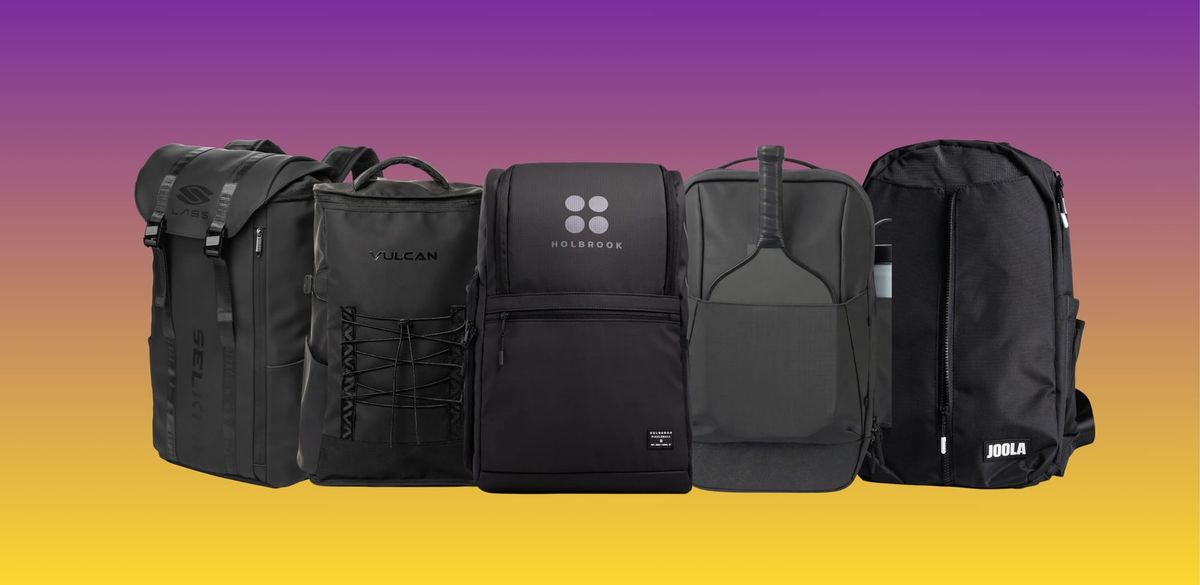
Best Pickleball Backpacks 2026: Options for Every Budget
From small and budget-friendly to large and more premium, here are five pickleball bags we’ve tested and would trust with our paddles any day.
The Dink PickleballAlex E. Weaver
Mistake #5: Having No Backhand Offense
This is the final barrier between 3.0-4.0 and true 4.0-plus play.
From the baseline, you don't necessarily need backhand offense because you have time to run around and use your forehand.
But from the kitchen line, it's non-negotiable. Your opponent will hit balls high to your backhand side, and you need to be able to attack them.
There are two key backhand shots: the roll and the flick.
The roll is used when the ball comes high and you have time.
You're using your whole arm and shoulder, sweeping across with a continental grip. It's a more controlled, aggressive shot.
The flick is used when the ball is lower and you have less time.
You're generating power primarily from your wrist, snapping it to get enough pace to attack your opponent's feet or speed up from a dinking situation.
Most players under 4.0 can't execute either of these shots effectively. That's why their opponents can bail themselves out of difficult positions.
Once you develop backhand offense, you close off escape routes for your opponent.
The two-handed backhand dink is also worth developing. Instead of slicing with one hand, pros use two hands to generate topspin on their backhand dinks.
This makes it much harder for opponents to attack you during dinking rallies.
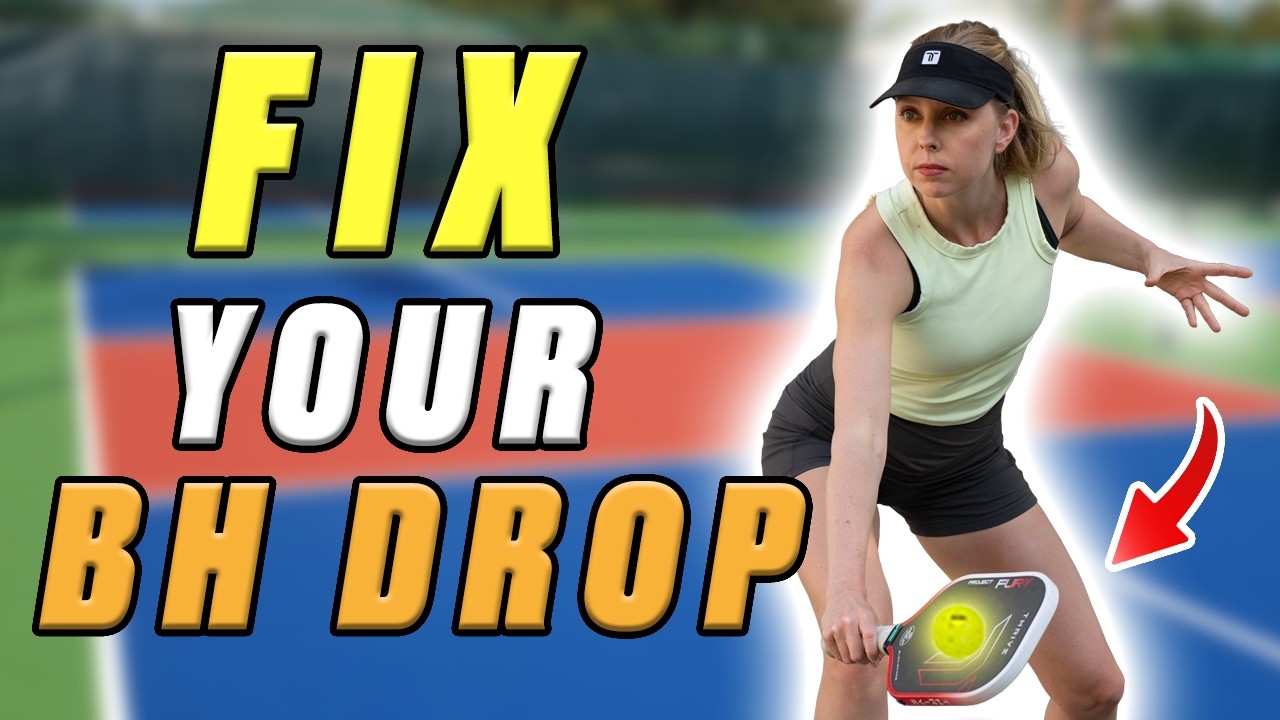
Master the Backhand Drop: A Step-by-Step Guide
The backhand drop is one of the most avoided shots in pickleball, but it doesn’t have to be. With the right progression and focus on fundamentals, you can build a reliable backhand drop that becomes a weapon instead of a weakness.the
The Dink PickleballThe Dink Media Team
Why These Mistakes Matter
Breaking out of 3.0-4.0 prison requires understanding that pickleball is a game of positioning and decision-making, not just stroke production.
Every pickleball mistake listed above is fundamentally about being in the wrong place at the wrong time or making the wrong tactical choice.
The encouraging part is that these aren't talent issues. They're habit issues. Once you reprogram your instincts, you'll see immediate improvement.
💡
Heads up: hundreds of thousands of pickleballers read our free newsletter.
Subscribe herefor cutting edge strategy, insider news, pro analysis, the latest product innovations and more.
Frequently Asked Questions
What's the most important pickleball mistake to fix first?
Forward movement after your third shot is the foundation. If you're not getting to the kitchen quickly and efficiently, everything else falls apart. Master this, and the rest becomes easier.
How long does it take to break out of 3.0-4.0?
It depends on your practice frequency and focus. If you're deliberately working on these five areas, most players see noticeable improvement within 4-6 weeks of consistent play.
Do I need an expensive paddle to handle hard drives better?
A quality paddle with good stability helps, but technique is more important. You can defend hard drives with a mid-range paddle if your wrist is firm and your swing path is linear.
Is the two-handed backhand dink necessary to reach 4.0?
Not necessarily to reach 4.0, but it's highly recommended. Most high-level players use it because it's simply more effective at generating topspin and creating offensive opportunities.
Can I skip developing backhand offense and still improve?
You can improve, but you'll hit a ceiling. Backhand offense from the kitchen line is what separates 4.0 players from 3.5 players. Without it, your opponents will exploit that weakness relentlessly.
Anuncie Aqui / Advertise Here
Sua marca para o mundo Pickleball! / Your brand for the Pickleball world!





 English (US) ·
  Portuguese (BR) ·