
 English
  Spanish
  Portuguese
  German
  Italian
  Japanese
  French
  Polish
  Russian
  Netherlands
  Hungarian
  Turkish
  Videos
  Thedink Pickleball

According to a top coach, winning at the kitchen comes down to placement, anticipation, and staying engaged.
The kitchen is where pickleball matches are won and lost. It's the seven-foot zone on either side of the net where the game slows down, where patience beats power, and where one mistake can cost you the point. But here's the thing: most players fall into the same traps in the kitchen, and they don't even realize it.
The Aylex Pickleball Academy breaks down five essential steps to help you avoid those traps and become nearly invincible in this critical zone.
Love pickleball? Then you'll love our free newsletter. We send the latest news, tips, and highlights for free each week.
Step 1: Avoid Dead Dinks in Your Pickleball Kitchen Strategy
A dead dink is any ball that sits up high enough for your opponent to attack.
You know the one. It bounces at net level or higher, practically begging to be put away.
The problem is that most players do not even recognize when they are hitting dead dinks. They keep feeding their opponents easy opportunities.
The key is to focus on placement over power.
Instead of trying to hit the ball hard, aim for depth and angle. Pull your opponent wide, hit to their backhand, or keep the ball low and tight to the net.
When you prioritize placement, you are building the point rather than handing it away.
One practical tip: stay leaned in when you dink.
A lot of players pop their hips up during the stroke, which elevates the ball. If you maintain a slight forward lean, you will keep the ball lower and harder to attack.
Step 2: Master Placement Over Power in Pickleball Kitchen Strategy
This builds directly on step one, but it deserves its own focus.
When you are in a dinking rally, your instinct might be to hit harder or faster. Resist that urge.
A softer, more precise dink is far more valuable than a hard one that sits up.
Think of it as building a point.
You are not trying to win it on one shot. You are setting yourself up to win it on the next one.
By pulling your opponent wide or targeting their weaker side, you create openings.
When they are forced into uncomfortable positions, that is when you get the pop up you need.
If you are working on control, check out this guide on how to choose the right paddle.
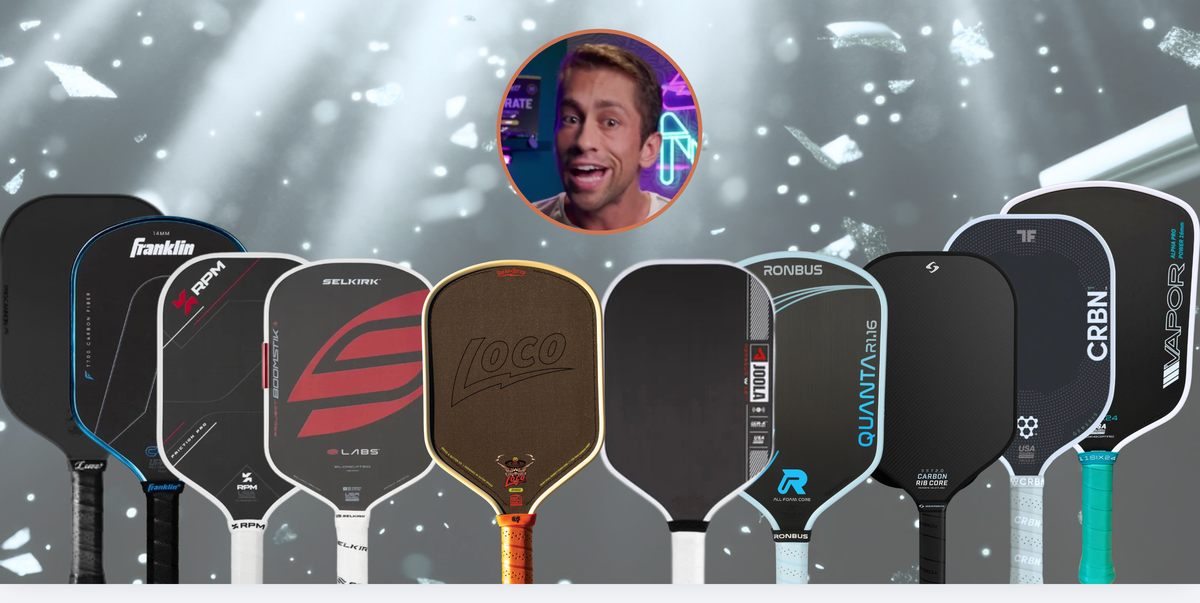
5 Tips for Choosing the Best Pickleball Paddle for Your Game
Pro Zane Navratil breaks down his top five picks for choosing the correct pickleball paddle for your game: don’t cheap out, trust the reviewers, and avoid extremes.
 The Dink PickleballThe Dink Media Team
Step 3: Look to Volley First in Pickleball Kitchen Strategy
Volleying is one of the most underrated skills in pickleball.
Most players let the ball bounce before returning it. But when you volley, you take time away from your opponent.
That matters because opponents rely on time to set up attacks. If you cut that time in half, they are forced into defensive shots. Suddenly, they are on their heels instead of dictating play.
The trick is knowing your comfortable volley range.
- Stand at the kitchen line and identify how far you can reach comfortably.
- Any ball within that range should be volleyed, not bounced.
- This keeps you aggressive and your opponent reactive.
For more on aggressive play styles, see a attack vs reset decision matrix.
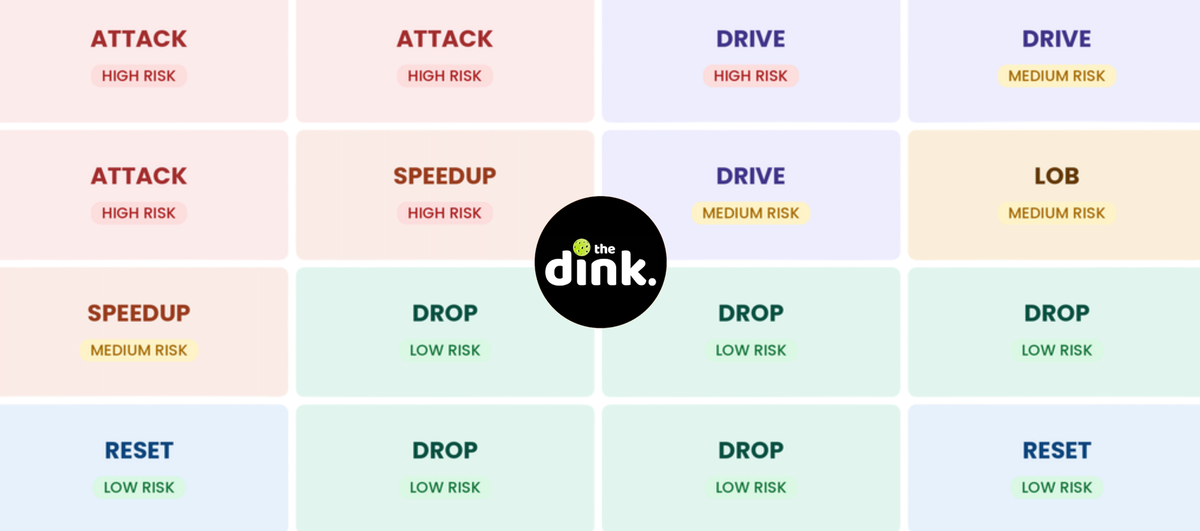
Decision Matrix: When to Attack or Reset in Pickleball
Pickleball is really all about two key factors: your court positioning and the height of the ball. This matrix decodes the game for you.
 The Dink PickleballThe Dink Media Team
Step 4: Track the Ball With Your Paddle in Pickleball Kitchen Strategy
After you hit a dink, what happens next matters.
If your paddle drops to your side, you are already at a disadvantage. Keep your paddle up and actively tracking the ball.
This keeps you engaged and ready for the next shot.
- When your paddle is down, your reaction time slows.
- When your paddle is up, you are locked in.
This is especially important in faster rallies.
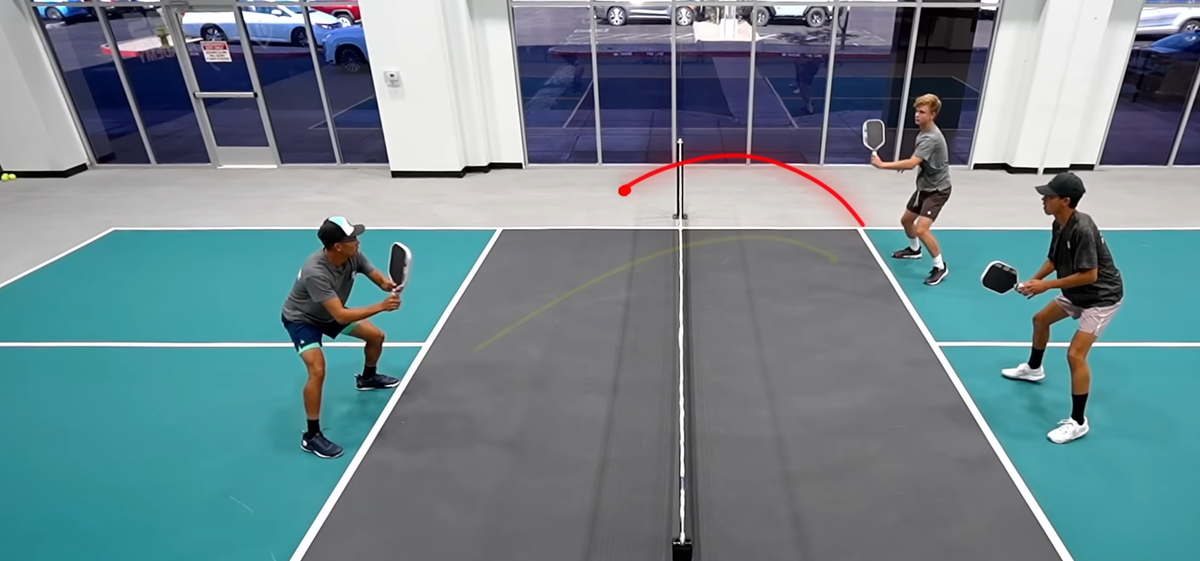
4 Pickleball Offensive Strategy Tactics You Need Now
Advanced pickleball isn’t about hitting the same shot over and over. It’s about reading your opponents in real-time and adjusting offensive and defensive strategy accordingly.
 The Dink PickleballThe Dink Media Team
Step 5: Always Expect an Attack
Step 5: Always Expect an Attack in Pickleball Kitchen Strategy
Even if you do everything right, your opponent may still attack.
That is part of the game. The key is being ready for it at all times.
When you expect an attack, you are already in position to defend or counter. Your paddle is up. You are balanced. You are watching closely.
If you are caught off guard, you are vulnerable. If you are prepared, you can turn defense into offense.
Modern paddles and spin techniques have changed the game.
Putting It All Together With a Complete Pickleball Kitchen Strategy
These five steps work together to create a complete pickleball kitchen strategy.
You are avoiding dead dinks, placing the ball precisely, taking time away with volleys, staying engaged, and anticipating attacks.
It is simple, but it requires focus and repetition.
The beauty of this approach is that it works at every level. Whether you are a beginner or an advanced player, these fundamentals apply.
Master them, and you will spend less time scrambling and more time finishing points.
For more tips on improving your game, explore how to improve your pickleball game and pickleball strategy basics.
Up Your Game - The Dink Pickleball
The Dink is the premier pickleball media & events company. Daily news, stories, instruction & reviews. Amateur tournaments, pro & celebrity exhibitions and broadcasts.
 The Dink Pickleball
Frequently Asked Questions
What is the pickleball kitchen strategy?
Pickleball kitchen strategy focuses on control, placement, and patience at the net. It helps players win points by avoiding mistakes and forcing opponents into errors.
Why is placement more important than power in the kitchen?
Placement keeps the ball low and forces your opponent out of position. Power often leads to pop ups that can be easily attacked.
When should I volley instead of letting the ball bounce?
You should volley whenever the ball is within your comfortable reach. This reduces your opponent’s reaction time and keeps you in control.
How do I avoid hitting dead dinks?
Focus on keeping the ball low and angled rather than hitting hard. A slight forward lean can help prevent the ball from popping up.
What is the biggest mistake players make in the kitchen?
The biggest mistake is not being ready for an attack. Keeping your paddle up and staying engaged improves reaction time and defense.
Anuncie Aqui / Advertise Here
Sua marca para o mundo Pickleball! / Your brand for the Pickleball world!





 English (US) ·
  Portuguese (BR) ·