
 English
  Spanish
  Portuguese
  German
  Italian
  Japanese
  French
  Polish
  Russian
  Netherlands
  Hungarian
  Turkish
  Videos
  Thedink Pickleball

Most intermediate pickleball players think they just need more time on the court. The real problem is specific habits that guarantee you stay stuck at 3.5 or worse.
If you have been playing pickleball for a while and feel like your game should be better than it is, the problem almost certainly is not your athletic ability or your paddle.
As an intermediate pickleball player, the habits you have quietly built into your game are likely doing more damage than any single bad shot ever could.
These are not dramatic mistakes. They are subtle, repeated patterns that feel totally normal in the moment but slowly lock you into the same level indefinitely.
The breakdown below comes from PaddleBoss Pickleball Training on YouTube, where coach Xavier has spent years diagnosing exactly why recreational players get stuck and what it takes to finally break through.
Here are the seven habits to cut out of your game right now.
Love pickleball? Then you'll love our free newsletter. We send the latest news, tips, and highlights for free each week.
Habit 1: Trying to Hit a Winner on Every Single Ball
This is the most common mistake at the 3.5 level, and it costs players more points than any other single habit.
The mindset is offense first, always, on every ball regardless of position or situation.
Better players ask one question before every shot: what is the highest percentage option available right now?
Most of the time, that answer is a controlled dink, a patient drop, or simply keeping the ball in play.
You need to stop treating every rally as a race to end the point. Let the point develop.
Disciplined pickleball creates real opportunities naturally, rather than forcing low percentage attacks from bad positions.If you find yourself speeding up balls from below the net or going for tight angles with no setup, you are playing offense on defense.
That is a fast way to donate points.
Habit 2: Avoiding the Soft Game Entirely
A lot of players believe improvement means hitting harder. Bigger serves, faster hands, more aggressive exchanges.
That belief is wrong, and it is one of the clearest signs of a player stuck at the 3.5 level.
The soft game is what separates average players from advanced players. If you cannot execute a reliable third shot drop, you will never get to the kitchen consistently. If you cannot reset under pressure, stronger players will simply overwhelm you until you crack.
Nobody posts a highlight reel of a great reset. That does not make it less important.
It makes it more important, because most of your competition is skipping it entirely.
The players who embrace dinks, drops, and resets are the ones who actually improve.
These shots slow the point down and give you control, and control in pickleball is everything.
💡
Need some new pickleball gear? Get 20% off select paddles, shoes, and more with code THEDINK at
Midwest Racquet SportsIs Your Court Position Costing You Points?
Yes, and it is probably doing so on almost every rally. Bad positioning is the invisible tax that makes every shot harder than it should be.
Common positioning errors at the 3.5 level include:
- Staying too far back when the situation calls for moving in
- Attacking from the transition zone instead of waiting
- Leaving a wide gap down the middle of the court
- Drifting into contact instead of getting balanced before the shot
That is positional intelligence built from knowing exactly where to stand before the ball is even struck.
The kitchen line is the strongest position on the court.
If you are not learning how to work your way there patiently and consistently, you are making every single shot harder than it needs to be.
Pickleball Shot Placement: Complete Winning Guide
Whether you’re serving, returning, dinking, or driving, knowing where to aim gives you control over the rally and keeps your opponent reacting instead of attacking.
 The Dink PickleballThe Dink Media Team
Habit 4: Blaming Your Partner for Losses
This one is uncomfortable, but it is worth saying directly. Players who blame their partners stay stuck the longest. Full stop.
When you spend mental energy cataloguing everything your partner did wrong, you are not identifying what you could have done differently.
And the only game you can actually improve is your own.
Higher-level players take ownership.They ask themselves what shot selection they could improve, what position they should have been in, what opportunity they missed.
That self-awareness is what drives real improvement over time.
Being coachable and self-aware is not a personality trait. It is a skill, and it compounds fast once you start practicing it.
10 Pickleball Doubles Strategy Mistakes Beginners Make
Most pickleball doubles players lose points not because of bad shots, but because of poor positioning, weak communication, and lack of structure. Here are the 10 pickleball doubles strategy mistakes that separate casual players from consistent winners.
 The Dink PickleballThe Dink Media Team
Are You Playing Random Pickleball Without Knowing It?
Random pickleball means reacting to every shot with no structure behind your decisions.
You are not building points. You are just hitting whatever feels available in that exact moment.
High-level pickleball is sequential. Better players understand that shots connect to each other in predictable patterns:
- The drop gets you to the kitchen line
- The dink creates pressure and forces errors
- The right speed-up or volley finishes the point
If you want to understand how structured point construction actually works, studying two-shot combos and pro patterns is one of the fastest ways to shift your thinking.
Start treating each shot as part of a sequence rather than an isolated event.
The 5 Mistakes 4.0 Pickleball Players Make Over and Over
Most 4.0 pickleball players already have the shots. The real problem is pickleball decision making, pressure management, and knowing when to use the right tool.
 The Dink PickleballThe Dink Media Team
Habit 6: Refusing to Be Patient
Patience is not passive. It is a strategy, and most amateur players completely ignore it.
The truth about recreational pickleball is straightforward: most points are lost, not won.
That means if you simply keep the ball in play longer than your opponent, you will win more games almost immediately without changing anything else about your technique.
When you force a speed-up from a neutral position or go for a low percentage angle because you are bored in the rally, you are doing your opponent a favor.
You are taking the pressure off them and putting it squarely on yourself.
Slow your game down. Wait for a ball that is genuinely attackable.
If you need a framework for when that actually is, these five factors will help you decide when a speed-up makes sense versus when you are just being impatient.
The players who master patience make their opponents crack. That is not luck. That is pressure through consistency, and it is a legitimate weapon.
Pro Breakdown: Pickleball Match Strategy That Wins Points
A pro breaks down 3.0/3.5 pickleball match strategy point by point, revealing what each team did well and how to win more at competitive rec play.
 The Dink PickleballEric Roddy
Habit 7: Thinking Games Alone Will Make You Better
This is probably the most widespread trap in recreational pickleball.
Players assume that if they just play more, improvement will follow automatically. It will not.
If you bring the same bad habits to every game, more games simply means more repetitions of those bad habits.
You are not training. You are reinforcing the problem.
Higher-level players do something different. They identify specific weaknesses and work on them through intentional drilling.They practice drops until drops feel automatic.
They work resets until resetting under pressure is no longer stressful. Then they take those sharpened skills into games where they actually hold up.
The path forward is not complicated. It means being honest about your weakest shots and dedicating focused time to fixing them.
These drills are a practical starting point for turning your worst shots into reliable ones.
Pickleball Mental Health: Playing More Boosts Wellbeing
Players who hit the court three or more times per week, for at least two hours each session, scored significantly higher on mental wellbeing tests than those who played once or twice.
 The Dink PickleballAlex E. Weaver
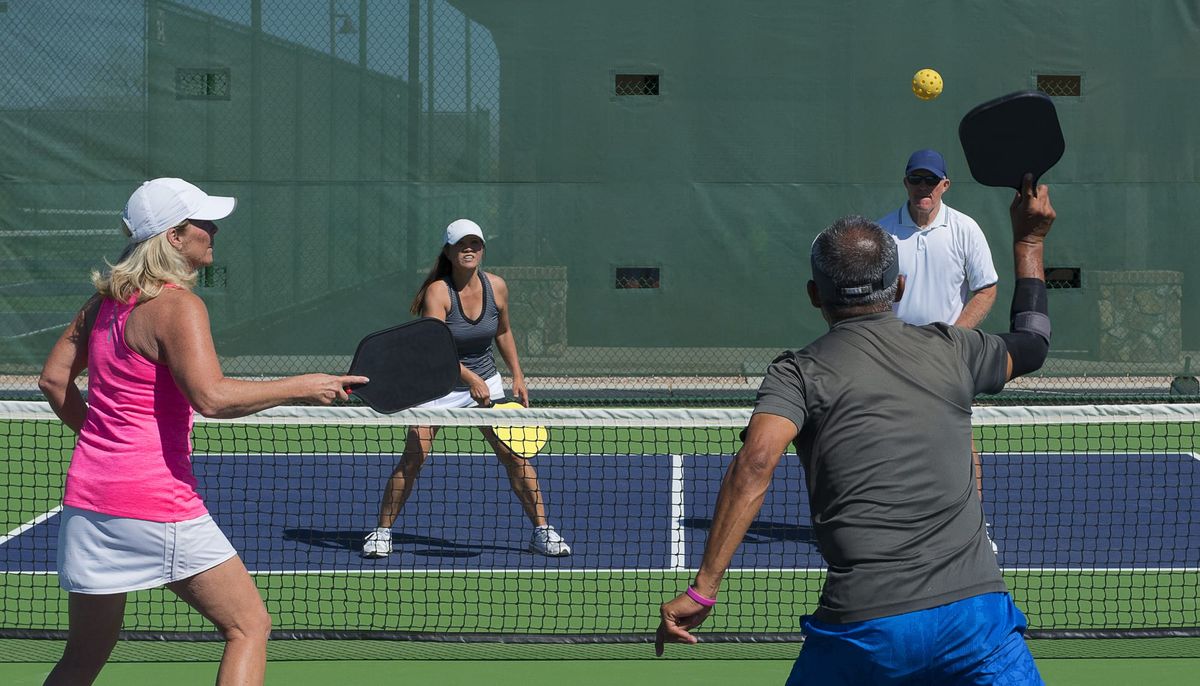
What Separates Players Who Break Through
When you look at all seven habits together, a clear picture emerges. Players do not stay stuck at 3.5 because they lack talent.
They stay stuck because their habits keep them there.
The fix is not more complexity. It is more discipline in the areas that actually matter.
That means controlling impulse decisions at critical moments, building a reliable soft game, and learning to construct points rather than just react to them.
Players who improve fast share one thing in common. They are honest about what is not working and they do something specific about it.
Not just more games, but more focused and intentional work on the right things.
You want to feel calm when the ball comes to you. You want to be the player people trust to partner with.
That player is built through smart habits, not just raw time on the court.
Start by cutting one of these seven habits from your game this week. Pick the one that stings the most when you read it.
That is almost certainly the one costing you the most points right now.
Understanding why you keep losing is the first honest step toward actually winning more.
Once you address your habits, the technical side of the game starts to feel more manageable.
Good fundamentals like these four shots become much easier to build when your positioning, patience, and decision-making are already working in your favor.
And if you want to understand what separates 4.0 players from 5.0 players after you make this first leap, this breakdown shows you exactly what the next ceiling looks like and how to prepare for it.
💡
Heads up: hundreds of thousands of pickleballers read our free newsletter.
Subscribe herefor cutting edge strategy, insider news, pro analysis, the latest product innovations and more.
Frequently Asked Questions
What does it actually mean to be a 3.5 pickleball player?
A 3.5 pickleball player can sustain rallies and understands basic strategy, but tends to force shots, struggle with soft game consistency, and make positioning errors that give opponents easy opportunities. The defining characteristic is inconsistency, especially under pressure. Most players at this level know what they should do but lack the habits to do it automatically.
How do I stop trying to hit winners on every shot in pickleball?
Before every shot, ask yourself what the highest percentage option is given your current position and the ball height. If the answer is not a clear attacking opportunity, execute a controlled dink or reset instead. Repeating this decision-making process builds the habit over time.
Why is the soft game so important in pickleball?
The soft game, which includes drops, dinks, and resets, controls the pace of the point and keeps you from giving your opponent easy attacks. Without it, you cannot reliably get to the kitchen line or recover when you are pulled out of position. Advanced players use soft shots to create pressure without making unforced errors.
Will drilling actually help my pickleball game more than playing?
Yes, especially if you have a specific weakness. Intentional drilling isolates a skill and lets you repeat it under controlled conditions until it becomes automatic. Playing games reinforces whatever habits you already have, which helps if your habits are good and hurts if they are not.
How do I become more patient during pickleball points?
Set a simple rule for yourself before a game: make one more ball than your opponent and avoid speed-ups unless the ball is clearly attackable. Most amateur players self-destruct under consistent pressure, so staying disciplined for one extra shot per rally can dramatically shift your win rate. Patience is a tactic, not a temperament.
Anuncie Aqui / Advertise Here
Sua marca para o mundo Pickleball! / Your brand for the Pickleball world!





 English (US) ·
  Portuguese (BR) ·