
 English
  Spanish
  Portuguese
  German
  Italian
  Japanese
  French
  Polish
  Russian
  Netherlands
  Hungarian
  Turkish
  Videos
  Thedink Pickleball

Here's the hard truth: most players stay stuck at the same level for years because they're practicing wrong.
💡
If your idea of improvement is just playing more games and hoping something clicks, you're missing the real secret.
The difference between a 3.5 and a 4.5 player isn't talent or court time—it's pickleball drills that target specific weaknesses instead of just grinding out casual matches.
Pro player Michael Loyd, a top-ranked men's singles competitor with over 135 match wins on the professional tour, recently shared the exact pickleball drills he still uses as a pro to build consistency, improve decision-making, and fix the weaknesses that keep players stuck.
The best part? Every single one scales from beginner all the way to advanced.
Love pickleball? Then you'll love our free newsletter. We send the latest news, tips, and highlights for free each week.
Why Games Expose Weaknesses But Drills Fix Them
Let's start with the fundamental problem. Games expose your weaknesses while drills fix them.
Most intermediate players never actually practice their weaknesses—they only hit shots they're already comfortable with. That's why you see the same mistakes happening match after match.
Drilling lets you get more reps in less time and prove consistency faster. It builds confidence under pressure in a way casual play never can. If you only steal one of these pickleball drills and commit to it, your game will still level up noticeably.
1. Cooperative Dinking (The Foundation)
This is the most important pickleball drill in the sport, and also the most butchered.
Here's how it works:
- Two players stand at the kitchen line and dink crosscourt only.
- No attacking, no speedups.
- Your goal isn't to win—it's to keep the rally alive.
Focus on mixing up different paces and spins. Alternate between hitting your opponent's inside foot (toward the middle) and their outside foot (near the line). You want soft hands and high margin over the net, with consistent height and depth on every dink.
A good target for most players starting out is 20 dinks in a row. If you can't hit 20 consecutive dinks, attacking is going to be a fantasy. Pro players like Ben Johns can dink forever without missing, and that's exactly why they get to the attackable ball first.
Key Focus Points:
- Mix up different paces and spins
- Alternate between inside and outside foot targets
- Maintain soft hands and high margin over the net
- Aim for 20 consecutive dinks before progressing
2. Dink Attack Decision Drill (Learning When to Attack)
This is where dinking stops being passive and starts turning into points.
- Both players start at the kitchen line and rally straight ahead with dinks only.
- After five consecutive dinks (not including the feed), either player is allowed to move their opponent around, change direction, or attack if the ball is attackable.
Here's why this matters: it forces players to earn their attack instead of forcing it. Most intermediate players speed up the wrong balls because they haven't trained their decision-making. This pickleball drill teaches you when to attack, not just how.
For beginners, increase the required dink count to seven or ten before attacking. If you're advanced, designate one player as the attacker while the defender's goal is to reset and regain control. Switch roles every five points so you're working on both skill sets.
Progression Levels:
- Beginner: Increase dink count to 7-10 before attacking
- Advanced: Designate attacker and defender roles, switch every 5 points
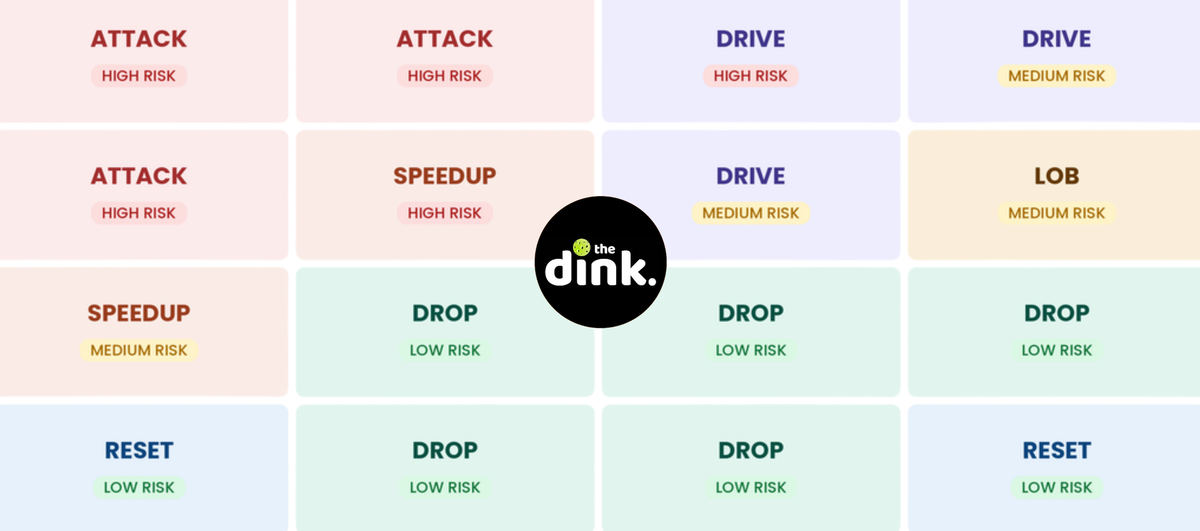
Decision Matrix: When to Attack or Reset in Pickleball
Pickleball is really all about two key factors: your court positioning and the height of the ball. This matrix decodes the game for you.
 The Dink PickleballThe Dink Media Team
3. Third Shot Drop Factory (Building Consistency Under Pressure)
If you want to move up levels, this pickleball drill is non-negotiable.
- Player A starts at the baseline while Player B is at the kitchen.
- Player A hits only third shot drops while Player B hits the ball back cooperatively.
Focus on a nice big arc with a soft landing. Aim for your opponent's feet, and you'd rather miss long than into the net. Give yourself about two to three feet of margin over the net—don't flirt with it.
💡
Need some new pickleball gear? Get 20% off select paddles, shoes, and more with code THEDINK at Midwest Racquet Sports
For beginners, have your partner hit balls back cooperatively. For advanced players, have your kitchen player make it more difficult by moving you side to side and taking balls out of the air. Once you feel confident, keep score and have Player A try to reach five points before Player B reaches eleven.
Here's a pro tip: consistency beats perfection.
Five okay drops beats one perfect highlight reel every single time.Beginner vs. Advanced:
- Beginner: Partner hits cooperatively to both forehand and backhand
- Advanced: Partner moves you side to side and takes balls out of the air
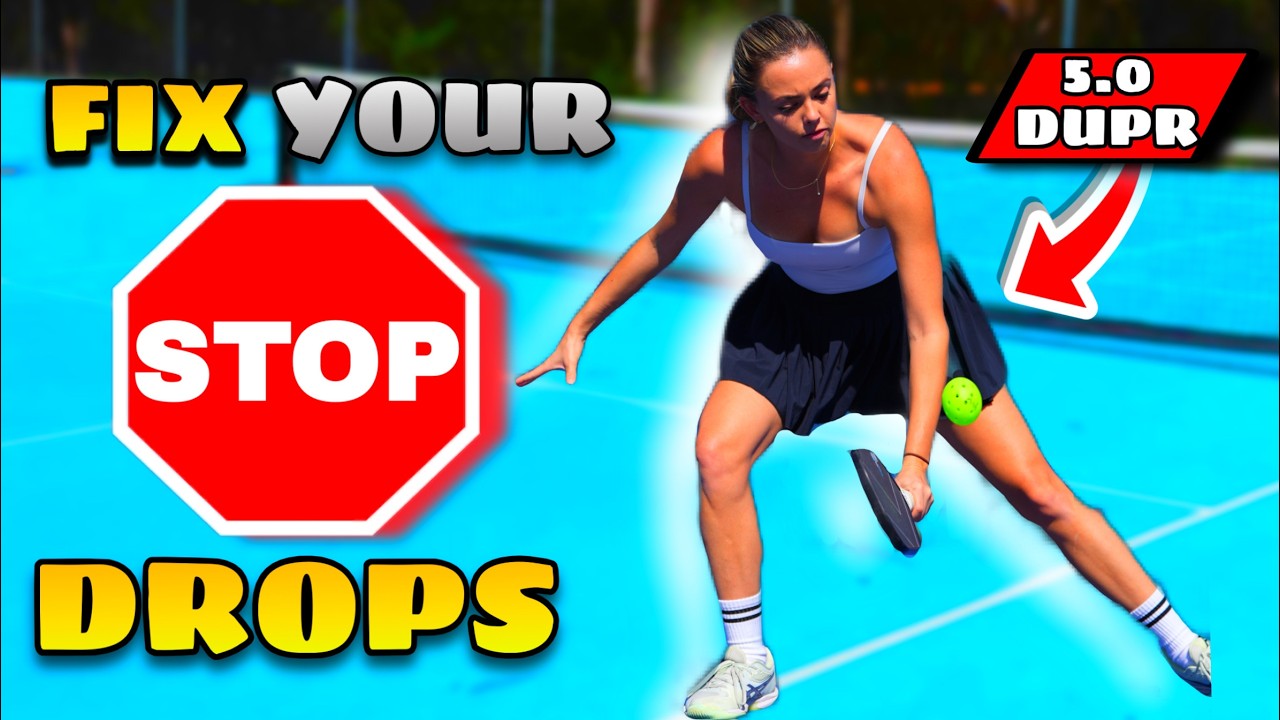
5 Drop Shot Techniques to Elevate Your Pickleball Game
The drop shot is one of pickleball’s most essential skills, yet it’s also one of the most misunderstood.
 The Dink PickleballThe Dink Media Team
4. Reflex Hands Battles (Speed and Reaction Time)
This pickleball drill separates casual players from competitors.
Both players stand at the kitchen line with fast cooperative volleys. The paddle stays up and the swing stays compact.
- Start by alternating your target on your opponent.
- Hit down the line to their backhand while they hit crosscourt to yours.
- This forms a nice little butterfly pattern that helps you get in rhythm.
- Focus on short punches, not full long swings.
- Keep your paddle in front of your chest and track the ball all the way.
To progress, step about a foot inside the kitchen line. This makes the reactions harder and everything goes quicker. After you've done that, back up and you'll feel like you have way more time than before.
Pro player Anna Leigh Waters is a perfect example—her paddle barely moves, but she's there in time and hits the ball back with pace and accuracy.
Technique Tips:
- Keep paddle up the entire time
- Use short punches, not full swings
- Track the ball all the way to contact
- Alternate forehand and backhand targets
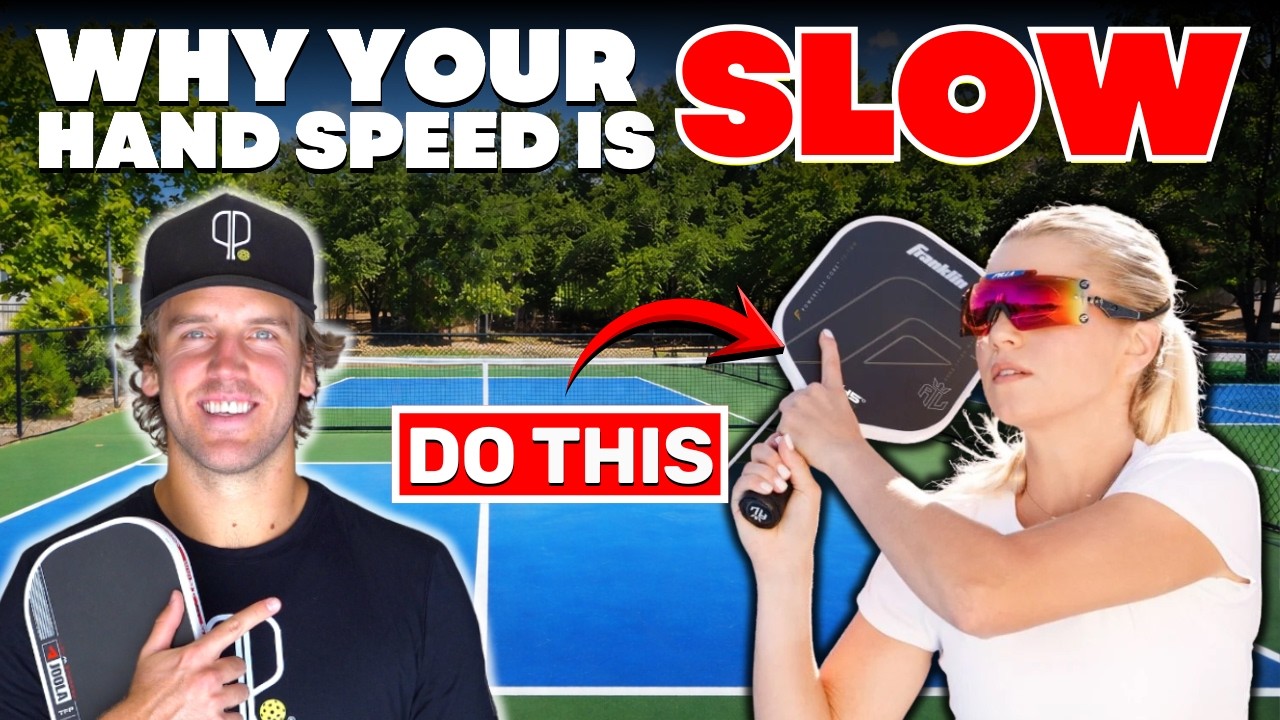
Master the F.A.S.T. Framework for Pickleball Hand Speed
Coach Austin Hardy’s F.A.S.T. system helps pickleball players develop quicker hands by focusing on stance, paddle positioning, footwork shifts, and consistent training habits
 The Dink PickleballThe Dink Media Team
5. Serve and Return Depth Drill (The Overlooked Foundation)
You hit these shots every single point, yet almost nobody practices them.
Server serves only deep while the returner returns only deep. No rally afterwards—just reset and repeat.
- Set up cones or targets on the court about three feet in front of the baseline on both sides.
- The goal is to get ten good deep serves and ten good deep returns.
- They don't have to come on the same series—if you hit a short serve and your partner hits a great return, that adds to their total.
Why this pickleball drill is gold: it improves consistency instantly and builds pressure-free confidence. If your serve or return lands short, you're giving your opponent a free ride to the kitchen plus the ability to be offensive. Make sure you're keeping the ball on your paddle as long as you can to help with depth.
Setup:
- Place cones 3 feet in front of baseline
- Goal: 10 deep serves + 10 deep returns
- Track separately (don't need to match)
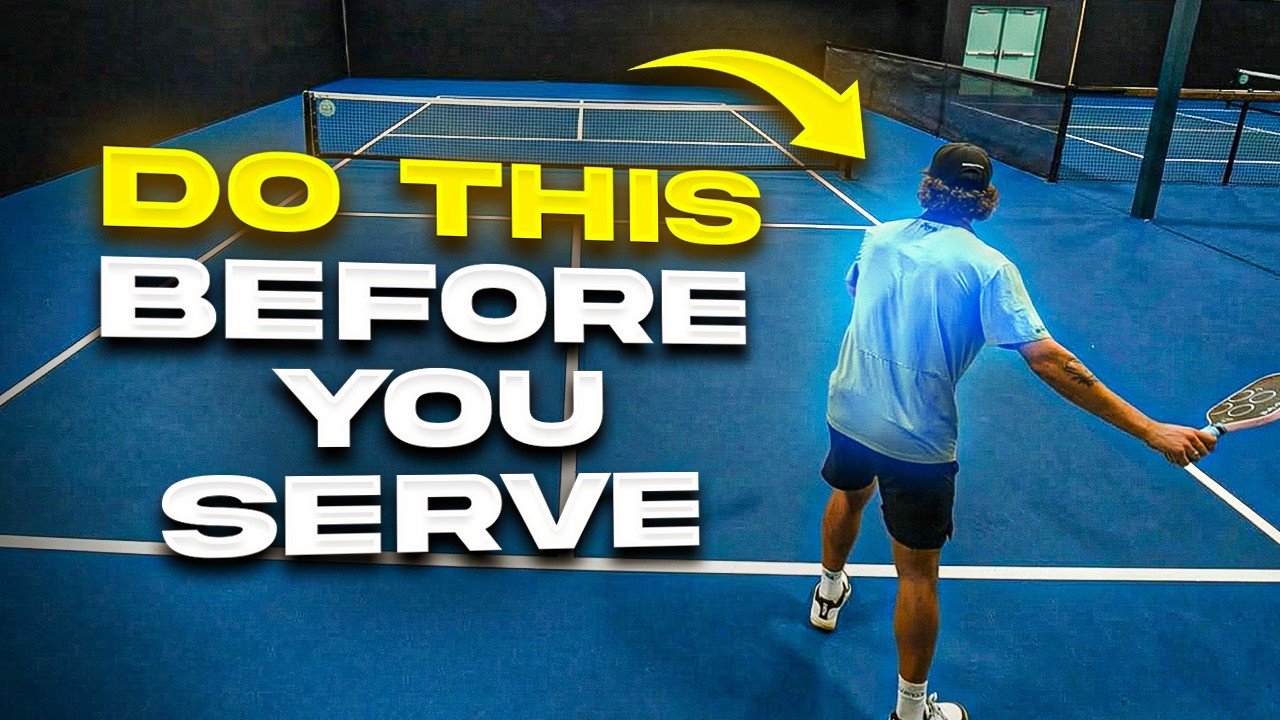
The Pickleball Serve Basics: Rules, Technique & Pro Tips from Michael Loyd
Fix your serve, and your entire game gets easier. You start points on offense instead of defense. Your opponent’s return is weaker. Your third shot is simpler. It all flows from that one shot you control completely.
 The Dink PickleballThe Dink Media Team
6. Transition Zone Survival Game (Movement and Pressure)
One player starts at the baseline while the other is at the kitchen line.
- The baseline player must advance through drops and drives while the kitchen player blocks, counters, and looks for offensive opportunities.
- The kitchen line player tries to keep the baseline player back with whatever they can—rolls, flicks, any offensive opportunity.
- The baseline player uses drives and drops (no lobs) to get all the way up to the kitchen line.
Make sure to split step before each shot while in transition. When under pressure, the goal isn't speed—it's control while moving forward. To turn this into a game, keep score where the baseline player must reach seven points while the kitchen player needs eleven.
Key Coaching Cues:
- Split step before every shot
- Focus on control, not speed
- Stay balanced throughout movement
- Use both drives and drops to advance
Master the Pickleball Transition Zone: Attack or Reset
The best players in the world aren’t just comfortable in the transition zone – they actively use it to their advantage
 The Dink PickleballThe Dink Media Team
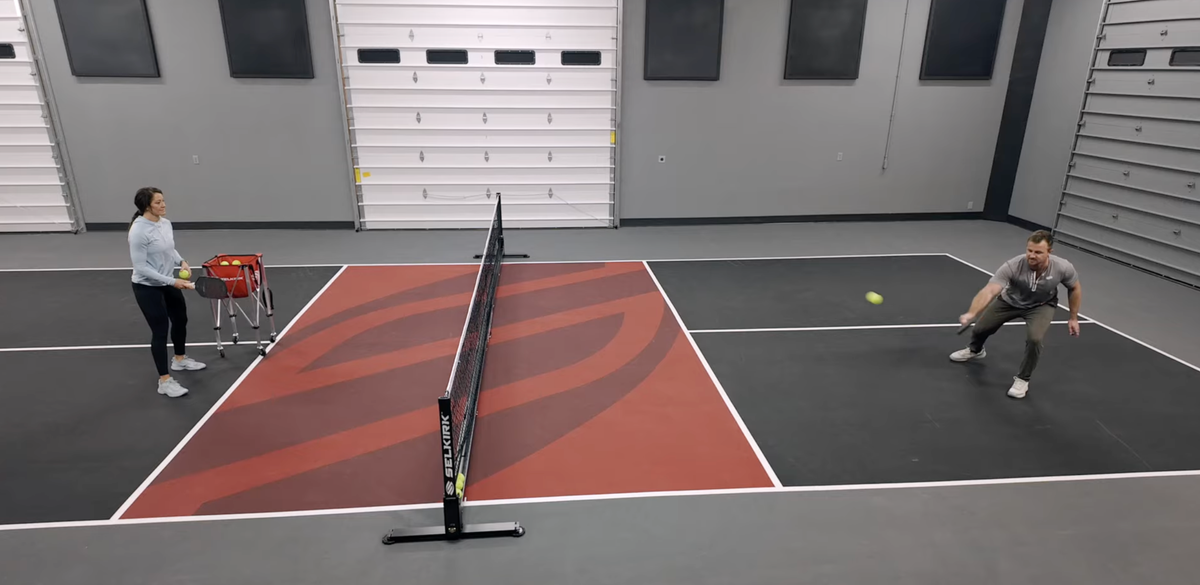
7. Cooperative to Competitive Game (Tying It All Together)
This is where all the pieces come together. Start each point with cooperative play. After all players establish themselves at the kitchen line and one dink is hit, the point is now live.
Begin with a cooperative serve and return, trying to get the ball nice and deep. Stay cooperative until you're all the way up at the kitchen line and that first dink is played.
After that, everything goes—you can speed up, lob, move them around, do whatever you want.
Play to seven or eleven depending on whether it's one-on-one or four players on a full court. This pickleball drill forces patient decision-making while blending drills into real points. It also exposes habits under pressure, which is where skills actually turn into wins.
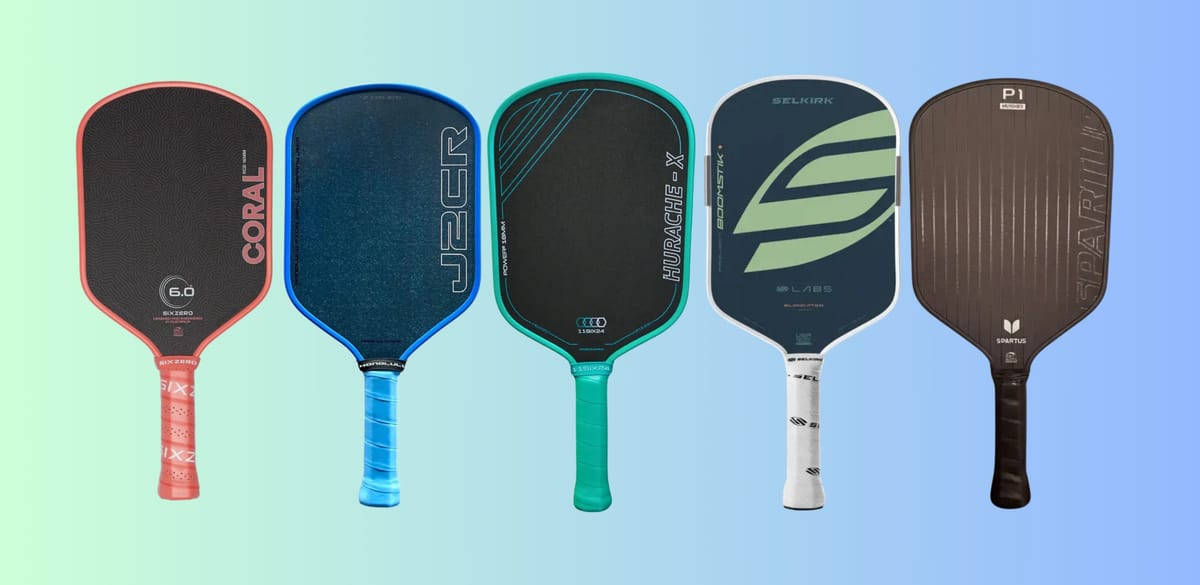
Pickleball Paddle Grit: 5 Durable Paddle Picks
Traditionally, a paddle’s surface grit is the first thing to wear out. Until now. A slew of top brands have entered the market with longer-lasting grit technology. Here are 5 of the best.
 The Dink PickleballAlex E. Weaver
The Real Takeaway
Games expose your weaknesses while drills fix them. The players who break through plateaus aren't the ones grinding out more matches—they're the ones who commit to targeted practice. These seven pickleball drills work because they're scalable, they target specific weaknesses, and they build habits that translate to tournament play.
Start with cooperative dinking if you're just beginning. If you're already 3.5 or higher, jump into the decision-making and transition drills. The key is consistency—pick one or two and commit to them for at least two weeks before moving on.
Heads up: hundreds of thousands of pickleballers read our free newsletter. Subscribe here for cutting edge strategy, insider news, pro analysis, the latest product innovations and more.
Frequently Asked Questions
What's the difference between drilling and just playing matches?
Games expose your weaknesses but don't fix them. Drills let you isolate specific shots and build consistency in a controlled environment. You get more quality reps in less time, and you can focus on technique without the pressure of winning or losing.
Can beginners do all seven of these pickleball drills?
Yes. Every single drill scales from beginner to advanced. Start with cooperative dinking and the serve-and-return drill. As you improve, progress to the decision-making and transition drills. The progression is built in.
How often should I practice these drills?
Ideally, two to three times per week. Michael Loyd recommends spending about five minutes on each progression level before moving to the next one. Consistency matters more than duration—better to drill twice a week for thirty minutes than once a month for three hours.
Which drill should I start with if I'm stuck at 3.5?
Start with the dink attack decision drill and the third shot drop factory. These two target the most common weaknesses at the 3.5 level: poor decision-making on attacks and inconsistent third shots. Once those improve, move to the transition zone survival game.
Do I need a partner to do these drills?
Yes, all seven require at least one partner. If you don't have a regular drilling partner, consider joining a local pickleball club or finding someone at your court who's serious about improvement. The investment in finding a good partner pays off immediately.
Anuncie Aqui / Advertise Here
Sua marca para o mundo Pickleball! / Your brand for the Pickleball world!





 English (US) ·
  Portuguese (BR) ·