
 English
  Spanish
  Portuguese
  German
  Italian
  Japanese
  French
  Polish
  Russian
  Netherlands
  Hungarian
  Turkish
  Videos
  Thedink Pickleball

For the past few years, the pickleball club business ran on one instinct: plant a flag. Find a warehouse, pour the courts, get open before the operator down the road did. Demand far exceeded supply, and that setup rewards speed to market over almost everything else.
That era is ending. Not because the sport is cooling — it isn't — but because the easy white space is gone. Courts that were scarce in 2022 are common in 2026. When supply catches demand, the game stops being about who builds first and starts being about who operates best. Every maturing industry reaches this point. Pickleball just reached it faster than most.
So the interesting question isn't whether pickleball consolidates. Maturing industries always consolidate. The interesting question is what kind of consolidation we get.
I see two playbooks. They lead to very different clubs.
Playbook One: The Rollup
The first is the one a private-equity associate could sketch on a napkin, because it's been run in a dozen industries before pickleball: laundromats, veterinary clinics, HVAC, car washes.
Buy clubs below replacement cost from owners who are tired, over-levered, or simply ready to exit. Renegotiate the leases. Install a common brand and a common playbook. Centralize purchasing, software, and marketing. Wring out the duplicated overhead. Sell the scale.
It's financial engineering, and there is nothing wrong with financial engineering. It's how mature industries squeeze out the slack that a boom leaves behind, and it can be very good business. The buyers are price-sensitive by design — the return depends on the discount to replacement value.
This hasn't really happened in pickleball yet. Give it time. It's coming, because it always does.A rollup is fundamentally a bet on cost: buy assets below what it would take to build them, run them more efficiently than the last owner did. That's a real edge. It's just a different bet than the one the next set of examples is making — a bet on experience — and in a business where the product is largely how a place feels, that second bet is worth understanding on its own terms.
The Pickleball Facility Boom Is Here, But a Shakeout Looms
First movers have rushed in to secure prime locations, sign leases, and build out clubs. But speed can come at a cost.
 The Dink PickleballAlex E. Weaver
Playbook Two: The Network
The second playbook starts from the opposite end — not the spreadsheet, but the experience.
Here, operators who already share a vision come together. Each club keeps its local character. Each gains resources, systems, and programming it couldn't afford alone. The buyer isn't hunting a discount; they're buying something that's already working and making it work better. Value creation, not just value capture.
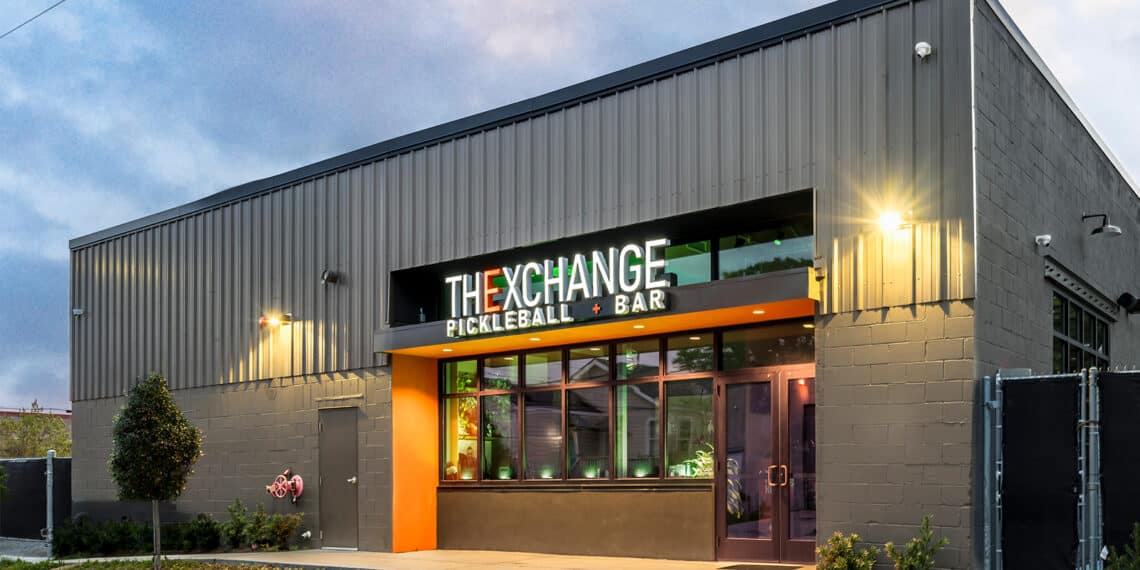
Rich Green, co-founder of SPF in Chicago, put it plainly when SPF parent Clear Skies Hospitality acquired The Exchange in New Orleans:
"You can build a beautiful facility pretty quickly. Building a community is the part that takes years. When we started talking, it felt less like acquiring a business and more like joining a community that already shared many of our values. Instead of starting from scratch in New Orleans, we had the opportunity to become part of something that was already thriving — and that's not something you can replicate overnight."Read that again, because it's the whole thesis.
In an over-built market, courts are a commodity. Community is the moat. You can pour concrete in ninety days; you cannot pour belonging.
Green is also clear-eyed about the failure mode.
"I'm a big live music fan, and I've seen too many great independent venues lose what made them special after being folded into a larger company. Suddenly every place starts feeling the same," he said.
"The goal isn't to turn The Exchange into another SPF. It's to support what was already working strategically — better systems, more programming, more opportunities for players — while keeping the personality that made people fall in love with the club. If anything, our hope is that The Exchange feels even more like itself a year from now."That's the difference between the two playbooks in one sentence. The rollup makes every location the same. The network makes every location more of what it already was.
Rishi Bengani, who built Casa Pickle and then acquired Rallies in Houston — now Casa Pickle Space City — landed in the same place in a different city:
"This was not a land grab. Pickleball grew quickly, and some overbuilding came with it, but the next phase will be about operators who can create real experiences, build strong communities, and run sustainable businesses. Thoughtful consolidation is not just about getting bigger — it is about building better clubs."Bigger versus better. That's the fork. And the market is already voting: less than a month after Casa took over Rallies, its first major tournament there drew more than 500 players and over 3,000 spectators. Demand follows experience, not square footage.

The Third Lever: Technology
Community explains why operators consolidate. Technology increasingly explains how the math works.
Look at Houston again, where 24 Hour Pickle is folding three former Pickle Point USA locations into its footprint — five clubs in total across one metro.
That's not just scale; it's density. Five clubs in one metro area operating 24/7 becomes a brand people associate with the place, a network a member can move through, not five one-offs.
Then there's the case where tech enables a shift of business model. Gotham Pickleball built one of the first genuinely autonomous clubs in the country, in Long Island City, New York — a labor-light model that runs at 75% utilization across a 21-hour day.
In 2025, Gotham acquired Pickleville, a three-court club in New Haven that was struggling to reach profitability. Instead of cutting to the bone, Gotham changed the operating model: extended the hours, moved the cost structure to labor-light, and let the technology carry the load the staff couldn't. As Gotham founder David Goldberg put it:
"A three-court club in a good market shouldn't be underwater. It was underwater on the old operating model. We didn't buy it to strip it — we bought it because the right technology turns a marginal club into a profitable one. Extend the hours, take the labor out of the parts that don't need a human, and the same building suddenly works."That's a different kind of consolidation math. The rollup buys healthy clubs cheap. The network can buy a marginal club and make it viable — because the constraint was never the location. It was the operating model.
What Ties a Network Together
Here's the part the napkin misses. If you're going to run many clubs and keep each one feeling like itself, you cannot do it on a booking form stapled to a payment processor. Point solutions don't compound. They fragment.
A network needs one operating system underneath it. One stack for reservations, identity, payments, door access, video, and programming — across every location, whether it's a full-service social club in Lincoln Park or an autonomous three-court room in New Haven. That's the layer that lets a consolidator increase revenue, take out cost, and elevate the member experience at the same time, instead of trading one for another.
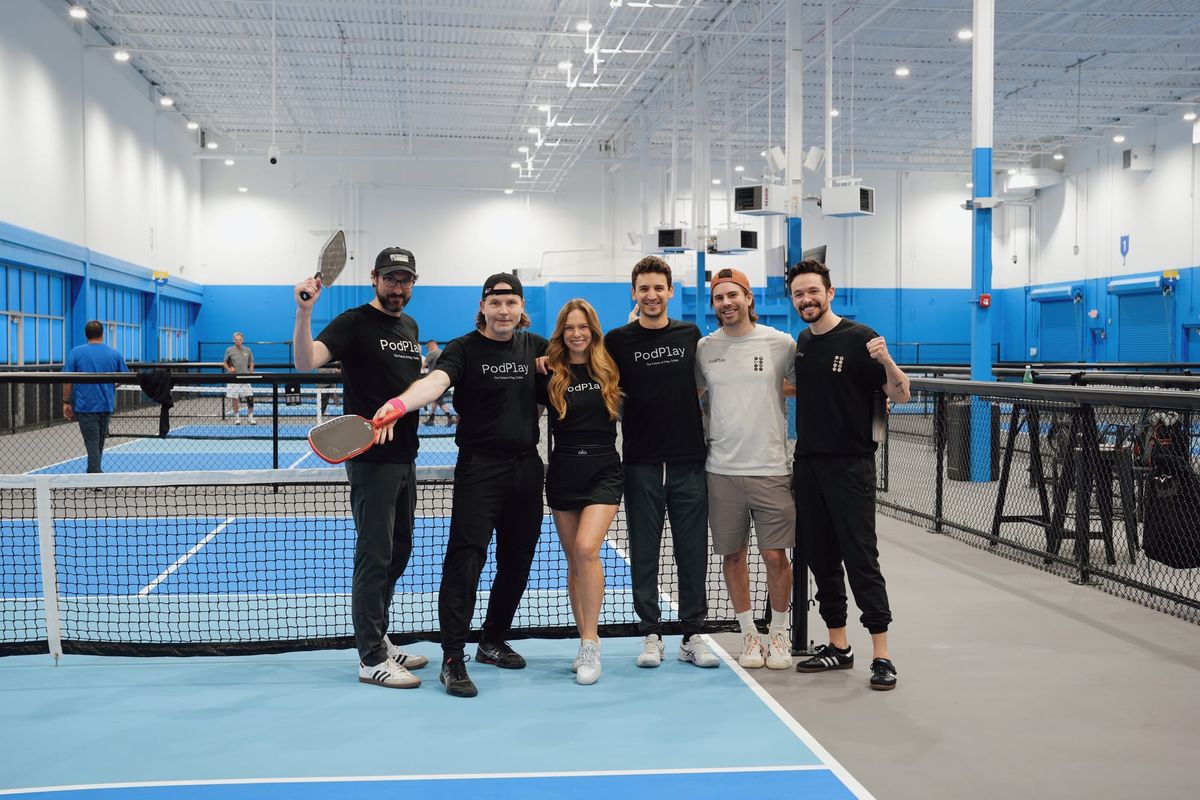
That's the business PodPlay is in. It's built to orchestrate experiences and community at scale — the tech stack for the future of the business, not the past.
PodPlay Raises $8M to Power the Best Pickleball Court Booking App
In the past twelve months, the seamless court-booking app has tripled its revenue and eclipsed one million users over 200 locations. More player-friendly features are on the way.
 The Dink PickleballAlex E. Weaver
More Than One Way to Win
None of this means consolidation is destiny. It's one strategy among several. Plenty of great clubs will stay proudly independent, and that's a real business — a single operator who knows every member's name can build something a network never quite replicates. Others will franchise, trading some autonomy for a proven system and a brand. Both paths win.
And the rollup will happen too; that's just gravity in a maturing market. I don't want to be glib about it. Buying the most clubs for the least money may well turn out to be a winning strategy — the math has worked in plenty of other industries, and I wouldn't bet against it here. It just won't be the only one.
That's the real point. The gold rush rewarded a single move: build first. What comes next rewards a range of them — independent, franchise, rollup, network — and the winner in each will be decided by execution, not by which category it sat in.
The operators I'd personally watch most closely are the ones consolidating without homogenizing: using scale to make each club more itself, not less. That's the harder trick. I think it's also the more durable one.
There's more than one way to get bigger. There's only one way to matter: stay worth belonging to.
Anuncie Aqui / Advertise Here
Sua marca para o mundo Pickleball! / Your brand for the Pickleball world!





 English (US) ·
  Portuguese (BR) ·