
 English
  Spanish
  Portuguese
  German
  Italian
  Japanese
  French
  Polish
  Russian
  Netherlands
  Hungarian
  Turkish
  Videos
  Thedink Pickleball

Pickleball IQ is not something you build in one video. But watching how a top pro thinks through every decision in a single point is one of the fastest ways to start.
Your pickleball IQ is the reason you keep making the same mistakes at the kitchen, even after drilling for months.
You know how to execute shots. What you struggle with is reading the situation fast enough to choose the right one.
That gap between technical ability and decision-making is exactly what separates a 3.5 from a 5.0.This breakdown comes from Anna Bright, the number two ranked women's pro in the world, who walked through a real competitive point she played in the MLP playoff series against the Texas Ranchers in Newport Beach.
She calls this kind of training an ADM exercise, and the detail she shares is genuinely rare.
Love pickleball? Then you'll love our free newsletter. We send the latest news, tips, and highlights for free each week.
What Is an ADM Exercise and Why Does It Matter?
An ADM exercise freezes a point right before an impactful decision and asks you to predict the best play before you see it.
ADM stands for anticipation and decision-making. It is a skill, not a talent.Anna Bright is clear about this: building pickleball IQ takes consistent repetition over time, the same way building muscle in the gym does.
If someone promises to fix your pickleball strategy in one session, they are lying to you.What you can do is start training it deliberately, one decision at a time. That is what this point walkthrough does.
Decision 1: What Do You Do With a Ball That Is Jammed Into Your Body?
The first impactful moment comes when all four players are at the kitchen and Anna receives a ball that is low and close to the center of her body.
Ball position eliminates options faster than most players realize.
When the ball is away from your body, you have extension and angle. When it is pressed into your center, you lose both.Here is what Anna eliminated immediately from the five possible choices:
- Going up the line: not viable when contact happens that far inside your body
- Pulling crosscourt at full width: the angle simply does not exist from that contact point
- A sharp angle dink crosscourt: also requires better positioning to execute
That narrowed it to two real options: jam Kaitlyn right in front of her or go through the middle.
Anna chose the middle, and her reasoning is worth understanding. By going middle, she kept herself posted up on her forehand side.
Whatever counter came back, she was already in position to handle it. That is not luck. That is a deliberate momentum decision.
The key takeaway here: when a ball is jammed into your body, your job is to make a decision you can still be right on even if your opponent guesses correctly.
💡
Need some new pickleball gear? Get 20% off select paddles, shoes, and more with code THEDINK at
Midwest Racquet SportsDecision 2: Should You Speed Up When Both Opponents Are Stationary and Ready?
The point continues and Anna gets another flickable ball, this time from a position closer to the sideline, which she calls zone one.
Her arm is very extended. The ball is low. And both opponents are stationary, moving forward, and very ready to counter.This is where most recreational players make the wrong call. They see a flick opportunity and they take it, regardless of whether the conditions justify the risk.
Anna did not speed it up here. She pushed a crosscourt dink instead. Here is why that was correct:
- The ball was too low to generate real power on a speed up
- Both opponents were stationary, which means they have a full cut at any ball you send hard
- Kate and Anna were already ahead in the point, so protecting that advantage mattered more than trying to end the rally
The goal of a speed up is not to win the point outright. The goal is to maintain or extend your advantage.
If the conditions do not support that, the dink is the smarter play.For more on the shot selection mistakes players repeat, the pattern here is extremely common.
Pro Speed-Up Strategy: Master the Kitchen Line Attack Like a 5.0+ Player
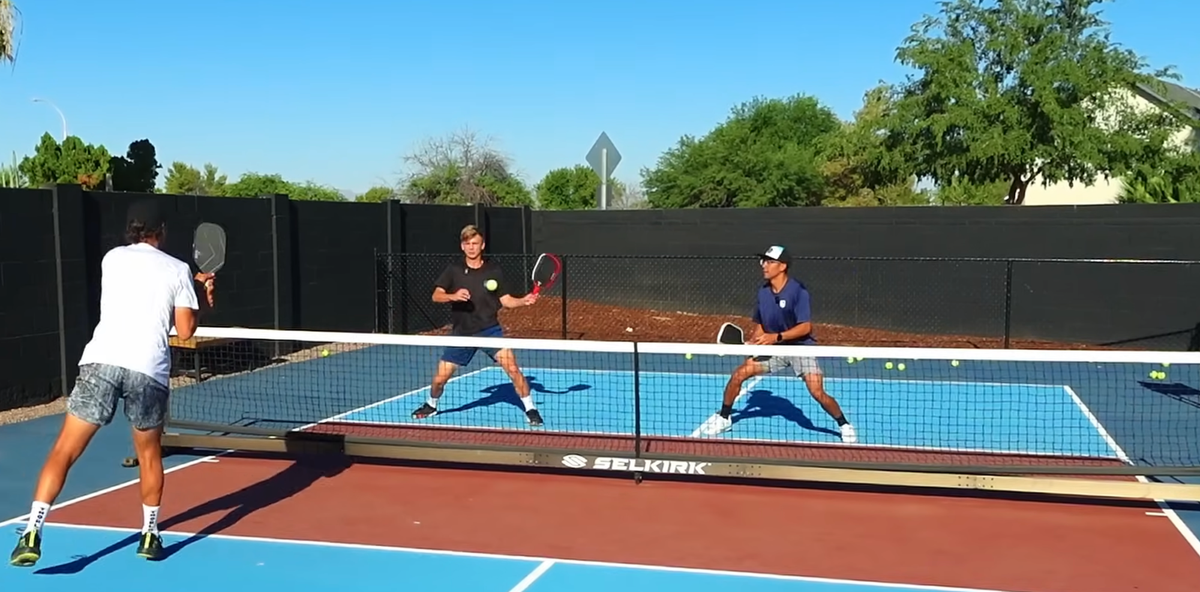
Connor Garnett shows that winning kitchen battles isn’t about raw power, but about positioning, psychology, and reading opponents in real time
 The Dink PickleballThe Dink Media Team
What Does Kate's Shot Teach You About Reading Opponent Positioning?
Now the ADM shifts to Kate, Anna's partner, who earns a higher ball off a dink exchange with Leia.
The setup looks like this: Leia is pressed very close to the sideline. Kaitlyn is posted up centrally, already shifting toward the middle to cover.Anna walks through every option Kate had:
- Speed up up the line at Leia: very difficult to execute with enough pace from that contact point
- Jam Leia center of mass: possible, but Leia is sitting hard forehand and ready
- Speed up through the middle: the easiest to execute, but Kaitlyn is already covering it
- Sharp crosscourt angle behind Kaitlyn: the second hardest option, but the smartest
Kate went sharp crosscourt. And watch what happened: Kaitlyn committed hard to the middle, which is exactly what Kate anticipated. Leia shifted forehand.
The court opened up behind Kaitlyn and Kate put the ball right there.This is rock paper scissors at the highest level. Kate read what both opponents were sitting on and beat them at their own coverage.
That kind of anticipation is trainable if you know what to look for.
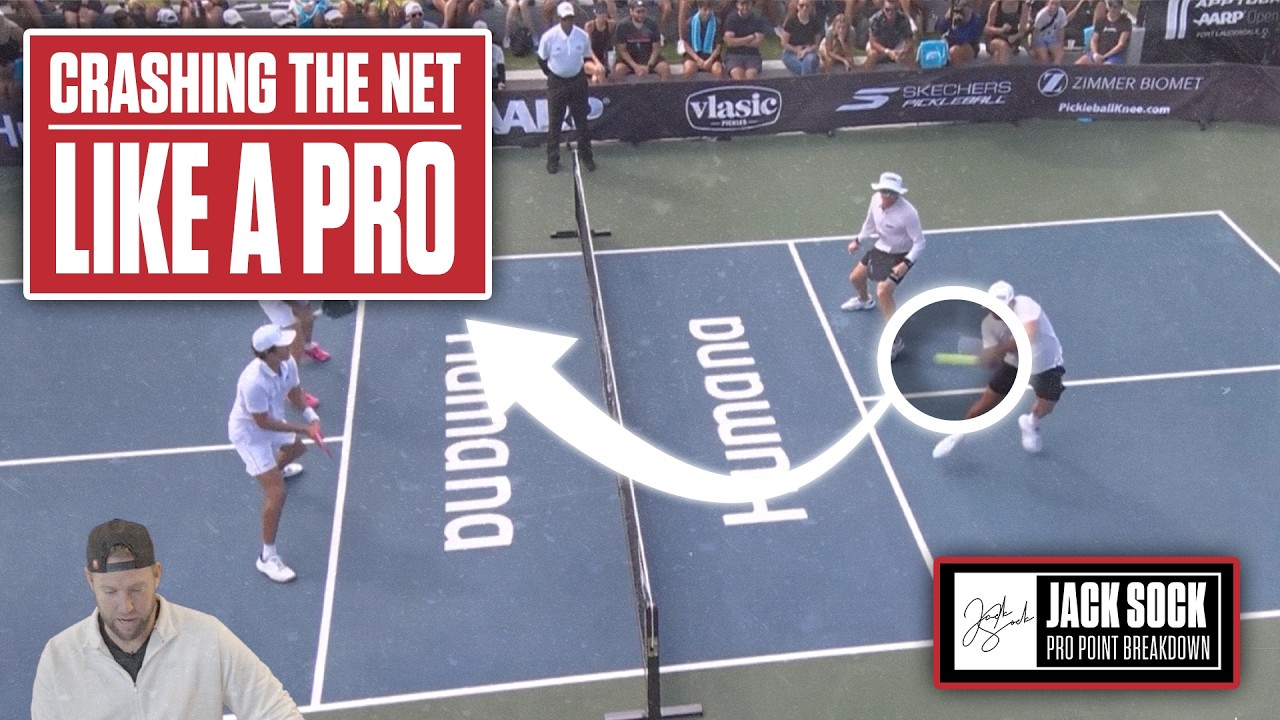
How to Read Your Opponent’s Eyes and Poach More Balls in Doubles Pickleball
The key to winning many pickleball points isn’t just quick reflexes; it’s reading what your opponent is about to do before they do it
 The Dink PickleballThe Dink Media Team
Decision 3: Why the Inside Out Dink Beats the Aggressive Speed Up Here
Anna gets set up after Kate's great shot with a forehand ball in the middle of the court. Both Leia and Kaitlyn are balanced, ready, and not far off the line.
The ball is around knee height. Anna is in a good central position. The temptation is to pull it.She chose an inside out dink instead, and here is the logic.
If she had gone after Kaitlyn with a speed up, Kaitlyn could have cranked the ball back inside on her because the angle worked against Anna.
Going inside at Kaitlyn from the middle of the court is what Anna called the toughest shot in the game.You are dealing with the highest part of the net and the shortest part of the court at the same time. That is not a 50/50 play.
That is a low percentage gamble when you are already winning.
When you are ahead, 50% is not worth taking. This is a mindset shift that most recreational players never make.By going inside out to Leia instead, Anna kept herself planted in the middle, which is exactly where she wanted to be.
Leia's most natural reset from wide is back toward the middle or inline, not crosscourt.Anna made the geometrically correct choice. For a deeper look at how ball height changes what you should do, this point is a perfect case study.
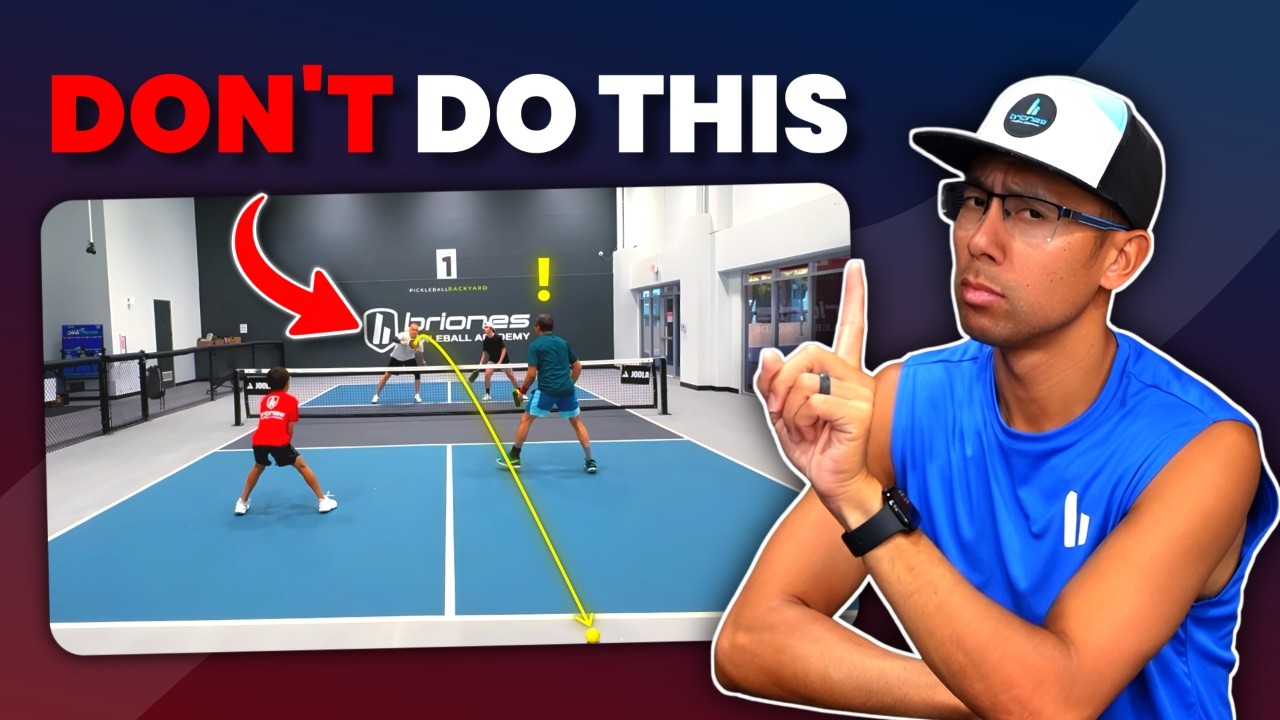
How to Beat Aggressive 4.0 Players: 7 Adjustments
Aggressive 4.0 players win by lobbing, driving, and crashing before you can get set. These seven adjustments help you absorb the pressure and flip points back your way.
 The Dink PickleballThe Dink Media Team
Decision 4: High Ball Away From the Line Means You Pull
Anna gets a high backhand ball and surprises Kaitlyn by going up the line, something that works specifically because she has a two-handed backhand that disguises direction well.
Then she earns a ball that is higher and further off the line, which changes the calculation entirely.
Being further off the line actually gives you more options, not fewer. You have time to load, generate pace, and pick your spot.
Anna's rule here is clear: when the ball is attackable and you are in a good position, you take it.Her best option was hard inside out at Leia, because Leia had to cover the middle and Anna had the angle to find her backhand while still keeping the ball in.
The middle speed up was the easiest to execute, but also the most predictable.Both opponents already knew the middle was the easiest option, which is exactly why Anna leaned away from it.
This is the chess element Anna talks about.
Understanding when to go with the high percentage play versus the unexpected one is what separates players who win matches from players who just execute shots.
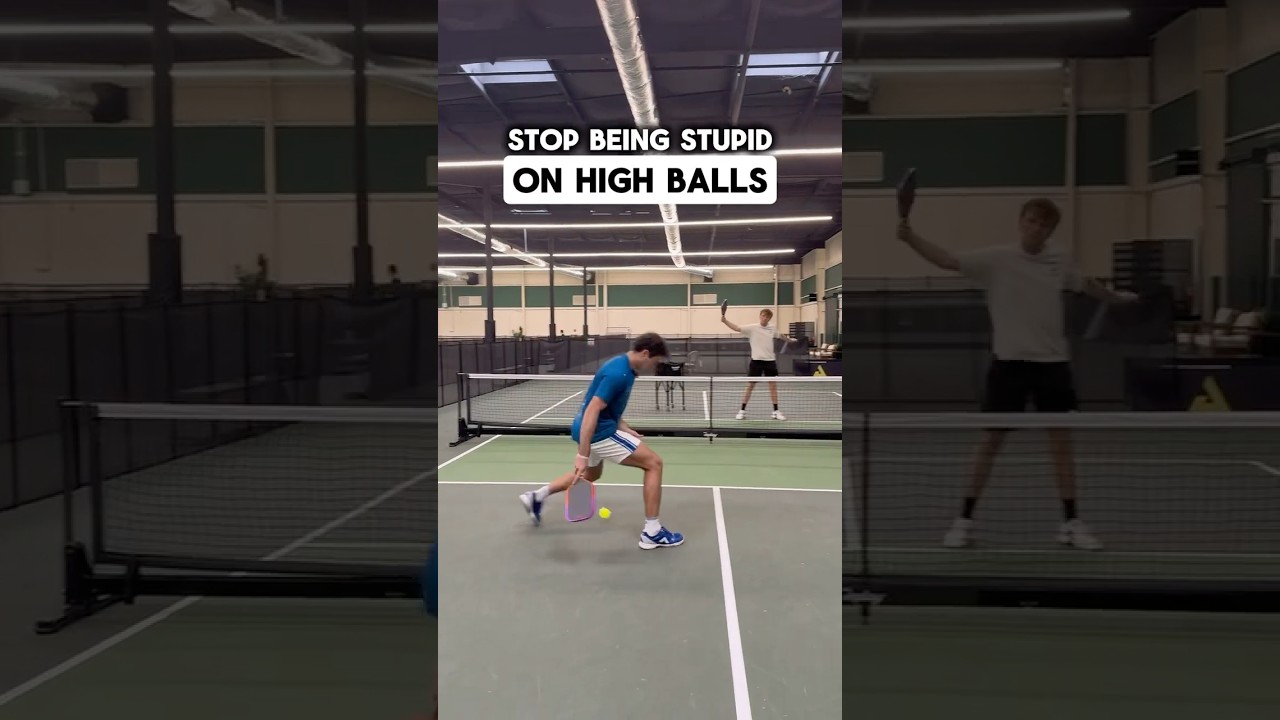
Pickleball High Ball: Find the Backhand Every Time
When a pickleball high ball comes at you, most players guess wrong and pay for it. This one backhand rule tells you exactly where to position every single time.
 The Dink PickleballThe Dink Media Team
The One Rule That Connects Every Decision in This Point
Every single choice Anna made came back to one question: does this decision maintain my advantage, or does it risk giving it away?
That framing is different from how most players think. Most players ask "can I hit this shot?" and the answer is almost always yes.The better question is whether hitting it makes sense given where you are, where they are, and how much you have to gain or lose.
That question is the entire foundation of advanced pickleball strategy.
The Four-Line Version of This Pickleball Strategy
- When you are ahead, protect the lead.
- When the ball is low and they are balanced, keep it moving without giving them a clean counter.
- When the ball is high and they are off the line, pull it.
- When your court position limits your angles, eliminate the options that require angles you do not have.
Anna uses ADM exercises daily in her academy for exactly this reason. You do not build this kind of awareness by drilling alone.
You build it by repeatedly asking yourself what you would do before you see the answer, then checking your reasoning against what the best players actually choose.
That is the muscle you need to train.
The same principle sits underneath modern pickleball strategy across every level of the game, from 3.0 rec play up through the USA Pickleball rating tiers and into the pro tours.
Start building it one point at a time.For players ready to keep going, working through attack combinations is the natural next step once the decision layer is in place.
💡
Heads up: hundreds of thousands of pickleballers read our free newsletter.
Subscribe herefor cutting edge strategy, insider news, pro analysis, the latest product innovations and more.
Frequently Asked Questions
What is pickleball IQ and how do you improve it?
Pickleball IQ is your ability to read situations quickly and make smart shot decisions under pressure. It improves through repeated deliberate practice, including exercises like ADM drills where you predict what a player should do before seeing the outcome. It builds slowly over time, just like strength training.
What is an ADM exercise in pickleball?
An ADM exercise freezes a point right before an impactful decision and asks you to decide what the best play is before watching it happen. ADM stands for anticipation and decision-making. Anna Bright uses these exercises daily in her training program to build pattern recognition and sharpen in-game awareness.
When should you NOT speed up in pickleball?
You should avoid speeding up when the ball is low, your opponents are stationary and balanced, or you are already ahead in the point and the risk outweighs the reward. A 50/50 speed up when you have the advantage is a bad trade. A neutral dink that protects your position is often the smarter call.
How does ball position change your shot options at the kitchen?
When the ball is jammed close to your body, you lose arm extension and the angles needed for line shots or wide crosscourt attacks. Your best options shrink to going central or through the middle. When the ball is away from your body, your full range of shots becomes available.
What does it mean to "maintain an advantage" in a pickleball rally?
Maintaining an advantage means making choices that keep you in a favorable position in the point, even if you do not win the rally outright on that shot. A speed up that works 50% of the time does not maintain an advantage when you are already ahead. A smart dink that forces a weak reply does.
Anuncie Aqui / Advertise Here
Sua marca para o mundo Pickleball! / Your brand for the Pickleball world!



 English (US) ·
  Portuguese (BR) ·