
 English
  Spanish
  Portuguese
  German
  Italian
  Japanese
  French
  Polish
  Russian
  Netherlands
  Hungarian
  Turkish
  Videos
  Thedink Pickleball

Holding a dink forces your opponent to prepare for a slew of possibilities, and that split-second delay is where you gain the upper hand
The pickleball world moves fast. What worked last year might already be outdated. And if you're still rushing your dinks at the kitchen line, you're falling behind.
That's the core message from Richard Livornese Jr., a top APP pro who just dropped a video that cuts straight to the heart of how modern pickleball is changing with a concept you've likely heard by now, but may not fully understand: holding your dinks.
Love pickleball? Then you'll love our email newsletter. We send the latest news, tips, and highlights for free each week.
What 'Holding the Dink' Actually Means
Holding your dink isn't some fancy paddle manipulation or wrist trick. It's way simpler than that, and honestly, that's what makes it so effective.
"Holding your dinks isn't actually about doing anything fancy with your paddle," Livornese explains.
"It's really just about early preparation."The concept works like this.
- When you get a dead ball at the kitchen line, instead of waiting for it to land and then reacting, you prepare your paddle early
- You get into position before the ball even arrives
- Then you wait
And while you're waiting, your opponent is left guessing. Are you going to dink it? Speed it up? Lob it? That uncertainty is your advantage.
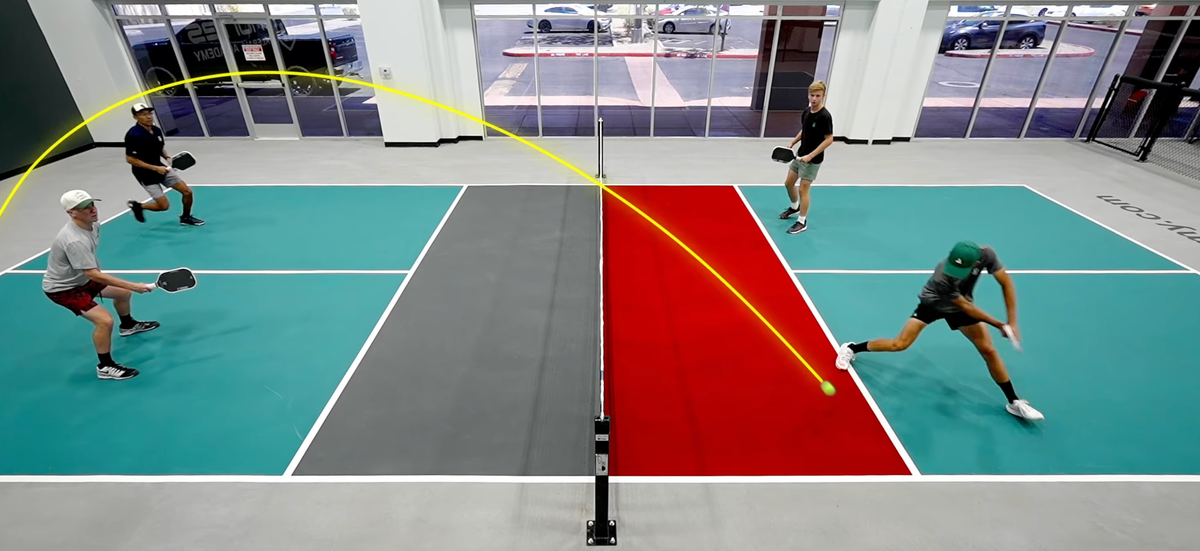
The best time to practice this is on dead balls, those floaters that hang in the air and give you time to think. If your opponent short hops a ball, you know it's coming early, so you prepare. Then you have options. You can dink it softly, speed it up aggressively, or even lob it. Your opponent has to react to all of those possibilities, and that split-second delay is where you gain control.
The Two-Part Formula: Dink, Then Speed Up
Livornese breaks the holding dink strategy into two main patterns, and understanding both is crucial.
- First, the hold and dink. When you prepare early and then hit an aggressive dink, you're putting pressure on your opponent in a way that feels different from a normal rally. The key here is location. You want to dink on or just behind the kitchen line, not deep into the court. If you hold your paddle early but then hit a soft dink deep, you've wasted the advantage you created.
The real magic happens when you change your location. Livornese points to Ben Johns and Hayden Patriquin as the best in the world at this. They hold the ball, then hit it to different spots, creating gaps and forcing their opponents to move. You don't need to be as skilled as those pros to benefit. Just changing where you hit the ball from your held position causes problems.
- Second, the hold and speed up. This is where things get interesting. If your opponent starts reaching for the ball after you've held it a few times, that's your signal to speed up. When a player is reaching out of the air, they're in a vulnerable position. They have to bring their paddle back and up, then hit. That's a lot of movement. If you speed up the ball at that moment, they're forced to go from a defensive position to a counter-attacking position in a fraction of a second. Most players can't do that cleanly.
Livornese calls the first one or two balls "test balls." You hit them softly to see how your opponent reacts. Once you see them reaching, you know it's time to speed up and be aggressive.
Master the First 4 Shots in Pickleball: Your Blueprint for Better Points
It’s not about hitting harder, faster, or flashier. It’s about understanding the rhythm of the rally and executing the fundamentals at each stage.
 The Dink PickleballThe Dink Media Team
Forward and Cross-Court: Two Sides of the Same Coin
The forward dink hold is most effective out of the middle of the court, which makes sense. When players get in trouble, they go to the middle. So you'll see a lot of dead balls there, and being able to create from that area is a skill that's going to matter more and more in 2026.
The cross-court version adds another layer. The inside-out dink, where you hold the ball and then hit it across your body, is Ben Johns' specialty. He holds, goes inside out, and gets his opponent off balance. Then, if that player starts to lean or reach, he holds again and snaps it through the middle. It's a one-two punch that's hard to defend.
💡
Need some new pickleball gear? Get 20% off select paddles, shoes, and more with code THEDINK at Midwest Racquet Sports
Why This Matters Right Now
Holding your dink is about patience, reading your opponent, and creating pressure without necessarily hitting harder. It's about intelligence over athleticism.
In a sport where power and speed have traditionally been valued, this shift toward patience and deception is significant. It means that pickleball is maturing as a sport. The game is becoming more nuanced, more strategic. The players who understand this will thrive. The ones who don't will find themselves struggling against opponents who do.
If you're serious about improving your game, this is worth watching and practicing.
- Start on dead balls
- Get comfortable with early preparation
- Hit a few test balls to see how your opponent reacts
- Then speed up when they reach
It's simple in theory, but it takes practice to execute under pressure.
This isn't a magic bullet. It won't fix a weak serve or poor footwork. But it's a tool that separates good players from great ones. And if Livornese (and pretty much every pro on the APP and PPA Tour) is right, it's a tool you're going to need sooner rather than later.
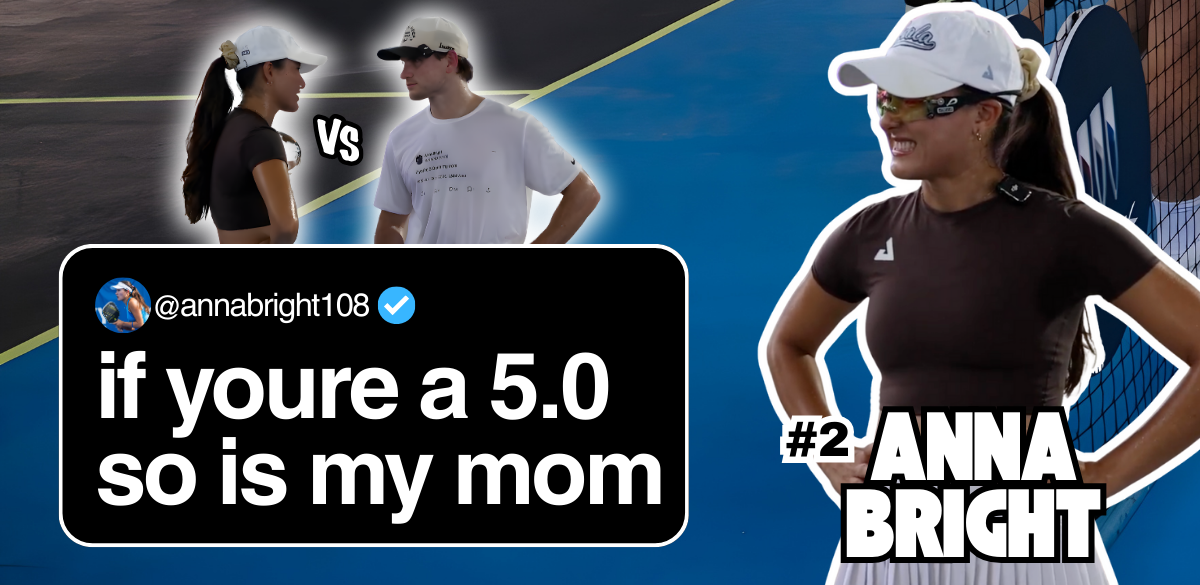
The Craziest Pickleball Match Yet? Anna Bright vs. Thomas Shields Gets Wild
A 5.0 vs. the World No. 2. Foot faults, paddle drama, heated moments. Watch the full Anna Bright vs. Thomas Shields match from Courted Miami now.
 The Dink PickleballAlina Leontarakis
Anuncie Aqui / Advertise Here
Sua marca para o mundo Pickleball! / Your brand for the Pickleball world!







 English (US) ·
  Portuguese (BR) ·