
 English
  Spanish
  Portuguese
  German
  Italian
  Japanese
  French
  Polish
  Russian
  Netherlands
  Hungarian
  Turkish
  Videos
  Thedink Pickleball

If you want to win more points at the kitchen line, learning to attack dead dinks in pickleball is the skill that separates 3.5 players from 4.5 players.
A dead dink is a gift. It pops up, sits in your strike zone, and begs to be punished.
The problem? Most players either swing too early, attack the wrong ball, or have no plan for where the shot is going.
This guide fixes all of that. By the time you finish reading, you'll know exactly how to attack dead dinks in pickleball the right way, every time, not just occasionally.
Love pickleball? Then you'll love our free newsletter. We send the latest news, tips, and highlights for free each week.
What Is a Dead Dink in Pickleball?
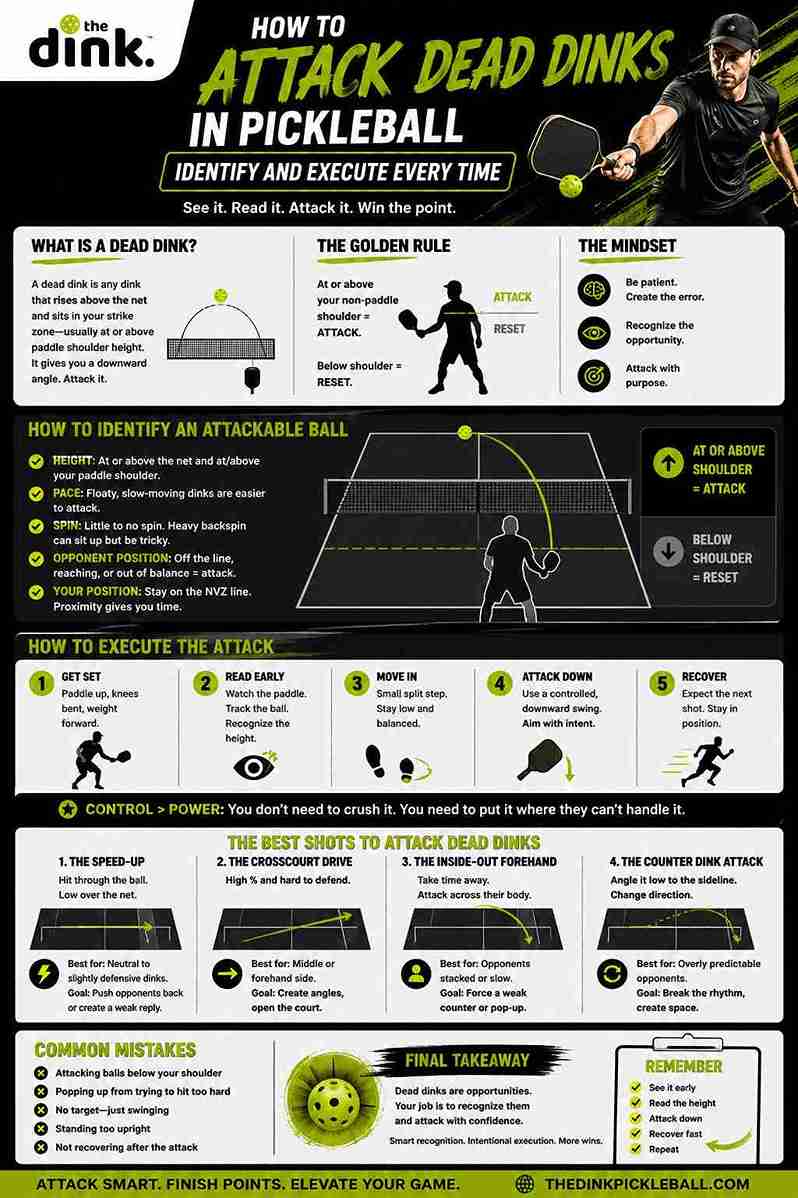
A dead dink is any dink that rises above the net and sits in an attackable position, typically at or above your paddle shoulder height.
Unlike a well-executed dink that stays low and forces you to hit upward, a dead dink gives you a downward angle. That downward angle is everything.
Here's the thing: a dink is "dead" the moment your opponent loses control of the trajectory.
It could result from poor paddle face angle, a mis-hit, or simply being off-balance during the exchange. The ball floats. When it floats, you attack.
Under USA Pickleball's 2025 Official Rulebook, all volleys struck from the non-volley zone are illegal, meaning every attack you make from the kitchen line requires the ball to have bounced first, or you must be behind the NVZ line at the moment of contact.
Knowing that rule cold prevents you from burning a perfect attack opportunity with a fault.
Compare this to a good dink, which keeps the ball low and in front of you, forcing you to lift the ball back into the kitchen.
Understanding the difference between a good shot and bad positioning is the first step to recognizing when a ball is actually attackable.
Think of it this way: you want to be hungrily patient at the kitchen. Dink with purpose, wait for the error, then pounce.
How to Identify an Attackable Ball at the Kitchen
The single most reliable rule: if the ball is at or above your non-paddle shoulder, it's attackable. Below that line, reset. Above it, attack.
This is called the strike zone, and drilling this concept into your muscle memory is non-negotiable.
Players who consistently attack dead dinks in pickleball have trained themselves to recognize the ball's apex before it even reaches them.
Research published in the Journal of Sports Sciences (2023) on anticipatory decision-making in racket sports found that elite players begin their shot preparation an average of 150–200ms earlier than recreational players, a gap built almost entirely through pattern recognition training, not raw athleticism.
Here's a quick checklist to identify a dead dink:
- Height: Is the ball rising above the net plane from your vantage point? Does it clear the tape by more than a few inches? If it's shoulder height or above, that's your signal.
- Pace: A floaty, slow-moving dink with no spin is far easier to time than a fast-paced or heavy topspin ball. Slow + high = dead.
- Spin: Heavy backspin dinks often sit up but behave unpredictably off the paddle. Recognize spin before committing to an attack.
- Opponent's position: If they're off the line, scrambling, or reaching wide, an attackable dink creates the perfect punishing combination.
Positioning at the kitchen determines how much time you have to read the ball.
A player glued to the NVZ line sees everything a fraction earlier, which matters more than most players realize.
Studies on visual reaction time in paddle and racket sports, including work compiled by the National Strength and Conditioning Association (NSCA), consistently show that proximity to the ball's source compresses available response time.
At the kitchen line, that fraction of a second is the difference between an attack and an unforced error.
💡
Need some new pickleball gear? Get 20% off select paddles, shoes, and more with code THEDINK at
Midwest Racquet SportsThe Right Way to Attack Dead Dinks Pickleball Players Misunderstand
This needs to be said clearly: not every fast ball is an attack, and not every attack needs to be fast.
The banger mentality is the enemy of smart kitchen play.
Players who try to rip every dink end up creating attackable opportunities for their opponents by popping balls up in return.
Becoming unattackable starts with understanding that discipline in the kitchen creates pressure, and pressure creates dead dinks for you to attack.
The better mental model: you are a problem-setter. Every dink you hit is designed to create an error from your opponent.
When that error comes, you cash it in. You're not looking to force the attack, you're waiting to recognize it.
This maps directly to what sports psychologists call anticipatory tactical behavior, the ability to read a developing situation and prepare a response before the opportunity fully materializes.
A 2024 review in the Journal of Sport and Exercise Psychology identified patient decision-making under pressure as one of the strongest predictors of performance in net-and-wall sports.
Pro players like Ben Johns and JW Johnson are masterful at using unusual dinking techniques specifically to generate those floating, high-sitting balls from their opponents. Patience is the prerequisite.
What Is a Dead Dink? The Gift Shot You Should Be Attacking Every Time
Think of a dead dink like a gift. Your opponent either made a mistake or gave you an opening. The question is: what are you going to do with it?
 The Dink PickleballThe Dink Media Team
The Best Shots to Attack Dead Dinks: Pickleball's Most Effective Weapons at the Kitchen
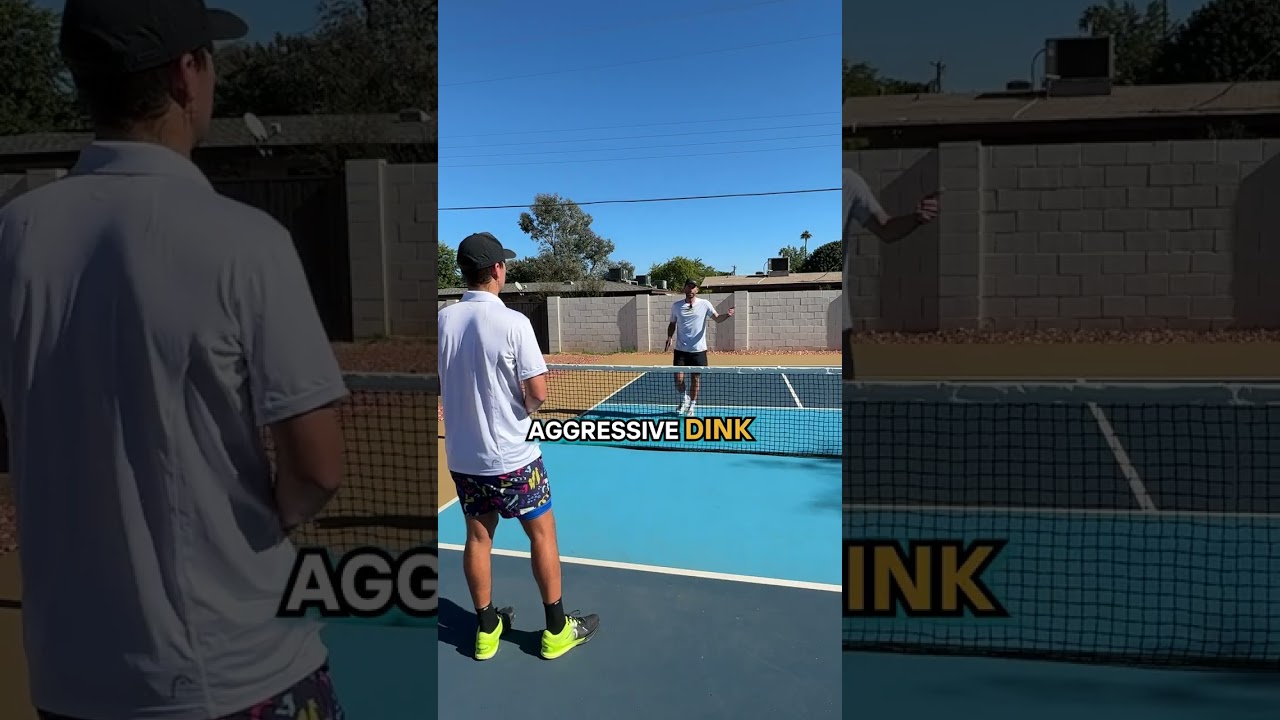
The Speed-Up (Flat or Topspin Drive)
This is the bread-and-butter attack.
You contact the ball at shoulder height or above, drive it flat and fast at your opponent's body, or angle it wide to their backhand hip.
Aim for the transition zone between their hip and armpit. That spot is hardest to defend with either forehand or backhand.
A flat speed-up gives your opponent almost no reaction time.
Topspin on the attack adds dip, keeping it in-bounds while still driving through the contact zone, a physical effect well-documented in sports biomechanics research on topspin ball behavior (Choppin et al., Sports Engineering, 2013), which showed that topspin dramatically increases the downward Magnus force on a ball in flight, causing it to drop faster than a flat shot traveling at the same speed.
In practical terms: topspin attacks land shorter and kick lower, making them harder to reset cleanly.
Either version is effective; the flat version is faster, the topspin version is safer.
For depth on power shot execution, the key is compact swing mechanics.
No big backswing. Short, explosive forward motion. Contact in front of your body, every time.
Holding Your Dinks: The Deadliest Kitchen Strategy You’re Not Using Enough
Holding a dink forces your opponent to prepare for a slew of possibilities, and that split-second delay is where you gain the upper hand
The Dink PickleballThe Dink Media Team
The Swing Volley
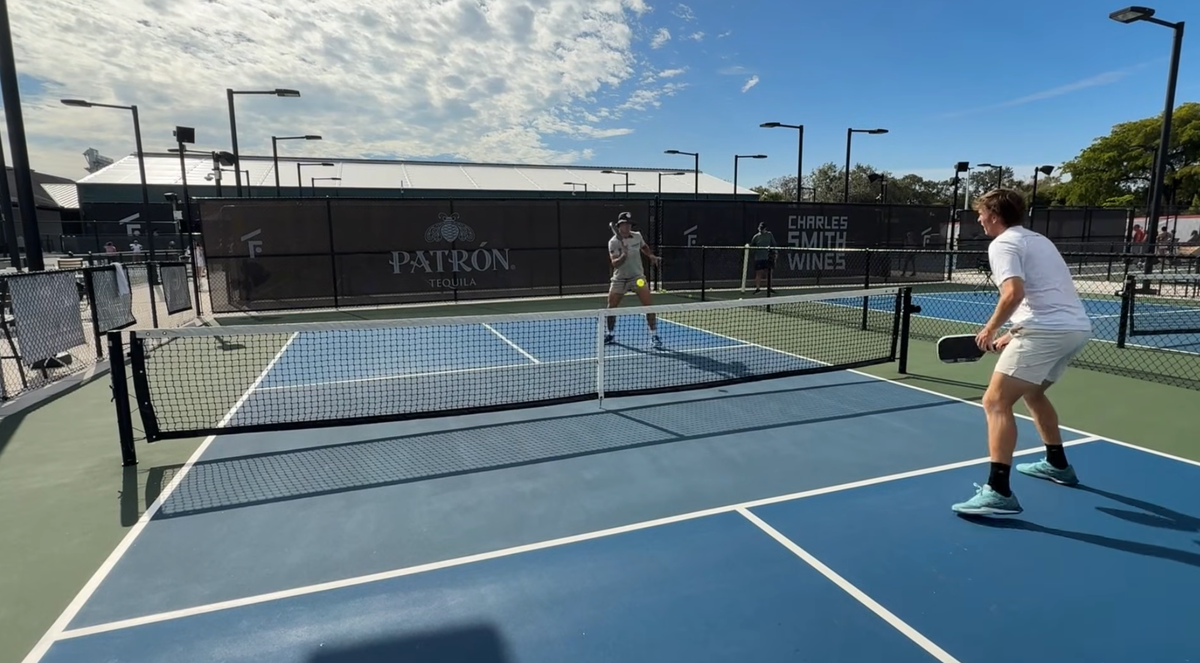
The swing volley is essentially a drive made from a volley position, and it's one of the hardest shots you can hit in pickleball.
When you attack dead dinks in pickleball using a swing volley, you're taking the ball before it reaches its apex and sending it downward into a difficult zone for your opponent.
It requires excellent timing.
You need to catch the ball slightly in front of your lead foot, a biomechanical principle supported by contact-point research in paddle sports, which consistently shows that forward contact point reduces wrist compensation and increases directional accuracy (see: NSCA's position on upper extremity mechanics in overhead striking sports).
Keep your elbow in and drive through the ball, not at it. A common mistake is flicking the wrist, which sends the ball up.
Drive through with your shoulder and forearm instead.
Pickleball Dinking 101: Small Swings, Big Results
You’re not trying to hit winners from the kitchen. You’re trying to create situations where your opponent makes a mistake or gives you a ball you can attack
The Dink PickleballThe Dink Media Team
The Angled Roll
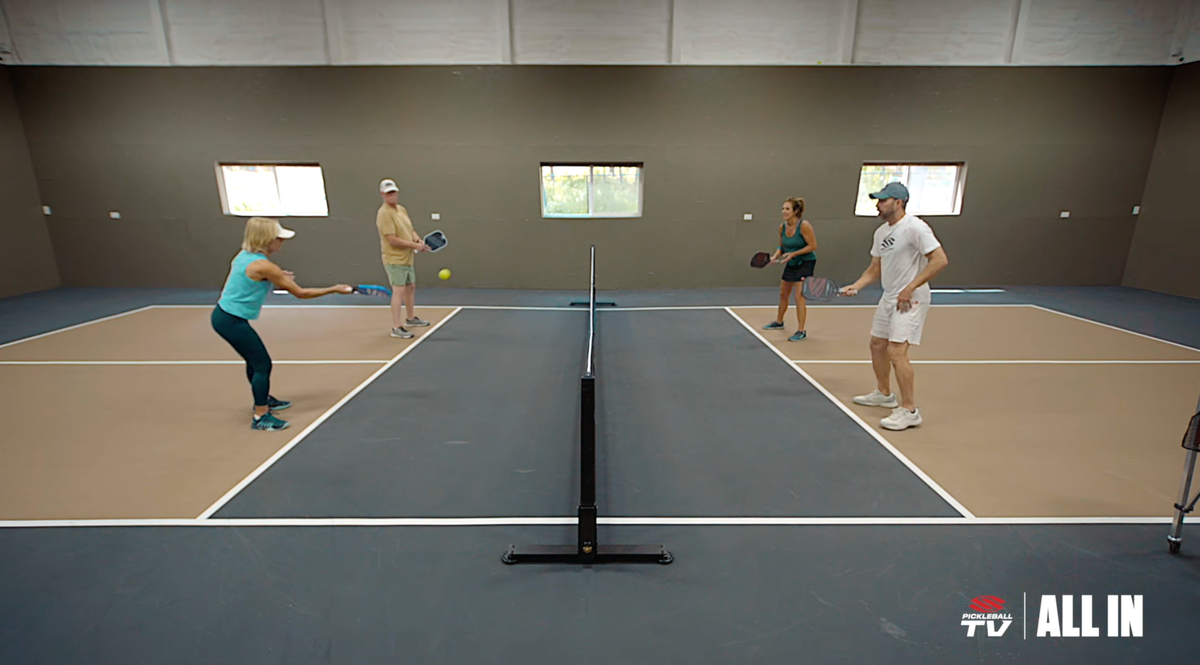
Instead of driving through the ball, you roll it crosscourt with topspin, landing it short in the kitchen at a steep angle.
This is ideal when your opponent is positioned in the center and you have an open corner. The ball stays low after the bounce, making a clean reset nearly impossible.
The angled roll pairs perfectly with deception at the kitchen line. Set it up by looking one way, rolling the other.
The Key to a Killer Overhead: Angles, Not Power
Too many players focus on hitting harder instead of hitting smarter. The overhead isn’t just about power; it’s about placement, timing, and court geometry.
The Dink PickleballThe Dink Media Team
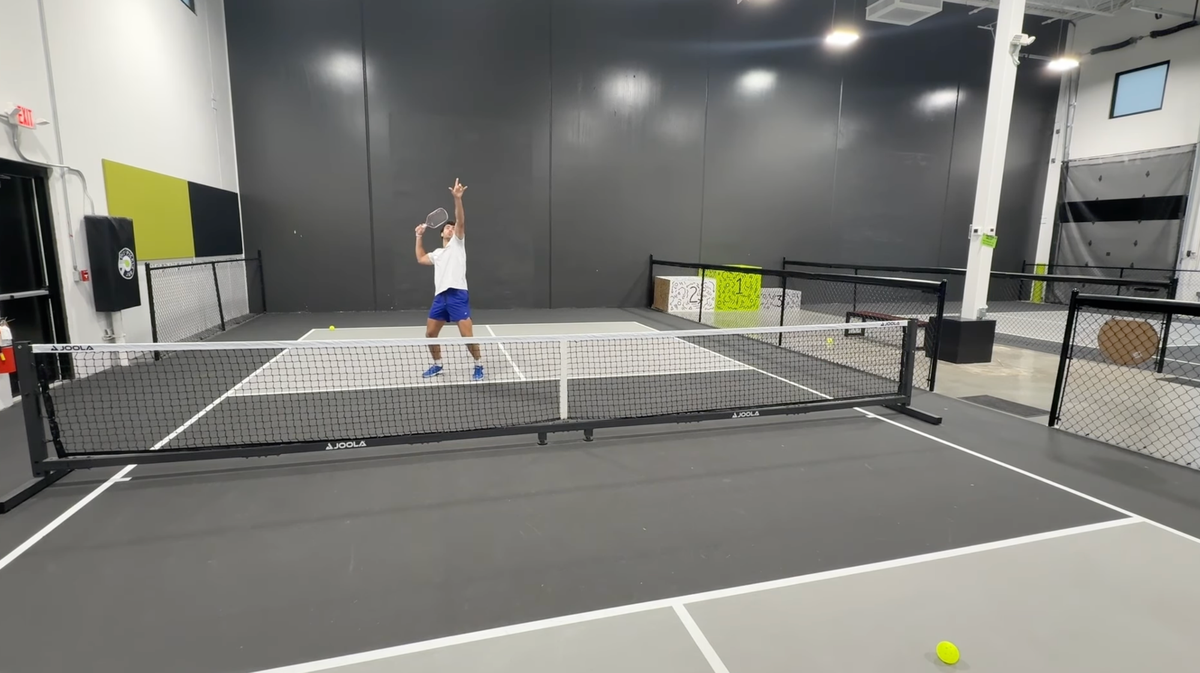
The ATP (Around-the-Post)
If the dead dink floats wide toward the sideline and sits low enough, the ATP (around the post) is on. You don't need the ball to clear the net, it travels around it.
The 2025 USA Pickleball Official Rulebook, Rule 11.L explicitly permits shots that travel around the net post below the net height, provided the ball lands in the correct court.
But this only works when the ball is pulled wide and your opponent is out of position. It's a low-percentage play if forced.
Learn the five essential shots and you'll know exactly when the ATP makes sense versus when it's just showing off.
How to Hit an ATP in Pickleball: Around-the-Post Guide
The ATP around the post in pickleball is one of the most spectacular shots in the game, and it’s totally legal. This guide breaks down the setup, mechanics, and decision-making to help you execute it in a real match.
The Dink PickleballThe Dink Media Team
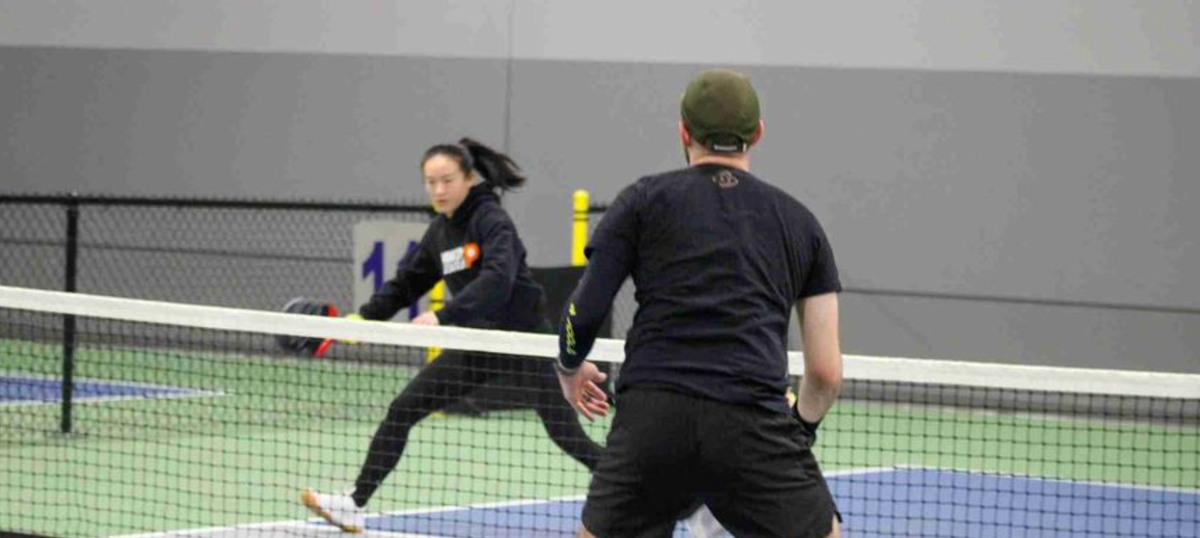
Where to Aim When You Attack Dead Dinks in Pickleball
Direction matters as much as pace. Here are the three primary targets when you attack dead dinks in pickleball:
1. The body: Jamming the ball into your opponent's hip or torso eliminates reaction space. Even a medium-pace ball jammed at the body is hard to reset cleanly. This works in both singles and doubles.
2. The backhand hip: Most players defend the backhand side less effectively than the forehand, a pattern consistently observed in net-and-wall sport analysis. A 2022 study in the International Journal of Racket Sports Science found that in comparable paddle sports, backhand defensive errors occurred at nearly twice the rate of forehand errors under high-pace attacking conditions. Attack the backhand hip and you'll force errors or weak pop-ups that set up a follow-up winner.
3. The open court: If your opponent is caught off-center or scrambling after a wide dink, the open court becomes available. A doubles strategy built around placement prioritizes keeping opponents moving and creating open angles.
A word of caution: don't aim at your comfort zone. Attacking crosscourt feels natural but gives your opponent more time to react.
The shorter the court distance your ball travels, the less reaction time your opponent has, a principle rooted in the physics of ball travel speed versus human neural response lag, which averages 150–300ms for visual stimulus in sport contexts (Ando et al., Perceptual and Motor Skills, 2002).
Down-the-line and at-the-body attacks consistently exploit that lag better than crosscourt rolls.
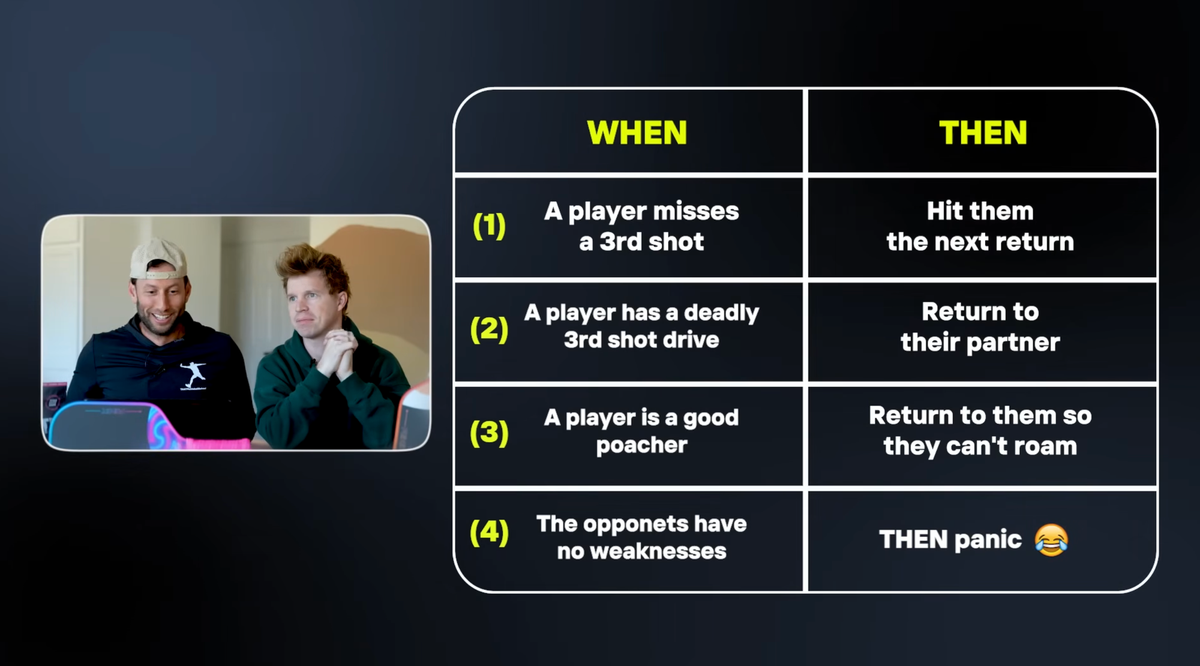
The 4 Essential Pickleball Return Targets to Play Like a Pro
By mastering these targets, you’ll improve your return consistency, put pressure on your opponents, and ultimately win more points.
The Dink PickleballThe Dink Media Team
How to Reset If Your Attack Goes Wrong
Every attack doesn't win the point. Sometimes you attack a dead dink and get it back, faster. That's the game.
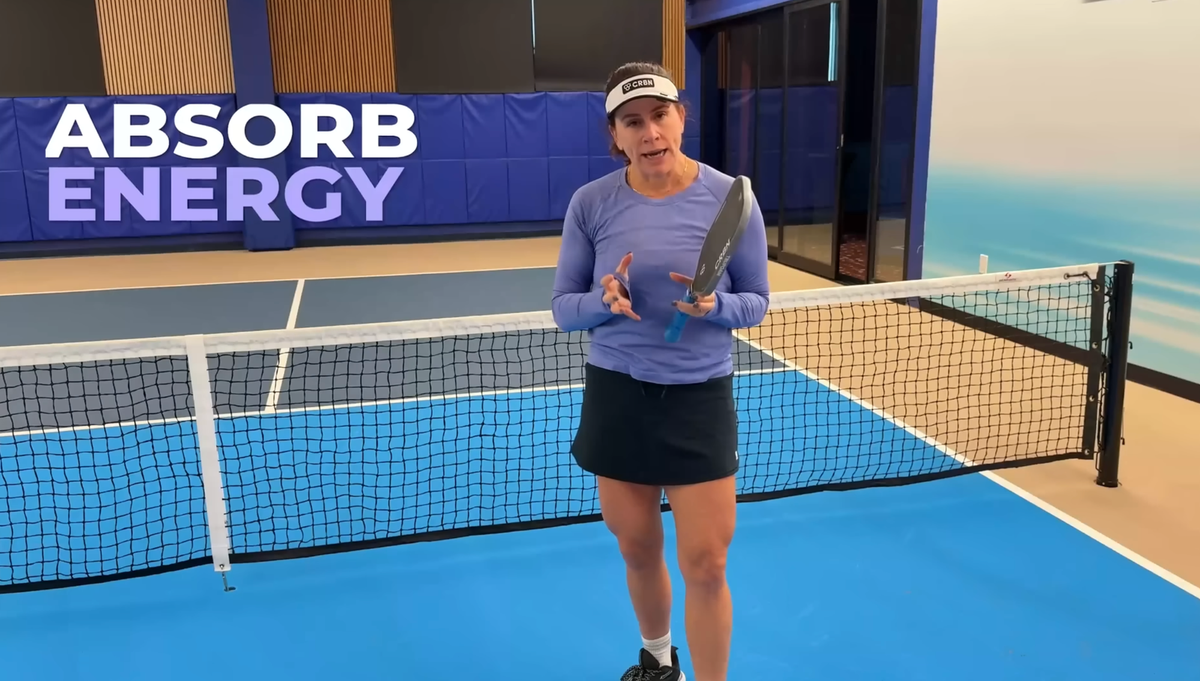
What separates good kitchen players from great ones is the ability to absorb a speed-up and reset effectively.
The reset requires a soft, passive paddle face. Don't try to guide the ball. Let the pace of the incoming shot do the work.
Lock your wrist, stay low, and absorb. Think of your paddle as a wall that takes the pace off the ball rather than a tool that redirects it.
This technique, sometimes called dead-hands defense in coaching circles, is grounded in the physics of inelastic collision: a relaxed, yielding surface absorbs kinetic energy rather than redirecting it, producing a softer return.
For a practical breakdown of this principle applied to pickleball, USA Pickleball's coaching education resources provide certified instruction frameworks built around exactly this concept.
A different kind of reset approach suggests thinking about resetting in thirds: where is the ball coming from, what angle is your paddle at, and where does the ball need to land?
Answering those three questions in real-time is a trainable skill.
If your attack attempt goes into the net, that's a paddle angle and contact point issue. If it goes long, that's a timing or swing length issue.
Review your drive technique to dial in the mechanics before drilling the pattern.
The Pickleball Reset: The One Skill That Takes You Beyond 3.5
By softening pace, controlling trajectory, and stabilizing through transition, players can use the reset to regain the kitchen and compete with stronger opponents
The Dink PickleballThe Dink Media Team
Drills That Make You Better at the Attack Dead Dinks Pickleball Pros Train Daily
You can't just think your way into this skill. You have to train it.
The ability to attack dead dinks in pickleball is built through repetition and pattern recognition, not theory.
Research on motor learning in sport consistently confirms that variable practice, training a skill across a range of conditions rather than a fixed, blocked routine, produces faster, more durable skill acquisition.
A widely cited 2025 review in Frontiers in Psychology (Motor Neuroscience section) found that athletes who trained decision-making under variable conditions outperformed blocked-practice groups by a significant margin in transfer tasks.
That's the scientific case for why the drills below are structured the way they are.
- The Float and Fire Drill: Have a partner deliberately toss or dink balls at shoulder height while you practice your speed-up attack. Vary the height, vary the location across the kitchen, and track your consistency rate. If you're missing more than 30% of those attempts, your timing is off. Slow down the pattern, then build back up.
- The Transition Recognition Drill: Play a full dinking rally with your partner. Every time either player hits a ball above a target line (set a cone or use tape on the fence), the receiver must attack. This trains your eye to recognize the trigger in a live point scenario, exactly the kind of variable, decision-loaded repetition the motor learning research recommends.
Solo drills can also help you work on your contact point and swing mechanics without a partner.
Use a rebounder or a wall, and practice the compact forward drive until it's automatic.
The figure-8 drill works your footwork and hand speed simultaneously, which is critical because most missed attacks happen because your feet weren't set before contact.
Solid foot position before ball contact is one of the most frequently cited mechanical errors in USA Pickleball's certified coaching curriculum, and it's entirely fixable with deliberate repetition.
5 Pickleball Drills That Will Transform Your Game in 2026
Five simple yet powerful pickleball drills can completely reshape how you play. These mechanics focus on consistency, footwork, and positioning to help you see immediate results on the court.
The Dink PickleballThe Dink Media Team

Key Takeaways
Here is everything you need to remember about how to attack dead dinks in pickleball effectively:
- A dead dink is any ball that rises above the net and presents a downward contact angle, typically at or above your non-paddle shoulder.
- The strike zone is your decision trigger: above shoulder height, attack; below it, reset.
- The three best attacks on dead dinks in pickleball are the speed-up drive, the swing volley, and the angled roll.
- Aim at the body, backhand hip, or open court, not crosscourt when you have a better option.
- Patience creates the opportunity. Discipline in the dink rally forces the floating ball.
- When an attack doesn't win the point, reset with a soft paddle face and fight back into the exchange.
💡
Heads up: hundreds of thousands of pickleballers read our free newsletter.
Subscribe herefor cutting edge strategy, insider news, pro analysis, the latest product innovations and more.
Frequently Asked Questions
What counts as a dead dink in pickleball?
A dead dink in pickleball is a dink that rises above the net tape level and sits high enough in your strike zone to allow a downward attack. Specifically, any ball at or above your non-paddle shoulder qualifies. It typically results from your opponent mis-hitting, losing balance, or poor paddle angle during a dink exchange. The USA Pickleball 2025 Rulebook governs all NVZ play and confirms that attacking from behind the kitchen line is legal as long as you haven't volleyed from within the zone.
Should I always attack a dead dink in pickleball?
Not automatically. You should attack when you have a clear downward angle, your feet are set, and you've identified a target. If you're off-balance, reaching wide, or the ball only slightly pops up, a reset is the smarter play. Attacking the wrong ball hands your opponent an easy opportunity.
How to Attack Dead Dinks Pickleball-Style Without Popping the Ball Up
Contact the ball in front of your body with a compact swing, not a big backswing. Drive through the ball with your forearm and shoulder rather than flicking your wrist. Make sure your paddle face is slightly closed at contact. Wrist flicks and late contact are the two most common reasons attacks float, both are mechanical errors directly addressed in USA Pickleball's coaching education framework.
What's the difference between a speed-up and a swing volley when attacking dead dinks?
A speed-up is typically hit from a stationary position after the ball bounces or at the apex of its flight. A swing volley is taken before the ball reaches its apex, more like a drive made from a volley position. Both attack dead dinks, but the swing volley is higher-risk and higher-reward since you're attacking a ball still in motion.
What Drills Help You Attack Dead Dinks Pickleball Players Actually Rely On?
The most effective method is the float-and-fire drill: have a partner feed balls at varying heights across the kitchen while you react and attack only the ones above your shoulder. This type of variable, decision-loaded practice is strongly supported by motor learning research in Frontiers in Psychology (2025) as the fastest path to durable skill transfer. Practicing with a visual reference point (like a cone at shoulder height) trains your eye to identify the trigger automatically before you consciously think about it.
Anuncie Aqui / Advertise Here
Sua marca para o mundo Pickleball! / Your brand for the Pickleball world!





 English (US) ·
  Portuguese (BR) ·