
 English
  Spanish
  Portuguese
  German
  Italian
  Japanese
  French
  Polish
  Russian
  Netherlands
  Hungarian
  Turkish
  Videos
  Thedink Pickleball

Learning how to counter a speed up at the kitchen in pickleball is one of the fastest ways to stop giving free points at the net. This guide breaks down the Block, Reset, Reload system so you can neutralize attackers and take back control of the rally.
Knowing how to counter a speed up at the kitchen in pickleball is the difference between surviving the net game and getting picked apart by it.
The speed up is everywhere right now. Players at every level are ripping fast hands at the net, and if you don't have a system, you're just hoping to get lucky.
That ends here.
Love pickleball? Then you'll love our free newsletter. We send the latest news, tips, and highlights for free each week.
What Is a Speed Up in Pickleball (And Why It Works)?
A speed up is exactly what it sounds like: a sudden, aggressive acceleration of the ball out of the dink rally, usually aimed at your body, shoulder, or backhand.
It works because it breaks the rhythm of a slow, patient exchange and forces you to react instead of act.
Most speed ups come from above the net, which means the attacker has a downward angle.
But here's the thing — they only work if you panic. And panic is just the absence of a plan.
The NVZ (non-volley zone) is where pickleball matches are really decided, and the speed up is the primary weapon players use to break down soft-game patterns. Understanding that is step one.
Why Most Players Fail to Counter a Speed Up at the Kitchen
Most amateur players make the same two mistakes when a speed up comes:
- They swing back: matching pace with pace, which usually results in an unforced error.
- They freeze: tightening up, closing their stance, and popping the ball up for an easy put-away.
Neither works. The ball is moving too fast to power through, and too fast to ignore. You need a third option.
That's the Block, Reset, Reload system — a three-phase defensive framework that turns speed ups from a threat into an opportunity.
Players who study kitchen strategy and defensive play know that absorbing pace is a skill, not an accident. It can be trained.
💡
Need some new pickleball gear? Get 20% off select paddles, shoes, and more with code THEDINK at
Midwest Racquet SportsThe Block, Reset, Reload System: How to Counter a Speed Up at the Kitchen
Phase 1 : The Block
The block is your first line of defense. When a speed up comes, your only job is to redirect the ball safely back into the kitchen.
Not attack it. Not match it. Redirect it.
Here's how to block correctly:
- Compact your swing to zero. The paddle should barely move. Let the ball's own pace do the work.
- Keep your paddle face slightly open (angled upward). This absorbs pace and drops the ball into the NVZ.
- Stay square to the ball. Don't rotate your hips to swing — that adds pace you don't need.
- Aim cross-court. Cross-court dinks travel over the lowest part of the net and have the most margin for error.
Your grip pressure matters here. Loose grip = soft hands = better blocks.
This is why grip pressure is one of the most underrated concepts in the kitchen game. Tight hands send the ball flying. Soft hands absorb and redirect.
Think of it like catching an egg. You don't catch an egg by squeezing your fist. You receive it.
When to Block vs. Counter Against Pickleball Bangers
Bangers thrive on chaos. They want you panicking, swinging wildly, and popping the ball up for easy putaways.
 The Dink PickleballThe Dink Media Team

Phase 2 : The Reset
You blocked it. Now what? The reset. This is where most players fail even after a solid block — they rush to attack and give the point right back.
A reset means returning to neutral
The ball goes softly into the kitchen. You get back to your ready position. The rally continues on your terms.
The reset shot has one goal: land the ball in the non-volley zone below net height on the other side.
When the ball is unattackable, you're in control. When it's attackable, you're just waiting to get hit again.
A few reset principles:
- Aim for the kitchen line, not the middle of the NVZ. Deeper resets give your opponent more options.
- Add a touch of backspin. This kills pace and forces the ball to stay low after landing. Check out this breakdown on backspin to refine the mechanic.
- Move forward slightly as you reset. Resetting while drifting back loses you ground at the kitchen. Stay on the line.
If you want to understand what a real reset looks like at the pro level, this breakdown is worth your time.
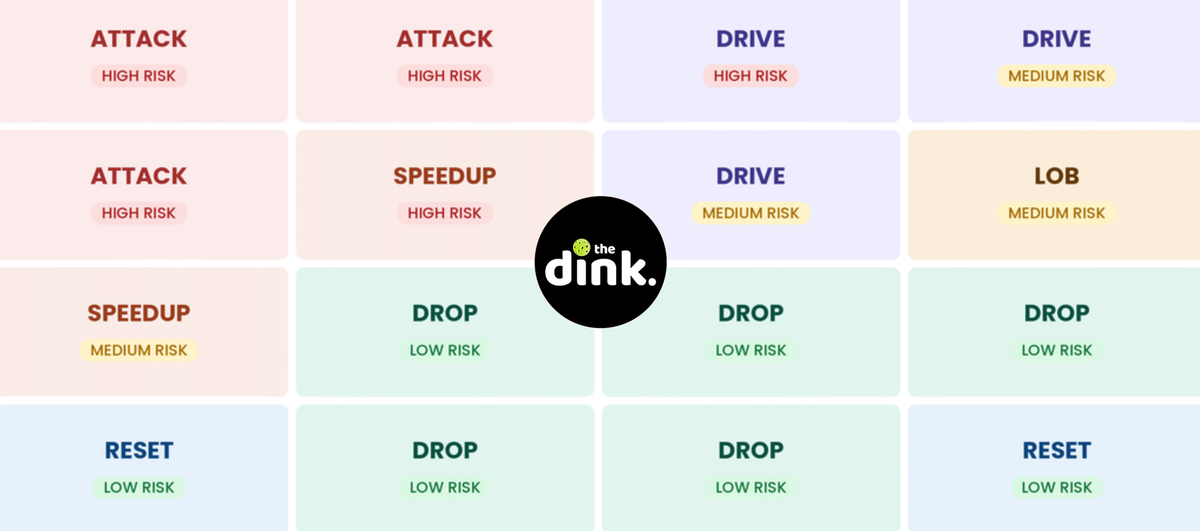
Decision Matrix: When to Attack or Reset in Pickleball
Pickleball is really all about two key factors: your court positioning and the height of the ball. This matrix decodes the game for you.
The Dink PickleballThe Dink Media Team
Phase 3 : Reload
The reload is mental. After the block and reset, most players are still in reaction mode — rattled, tense, scanning for the next attack.
That's a problem. You need to flip back into patient, controlled mode as fast as possible.
Reload means:
- Resetting your body language (shoulders down, knees soft, paddle up)
- Returning to the dink rally with intention
- Not abandoning your patience just because you got attacked once
The player who reloaded fastest in a firefight wins the next exchange. It's really that simple.
Pro tip: Watch how elite players handle being speed up on — they reset better not just mechanically, but mentally.
Their expression doesn't change. Their posture doesn't change. That's the reload.
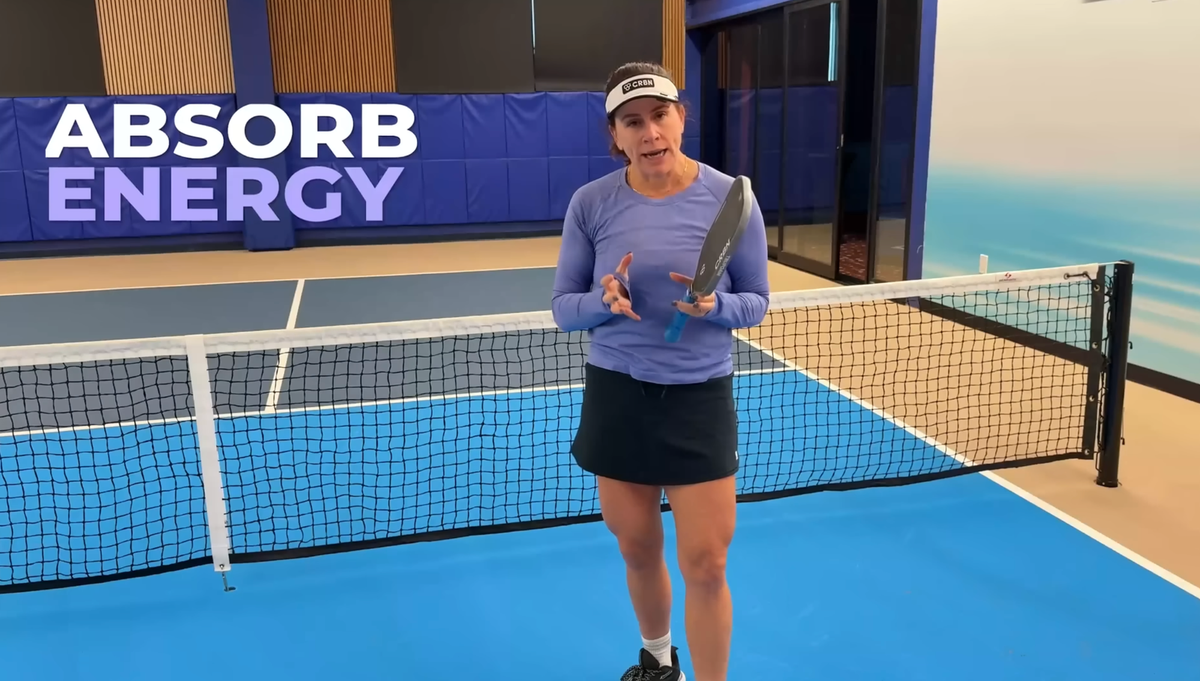
The Pickleball Reset: The One Skill That Takes You Beyond 3.5
By softening pace, controlling trajectory, and stabilizing through transition, players can use the reset to regain the kitchen and compete with stronger opponents
The Dink PickleballThe Dink Media Team
Does Paddle Position Affect Your Ability to Counter a Speed Up?
Absolutely. This is a point most instructional content glides past.
Your paddle position before the speed up comes determines everything.
If your paddle is low — hanging near your hip during the dink exchange — you have to cover 18+ inches of travel distance before you can block.
That's too slow. The ball is already past you.
Paddle up, paddle ready. The standard recommendation is to keep the paddle face between waist and shoulder height during any kitchen exchange.
When the speed up triggers, you already have a blocking surface in the path of the ball.
This connects directly to court positioning — being physically prepared before the attack rather than reacting to it.
Learn more about how to position yourself at the kitchen for a deeper look at stance and setup.
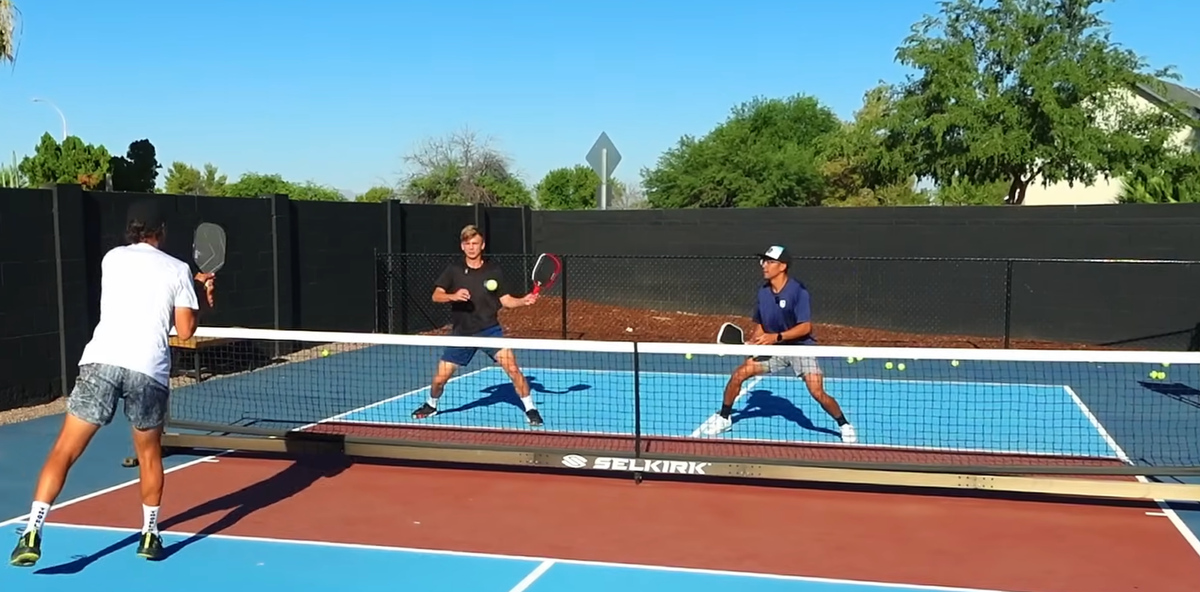
Pickleball Paddle Shapes Explained: Widebody vs. Hybrid vs. Elongated
Pickleball paddles come in three main shapes, and picking the right one can make a real difference in how you play.
The Dink PickleballThe Dink Media Team

How to Counter a Speed Up at the Kitchen When It Comes to Your Body
Body shots are the hardest speed ups to handle. Your natural instinct is to back up or flinch. Do neither.
Here's the real fix: Move your elbow. Not your feet.
When the ball is coming straight at your torso, flare your hitting elbow out and let your paddle clear your body. The elbow creates the space. The block does the rest.
This is the same mechanic you'd use for a backhand volley — your arm clears the hip and creates a clean hitting window.
Body shot blocking is one of the most advanced pickleball drills you can work on. Get a partner to feed at you from various body positions.
Ten minutes of this — genuinely uncomfortable reps — does more for your kitchen defense than an hour of casual dinking.
Pro Speed-Up Strategy: Master the Kitchen Line Attack Like a 5.0+ Player
Connor Garnett shows that winning kitchen battles isn’t about raw power, but about positioning, psychology, and reading opponents in real time
The Dink PickleballThe Dink Media Team
Drilling the Counter Speed Up: How to Train the System
You can't think your way through a speed up in real time. The block has to be automatic. That means drilling it until the response is reflexive.
- Drill #1: Partner Speed Up Feeds Stand at the kitchen. Your partner dinks three balls softly, then fires a speed up to your forehand, backhand, or body.
Your job: block, dink, repeat. Run it 15–20 reps per side.
- Drill #2: The Pressure Series Start a live dink rally. Either player can speed up at any time with no warning.
First to hit a block that lands in the NVZ wins the point. This builds hand speed and reaction time simultaneously.
- Drill #3: Reload Visualization After each blocked speed up in drilling or play, take one breath and physically re-set your ready position.
You're training the reload to become automatic.
For solo pickleball drills, you can use a rebounder or wall to practice compact blocking motions in isolation.
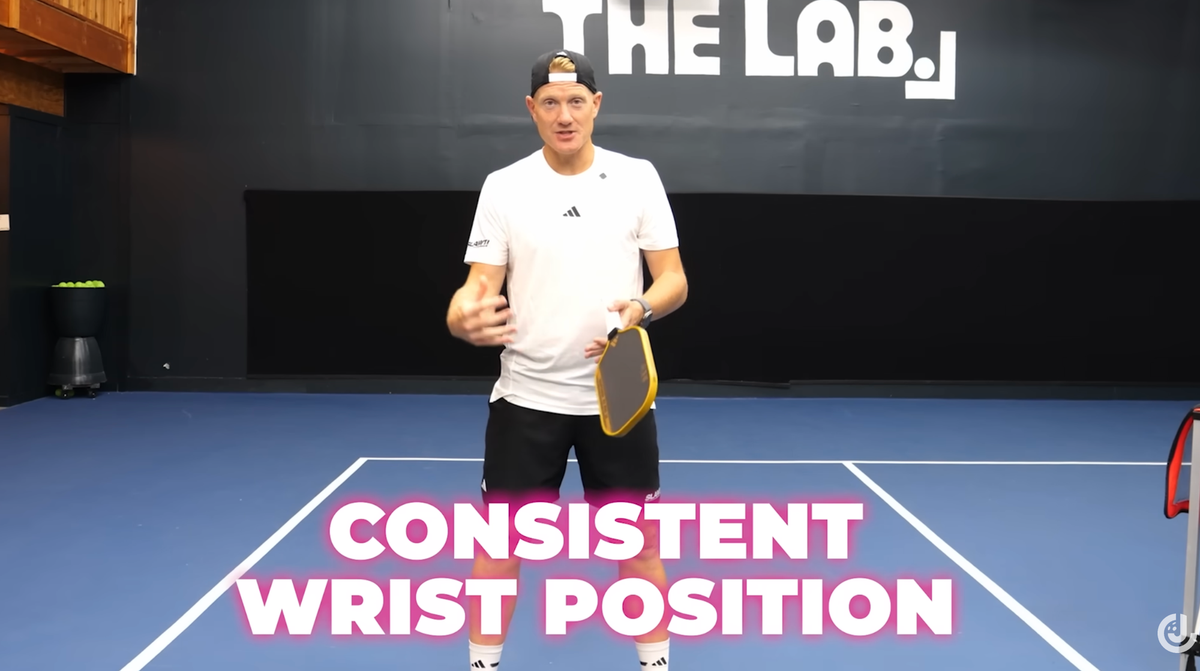
5 Pickleball Improvement Tips That Actually Work
You don’t need to spend eight hours a week on the court to see improvement. Sometimes a mindset shift or a focus on one specific element is enough to move the needle.
The Dink PickleballThe Dink Media Team
Common Mistakes When Trying to Counter a Speed Up at the Kitchen
Mistake #1 Trying to win the point on the block
The block's job is survival, not attack. Players who swing on blocked speed ups give the point away almost every time.
Mistake #2 Moving backward
Stepping back on a speed up lowers your contact point and makes the reset nearly impossible. Stay on the line.
Mistake #3 Closing the paddle face
A closed paddle face (angled downward) drives the ball into the net. Keep it open — slightly, not dramatically — to lift and absorb.
Mistake #4 Losing your dinking strategy after surviving one attack
Getting sped up once is not a reason to abandon patience. If you survive the block and reset, the attacker failed. Get back to work.
The Common Trap All Rec Pickleball Players Fall Into — and How to Climb Out
The fastest way to improve isn’t to practice more. It’s to practice smarter and understand the game at a deeper level.
The Dink PickleballThe Dink Media Team

Key Takeaways
- Counter speed up kitchen pickleball situations with the three-phase Block, Reset, Reload system — not by matching pace.
- The block absorbs and redirects. Zero swing, open paddle face, cross-court target.
- The reset returns the ball to neutral — unattackable, in the kitchen, below net height.
- The reload is the mental reset: back to neutral body language, back to patient dinking.
- Paddle position before the speed up is critical. Keep it between waist and shoulder height during the kitchen exchange.
- Body shot speed ups are handled by flaring the elbow, not moving the feet.
- Drill the response until it's reflexive. You can't think your way through a 70mph hand battle.
💡
Heads up: hundreds of thousands of pickleballers read our free newsletter.
Subscribe herefor cutting edge strategy, insider news, pro analysis, the latest product innovations and more.
Frequently Asked Questions
How do you counter a speed up at the kitchen in pickleball?
The most reliable way to counter a speed up at the kitchen in pickleball is to use a compact block — no swing, open paddle face, redirecting the ball softly into the NVZ. Don't match pace. Instead, absorb it and reset the point to neutral. Then reload mentally and get back into the dink rally.
What paddle position helps you react faster to speed ups?
Keeping your paddle between waist and shoulder height during dink exchanges is the single biggest positional adjustment you can make. It eliminates the travel distance your paddle has to cover when a speed up triggers, giving you a blocking surface already in the ball's path. Most players who struggle to block speed ups simply have their paddle too low.
Should you speed up back when someone attacks you at the kitchen?
Generally, no. Matching pace in a hand battle at the kitchen heavily favors the attacker, who has the angle and momentum. The smarter play is to absorb the speed up with a block and reset — neutralizing the threat before re-engaging on your own terms. You can look for shot selection opportunities after the reset, but don't force the counter-attack.
Why do I keep popping up the ball when I get sped up?
Popping up is almost always caused by two things: tight grip pressure and a closed paddle face. When you tense up, your hands go stiff, and the ball bounces off your paddle with extra pace. Consciously soften your grip and open your paddle face slightly — this produces a controlled, absorptive block instead of a reflexive pop. Check your paddle positioning habits as well.
How can I drill my speed up defense at home or with one partner?
The most effective solo drill is wall blocking — standing close to a wall and practicing compact redirects with no swing. With a partner, run the 3-2-1 drill: three dinks, then an unpredictable speed up. Your job is to block and reset every time. Repetition builds the reflexive response that you can't manufacture in live play without prior training. For more ideas, see this training routine.
Anuncie Aqui / Advertise Here
Sua marca para o mundo Pickleball! / Your brand for the Pickleball world!





 English (US) ·
  Portuguese (BR) ·