
 English
  Spanish
  Portuguese
  German
  Italian
  Japanese
  French
  Polish
  Russian
  Netherlands
  Hungarian
  Turkish
  Videos
  Thedink Pickleball

This two-handed approach gives you the control and stability needed to lift balls cleanly, especially when they're coming at awkward angles or bouncing low
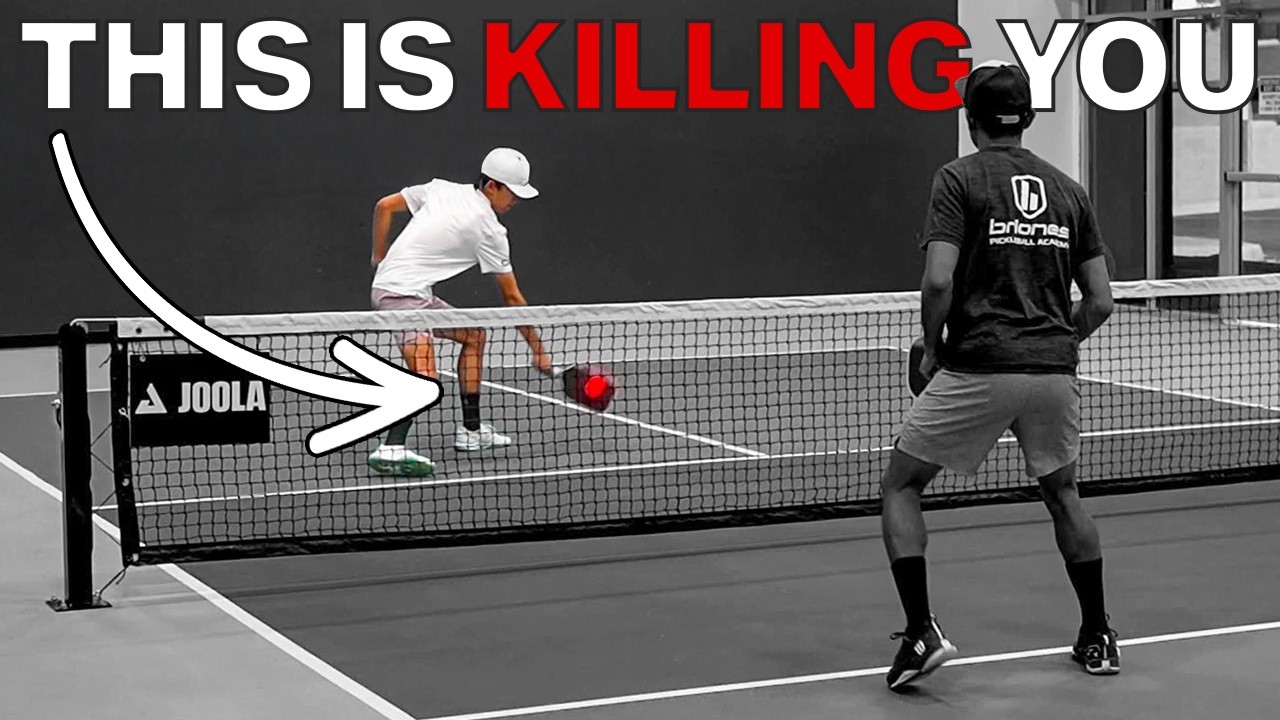
Kyle Koszuta just dropped a masterclass on defensive resets, and if you've been struggling to stay in points when you're pushed back from the kitchen line, this one's for you.
In the video, Kyle trains his friend Tyler on how to hit resets that either land softly back in the kitchen or force opponents to hit up, giving you the chance to work your way back into an advantageous position.
It's the kind of fundamental skill that separates players who panic under pressure from those who stay composed and methodical.
Love pickleball? Then you'll love our free newsletter. We send the latest news, tips, and highlights for free each week.
Stop Flicking Your Wrist and Use Both Hands
One of the first things Kyle addresses is a common mistake: using one hand and relying on wrist flicks to control the reset.
The problem is that your wrist alone doesn't have enough stability to consistently place the ball where you want it.Instead, Kyle emphasizes getting your second hand on the paddle to create a solid foundation. This two-handed approach gives you the control and stability needed to lift balls cleanly, especially when they're coming at awkward angles or bouncing low.
The mechanics are straightforward but require practice.
- When you see a ball pop up, your paddle should go down first, then you lift.
- Keep your elbows tucked and your swing compact.
- You're not trying to generate power here; you're trying to be precise.
Kyle demonstrates this by hitting balls with minimal arm motion, allowing the paddle's lift to do the work rather than muscling the ball.
Compact Swings Win Points in the Midcourt
Pickleball rewards efficiency, and nowhere is that more true than in the midcourt transition zone. Kyle stresses short, compact swings on most motions because longer swings leave you vulnerable and harder to control.
When you're resetting, you want to minimize your movement and maximize your touch.
Here's the key insight: your paddle angle matters. Instead of keeping your paddle flat and horizontal, angle it at about 45 degrees.
This helps you lift the ball with better trajectory and reduces the chance of pushing it into the net.
Kyle also points out that softening your hands (relaxing your grip) helps you avoid skying the ball too high. You're aiming to miss high if you miss at all, because a high miss gives your opponent a chance to miss an overhead while a net ball loses the point immediately.
Four Amateur Pickleball Habits Sabotaging Your Game
Your pickleball game might be better than you think, but four sneaky amateur habits could be holding you back from reaching the next level.
 The Dink PickleballThe Dink Media Team
The Reset-and-Recover Pattern
One of the most practical drills Kyle runs with Tyler involves popping a ball up, then immediately backing up several steps to get balanced and ready to defend. Once you've reset the ball, your job isn't done. You need to recover position and prepare for the next shot. This mirrors real match situations where you're pushed back, reset, and then have to work your way forward again.
The goal is to stay in the point long enough to neutralize the rally. You're not trying to win it with one reset; you're trying to buy yourself time to get back to the kitchen line where you have the advantage. Kyle emphasizes that patience here is crucial. If you're hitting up on the ball, your opponent is hitting down. That's a losing trade, so don't force aggression from a disadvantaged position.
Anna Leigh Waters’ Signature Franklin Paddle, the Aurelius, Is Approved for Pro Play
Packed with tech, it’s part of the C45 line and available for pre-order now
 The Dink PickleballAlex E. Weaver
Stop Moving When You Hit
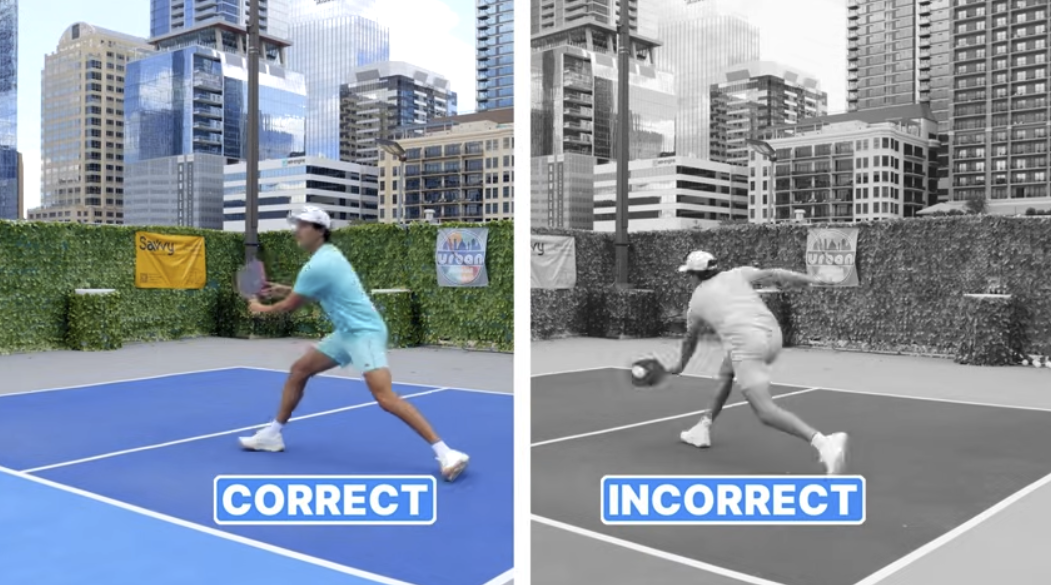
A subtle but critical detail Kyle emphasizes is the importance of remaining still when you make contact. Many players backpedal while swinging, which destroys consistency and control. Similarly, when you're moving forward after hitting a third shot drop, you should stop when your opponent makes contact, not keep running through the transition.
This applies to resets too. The moment the ball goes up and you're about to hit it, plant your feet. Make contact from a stable position. Then, once you've hit the reset, you can move. This rhythm of stop-hit-move is what separates clean resets from desperate flailing.
Win the Transition Zone: The Modern Pickleball Guide to Midcourt Aggression
While traditional coaching has long emphasized getting to the kitchen line as quickly as possible, modern pros are turning midcourt aggression into unexpected offensive opportunities
 The Dink PickleballThe Dink Media Team
Know When to Attack and When to Reset
Kyle wraps up the lesson with an important strategic point: aggression only works when the ball is above net height.
If you're hitting up on the ball from the midcourt, your opponent in the kitchen is hitting down. That's a bad trade. Wait for a ball that's at or above net height, ideally around forehead height or higher, before you try to put pressure on your opponent.
Heads up: hundreds of thousands of pickleballers read our free newsletter. Subscribe here for cutting edge strategy, insider news, pro analysis, the latest product innovations and more.
Until then, your job is to reset, recover, and stay in the point.
It sounds passive, but it's actually the most aggressive thing you can do because it keeps you alive in the rally and gives you chances to win. The best players at the pro level understand this. They get pushed off the line, reset multiple times if needed, and work their way back to neutral or an advantage. That maturity in shot selection is what separates good players from great ones.
Anuncie Aqui / Advertise Here
Sua marca para o mundo Pickleball! / Your brand for the Pickleball world!







 English (US) ·
  Portuguese (BR) ·