
 English
  Spanish
  Portuguese
  German
  Italian
  Japanese
  French
  Polish
  Russian
  Netherlands
  Hungarian
  Turkish
  Videos
  Thedink Pickleball

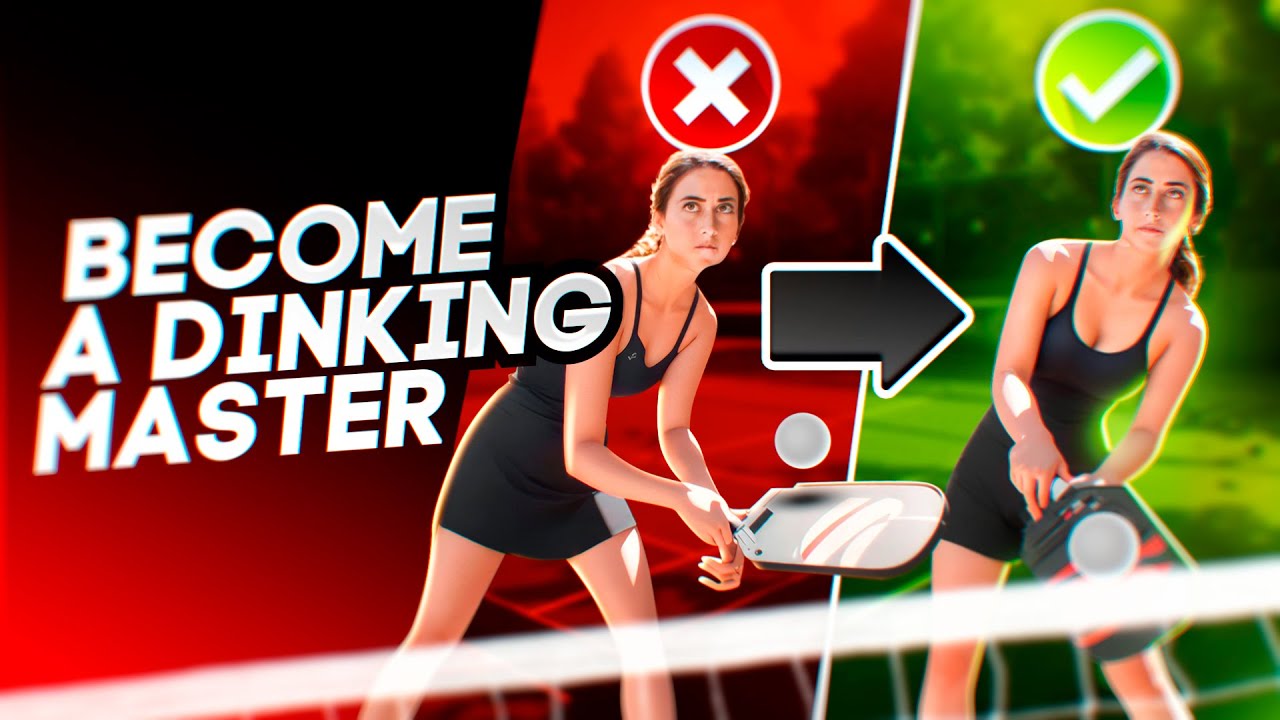
Learning how to hit a fake dink in pickleball comes down to one skill: making your paddle prep look identical until the last quarter second. This guide breaks down the grip, the pause, and three variations that turn a routine dink exchange into a free point.
The best dinkers in the sport aren't winning with a better dink. They're winning with a better lie.
Learning how to hit a fake dink in pickleball – also known as a disguised speed-up – is the fastest way to turn a stalemate near the kitchen line into a point you never had to earn the hard way.
Your opponent reads your paddle prep, commits to a direction, and you go the other way. Game over before it started.
Love pickleball? Then you'll love our free newsletter. We send the latest news, tips, and highlights for free each week.
What's Actually Happening When You Learn How to Hit a Fake Dink in Pickleball?
A fake dink is a soft shot where your setup – the grip, the backswing, the paddle face – looks exactly like a real dink until the very last moment, when you change the direction, the depth, or the speed of the shot entirely.
Here's the thing: your opponent isn't reacting to the ball. They're reacting to your paddle prep, and that's the whole opening.
Most club players telegraph their dink shot placement a full half second before contact. Their shoulders turn early. Their paddle face opens too soon.
Pros exploit that same half second, and they've built entire point patterns around it.
A well-disguised fake dink doesn't need pace. It needs a reader who's already moving the wrong way.
How to Hit a Fake Dink in Pickleball: The Grip, Prep, and Setup
Your setup has to be identical for the real dink and the fake, or the whole trick collapses.
That means the same grip pressure, the same paddle angle at the top of your backswing, and the same knee bend, regardless of which shot you're actually about to hit.
💡
Need some new pickleball gear? Get 20% off select paddles, shoes, and more with code THEDINK at
Midwest Racquet SportsWhy Your Grip Has to Stay Neutral Until the Last Second
A continental grip gives you the most options without changing your hand position. If you shift toward an eastern grip the moment you decide to go crosscourt, your opponent will see it. Keep the wrist quiet and let the paddle face do the disguising, not your hand, the same principle that makes backspin control so hard to pick up on for the player across the net.
The Paddle Face Lie Everyone Believes
Here's a common mistake. Players think a slower backswing sells the fake better. It's actually the opposite. A slightly faster, more compact backswing gives your opponent less time to read anything at all, which is why a lot of coaches now teach slice on the return and the dink with nearly identical prep. Build one motion. Change the finish, not the start.
Disguise Dinks in Pickleball: Same Setup, Different Shot
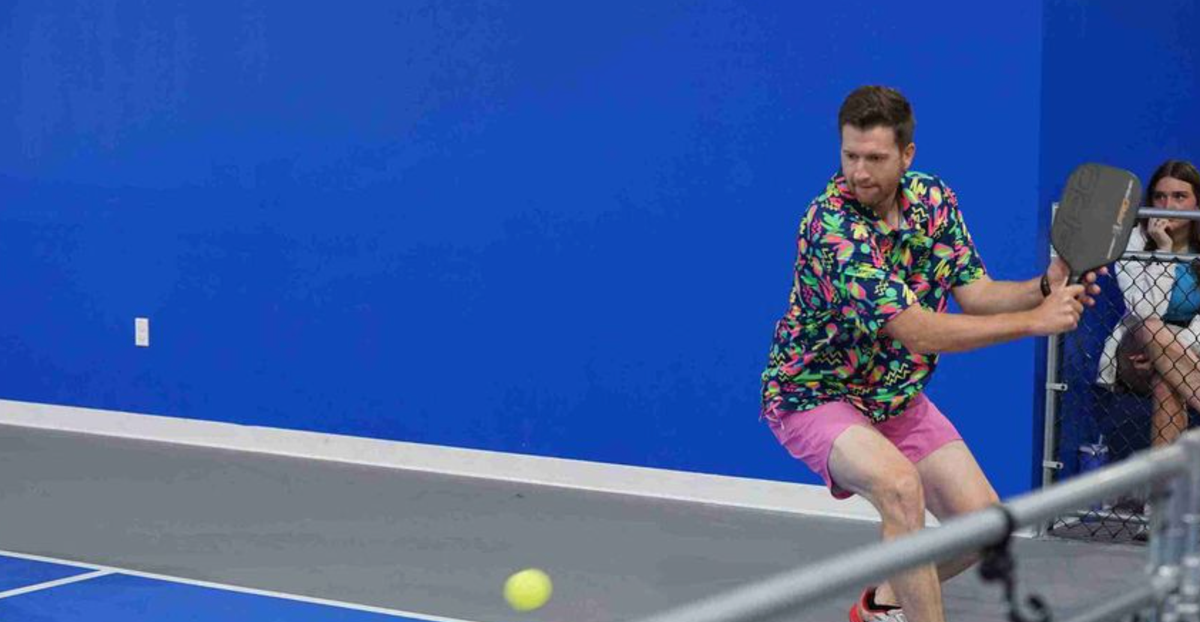
Disguise dinks pickleball players rely on comes down to one principle: same body setup, different shot direction. Master this skill and your opponents will stop reading your dinks before you even hit them.
 The Dink PickleballThe Dink Media Team
When's the Right Moment to Pull the Trigger?
The right moment to fake is the split second your opponent's weight commits forward or to one side, not before.
Pull the trigger too early and there's nothing to exploit yet. Too late, and you're rushed.
Reading Your Opponent's Weight Transfer
Watch the front foot. When a player leans into a dink, expecting to keep the rally going, their weight shifts just enough that recovering to the opposite side takes an extra step. That's your window. If you're still building the instinct for this, resetting the point with a neutral shot buys you an extra rep to watch for the tell.
The Pause Sells the Fake
Honestly, the pause matters more than the fake itself. A quarter-second hesitation at the top of your swing makes your opponent commit before you've committed to anything. According to USA Pickleball's officiating guidance on non-volley zone play, legal paddle contact must occur outside the kitchen unless the ball has already bounced, so your pause has to happen entirely within your own preparation, not your footwork.
Players who rush this step often fall back on a different kind of reset shot because they never developed the patience the fake actually requires.
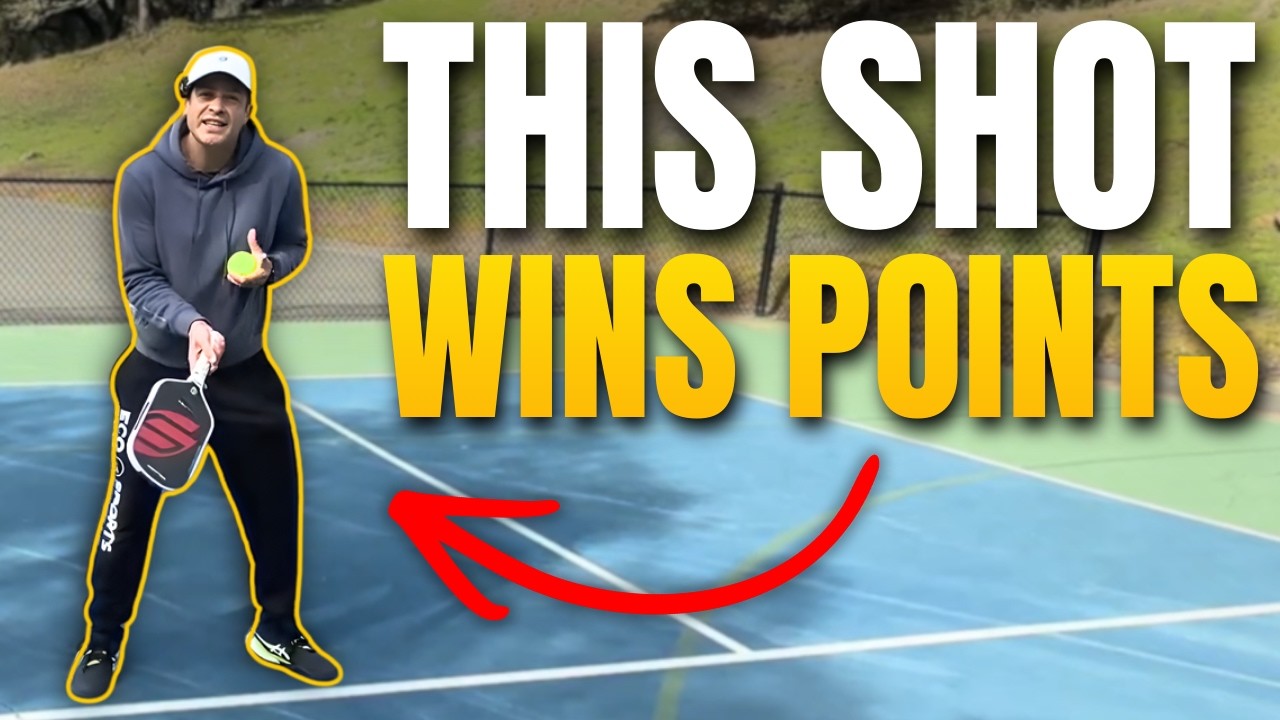
How to Disguise Your Speed-Up Shot in Pickleball
Your opponent relies on reading small changes in your movement, grip, and paddle position to anticipate your shots. Eliminate those tells and you’re in control.
 The Dink PickleballThe Dink Media Team
Three Fake Dink Variations Worth Stealing
Once you understand how to hit a fake dink in pickleball at a basic level, the real value comes from having a small menu of variations instead of one trick.
You don't need a dozen. You need three that you can hit under pressure, on command, without thinking twice.
- The fake cross-court dink. Set up like you're going crosscourt, then drop it straight ahead down the line instead. This works best against players who over-shift to cover the crosscourt angle, a habit that shows up constantly in advanced shot selection drills.
- The fake-to-drive. Show dink prep, then drive the ball low and hard past a player who's already leaning in for a soft exchange. A 2025 biomechanics review published on ResearchGate found that reaction time in racket sports drops significantly when an opponent's preparatory motion matches across shot types, which is exactly why this variation works so well. If you want a cleaner sense of when to drive versus drop, the breakdown in drive versus drop on the fifth shot covers the decision tree in more detail.
- The double fake at the kitchen line. Fake once, let your opponent recover, then fake again in the same exchange. This is an advanced move and it only works in doubles, where the extra body on court gives you more angles to exploit, similar to the positioning principles in T versus sideline doubles strategy.
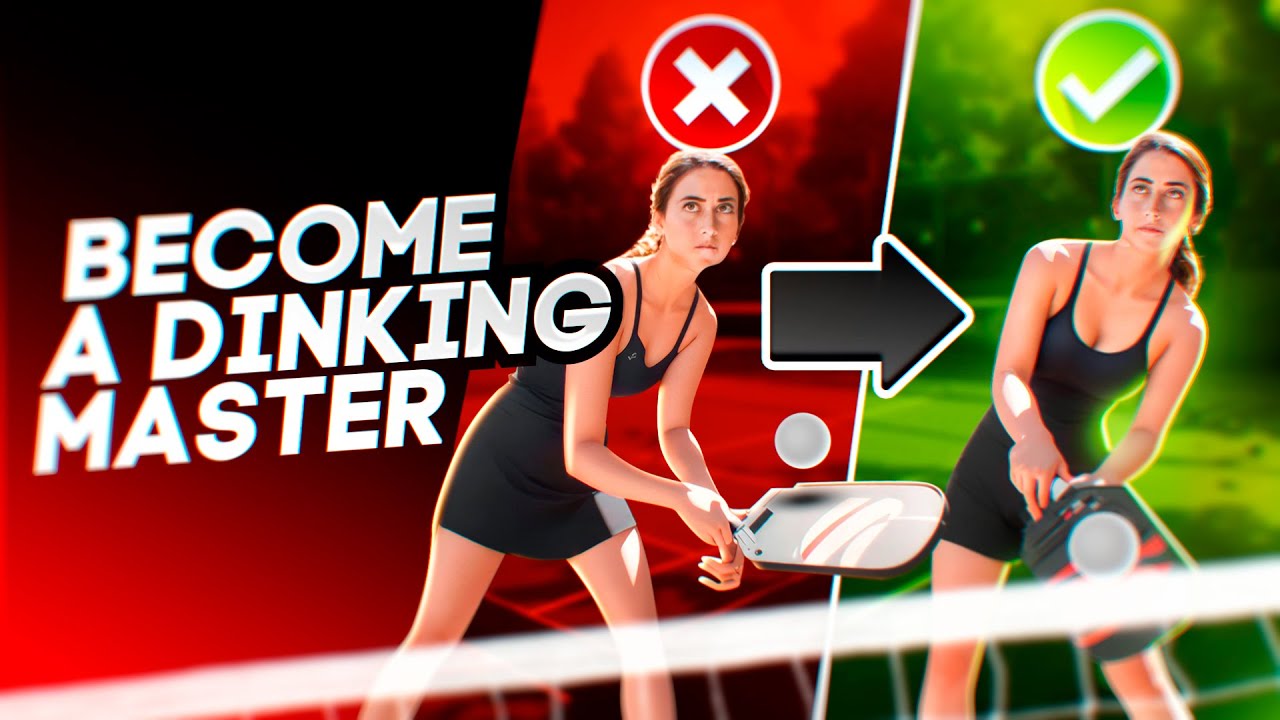
Pickleball Dinking Technique: The Complete Beginner’s Guide
This guide breaks down everything you need to know about proper dinking form, grip, stance, and drills to dominate at the kitchen line.
 The Dink PickleballThe Dink Media Team
The One Mistake That Ruins How You Hit a Fake Dink in Pickleball
The single biggest mistake is overselling it.
A big, exaggerated backswing might look convincing in your head, but it also gives a sharp opponent extra time to recover, which defeats the entire purpose.
Keep the motion small.
Let the pause do the work, not the theatrics.
The second mistake is using the fake dink on every single shot. If you fake constantly, it stops being a fake. It becomes a pattern, and patterns get read.
Mix in straightforward dinks the same way you'd mix in a genuinely spicy third shot instead of leaning on one trick.
Players who treat every dink like a setup for the fake usually end up turning mediocre dinks into winners purely by accident, without ever learning the actual skill underneath it.
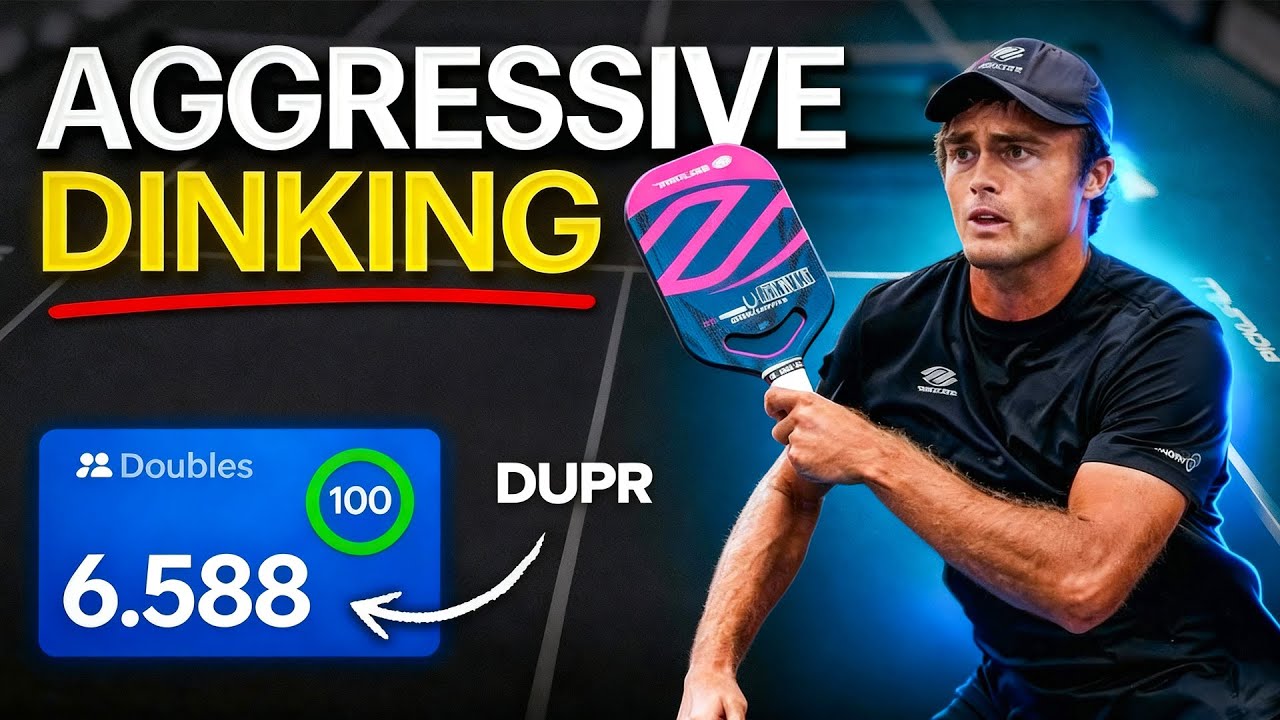
Avoid These 3 Deadly Mistakes to Master Aggressive Dinking
The aggressive dink isn’t about overpowering your opponent. It’s about creating pressure through placement, using deception to keep them guessing, and understanding when to attack versus when to reset
 The Dink PickleballAlex E. Weaver
How to Practice the Fake Dink
You build this shot with reps, not theory. Start slow, add pressure gradually, and film yourself so you can see what your opponent actually sees.
The Fastest Way to Learn How to Hit a Fake Dink in Pickleball
Skip straight to live reps and you'll bake in bad habits.
The fastest real progress comes from isolating the setup first, then adding the decision, then adding an opponent who's actually trying to read you.
- Shadow drill. Practice the identical backswing for a real dink and a fake dink, ten reps each, without a ball, so the motion becomes muscle memory before you add pace.
- Partner read drill. Have a partner call out "real" or "fake" the instant they see your paddle at the top of the swing. If they guess right more than half the time, your setup isn't disguised enough yet.
- Live-ball pressure drill. Work the fake into an actual dink rally, similar to the format used in pickleball's hardest dinking drill, so you're reading real footwork instead of a scripted feed.
Participation in pickleball has kept climbing since 2023, and the Sports & Fitness Industry Association's 2026 report noted that the sport's growth has pushed average skill levels up across every age bracket, meaning the margin for a lazy, obvious dink shrinks every season.
If you're still building comfort at the net before adding the fake, positioning yourself correctly at the kitchen is the prerequisite skill worth locking down first.
And once the fake feels automatic, pair it with a solid response to the perfect drop so your whole soft game holds together, not just one shot in isolation.
A quick figure-8 footwork drill before you practice will also make the recovery step after your fake noticeably faster.
Pickleball Dinking Technique: The Complete Beginner’s Guide
This guide breaks down everything you need to know about proper dinking form, grip, stance, and drills to dominate at the kitchen line.
 The Dink PickleballThe Dink Media Team
Key Takeaways
- Anyone can learn how to hit a fake dink in pickleball once the real shot and the fake shot share an identical setup until the final quarter second.
- The pause at the top of your swing matters more than any physical fake motion.
- Watch your opponent's weight transfer, not the ball, to time the fake correctly.
- Keep your grip neutral and your backswing compact so nothing telegraphs early.
- Mix real dinks in constantly. A fake used every time stops being a fake.
- Build the shot with shadow reps and partner-read drills before testing it in live points, and once contact feels natural, layer it into a broader third-shot drive game plan so the fake isn't your only weapon.
💡
Heads up: hundreds of thousands of pickleballers read our free newsletter.
Subscribe herefor cutting edge strategy, insider news, pro analysis, the latest product innovations and more.
Frequently Asked Questions
What is a fake dink in pickleball?
A fake dink is a soft shot at the kitchen line where your paddle prep and body language match a normal dink, but you change the direction, depth, or shot type at the last moment. It's a deception tactic built on identical setup, not extra power or spin.
How long does it take to learn how to hit a fake dink in pickleball?
Most players who already have a consistent dink can build a usable fake within a few weeks of dedicated shadow drilling and partner-read practice. The setup itself isn't complicated. What takes time is trusting the pause instead of rushing the fake.
Is the fake dink legal under pickleball rules?
Yes. There's nothing in the rulebook that restricts how you disguise a shot, only where and how you make contact with the ball relative to the non-volley zone. As long as your footwork and contact point follow standard kitchen rules, any level of deception is fair game.
What's the biggest difference between a fake dink and a regular dink?
The shot itself often looks nearly identical at address, the same way a good backhand volley read depends on catching a tell before contact. The difference shows up in the split second before contact, when a fake dink either changes direction or converts into a different shot entirely, while a regular dink follows through on the direction your body already suggested.
Can beginners use a fake dink, or is it only for advanced players?
Beginners can start learning the concept early, but it works best once your regular dink is already consistent. Trying to disguise a shot you can't reliably hit in the first place usually backfires, so nail the standard dink and a reliable third shot drop before adding the fake.
Anuncie Aqui / Advertise Here
Sua marca para o mundo Pickleball! / Your brand for the Pickleball world!





 English (US) ·
  Portuguese (BR) ·