
 English
  Spanish
  Portuguese
  German
  Italian
  Japanese
  French
  Polish
  Russian
  Netherlands
  Hungarian
  Turkish
  Videos
  Thedink Pickleball

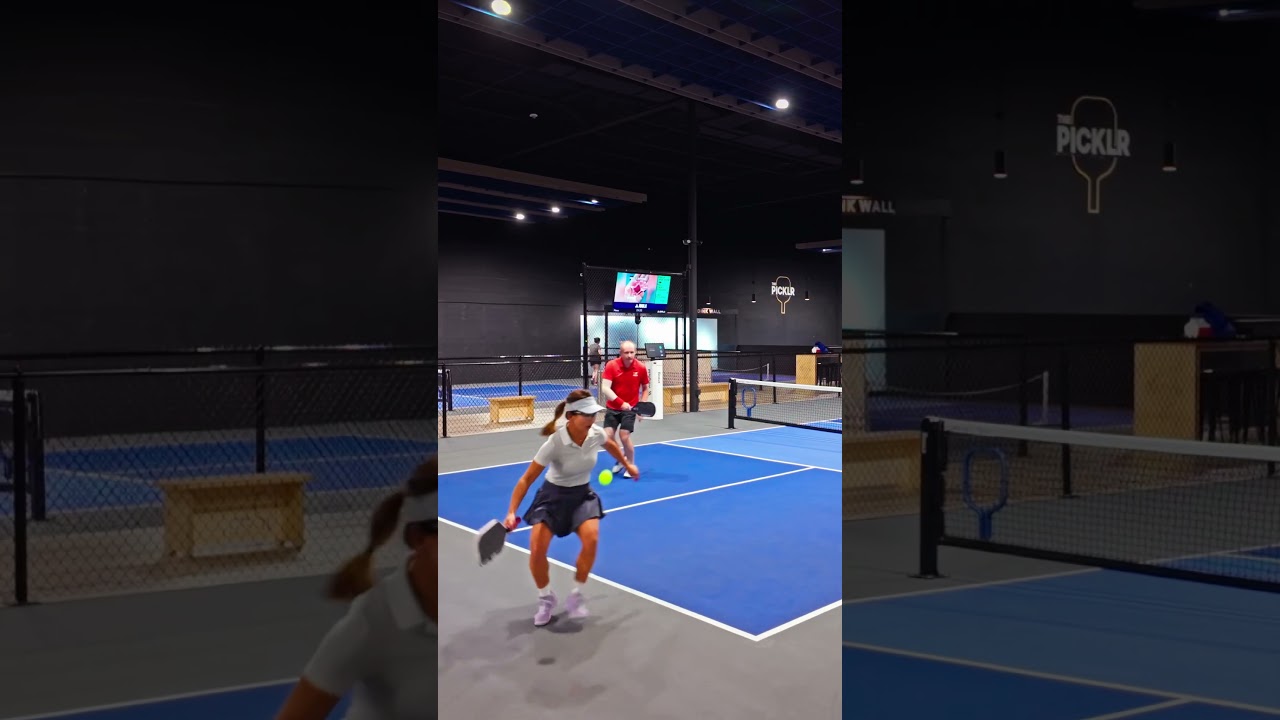
The topspin drop is one of pickleball's most aggressive net shots, and mastering the topspin drop requires understanding footwork, spin generation, and body positioning. James Ignatowich breaks down the exact mechanics you need to add this shot to your arsenal.
Here's the thing: not all drop shots are created equal.
The topspin drop sits on the opposite end of the spectrum from the push drop, which is primarily a defensive tool.
When you hit a topspin drop, you're being aggressive.
You're not just trying to keep the ball in play; you're actively trying to win the point or force your opponent into a weak response.
The key difference comes down to intent and spin. A push drop is about control and defense, keeping the ball low and soft.
A topspin drop, on the other hand, uses forward spin to create a more aggressive trajectory while still landing the ball softly near the net.
Love pickleball? Then you'll love our free newsletter. We send the latest news, tips, and highlights for free each week.
The Footwork Foundation: Getting Your Body in Position
Before you even think about hitting the ball, your feet need to be in the right place.
According to pro James Ignatowich, the footwork for a topspin drop starts with bringing your left leg in front of your body.
This forward leg positioning is crucial because it sets up the angle and leverage you need to generate topspin.
When your left leg comes forward, you're not just moving for the sake of movement.
You're creating a foundation that allows you to get underneath the ball, which is essential for generating the topspin that defines this shot.
The positioning also helps you maintain balance and control throughout the stroke, preventing you from overcommitting or losing your court position.
Think of your footwork as the base of a building. If the foundation isn't solid, everything else falls apart.The same applies to the topspin drop. Get your feet right, and the rest of the shot becomes much more manageable.
Getting Under the Ball: The Core of Topspin Generation
Once your footwork is set, the next critical element is getting underneath the ball. This is where the magic happens.
To create topspin on your topspin drop, you need to make contact with the ball from a lower point and brush upward through it.
This upward motion is what generates the forward spin that makes the ball dip quickly after it clears the net.
Getting under the ball requires you to bend your knees and lower your center of gravity.
💡
Need some new pickleball gear? Get 20% off select paddles, shoes, and more with code THEDINK at
Midwest Racquet SportsYou're not hitting down on the ball like you might with a smash or an aggressive drive.
Instead, you're positioning yourself so that your paddle face can move upward through the contact point.
This creates the topspin while keeping the ball soft and controlled.
The beauty of this technique is that it allows you to be aggressive without being reckless.
You can swing with intent and generate pace, but the topspin and your positioning keep the ball from flying long or sailing over the baseline.
Here’s What a Busted Paddle Actually Sounds Like
Pro Vivian Glozman shares the difference in sound between a new paddle and a failed paddle.
 The Dink PickleballAlex E. Weaver

Wrist Control: Less Is More
Here's where a lot of players make a mistake. They think that to hit a topspin drop, they need to use a ton of wrist action. That's not the case.
In fact, excessive wrist movement is one of the quickest ways to lose control of the shot and send the ball into the net or long.
James Ignatowich emphasizes that your wrist should remain relatively quiet during the topspin drop.
Your wrist isn't inactive, but it's not the primary driver of the shot either.
The topspin comes from the upward motion of your arm and the brush of your paddle through the ball, not from flicking your wrist.
Keeping your wrist stable helps you maintain consistency and control. It also reduces the margin for error.
When you rely on wrist action, you're introducing more variables into the shot, which makes it harder to repeat and harder to execute under pressure.
By keeping your wrist quiet, you're simplifying the mechanics and making the shot more reliable.
What Is Wrist Lag in Pickleball? The Pro Technique for Power, Spin & Control
Pros use this technique to generate more power, more spin, and better control on serves, returns, drives, and speedups. And you should, too.
The Dink PickleballThe Dink Media Team
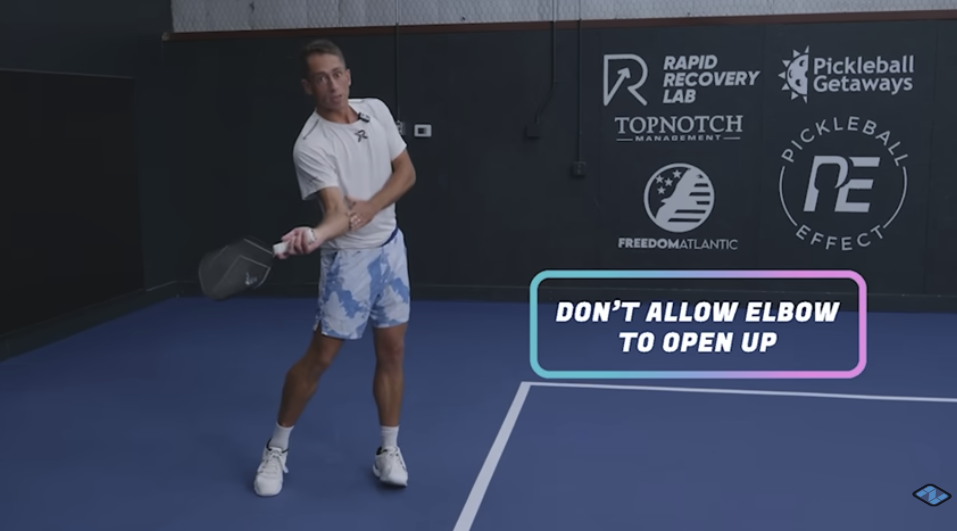
The Finish: Staying on the Same Side of Your Body
One of the most overlooked aspects of the topspin drop is the finish.
Where your paddle ends up after you make contact with the ball matters more than most players realize.
The proper finish for a topspin drop is to complete your stroke on the same side of your body where you started.
What does this mean in practical terms? If you're hitting a forehand topspin drop, your paddle should finish on your right side (for a right-handed player).
You're not wrapping the paddle around your body or finishing across your chest. You're keeping the motion compact and controlled by finishing on the same side.
This finishing position serves two important purposes. First, it helps you maintain control throughout the entire stroke.
Second, it prevents you from adding extra wrist action at the end of the shot, which could cause the ball to sail long or lose the soft touch you're trying to achieve.
The finish is the final checkpoint that ensures your topspin drop stays true to its purpose: aggressive yet controlled.
How to Close Out Rallies in Pickleball: 3 Finishing Techniques That Win Points
The best players aren’t just steady. They’re hunters. They recognize when the moment arrives to put the ball away, and they know exactly how to do it.
The Dink PickleballThe Dink Media Team

Why Aggression Matters in Modern Pickleball
The topspin drop represents a shift in how pickleball is being played at higher levels.
The sport has evolved from a game focused primarily on soft hands and defensive positioning to one where controlled aggression is increasingly important.
Players who can execute shots like the topspin drop are the ones winning matches and tournaments.
This doesn't mean pickleball has become a power game. It's still a sport where touch and finesse matter tremendously.
But it does mean that the best players are the ones who can blend aggression with control, who can take calculated risks, and who understand when to attack and when to defend.
The topspin drop is a perfect example of this balance.
Kitchen Line Aggression: When to Attack in Pickleball
Jack Munro, the #1 player on the APP tour in mixed and men’s doubles, breaks down the exact signals that tell you when your opponent is vulnerable and ready to be attacked.
The Dink PickleballThe Dink Media Team

Putting It All Together: The Complete Topspin Drop
Let's recap the essential elements of hitting a topspin drop:
- Position your left leg in front of your body to create a stable foundation
- Get underneath the ball by bending your knees and lowering your center of gravity
- Brush upward through the ball to generate topspin
- Keep your wrist quiet and let your arm do the work
- Finish on the same side of your body to maintain control
When you combine these elements, you get a shot that's both aggressive and reliable.
You're taking the initiative at the net, putting pressure on your opponent, and doing it with the kind of control that keeps the ball in play and gives you the best chance to win the point.
When the moment is right, when your opponent is expecting a soft touch and you can deliver controlled aggression instead, that's when the topspin drop becomes a game-changer.
💡
Heads up: hundreds of thousands of pickleballers read our free newsletter.
Subscribe herefor cutting edge strategy, insider news, pro analysis, the latest product innovations and more.
Frequently Asked Questions
What's the difference between a topspin drop and a push drop?
The push drop is a defensive shot designed to keep the ball low and soft, buying you time and keeping your opponent from attacking. The topspin drop is an offensive shot that uses forward spin to create a more aggressive trajectory while still landing softly near the net. The topspin drop is meant to take the initiative and put pressure on your opponent.
How much wrist should I use when hitting a topspin drop?
Your wrist should remain relatively quiet during the topspin drop. The topspin comes from the upward motion of your arm and the brush of your paddle through the ball, not from wrist action. Excessive wrist movement will cause you to lose control and consistency.
Can I hit a topspin drop from anywhere on the court?
The topspin drop is primarily a net shot, executed when you're already at or near the net. It's not a shot you'd hit from the baseline. The closer you are to the net, the easier it is to execute the topspin drop with proper control and aggression.
How do I know when to use a topspin drop instead of a regular drop?
Use the topspin drop when you want to be aggressive and take the initiative at the net. Use a regular drop when you're in a defensive position and need to neutralize your opponent's attack. The topspin drop is an offensive weapon; the regular drop is a defensive tool.
Is the topspin drop difficult to learn?
The topspin drop requires practice and proper technique, but it's not impossibly difficult. The key is understanding the footwork, getting underneath the ball, and keeping your wrist quiet. Once you understand these fundamentals, you can develop consistency through repetition and practice.
Anuncie Aqui / Advertise Here
Sua marca para o mundo Pickleball! / Your brand for the Pickleball world!





 English (US) ·
  Portuguese (BR) ·