
 English
  Spanish
  Portuguese
  German
  Italian
  Japanese
  French
  Polish
  Russian
  Netherlands
  Hungarian
  Turkish
  Videos
  Thedink Pickleball

Playing pickleball with bad knees is possible with the right modifications. These 8 adjustments protect your joints, reduce pain, and keep you competing longer.
Playing pickleball with bad knees doesn't have to mean hanging up your paddle.
Knee pain is one of the most common complaints in the pickleball community, and it makes sense: the sport demands lateral cuts, explosive pushes to the kitchen line, and repeated bending into that low ready position.
For players with arthritis, old ACL damage, or general wear-and-tear, every session can feel like a negotiation between staying competitive and staying functional.
Here's the thing: the game is actually more manageable on your knees than most people assume.
The court is small. The pace is controllable. And with a few smart adjustments, you can keep playing without making things worse.
Love pickleball? Then you'll love our free newsletter. We send the latest news, tips, and highlights for free each week.
Why Pickleball With Bad Knees Is More Manageable Than You Think
Pickleball is genuinely one of the more joint-friendly racket sports available.
The court is only 20x44 feet, a fraction of a tennis court, which means far less ground to cover and shorter bursts of movement.
Research published in the Journal of Aging and Physical Activity found pickleball to be a moderate-intensity aerobic activity well-suited for older adults, with lower injury risk compared to tennis.
That said, "lower risk" doesn't mean zero risk. The lateral shuffling, quick stops, and lunging for low balls are real stress points for anyone dealing with knee issues.
The goal isn't to eliminate movement, it's to move smarter.
The 8 Modifications That Keep Pickleball Players With Bad Knees on the Court
1. Play Doubles Exclusively (Seriously, Make the Switch)
Doubles cuts your court coverage roughly in half. Your partner handles the wide balls.
You stay in your lane, protect the kitchen, and work the game from a position of control rather than chaos.
Singles with bad knees is a punishment. Doubles is pickleball.
If you've been dabbling in both, commit to doubles. It's not a downgrade, it's the format the pros play at the elite level, and it's dramatically easier on your joints.
💡
Need some new pickleball gear? Get 20% off select paddles, shoes, and more with code THEDINK at
Midwest Racquet Sports2. Shorten Your Stance and Bend Less at the Knee
The ready position most coaches teach puts players in a deep athletic squat, knees tracking over toes, weight forward.
For healthy knees, great. For damaged ones, not always necessary.
A modified ready position keeps a slight bend in the knee without the full squat depth.
Stay tall, use your hips to hinge instead of driving purely through the knees. You lose a little reaction speed on extreme low balls.
You gain a lot in pain-free sessions. The trade-off is worth it.
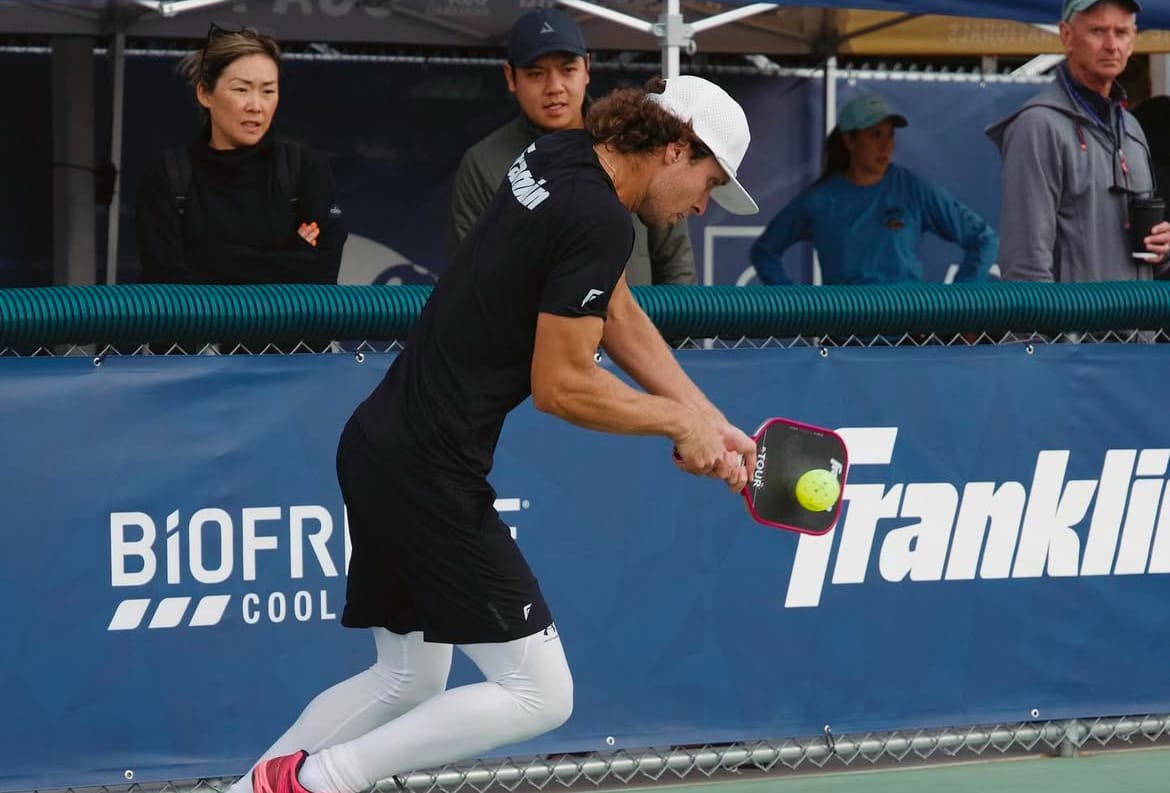
Brave: Top Pro Takes Controversial Stance on Pickleball Drama
Standing up for what’s right, Will Howells takes risky stance on high stakes pickleball controversy.
 The Dink PickleballThomas Shields
3. Wear the Right Shoes (This One Is Non-Negotiable)
Footwear does more work than most players realize.
A court shoe with proper lateral support and cushioning absorbs the shock that would otherwise travel straight up into your knee joint.
Running shoes are not a substitute. Their heel-heavy design actively increases knee stress during lateral movement.
Look for dedicated pickleball or indoor court shoes with reinforced outsoles, responsive cushioning, and low-profile heel drop.
The Dink has covered what the data says about the top-rated pickleball shoes, worth a read before your next purchase.
You can also add orthotics or specialized shoe inserts like Airfeet for extra shock absorption and arch support.
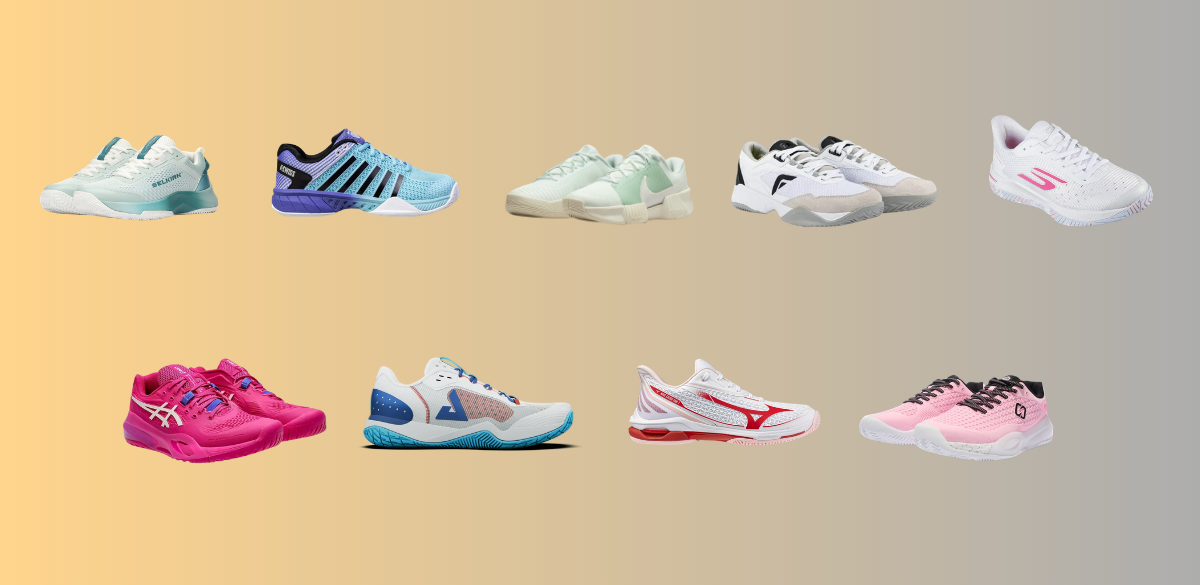
Best Women’s Pickleball Shoes of 2026: Top 9 Reviewed
I tried the 9 top women’s pickleball shoes from Nike, ASICS, Selkirk, JOOLA and more to reveal the best options for comfort, speed, and on-court performance.
 The Dink PickleballEmily Visnic
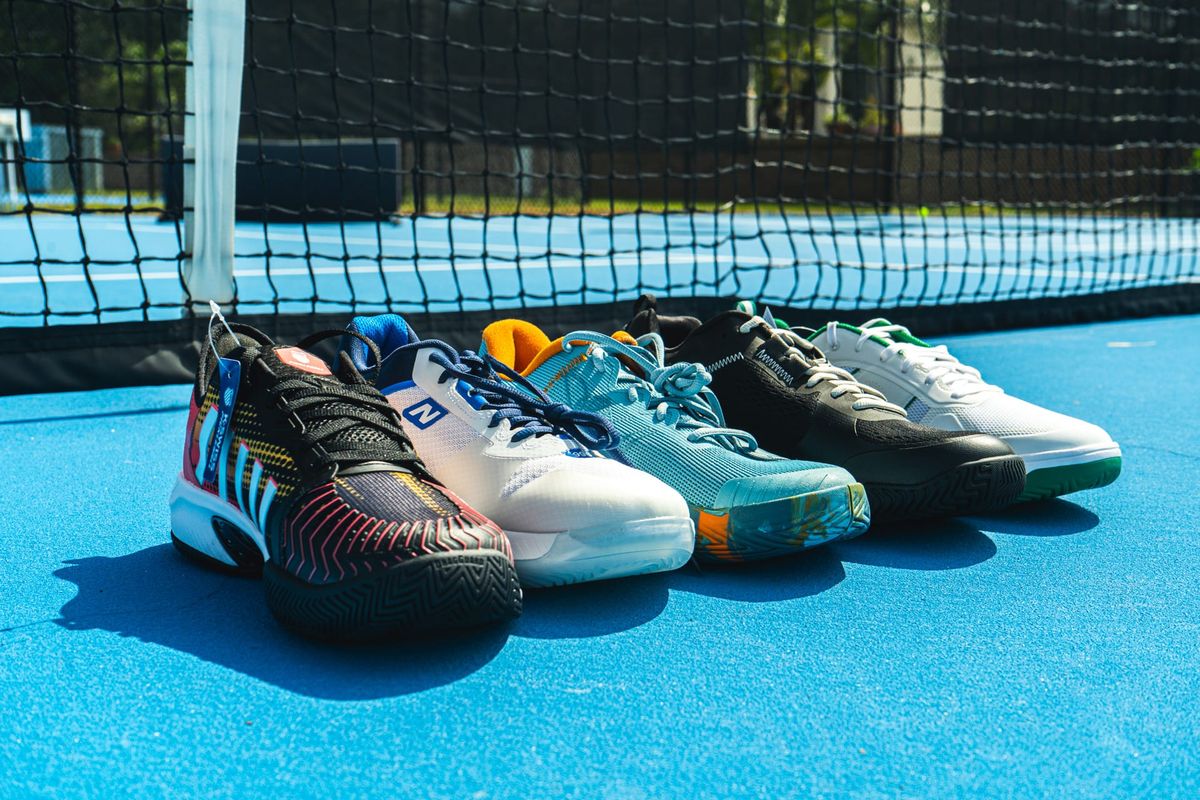
Ranking the Best Men’s Pickleball Shoes of 2025
Pickleball addicts (like myself) will wear down at least 3-5 pairs of shoes per year. So finding the right pair is crucial for your wallet and your game. To help my fellow players, I’ve ranked the best men’s pickleball shoes of 2025.
The Dink PickleballLuke Burton
4. Brace the Knee During Play
A quality knee brace provides compression, proprioceptive feedback, and light structural support that makes a real difference during lateral movement.
This isn't about masking pain, it's about giving the joint a little extra stability so you're not relying entirely on fatigued muscles to hold everything together.
According to research from the National Institutes of Health, compression sleeves and hinged braces have been shown to reduce pain and improve functional mobility in patients with knee osteoarthritis.
For pickleball specifically, a compression sleeve works well for mild discomfort.
A hinged brace is the better call if your issue involves instability or previous ligament damage.
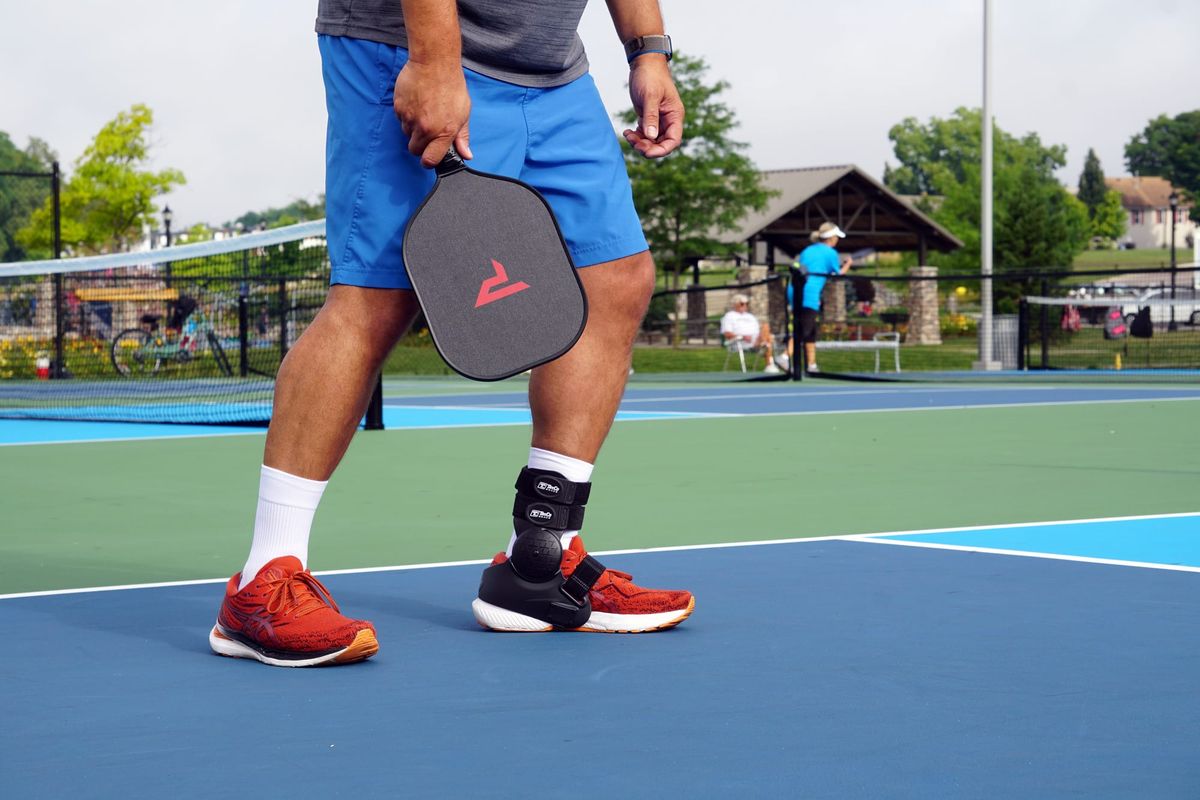
This Innovative Ankle Brace Is Purpose-Built for Pickleball
Many pickleball players – especially those with a history of ankle injuries – are looking for smarter, more effective ways to protect themselves without sacrificing performance.
The Dink PickleballAlex E. Weaver
5. Warm Up the Knees Before You Touch the Court
Cold joints are angry joints. Jumping straight into a game without warming up is one of the fastest ways to aggravate a knee issue, and it's completely avoidable.
A proper warm-up increases blood flow to the joint, activates the surrounding musculature, and improves range of motion before you ask anything demanding of it.
A solid 10-minute routine matters here.
Adding warm-up tools like Bzer mini pickleballs to your pre-game routine gets the hands working while you're still loosening the legs.
Bodyweight squats, leg swings, side-to-side shuffles, and calf raises are all effective.
Dynamic stretching beats static stretching before play, save the long holds for after the session.
Roll, Lunge, Jump: The Anna Bright Method for Warming Up Right
Take a page out of the pro book. Move your spine, lunge deep, and jump a little. Your knees and your win-loss record will thank you.
The Dink PickleballThe Dink Media Team
6. Focus Your Game at the Kitchen Line
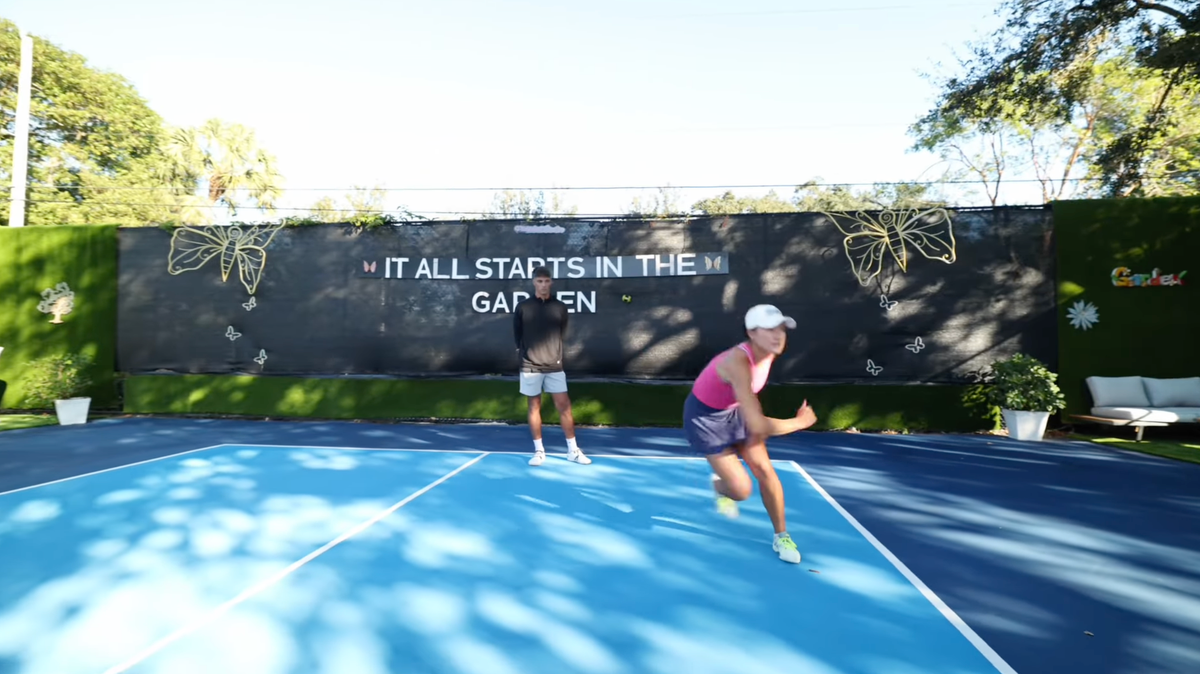
The kitchen line is the safest place on the court for bad knees. Once you're there, you're playing controlled, compact dinks.
Short movement, minimal explosive cutting, hands game. You're not sprinting back for overheads or chasing down wide drives.
This is strategic as much as it is practical.
Getting to the non-volley zone quickly is the correct pickleball tactic anyway, and for knee-compromised players, it doubles as injury prevention.
Get there fast on serve return, stay there, and let the game come to you.
Kitchen Line Dominance: 5 Secrets From Pro Tyra Black
Tyra’s approach combines footwork, positioning, tactical dinking, and elite hand skills into a system that’s incredibly hard for opponents to break down.
The Dink PickleballThe Dink Media Team

7. Strengthen the Muscles Around the Knee Off the Court
This one requires work outside the game. Quad strength is the single biggest protective factor for knee health in court sports.
Strong quadriceps reduce the mechanical load on the patella and knee joint by absorbing shock more effectively during movement.
The same goes for the hamstrings, glutes, and hip abductors.
Research from the American Journal of Sports Medicine has consistently shown that knee strengthening programs reduce pain and improve function in adults with knee osteoarthritis.
Specific exercises that help: terminal knee extensions, straight leg raises, clamshells, and step-downs.
Low weight, high reps. No heroics. The Dink's guide to bulletproofing your knees breaks this down for pickleball players specifically.
The Elite Volleying Technique That Beats Muscle in Pickleball
Stop trying to muscle your volleys. Start focusing on the mechanics that actually work.
The Dink PickleballThe Dink Media Team

8. Manage Recovery as Seriously as You Manage Your Game
Pickleball players are notorious for playing through pain and stacking sessions back-to-back. With bad knees, that approach breaks down fast.
Recovery is not optional, it's part of the program.
Ice the knee for 15–20 minutes after a session if there's swelling or heat. Keep sessions to 60–90 minutes and build in at least one rest day between play days.
Products like compression sleeves worn post-play can help you recover faster from the aches and pains that come with the sport.
And talk to your doctor or a physical therapist if pain is escalating, the earlier you address it, the better your long-term prognosis.
The Best Pickleball Amazon Shopping Guide Ever Written That Includes Some Things Money Can’t Buy, But Does Not Include Paddles, Balls, Gear, Supplements, Or Any Equipment. Sorry.
Looking for fun pickleball gifts? Discover quirky paddle tags, shirts, candles, snacks, and accessories every pickleball fan will love.
The Dink PickleballHunter Budrewicz

Does Playing Pickleball Actually Make Knee Pain Worse?
Not inherently. The concern is real, but the premise is often backwards.
A sedentary lifestyle typically accelerates joint degeneration faster than moderate, low-impact activity.
Studies published on PubMed show that appropriate exercise reduces inflammation and improves synovial fluid circulation in osteoarthritic joints.
Movement is medicine, in the right doses.
The key qualifier is appropriate.
Playing five days a week on hard courts with worn-out shoes and no strength training is a different equation than two or three controlled doubles sessions with proper gear and a maintenance routine.
New Study: 1 in 3 Players Push Through Pickleball Injury
Conducted by researchers from Saint Louis University, it analyzed 1,758 pickleball players ages 18-102 across the U.S. to better understand injury patterns beyond just emergency room data.
The Dink PickleballLuke Burton
Is Pickleball Bad Knees Friendly Compared to Other Sports?
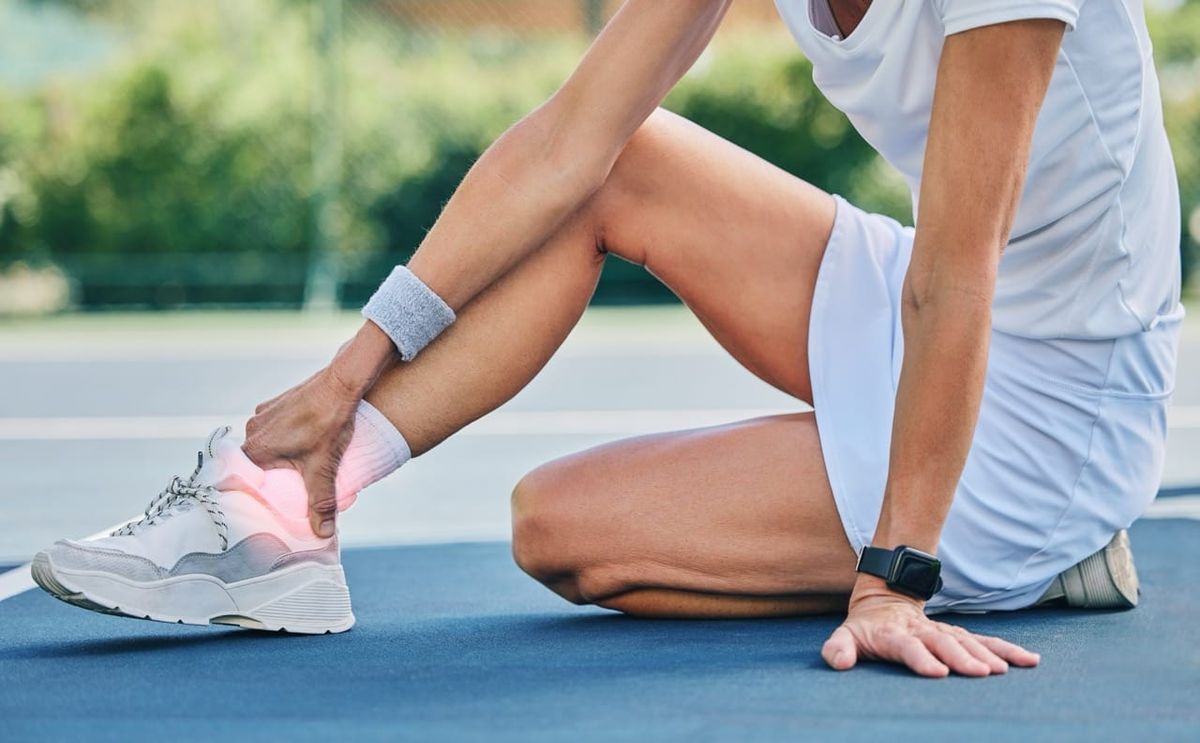
Compared to tennis, basketball, or running, pickleball is significantly more knee-friendly.
The lower intensity, smaller court, and underhand stroke mechanics all reduce peak joint stress.
This is one reason the sport has exploded among players 50 and older who've had to step back from other activities.
That said, pickleball is still a court sport with lateral movement demands. It's not the same as swimming or cycling in terms of joint load.
The players who stay active and live longer tend to be those who play smart, not just those who play often. Managing your body is part of the competitive equation.
Pickleball Fitness for Seniors: Train Safe, Play Better
Pickleball fitness for seniors is the difference between playing twice a week and playing every day without breaking down. This guide breaks down the exact training approach that lets older players compete harder and recover faster.
The Dink PickleballThe Dink Media Team
Key Takeaways
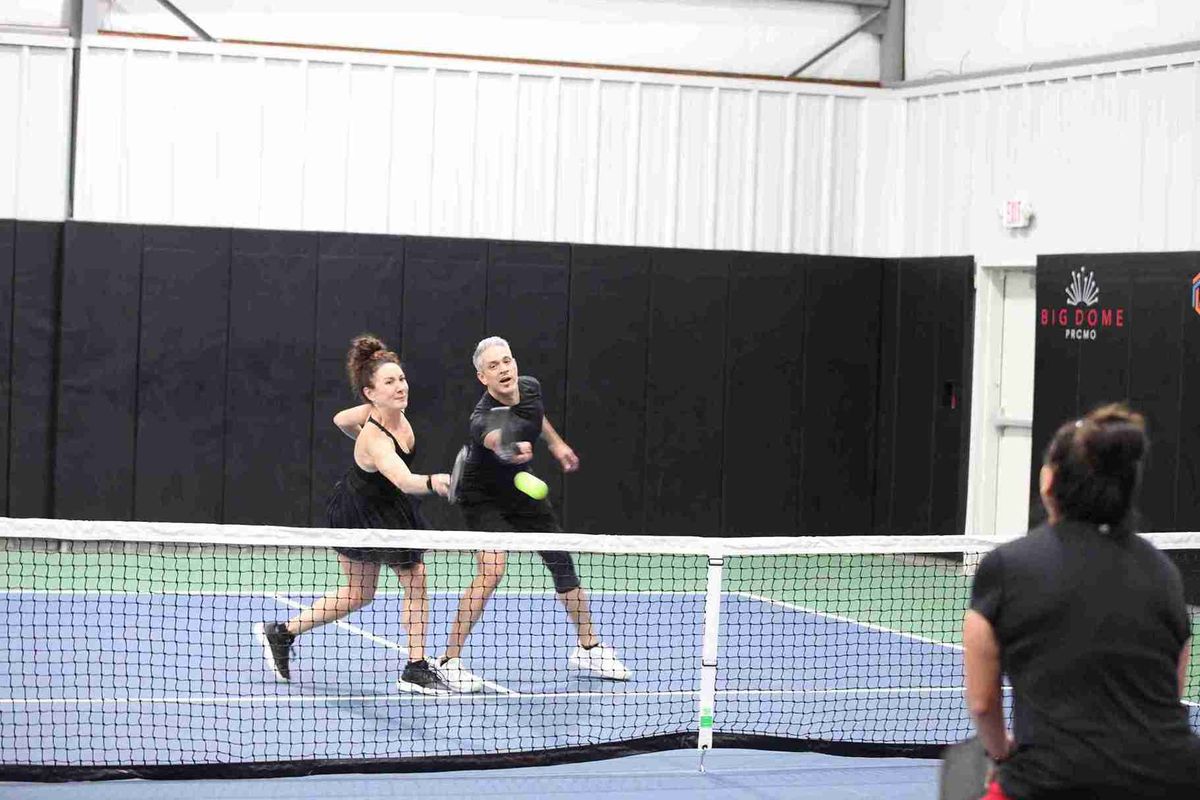
- Pickleball is one of the more joint-friendly court sports, but knee management still matters.
- Doubles format dramatically reduces court coverage demands and protects the knees.
- Proper court shoes and knee braces are the two highest-impact gear changes you can make.
- Strength training off the court, especially quad and glute work, directly reduces knee joint load during play.
- The kitchen line is both the correct tactical position and the safest position for knee-compromised players.
- Recovery between sessions is not optional. Ice, rest days, and compression sleeves all add up.
- Consult a physical therapist if knee pain is escalating, early intervention changes outcomes.
💡
Heads up: hundreds of thousands of pickleballers read our free newsletter.
Subscribe herefor cutting edge strategy, insider news, pro analysis, the latest product innovations and more.
Frequently Asked Questions
Can I still play pickleball with bad knees?
Yes. Pickleball with bad knees is manageable for most players with the right modifications. Switching to doubles, wearing proper court shoes, using a knee brace, and strengthening the surrounding musculature are the most effective adjustments. Many players continue competing for years with knee arthritis or prior injuries by modifying how they play and how they recover.
What is the best knee brace for pickleball?
The right brace depends on your specific issue. A compression sleeve works well for mild discomfort or general arthritis. A hinged knee brace is better for instability or ligament concerns. Consult an orthopedic specialist or physical therapist to identify which type fits your diagnosis. Whichever you choose, wear it consistently during play, not just when it hurts.
Is pickleball hard on the knees compared to tennis?
Pickleball is considerably easier on the knees than tennis. The smaller court means fewer explosive sprints and less ground coverage. The underhand serve eliminates the overhead loading that strains the knee in tennis. Research on pickleball's physical demands confirms it as a moderate-intensity activity with a favorable injury profile compared to higher-impact racket sports.
What exercises help with pickleball knee pain?
The most effective exercises for pickleball knee pain focus on strengthening the quadriceps, hamstrings, and glutes. Terminal knee extensions, straight leg raises, glute bridges, and step-downs are standard physical therapy staples. Wall sits and clamshells address the knee from multiple angles. Low weight, controlled reps, and consistency matter more than intensity here.
Should I stop playing pickleball if my knees hurt?
Not necessarily. Minor discomfort after play is common and manageable. The signal to stop is sharp pain during play, significant swelling, or pain that persists for more than 48 hours after a session. Those symptoms warrant a conversation with a doctor or physical therapist before returning to the court. Playing through acute pain or ignoring escalating symptoms is what turns a manageable issue into a serious one.
Anuncie Aqui / Advertise Here
Sua marca para o mundo Pickleball! / Your brand for the Pickleball world!





 English (US) ·
  Portuguese (BR) ·