
 English
  Spanish
  Portuguese
  German
  Italian
  Japanese
  French
  Polish
  Russian
  Netherlands
  Hungarian
  Turkish
  Videos
  Thedink Pickleball

Knowing how to position yourself in pickleball doubles is the difference between scrambling on defense and controlling every rally. This court map guide breaks down exactly where to stand, from the serve to the kitchen, in every phase of a doubles point.
Knowing how to position yourself in pickleball doubles is the single biggest separator between players who keep score and players who control points.
Not your dink. Not your third shot. Your positioning: where you are on the court before the ball even arrives. That determines whether you're reacting or dictating.
Most rec players understand the basics. Stand here, move there. But they're working off instinct and habit, not a real framework.
That's exactly what this guide fixes.
Love pickleball? Then you'll love our free newsletter. We send the latest news, tips, and highlights for free each week.
The Court Map: Four Zones You Need to Know
Before getting into the phase-by-phase breakdown, it helps to have a shared vocabulary.
The pickleball court has four functional zones in doubles play, and knowing how to position yourself in pickleball doubles starts with understanding where each zone begins and ends.
- Zone 1: The Kitchen Line. The non-volley zone (NVZ) line, seven feet from the net. This is the power position: the place both teams are racing to reach. Learn why holding the kitchen line is everything in doubles.
- Zone 2: The Transition Zone. The mid-court area between the baseline and the kitchen line. Nobody wants to live here. You pass through it as quickly as possible.
- Zone 3: The Baseline. Where the serving team starts every point. You'll spend time here, but the goal is always to escape it.
- Zone 4: The Middle. Not a physical zone, but a strategic one. The center of the court, the seam between two players, is where most points are won and lost. Doubles strategy built around the middle is one of the most effective weapons you can add.
How to Position Yourself in Pickleball Doubles: The Serving Phase
When your team is serving, you and your partner are starting from behind.
The serving team begins at or near the baseline, while the returning team already has a positional edge. They can sprint to the kitchen immediately after the return.
Here's where each player stands:
- Server: Behind the baseline on their respective side (right or left). According to USA Pickleball's 2025 Official Rulebook (Rule 4.A), the server must stand behind the baseline and within the imaginary extension of the sideline and centerline.
- Server's partner: Also behind the baseline. Remember the double-bounce rule here: the serving team must let the return bounce before making contact.
The key mistake here: the server's partner creeping into no-man's land and freezing.
Sitting in the middle is a death sentence when a fast drive comes at your feet.
💡
Need some new pickleball gear? Get 20% off select paddles, shoes, and more with code THEDINK at
Midwest Racquet SportsHow to Position Yourself in Pickleball Doubles: The Return Phase
The returning team has the advantage, and good court positioning is how you keep it.
- Returner: Behind the baseline on their side, with enough room to step into the return. After hitting, they move forward immediately. The goal is reaching the kitchen line before the server can recover.
- Returner's partner: Already at the kitchen line. Full stop. There's no reason to be anywhere else. Your partner handles the return; you hold the line and prepare for whatever comes next.
The two-player formation during the return phase should look like a staircase: one player moving up while the other holds position.
Understanding the return slice and how it sets up your positioning advance is worth studying.
Why Is the Transition Zone So Dangerous?
The transition zone is the area between the kitchen line and the baseline, roughly the middle third of the court.
It's dangerous because a ball that lands at your feet in the transition zone is almost unreturnable at a high pace.
You can't volley it (you're not at the kitchen) and you can't let it bounce comfortably (it's too close to your body).
The answer isn't to avoid the transition zone. You have to move through it.
The skill is doing it quickly and behind a good shot: a third-shot drop or reset that buys you time to close the gap and arrive at the kitchen with control, not panic.
More on the drive vs. drop decision from the baseline.
8 Pickleball Doubles Strategy Tips Nobody Talks About
Pickleball doubles is a game of angles, positioning, and reading your opponent. But there’s a gap between what coaches teach and what actually wins matches.
 The Dink PickleballThe Dink Media Team
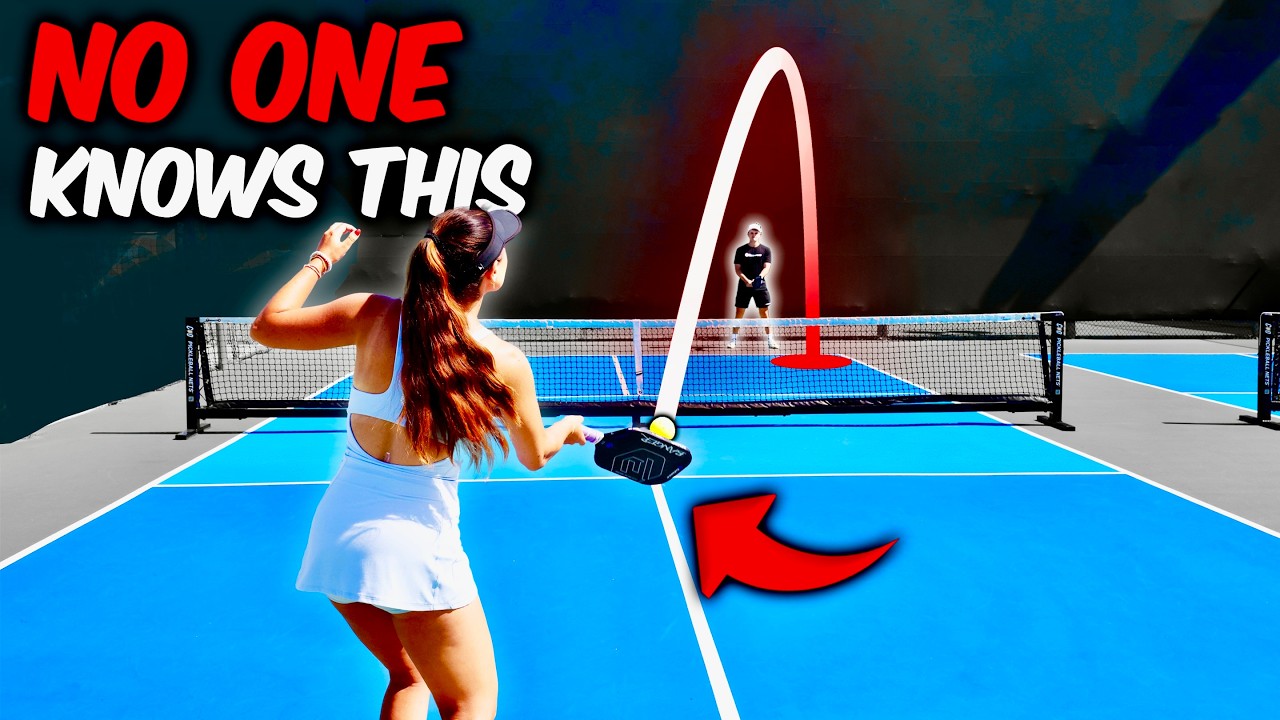
Holding the Kitchen: The Most Important Pickleball Doubles Position
Once both players reach the kitchen line, pickleball doubles positioning becomes about staying connected and holding shape.
The two most common mistakes at the NVZ:
- Drifting laterally without your partner following. If you slide left to cover a wide dink, your partner needs to shift left too, or you've opened a gap in the middle.
- Backing off the line on a lob. Most intermediate players instinctively retreat when a lob goes up. The better move: identify whether the lob is short enough to take out of the air. If it is, stay forward.
Side-by-side is the default. You're a unit. When one player moves, the other moves with them. Think of a bead on a wire.
The two of you slide together,, protecting the center seam while maintaining pressure on the net.
Changing the way you think about doubles pickleball starts here.
4 Keys to ‘Squishy’ Kitchen Line Positioning in Pickleball
Pros have a new favorite word for elite defense: squishy. Here is how the right kitchen line positioning lets you reset a speedup and still take the next ball out of the air.
 The Dink PickleballThe Dink Media Team
Who Takes the Middle Ball in Pickleball Doubles?
This is the most argued topic at every rec session on the planet. Here's the rule that actually works:
The player with the forehand positioned toward the middle takes the ball.In a right-right partnership, the player on the left side (whose forehand faces the center) owns middle balls.
In a mixed partnership of right-handed and left-handed players, the overlap creates a natural coverage zone both players can attack with their forehand.
The reason isn't just comfort.
A 2025 study on decision-making in racket sports from PubMed/NIH found that athletes consistently perform better when shot selection rules are established pre-rally rather than decided reactively mid-point.
Call your middle ball coverage before the rally starts, not during it.
Doubles communication is the underrated skill that separates good teams from great ones.
Covering the Middle in Pickleball: 4 Rules to End Confusion
Most players think the forehand always takes the middle, but that is costing them points. Here is the real system for covering the middle in pickleball.
 The Dink PickleballThe Dink Media Team
Stacking: When Standard Pickleball Doubles Positioning Goes Out the Window
Stacking is a doubles formation where both players start on the same side of the court, then shift into their preferred positions after the ball is in play.
When coaches explain how to position yourself in pickleball doubles at the 4.0+ level, stacking is almost always part of the answer.
It's the most common positioning adjustment you'll see at the pro level. It's becoming standard at 4.0+.
Why do teams stack? To keep both forehands in the middle, or to protect a weaker backhand from the middle ball.
A right-handed/left-handed team stacks to create a two-forehand configuration that covers the middle without compromise.
The mechanics:
- On the serve: the server hits from their legal position, and their partner stands on the same side just behind the kitchen line (in bounds, but offset). After the serve, both players shift into their preferred positions.
- On the return: the non-returner stands near the centerline, at the kitchen. After the return lands, both players shift left or right into their preferred side.
Stacking in men's doubles has been reshaping how positioning is taught at the competitive level.
Doubles Stacking 101: The Fool-Proof Positioning Strategy That Wins Points
Stacking might be the single most underrated positional tool in doubles pickleball – and it’s way simpler than you think
 The Dink PickleballThe Dink Media Team
How Does Poaching Change Doubles Positioning?
Poaching is when one player crosses the centerline to pick off a ball heading toward their partner.
It's aggressive, it's effective, and it completely reshapes court positioning if you don't communicate it.
When you poach, you move into your partner's zone. That means your partner must immediately cross behind you to cover your original zone.
This is called the switch. No communication = two players converging on the same ball, leaving the other side open.
The cue system is simple: call "mine" loud and early, then your partner calls "switch" and rotates.
Poaching without the switch is just gambling. Studying good shot vs. bad positioning decisions is the fastest way to build this habit.
Stop Apologizing and Start Poaching More Shots in Pickleball
Poaching applies pressure, shrinks the court for your opponents, and helps cover a weaker partner — all tactics that increase unforced errors.
 The Dink PickleballAlex E. Weaver
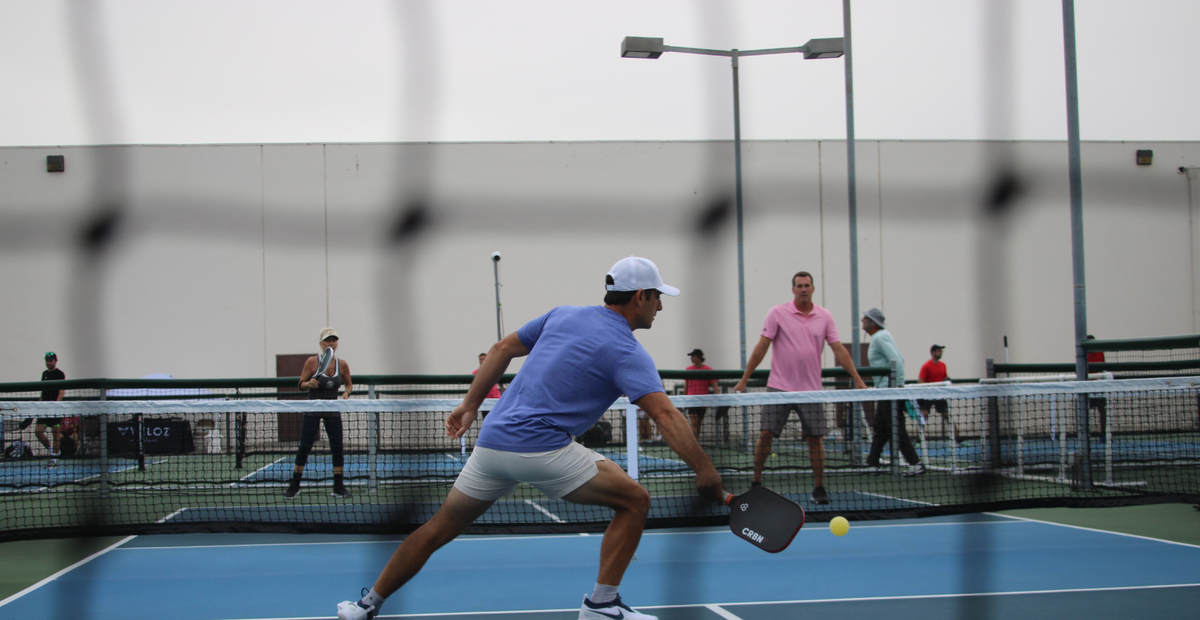
How to Move as a Unit: The Pickleball Doubles Positioning Principle No One Talks About
The best doubles teams aren't two individuals playing near each other. They're a system.
If you're still working out how to position yourself in pickleball doubles as a cohesive unit, the core principle is positional synchronization: moving together as if connected by an invisible rope about eight feet long.
Here's the movement principle: wherever the ball is, your unit should angle toward it. If the ball is on the right side of the court, both players slide right.
Left player moves to center, right player holds the right sideline. This angling is called ball tracking, and it's how elite doubles teams eliminate the open court.
A 2025 movement analysis published via the British Journal of Sports Medicine on court sport positioning emphasizes that team synchronization in lateral movement is a learned behavior, not intuition.
It requires deliberate practice. Work the hardest dinking drills in pickleball to build that court instinct at the NVZ.
Resets are the tactical companion to good positioning: they give you time to recover when the formation breaks.
Competitive Doubles Strategy 4.0 Pickleball: Patterns That Win
Competitive doubles strategy 4.0 pickleball is less about hitting harder and more about controlling patterns, court positioning, and forcing opponents into losing situations.
 The Dink PickleballThe Dink Media Team
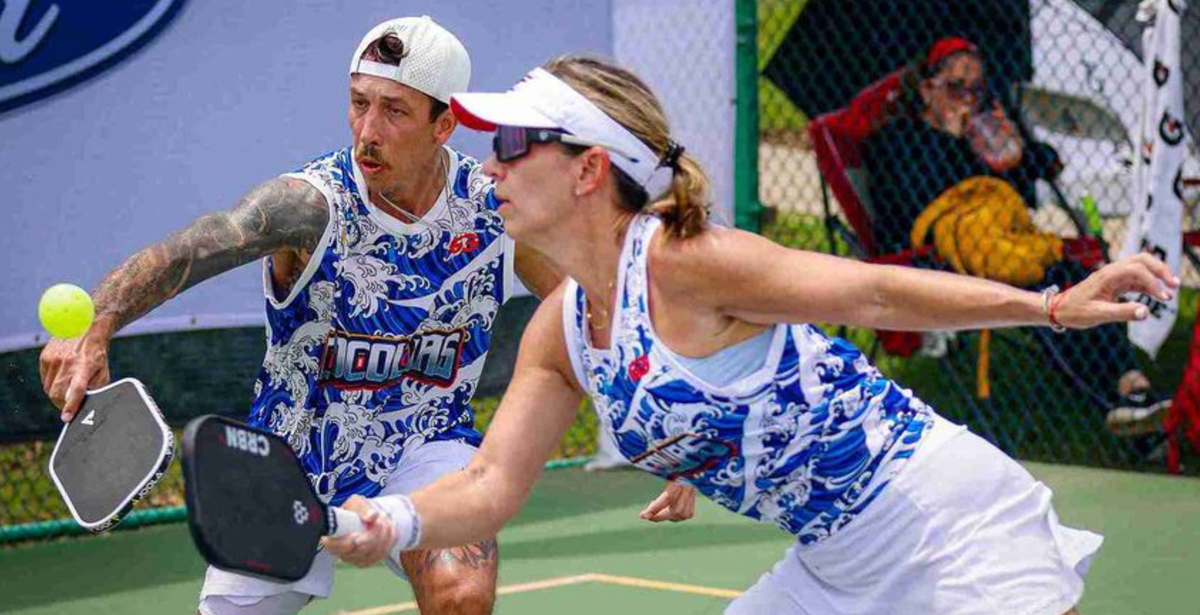
Key Takeaways
- The kitchen line is king. Both players should get to the non-volley zone line as fast as possible and hold it.
- Stay side-by-side. Move as a connected unit. When one player shifts, the other adjusts.
- The transition zone is the danger zone. Moving through it quickly is a skill, staying in it is a mistake.
- Server's partner stands mid-court on the right side, just inside the baseline, not at the kitchen.
- Stacking changes your positioning logic entirely, but the goal stays the same: protect the middle, control the line.
- Middle balls belong to the player with the forehand in most situations, especially on the forehand-dominant side.
💡
Heads up: hundreds of thousands of pickleballers read our free newsletter.
Subscribe herefor cutting edge strategy, insider news, pro analysis, the latest product innovations and more.
Frequently Asked Questions
How do you position yourself in pickleball doubles as the serving team?
The server stands behind the baseline on their side, and their partner stands mid-court on the same side, often called the "up-back" formation, where the server's partner is positioned ahead. The goal is for both players to advance to the kitchen line as quickly as possible, using the third shot (usually a drop or drive) to buy time for the transition. Sitting in the middle of the court without committing either way is the most common mistake serving teams make.
How to position yourself in pickleball doubles when you're at the kitchen line?
Stand side-by-side with your partner, roughly an arm's length from the centerline each. Move laterally as a connected unit. When the ball pulls one player wide, the other shifts toward the center to close the gap. Avoid backing off the line unless a lob is clearly going over your head. Holding kitchen line position consistently is the single highest-leverage habit in recreational doubles.
Where should the non-returner stand in pickleball doubles?
The non-returner should be at the kitchen line before the return is even hit. There's no reason to hover in the transition zone waiting. Your job is to hold the NVZ and put pressure on the net. Stand roughly in the center of your side, with your paddle up and ready. Your partner will join you at the line after they hit the return and advance.
What is stacking in pickleball doubles and why does it affect positioning?
Stacking is a doubles formation where both players start on the same side of the court to control which side each player occupies during the rally. It's used to keep two forehands in the middle or protect a player's backhand from being targeted. After the serve or return is hit, both players shift into their preferred positions. It looks unconventional, but it's one of the most strategically sound court positioning choices at 4.0 and above.
How should two right-handed players cover the middle in pickleball doubles?
In a right-right partnership, the player on the left side has their forehand facing the center of the court. They own the middle ball by default. The player on the right side covers the sideline and anything that pulls wide on the right. Establish this rule before the rally starts. Reactive decision-making in the middle leads to hesitation, missed balls, and a lot of unnecessary arguments between partners.
Anuncie Aqui / Advertise Here
Sua marca para o mundo Pickleball! / Your brand for the Pickleball world!





 English (US) ·
  Portuguese (BR) ·