
 English
  Spanish
  Portuguese
  German
  Italian
  Japanese
  French
  Polish
  Russian
  Netherlands
  Hungarian
  Turkish
  Videos
  Thedink Pickleball

The player already at the non-volley zone line should always take the middle 4th shot, not the returner moving forward from the baseline.
If you've ever hesitated on a middle ball, collided paddles with your partner, or watched a ball drop between you for a loss, you're not alone.
Middle coverage pickleball is one of the most confusing aspects of doubles play, but it doesn't have to be.
Coach Tony Roig from Better Pickleball has a solution that's refreshingly simple: the player already positioned at the non-volley zone line should take the middle 4th shot every single time.
Love pickleball? Then you'll love our free newsletter. We send the latest news, tips, and highlights for free each week.
Why the Middle 4th Shot Causes So Much Confusion
Here's the thing: the 4th shot in pickleball is where the returner hits the ball back after the server's third shot.
When that ball travels down the middle of the court, both players instinctively want to take it.
The returner is moving forward from the baseline, and the non-returner is already positioned at the kitchen line. So who actually takes it?
The answer comes down to positioning and offensive advantage.Tony Roig explains that at the moment the serve happens, the non-returner is the only player in an offensive position.
The returner, by definition, is in a defensive position at the baseline.
This fundamental asymmetry is the key to solving middle coverage pickleball once and for all.
"When I'm up at the non-volley zone line, I'm going to take the fork," Roig says in the video.
"This is not a rule where there's ifs, ands, or buts. This is an absolutely all the time rule."The Positioning Rule: A Step Over the Line
So how far should the player at the kitchen line move to cover the middle?
Roig demonstrates that it's about a lateral step over the center line, roughly half a step sideways.
This positioning allows the player up to take the ball while still maintaining court coverage on their side.
The critical detail here is knowing when to stop. Move too far over and you open up too much space on your side of the court.
💡
Need some new pickleball gear? Get 20% off select paddles, shoes, and more with code THEDINK at
Midwest Racquet SportsThe sweet spot is about a step over the line, which gives you enough reach to take the middle ball while allowing your partner to fill in the space behind you as they advance toward the kitchen.
This middle coverage strategy is especially valuable for 50+ players who need a bit more time to reach the non-volley zone line after the return of serve.
By having a clear, absolute rule, the returner doesn't have to rush or second-guess themselves.
They know their partner has the middle covered, so they can focus on moving forward at their own pace.
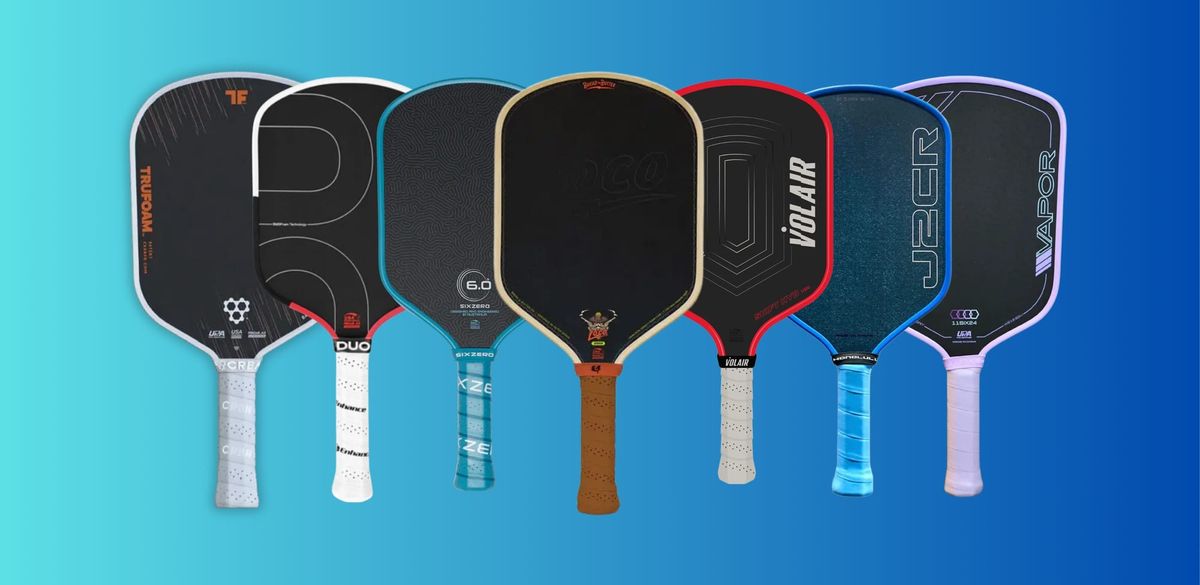
7 Hybrid Pickleball Paddles that Blend Power and Control
None of these are lacking in the oomph department. But their foam cores and hybrid shapes combine to offer more stability, control, and feel when it matters most.
 The Dink PickleballAlex E. Weaver
Why This Rule Works Better Than "Forehand in the Middle"
You've probably heard the old pickleball saying: "Forehand in the middle." The idea is that whoever has a forehand in the middle should take it.
But Roig pushes back on this conventional wisdom.
"Forehand in the middle does not work," he states plainly. Instead, he recommends a concept called "Respect the X," which is a more nuanced approach to middle coverage.
The point is that relying on forehand positioning creates hesitation and confusion, especially in recreational play where players aren't always perfectly positioned.
A clear, positional rule eliminates that hesitation. The player up takes it. Period.
- No thinking.
- No collisions.
- No balls dropping between you.
Master Middle Coverage: 3 Pro Tips for Pickleball
Tanner Tomassi explains why mastering footwork, paddle control, and anticipation are the keys to dominating the middle in pickleball
The Dink PickleballThe Dink Media Team

How This Connects to Your Return of Serve Strategy
Here's where middle coverage pickleball intersects with another critical skill: the return of serve.
Roig mentions that his students use a specific return target: aiming for the center line about 4 feet from the baseline on the third shot.
This target works beautifully with the middle 4th shot coverage rule.
When you return serve down the middle, you're setting up a situation where your partner at the kitchen line can take the 4th shot if it comes back through the middle.
This creates a cohesive offensive strategy rather than a reactive scramble.
The broader principle here is that pickleball doubles strategy works best when both players understand their roles and responsibilities before the ball is even hit.
Clarity beats athleticism every time.
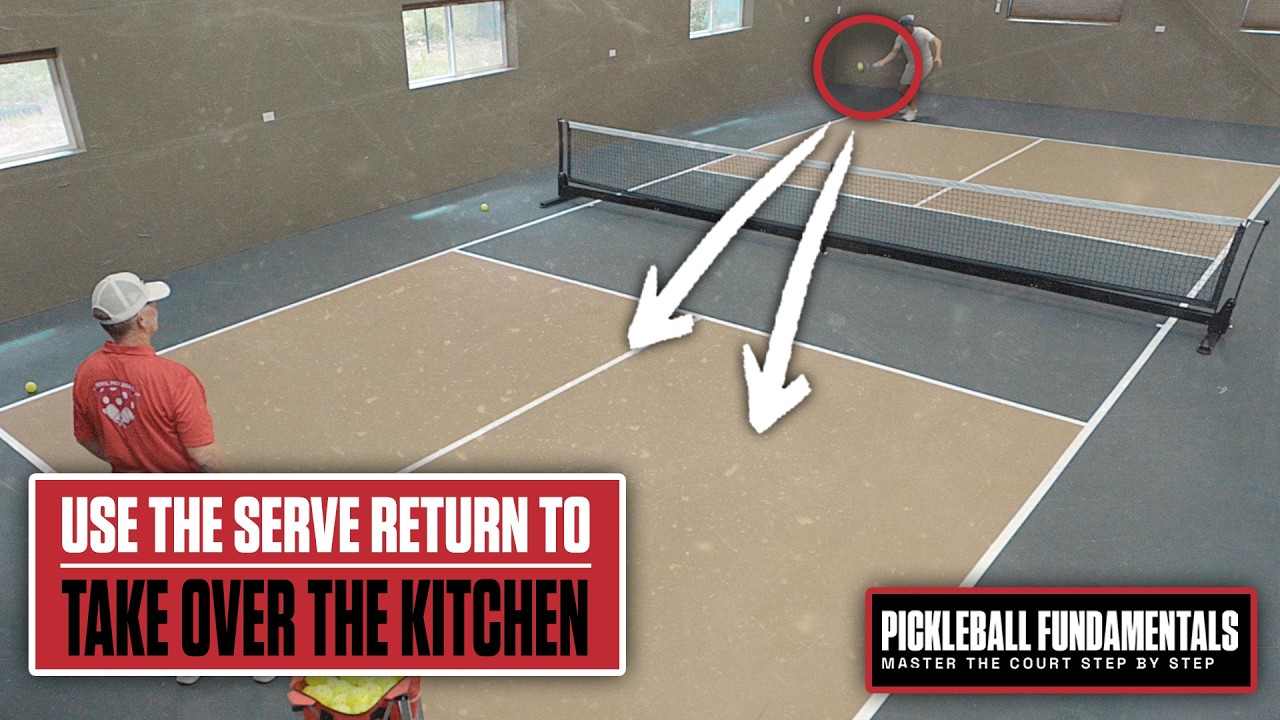
Unlock the Pickleball Return of Serve in 5 Steps
The pickleball return of serve is one of the most underrated shots in the game, but mastering it can give you a massive positional advantage. Learn the essential footwork, positioning, and strategy to transform your returns into a weapon.
The Dink PickleballThe Dink Media Team
The Real-World Challenge: Recreational Play
Roig acknowledges something that every recreational player knows: not every partner will appreciate you taking the middle 4th shot.
In rec play, some players feel like they should be taking every ball they can reach, regardless of positioning.
This is where communication becomes crucial. If you're playing with a new partner, you might want to discuss the rule beforehand.
Explain that you're taking the middle 4th shot not because you don't trust them, but because it's a strategic positioning advantage.
You're helping them get to the kitchen line faster and more safely.
The beauty of having an absolute rule is that it removes ego from the equation. It's not about who's the better player or who wants the ball more.
It's about what gives your team the best chance to win the point.
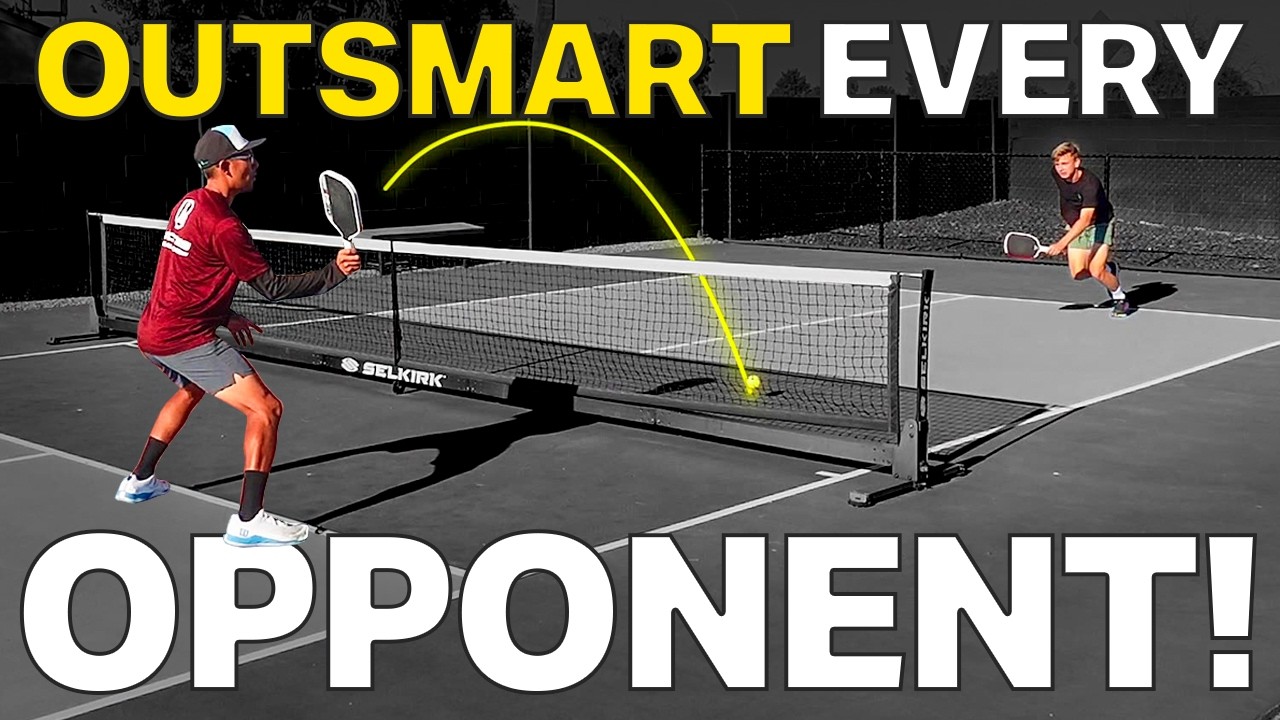
Three Pickleball Shots Every Recreational Player Must Learn
The lob handles defense, the drop volley finishes points with touch, and the ATP gives you an escape route when you’re in trouble.
The Dink PickleballThe Dink Media Team
Why This Matters for 50+ Players Specifically
Roig emphasizes that this strategy is particularly relevant for players 50 and older.
As we age, we need a bit more time to transition from the baseline to the kitchen line.
Having a partner who takes the middle 4th shot gives you that extra beat you need.
"Sometimes I need a little more time to make it up to the line than I did when I was 20," Roig explains.
"Knowing that my partner has the middle 4th shot, it's a great relief."This isn't about age being a limitation. It's about being smart with your positioning and your partner's positioning.
The best doubles teams aren't always the fastest; they're the ones with the clearest communication and the most consistent positioning.
The Return Plus One: Mastering the Transition from Baseline to Kitchen Line
The return and fourth shots aren’t glamorous; they’re the shots that determine whether you’re winning matches or wondering why you keep losing to players you think you should beat.
The Dink PickleballThe Dink Media Team

The Bigger Picture: Clarity Over Complexity
What makes this middle coverage pickleball rule so effective is its simplicity.
In a sport that can feel overwhelming with positioning, angles, and strategy, having one absolute rule is refreshing.
"I don't have time to play pickleball looking over my shoulder to see where my partner's at," Roig says.
"Instead, I like to have a clear rule that both me and my partner know."This philosophy extends beyond just the 4th shot. The best pickleball players and teams operate with a set of clear, agreed-upon principles.
When both players know the rule, they can play faster, more confidently, and with better court awareness.
💡
Heads up: hundreds of thousands of pickleballers read our free newsletter.
Subscribe herefor cutting edge strategy, insider news, pro analysis, the latest product innovations and more.
Frequently Asked Questions
What is the 4th shot in pickleball?
The 4th shot is the returner's second hit in a rally. The server hits the 1st shot (serve), the returner hits the 2nd shot (return), the server hits the 3rd shot, and the returner hits the 4th shot. This is where the middle coverage rule applies.
Why should the player at the kitchen line take the middle 4th shot?
The player at the kitchen line is already in an offensive position, while the returner is still moving forward from a defensive position at the baseline. Having the player up take the middle ball allows the returner to advance safely and gives your team better court control.
How far should I move over to cover the middle?
Move about a lateral step over the center line, roughly half a step sideways. This gives you enough reach to take the middle ball while maintaining coverage on your side of the court. Moving too far opens up too much space on your side.
What if my partner doesn't like this rule?
Communicate before you play. Explain that this is a strategic positioning advantage, not a reflection of trust or skill. Many recreational players aren't familiar with this rule, so a quick conversation can prevent frustration and collisions.
Does this rule apply to all skill levels?
Yes. Coach Roig emphasizes that this strategy applies to players of all ages and skill levels. It's particularly valuable for 50+ players who need more time to reach the kitchen line, but it works for everyone.
Anuncie Aqui / Advertise Here
Sua marca para o mundo Pickleball! / Your brand for the Pickleball world!





 English (US) ·
  Portuguese (BR) ·