
 English
  Spanish
  Portuguese
  German
  Italian
  Japanese
  French
  Polish
  Russian
  Netherlands
  Hungarian
  Turkish
  Videos
  Thedink Pickleball

The fourth shot in pickleball is your chance to seize control of the rally. By engaging your body and legs with a longer swing, you can generate maximum power and spin that forces errors from your opponents.
The fourth shot in pickleball is one of the most underrated opportunities to take control of a rally.
Most players treat it as a defensive reset, but the pros know better.
According to APP pro Richard Livornese, a pickleball coaching expert, applying pressure on your fourth shot is the key to forcing errors and lowering your opponent's transition percentage.
Here's the thing: most amateur players rely entirely on their arm to generate power on the fourth shot.
That's a fundamental mistake. The real power comes from engaging your entire body, not just your upper extremities.
Love pickleball? Then you'll love our free newsletter. We send the latest news, tips, and highlights for free each week.
Why Your Arm Alone Isn't Enough
Let's start with the biggest misconception about the fourth shot in pickleball.
Most recreational players think they need to muscle the ball with their arm to generate power. This approach is not only ineffective, it's also limiting.
When you rely solely on arm strength, you're leaving power on the table.
Your arm has a limited range of motion and force-generation capacity compared to your entire kinetic chain.
You're also more likely to make errors because you're not using your body's natural mechanics.
The solution is simple:
Stop thinking about your arm as the power source. Instead, think of it as the delivery mechanism.The Body and Leg Engagement Secret
Here's where the fourth shot in pickleball becomes a weapon. Richard
Pickleball emphasizes that engaging your body and legs along with a longer swing is what generates maximum power and spin.
When you initiate your swing from your legs and core, you create rotational force that travels up through your torso and into your arm.
💡
Need some new pickleball gear? Get 20% off select paddles, shoes, and more with code THEDINK at
Midwest Racquet SportsThis is the same principle that baseball pitchers, tennis players, and golfers use.
Your legs drive the movement, your core rotates, and your arm follows through naturally.A longer swing also gives you more time to accelerate the paddle. This increased acceleration translates directly into more power and spin on the ball.
The longer your swing arc, the more velocity you can generate at contact.The beauty of this approach is that it's not just about raw power. The spin you generate makes the ball harder to attack.
Your opponent will have fewer options to put the ball away, which means more pop-ups and more opportunities for you to finish the point.
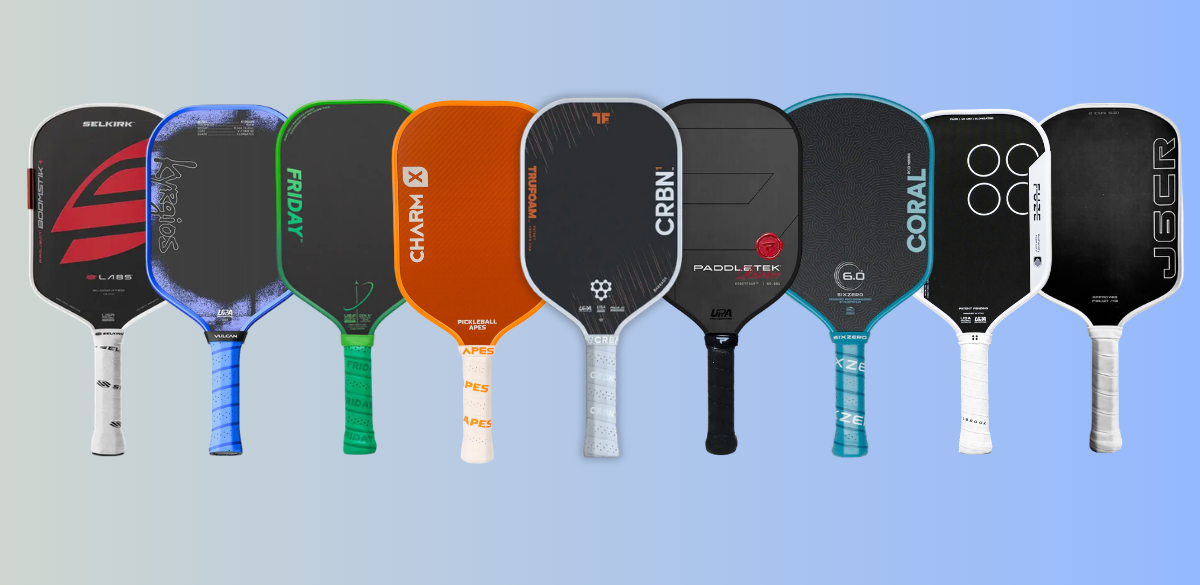
9 Power Paddles that Are Excellent at Dinking
Based on a unique blend of lab-tested power and consistency metrics, these paddles are proven to give you an edge in all three zones of the court.
 The Dink PickleballAlex E. Weaver
Why Taking the Risk Is Worth It
You might be thinking: "Isn't an aggressive fourth shot risky?" Yes, it is. But here's the counterintuitive part:
The risk is worth it.When you pressure your fourth shot in pickleball with an aggressive swing, you will generate more errors from your opponents.
Some of those shots will sail long or go into the net. That's the cost of playing aggressive pickleball.
But the payoff is significant. Your opponents will be forced to defend against a more difficult ball.
They'll pop up more often, which gives you the chance to finish the rally with an offensive shot.
Over the course of a match, this approach lowers your opponent's transition percentage, which is a fancy way of saying they'll have fewer opportunities to take control of the net.
Think about it this way: if you hit a safe, defensive fourth shot, your opponent gets to dictate the next shot.
If you pressure your fourth shot, you're forcing them to react to your aggression. That's a fundamental shift in who controls the rally.
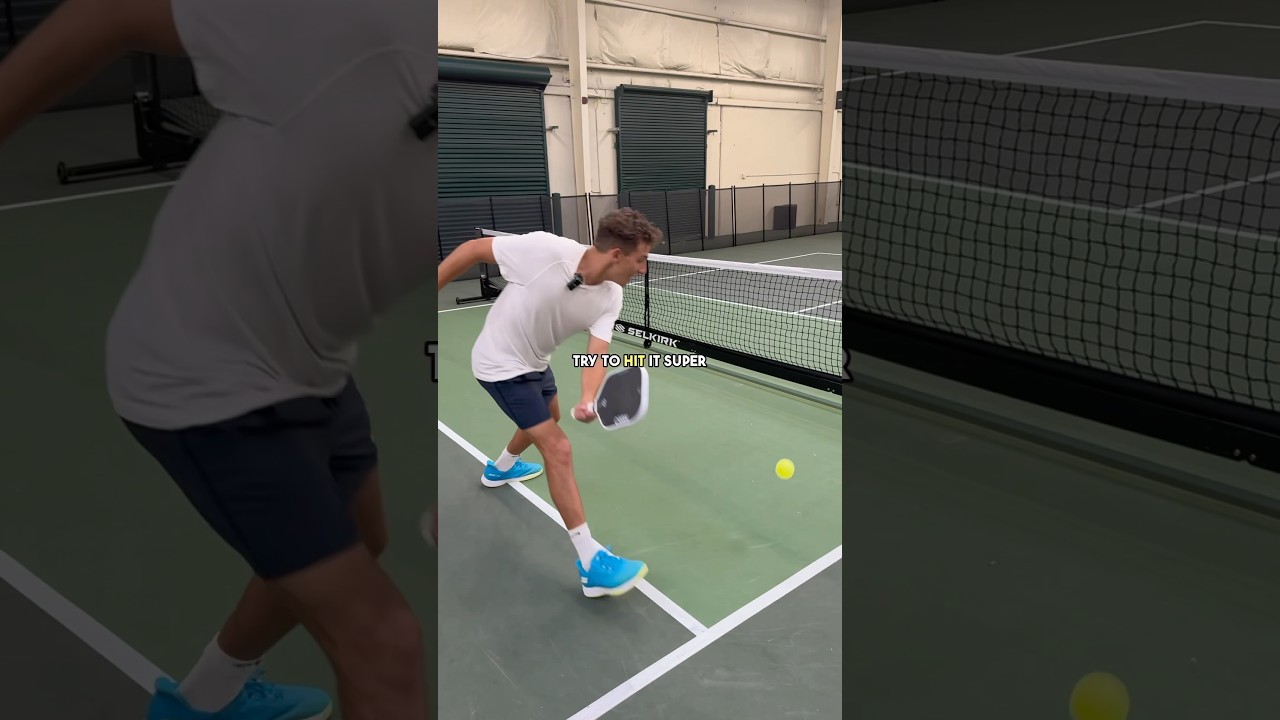
Pickleball Dink Strategy: Master the Neutral Game
This approach might not feel as satisfying as crushing a winner, but it’s far more effective. Over time, this mentality will show up in your win-loss record.
The Dink PickleballThe Dink Media Team
The Mechanics: How to Execute the Aggressive Fourth Shot
So how do you actually execute this? Here are the key mechanical elements:
- Start with your legs. As you prepare for your fourth shot, load your weight into your legs. This is your power source. Your knees should be slightly bent, and you should feel tension in your quads and glutes.
- Rotate your core. As you begin your swing, initiate the movement from your core, not your arm. Your torso should rotate toward the ball, creating rotational force. This is where the power comes from.
- Extend your swing. Take a longer swing arc than you would on a typical dink or reset. This gives you more time to accelerate and more distance to build velocity. Your arm should feel like it's following your body's rotation, not leading it.
- Follow through completely. Don't decelerate at contact. Continue your swing through the ball and finish with a complete follow-through. This ensures you're transferring all the energy you've built up into the shot.
The result is a fourth shot that has pace, spin, and depth. Your opponent will have to make a decision quickly, and they'll likely make a mistake.
Pickleball Mechanics for Seniors: Grip, Footwork & Net Play
If your footwork is sharper, your grip is more efficient, and your positioning is smarter, you can compete at any age.
The Dink PickleballThe Dink Media Team
When to Use Aggressive Fourth Shots
Not every fourth shot should be aggressive. Context matters. If your opponent is already at the net and ready to attack, an aggressive fourth shot might be too risky.
But if your opponent is still transitioning to the net or if they're out of position, that's your moment to strike.
Look for situations where your opponent has hit a weak third shot.
If the ball is sitting up or if they're still moving forward, that's your cue to pressure the fourth shot in pickleball.
You want to catch them when they're vulnerable.
Also consider the score and the match situation. If you're down in a match, you might need to take more risks on your fourth shot.
If you're up, you can afford to be a bit more conservative. But in general, the aggressive approach to the fourth shot is the way to win more points.
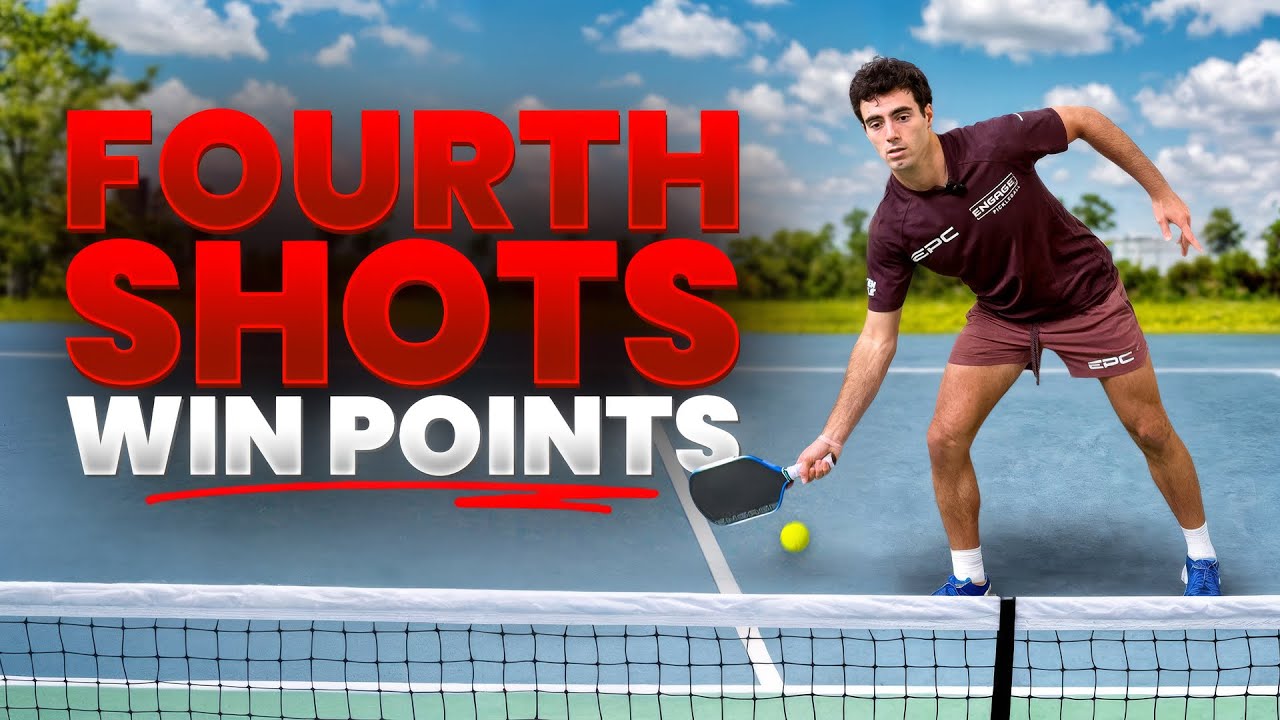
The Fourth Shot in Pickleball: 3 Variations That Win Points
The fourth shot in pickleball is where rallies get decided. Most players obsess over the serve, return, and third shot, but if your fourth shot is weak, everything falls apart.
The Dink PickleballThe Dink Media Team
The Bigger Picture: Fourth Shot Strategy in Modern Pickleball
The fourth shot in pickleball has evolved significantly over the past few years.
The game has become more aggressive at every level, and the fourth shot is no exception.
Players who can pressure this shot consistently will have a significant advantage.
This shift reflects a broader trend in pickleball toward more aggressive play. The days of purely defensive, dinking-based rallies are fading.
Modern pickleball rewards players who can take calculated risks and capitalize on opportunities.By mastering the aggressive fourth shot, you're not just improving one aspect of your game. You're adopting a mindset that will elevate your entire game.
You're learning to be proactive instead of reactive, to attack instead of defend, and to control rallies instead of letting your opponent control them.
💡
Heads up: hundreds of thousands of pickleballers read our free newsletter.
Subscribe herefor cutting edge strategy, insider news, pro analysis, the latest product innovations and more.
Frequently Asked Questions
What's the difference between the third shot and the fourth shot in pickleball?
The third shot is hit by the serving team after the return of serve. It's typically a drop shot designed to land softly in the kitchen. The fourth shot is the opponent's response to the third shot. It's your chance to either reset the rally or attack, depending on the quality of the third shot.
How much power should I use on my fourth shot?
The amount of power depends on the situation. If your opponent hit a weak third shot, you can be more aggressive. If the third shot was good and they're already at the net, you might need to reset. The key is reading the situation and adjusting accordingly.
Can I use the aggressive fourth shot technique at all skill levels?
Yes, but it requires practice. Beginners should focus on consistency first, then gradually add more pace and spin. Intermediate and advanced players should be using aggressive fourth shots regularly as part of their strategy.
What if my aggressive fourth shot goes out?
That's part of the game. You'll make some errors when you're playing aggressively. The key is that you'll also force more errors from your opponent. Over time, the aggressive approach pays dividends.
How do I know when to be aggressive versus defensive on the fourth shot?
Watch your opponent's position and the quality of their third shot. If they're still transitioning to the net or if the third shot is weak, be aggressive. If they're already at the net and the third shot was solid, consider resetting and looking for a better opportunity.
Anuncie Aqui / Advertise Here
Sua marca para o mundo Pickleball! / Your brand for the Pickleball world!





 English (US) ·
  Portuguese (BR) ·