
 English
  Spanish
  Portuguese
  German
  Italian
  Japanese
  French
  Polish
  Russian
  Netherlands
  Hungarian
  Turkish
  Videos
  Thedink Pickleball

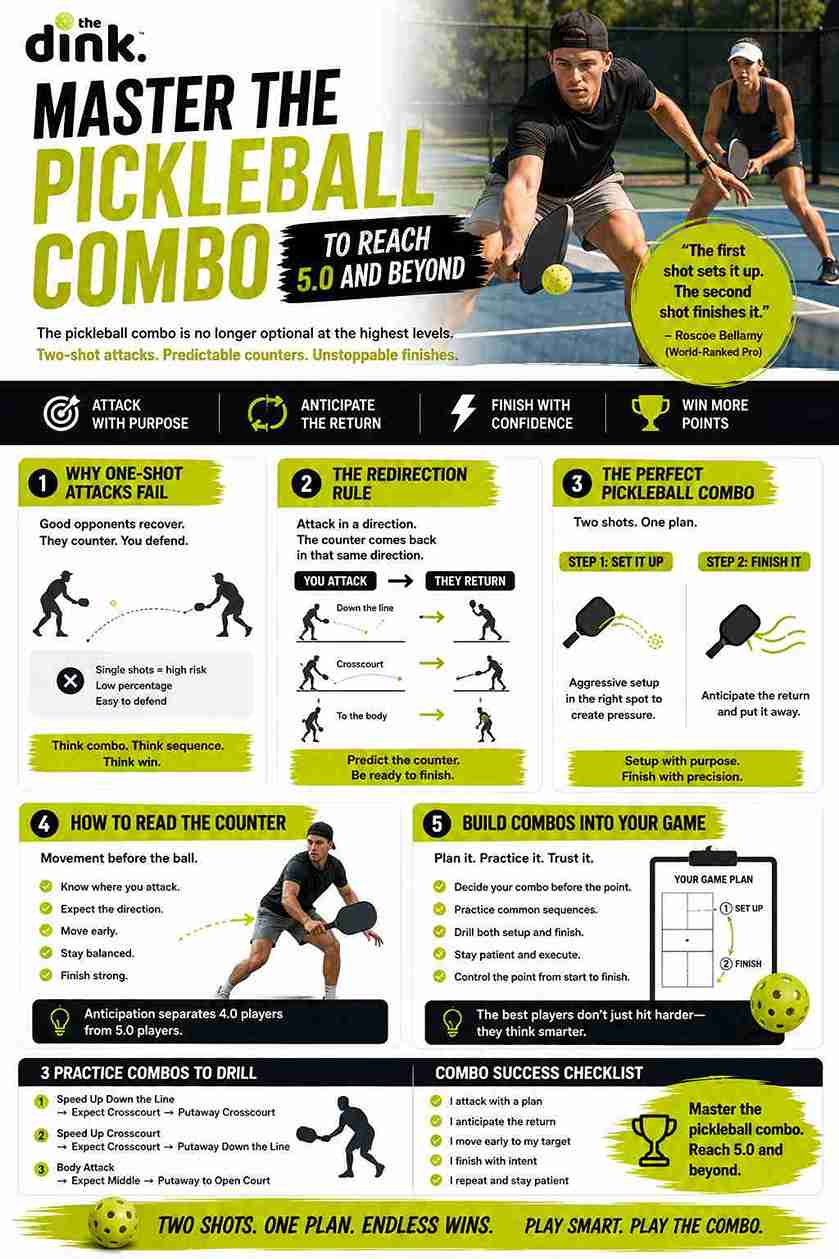
The pickleball combo is no longer optional at the highest levels of the game. World-ranked pro Roscoe Bellamy breaks down why two-shot attacks are now essential to competitive play.
The pickleball combo is no longer optional at the highest levels of the game. World-ranked pro Roscoe Bellamy breaks down why two-shot attacks are now essential to competitive play.
Love pickleball? Then you'll love our free newsletter. We send the latest news, tips, and highlights for free each week.
Why One-Shot Attacks Don't Cut It Anymore
Here's the reality: if you're still trying to win points with single aggressive shots, you're playing a losing game against good opponents.
Bellamy explains that at higher levels, attacking is almost always a pickleball combo. Your first attack is the setup. Your second ball is the finish.This shift in strategy reflects how the game has evolved. Players are faster, more athletic, and better at reading the court than ever before.
A single speed-up or aggressive dink isn't enough to catch them off-guard anymore.
They'll recover, counter, and suddenly you're on defense.
The mental shift is crucial here. Stop thinking about winning the point on your first aggressive shot.
Start thinking about creating the conditions where your second shot becomes unreturnable.
Understanding modern pickleball's four key strategies reinforces why sequential attack thinking has replaced single-shot gambling at every competitive level.
Understanding the Redirection Rule
The pickleball combo works because of a principle Bellamy calls the "redirection rule" or "rebound effect."
When you attack in a specific direction, your opponent's counter almost always comes back in that same direction.
If you speed up down the line, expect the ball to come back down the line. If you attack crosscourt, the counter comes back crosscourt.
If you target the body, it returns to the body.
This isn't magic. It's physics and reaction time.
When someone gets attacked, they don't have time to redirect the ball dramatically. They're focused on getting it back over the net.
Their natural instinct is to return it in the direction it came from.Bellamy demonstrates this principle in action: he speeds up crosscourt, his opponent reacts and counters crosscourt, and he's already positioned to finish the point.
He's not guessing where the ball is going. He's anticipated it based on where he attacked.
Learning how to execute the perfect crosscourt attack is the fastest way to put the redirection rule to work in your actual game.
💡
Need some new pickleball gear? Get 20% off select paddles, shoes, and more with code THEDINK at
Midwest Racquet SportsThe Setup Shot Matters More Than You Think
Most players obsess over their finishing shot. They want the put-away.
But Bellamy emphasizes that the first attack in a pickleball combo is equally important.
Your setup shot needs to accomplish two things: it needs to be aggressive enough to put pressure on your opponent, but it also needs to be placed strategically so that their counter comes back in a predictable location.
This is where placement beats power.You don't need to hit the hardest speed-up on the court. You need to hit it to the right spot.
A well-placed speed-up at hip height, for example, forces a linear return that you can attack more easily on the second shot.
Think of it like setting up a chess move. You're not trying to checkmate on move one.
You're positioning your pieces so that move two becomes devastating.
Understanding why your pickleball speedups fail and how to fix them is critical before your setup shots can consistently create the angles you need.
How and When to Hit the Drive-Drop Combo Shot in Pickleball
Most players think in binary terms. Drive or drop. Aggressive or defensive. But the reality of modern pickleball is more nuanced. Enter: The Drip.
 The Dink PickleballThe Dink Media Team
How to Read Your Opponent's Counter During a Pickleball Combo
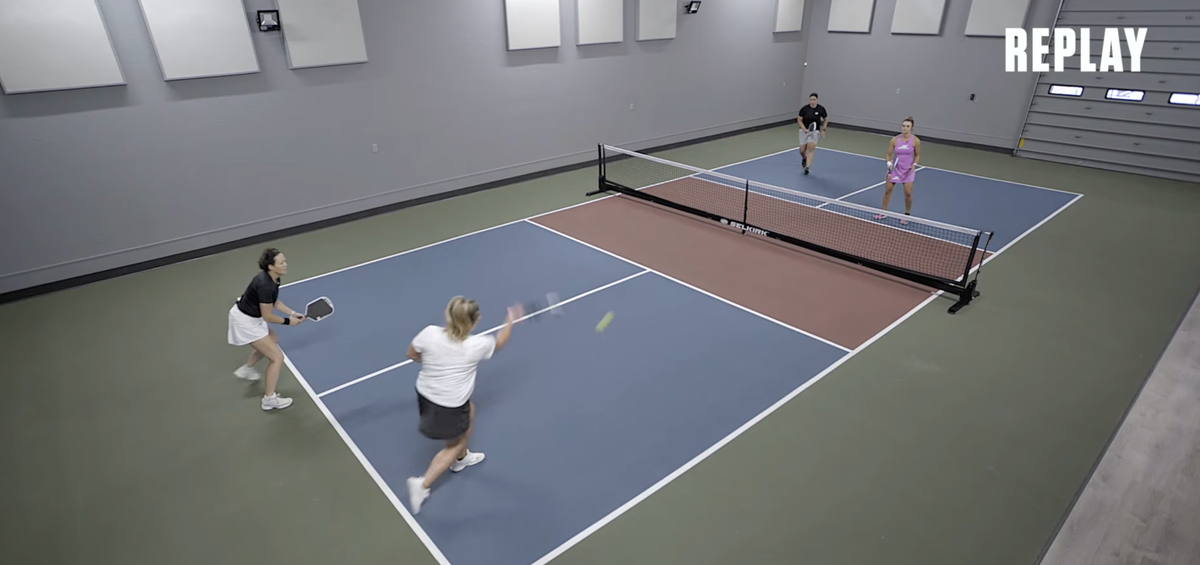
The beauty of understanding the pickleball combo is that it removes guesswork from your positioning.
Once you know where your attack is going, you can predict where the counter will come from.
Bellamy's approach is simple: anticipate based on direction. If you speed up down the line, move slightly to cover the line return.
If you go crosscourt, shift your weight to the crosscourt side.
You're not reacting after the ball leaves their paddle. You're already moving before it does.
Mastering how to anticipate every shot like a pickleball pro is the skill that closes the gap between 4.0 and 5.0 faster than any physical improvement.
This is what separates 5.0 players from 4.0 players. It's not faster reflexes or harder shots. It's anticipation.
It's understanding the geometry of the game well enough to be in the right place before the ball gets there.
How to Read Your Opponent’s Eyes and Poach More Balls in Doubles Pickleball
The key to winning many pickleball points isn’t just quick reflexes; it’s reading what your opponent is about to do before they do it
The Dink PickleballThe Dink Media Team

Building Pickleball Combos Into Your Match Strategy
Knowing the theory is one thing. Actually executing pickleball combos in a match is another.
Bellamy stresses that you need to plan these sequences before you hit the first shot.
Don't just speed up and hope for the best.
Decide in advance: "I'm going to speed up down the line, anticipate the crosscourt counter, and finish with a putaway to the open court." Then execute that plan.This requires confidence and repetition. You need to practice these sequences enough that they become automatic.
The 12 drills you need to play your best pickleball in 2026 include combo-specific reps that train your body to run these sequences without thinking mid-match.
When you're in a match, you shouldn't be thinking about the mechanics. You should be thinking about the strategy.
The good news is that once you internalize this concept, your game transforms. You stop playing reactively and start playing proactively.
You're not waiting to see what your opponent does.
You're controlling the point from the first aggressive shot.When you're ready to put the finishing shot away with conviction, these three finishing techniques that win points give you the put-away repertoire to seal the deal.
8 Pickleball Doubles Strategy Tips Nobody Talks About
Pickleball doubles is a game of angles, positioning, and reading your opponent. But there’s a gap between what coaches teach and what actually wins matches.
The Dink PickleballThe Dink Media Team

The Mental Game Behind Pickleball Combos
There's a psychological element to pickleball combo play that often gets overlooked.
When your opponent knows you're setting them up for a two-shot attacking sequence, it affects their decision-making.
They become more cautious on their counter.
They're thinking about where the ball might come back instead of just trying to get it over the net. That hesitation is your advantage.Bellamy's philosophy is rooted in patience and control. He's not trying to blow opponents off the court.
He's trying to control the point through intelligent sequencing.
It's chess at 60 miles per hour.This mindset shift is what allows players to reach 5.0 and beyond. It's not about being the most athletic or the strongest.
It's about being the smartest player on the court.
As CBS Sports has covered in their pickleball feature content, the mental component of competitive pickleball has become a defining separator at every level of the game.
Pickleball Mental Game: Stay Calm Under Pressure and Win
The mental game competitive pickleball demands is just as important as your backhand or your third shot drop. Learn how top players stay calm under pressure, reset after errors, and build the focus that wins matches.
The Dink PickleballThe Dink Media Team
Putting It All Together
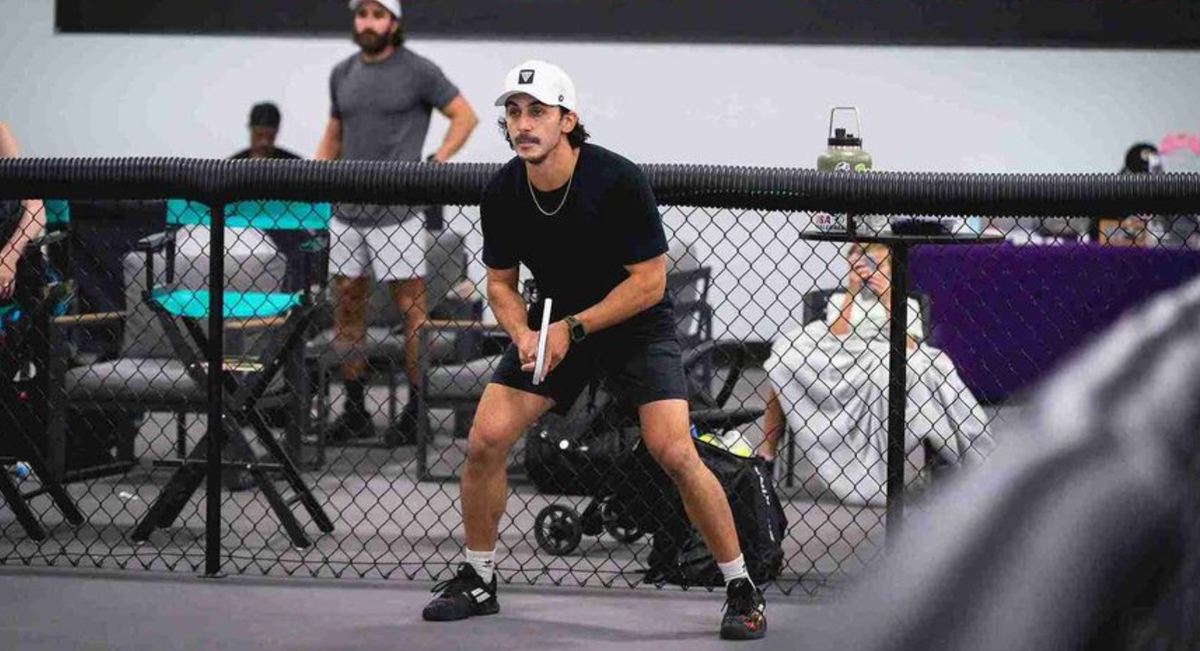
The pickleball combo is the modern game's answer to defensive excellence.
As players have gotten better at neutralizing aggressive shots, the combo has become the primary way to finish points at the highest levels.
Bellamy's breakdown gives you the framework: understand the redirection rule, plan your sequences in advance, anticipate your opponent's counter, and finish with conviction.
It's not complicated, but it requires practice and intentionality.
If you're working toward breaking 5.0 and mastering the shots you need before 2026, the combo is the skill that will move the needle most.
Master the combo, and you'll master the modern game.
If you want a full system to accelerate your growth, this simple 4-step system to win more pickleball games in 2026 pairs directly with combo development and gives you a repeatable framework for every match.
💡
Heads up: hundreds of thousands of pickleballers read our free newsletter.
Subscribe herefor cutting edge strategy, insider news, pro analysis, the latest product innovations and more.
Frequently Asked Questions
What exactly is a pickleball combo?
A pickleball combo is a two-shot attacking sequence where your first shot sets up your second shot for a finish. The first attack puts pressure on your opponent, and their counter comes back in a predictable direction, allowing you to finish the point with your second aggressive shot.
Why are pickleball combos more effective than one-shot attacks?
Good opponents can defend against a single aggressive shot, but when you set up a two-shot sequence, you're controlling where the ball comes back. This makes it much harder for them to defend because they're reacting to your plan, not creating their own opportunities.
How do I know where my opponent's counter will go during a pickleball combo?
The redirection rule states that the ball typically comes back in the direction you attacked it. If you speed up down the line, expect a line return; if you go crosscourt, expect a crosscourt counter, and this predictability is what makes the two-shot attacking sequence work.
Can I use pickleball combos at lower skill levels?
Absolutely. While pickleball combos are essential at 5.0 and above, understanding the concept helps players at all levels. Even at 3.5 or 4.0, thinking in terms of sequences rather than single shots will improve your game and your win rate.
What's the most important part of executing a pickleball combo?
The setup shot is just as important as the finish. Your first attack needs to be placed strategically so that your opponent's counter comes back in a location where you can finish it, because placement and positioning matter far more than raw power.
Anuncie Aqui / Advertise Here
Sua marca para o mundo Pickleball! / Your brand for the Pickleball world!





 English (US) ·
  Portuguese (BR) ·