
 English
  Spanish
  Portuguese
  German
  Italian
  Japanese
  French
  Polish
  Russian
  Netherlands
  Hungarian
  Turkish
  Videos
  Thedink Pickleball

Confidence at the line begins with a grip you trust — here are the three that matter
Your paddle grip might be the single most important thing holding back your pickleball game. It sounds simple, but where you place your hand on the handle fundamentally changes how you hit every shot.
Selkirk TV breaks down the three main grips every player should know, plus the science behind why grip choice matters so much.
Love pickleball? Then you'll love our free newsletter. We send the latest news, tips, and highlights for free each week.
The Eight Bevels: Your Grip Roadmap
Before you can choose a grip, you need to understand what you're working with. Every (ok, most) pickleball paddle handle has eight bevels, or panels, running around it. Think of them like the hours on a clock face.
Where you position your pointer finger knuckle and heel on these bevels determines your grip type. Small adjustments create big differences in shot control, power, and comfort. It's not magic, it's mechanics.
The Three Grips That Matter
You don't need to memorize every hybrid grip variation out there. Start with these three foundational grips that cover most situations on the court.
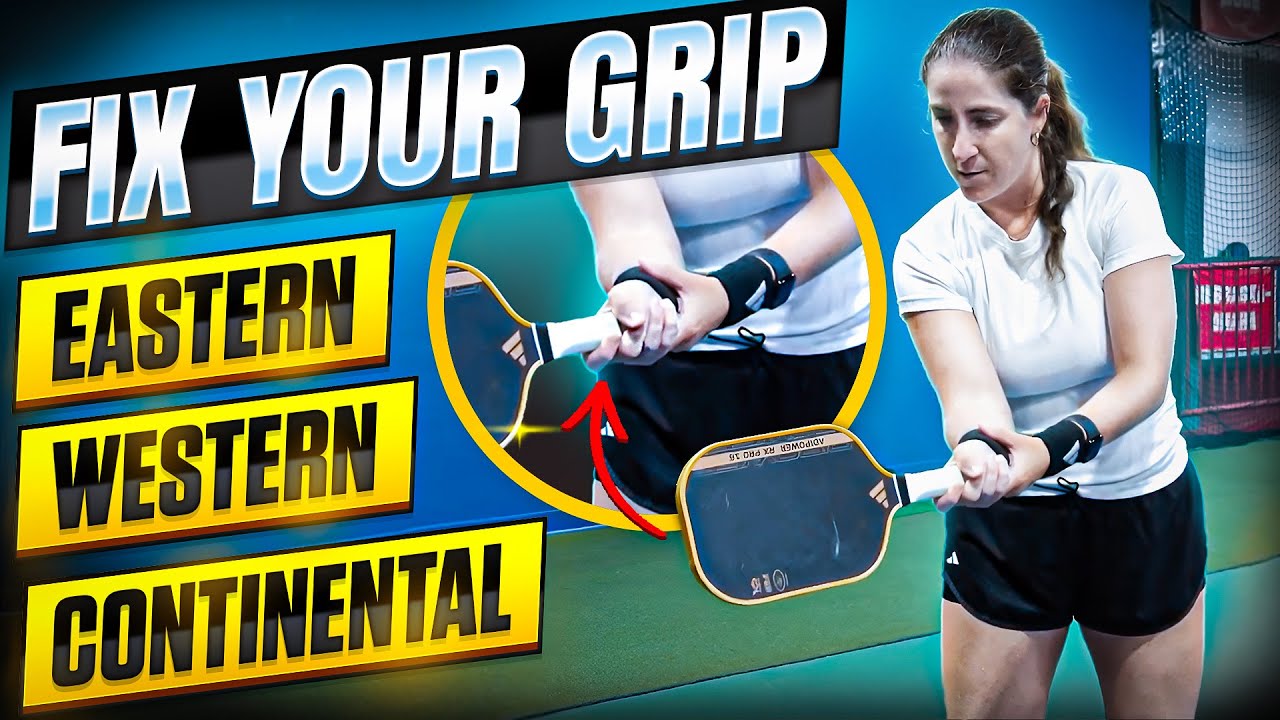
- Eastern Forehand: Place your knuckle and heel along the flat side of the paddle (bevels 1, 2, and 3). This grip favors forehand shots with natural power and control.
- Eastern Backhand: Move your hand all the way to bevel 1 on top. Your backhand becomes easier, but forehands can feel awkward.
- Continental: Position your hand between the forehand and backhand grips, right on bevel 2. This is the "gold standard" for versatility because it works reasonably well for both forehands and backhands.
The Three Pickleball Grips (& When to Use Them): Continental, Eastern & Western
Whether you’re crushing forehands from the baseline or executing delicate volleys at the kitchen line, your grip determines what’s possible.
 The Dink PickleballThe Dink Media Team
Why Continental Wins for Most Players
The Continental grip gets recommended most often for a reason. It's not the absolute best for any single shot, but it's solid for everything.
You won't get the raw power of a pure Eastern forehand grip, and your backhand won't feel as natural as a dedicated Eastern backhand grip. But you won't have to completely re-grip between shots, and that matters more than you'd think during a real match.
💡
Need some new pickleball gear? Get 20% off select paddles, shoes, and more with code THEDINK at Midwest Racquet Sports
The Experiment Never Stops
Here's the thing: there's no one-size-fits-all answer. Your hand size, strength, and shot preferences all play a role in which grip feels best.
The recommendation from Selkirk TV is straightforward: try all three grips during practice. Hit forehands and backhands with each one. Pay attention to which feels most natural and which gives you the best control. Some players prefer a more forehand-dominant grip because they lean on that shot. Others feel more confident with a backhand-friendly setup.
Don't overthink it. Keep it simple, experiment, and let your game tell you what works.
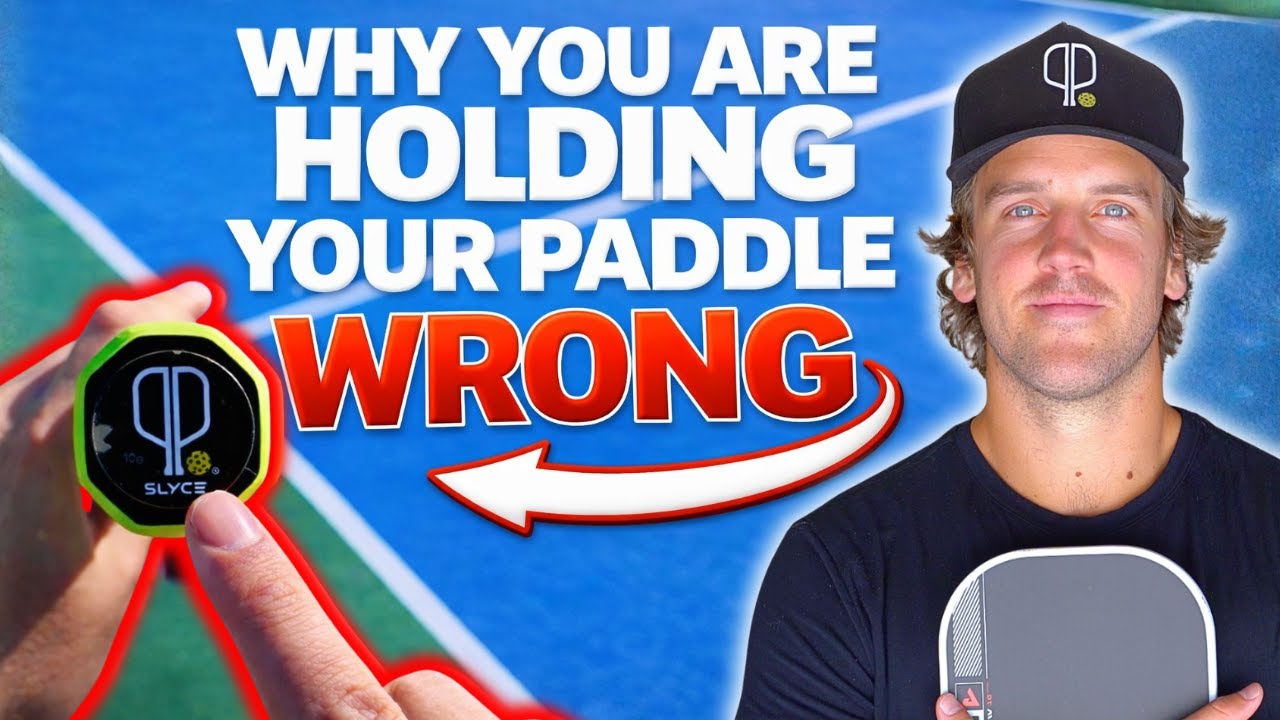
Pickleball Pros Hold Their Paddle Like This (You Should Too)
Your paddle grip isn’t a one-time decision. It changes based on where you are on the court and what you’re trying to do.
 The Dink PickleballThe Dink Media Team
Beyond the Basics
Once you've settled on a grip that feels right, you can explore hybrid variations and more extreme positions if you want. But that's advanced territory. Master one of the three main grips first, and your shot consistency will improve immediately.
Your grip is the foundation of everything else you do on the court. Get it right, and better shot control and precision follow naturally.
Heads up: hundreds of thousands of pickleballers read our free newsletter. Subscribe here for cutting edge strategy, insider news, pro analysis, the latest product innovations and more.
Anuncie Aqui / Advertise Here
Sua marca para o mundo Pickleball! / Your brand for the Pickleball world!







 English (US) ·
  Portuguese (BR) ·