
 English
  Spanish
  Portuguese
  German
  Italian
  Japanese
  French
  Polish
  Russian
  Netherlands
  Hungarian
  Turkish
  Videos
  Thedink Pickleball

The most useful pickleball tips for seniors have nothing to do with hitting harder. They have everything to do with owning the seven feet of court in front of you.
The best pickleball tips for seniors all point to the same seven feet of court: the kitchen line.
Not the serve. Not some new paddle that promises free power. The line.Because the player standing calmly at the non-volley zone with their paddle up beats the player scrambling around midcourt every time, no matter who's faster.
Here's the thing about getting older on a pickleball court. You lose a half step.
You don't lose the ability to stand in the right place, which is why the most useful pickleball tips for seniors are almost always about position rather than power.Love pickleball? Then you'll love our free newsletter. We send the latest news, tips, and highlights for free each week.
Why the Kitchen Line Is the Great Equalizer
Because nobody can out-run you at a spot you're already standing on. That's the whole argument.
Speed matters in the transition zone, in the backcourt, on the chase.At the kitchen line, the rally slows to hands, patience, and placement, and those three things hold up beautifully over decades.
Think of it this way. Every foot you stand back from the line gives your opponent more court to hit into and more angle to work with.
Step up, and suddenly their sharp cross-court dink has nowhere to land.
Proper court positioning at the kitchen does more for your win rate than any swing change you could make this season.The players who struggle aren't slow.
They're standing two feet too far back and reaching for everything, which hands the other team easy putaways at the kitchen line.
So What Exactly Counts as the Kitchen?
The kitchen, officially the non-volley zone, is the seven-foot area on each side of the net, bounded by the kitchen line, the sidelines, and the net itself.
You can stand in it all day.
What you can't do is volley while touching it, and per the USA Pickleball rulebook, you have to re-establish both feet completely outside the zone before you volley again.That last part trips up more rec players than anything else.
If you're fuzzy on the details, our breakdown of the non-volley zone rules clears it up in about three minutes.
💡
Need some new pickleball gear? Get 20% off select paddles, shoes, and more with code THEDINK at
Midwest Racquet SportsPickleball Tips for Seniors: Get to the Line Early, Then Stop
Arrive before the ball does, then plant. Kitchen-line problems are usually arrival problems.
You hit a decent third shot, start walking, and the ball comes back while your weight is still shifting forward.
Now you're hitting on the move, off balance, with your paddle trailing behind you.
The fix is a rhythm, not a sprint. Hit your return deep, walk in, and split-step as your opponent makes contact.Our guide on moving up after the third shot drop breaks that sequence down shot by shot.
Deep returns buy you the time to do it.
That's why the return of serve deserves real attention from senior players: a return that lands three feet from the baseline gives you an extra beat to get forward.
Why Does Stopping Matter as Much as Arriving?
Because a body in motion can't control a soft ball.
Momentum pulls your paddle face open and your contact point drifts behind you, so the dink you meant to drop at their feet floats up to chest height instead.
Free putaway for them.
Split-step, settle, then hit. Two good habits reinforce it: better footwork and staying balanced through contact.Neither requires athleticism. Both require attention.
Pickleball Tips for Seniors: Win as the Game Speeds Up
The best pickleball tips for seniors have little to do with getting quicker and everything to do with buying time. Preparation, position, and a dependable reset will keep you competitive against players half your age.
 The Dink PickleballThe Dink Media Team
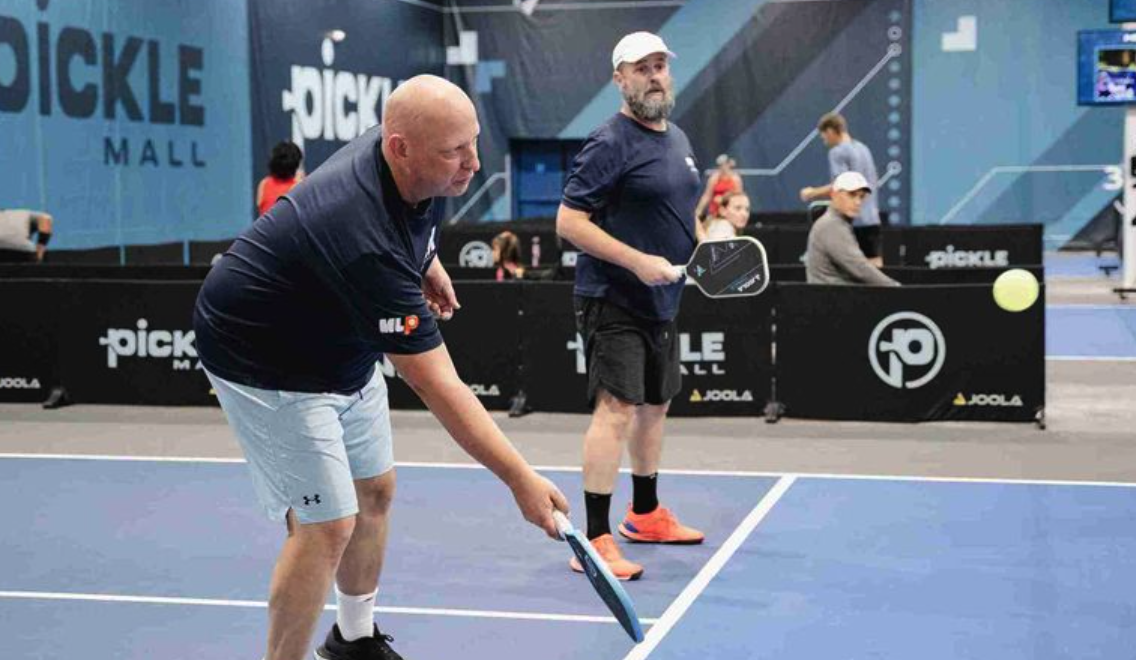
Paddle Up, Knees Soft, Hands in Front
Ready position is the cheapest point you'll ever win.
Paddle tip up somewhere between waist and chest, elbows in front of your ribs, knees soft, weight on the balls of your feet.
Hold that, and you're prepared for a dink and a speed-up at the same time. It's one of the two techniques most players are missing at the kitchen line.Drop your paddle to your thigh between shots and you've added a full half second to your reaction time. At the kitchen line, a half second is an eternity.
Contact point matters just as much. Keep the ball in front of your body, always.The moment you let a dink get beside your hip, you're reaching, your shoulder is doing work your legs should be doing, and the ball pops.
Our piece on posture and control is worth a read if your dinks keep sitting up. And please, no backswing. Dinks are a lift, not a swing.
Pickleball Tips for Seniors Who Keep Losing the Hands Battle
Aim at the shoulder, not the sideline. When a hands battle starts, most players panic and swing for winners.
The pros pick a target: your opponent's dominant shoulder, which jams their paddle and forces a defensive pop-up.
Keep your paddle out front and let the ball hit it. Short blocks beat big counters.
The technical side of kitchen-line hands battles comes down to paddle position more than reflexes, which is good news for anyone over 55.If the ball comes in too hot, don't counter. Reset it. Knowing when to attack and when to reset is the single biggest difference between a 3.5 and a 4.0 at this level.
7 Pickleball Tips for Seniors to Master the Soft Game
These pickleball tips for seniors focus entirely on the soft game, where position and patience beat pace. Learn how to hold the kitchen line, hit unattackable dinks, and reset under pressure.
 The Dink PickleballThe Dink Media Team
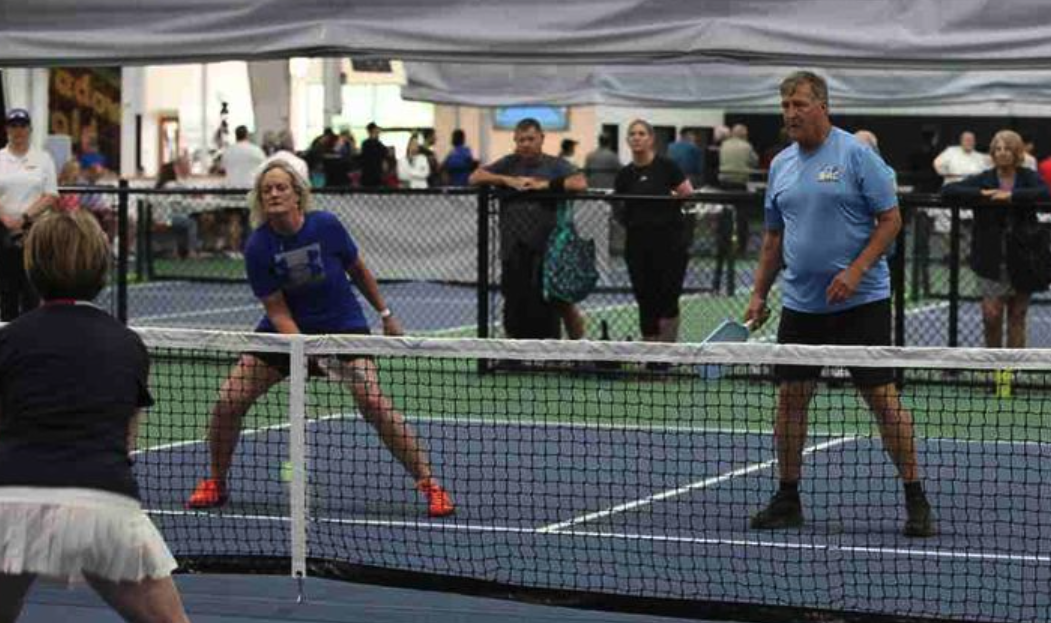
Which these Tips for Seniors Actually Hold Up Under Pressure
Dink placement and the reset. That's the whole toolkit.
Everything else is decoration, and any list of pickleball tips for seniors that runs longer than that is padding.
Dink placement is about making your opponent move, not making them miss. Target their outside foot, or the middle seam if they're out of position.
Placement is what actually controls the kitchen line, and it costs you nothing physically.
The reset is your escape hatch. When you're pushed off the line, a soft ball into the kitchen buys you the time to walk back in.The reset shot is pickleball's most overlooked weapon, and it ages better than any putaway.
Three ways to practice both:
- Cross-court dink exchanges, ten minutes. One target: your partner's outside foot. Count consecutive balls under net height.
- Half-speed hands battles. Start close, block only, no swinging. Builds the out-front paddle habit.
- Drop-and-walk drill. Feed from the baseline, hit a drop, walk to the line, freeze. Repeat until the walk feels automatic.
Ten minutes of dinking practice before open play beats an hour of casual games.
Pickleball Mental Game: Stay Calm Under Pressure and Win
The mental game competitive pickleball demands is just as important as your backhand or your third shot drop. Learn how top players stay calm under pressure, reset after errors, and build the focus that wins matches.
 The Dink PickleballThe Dink Media Team
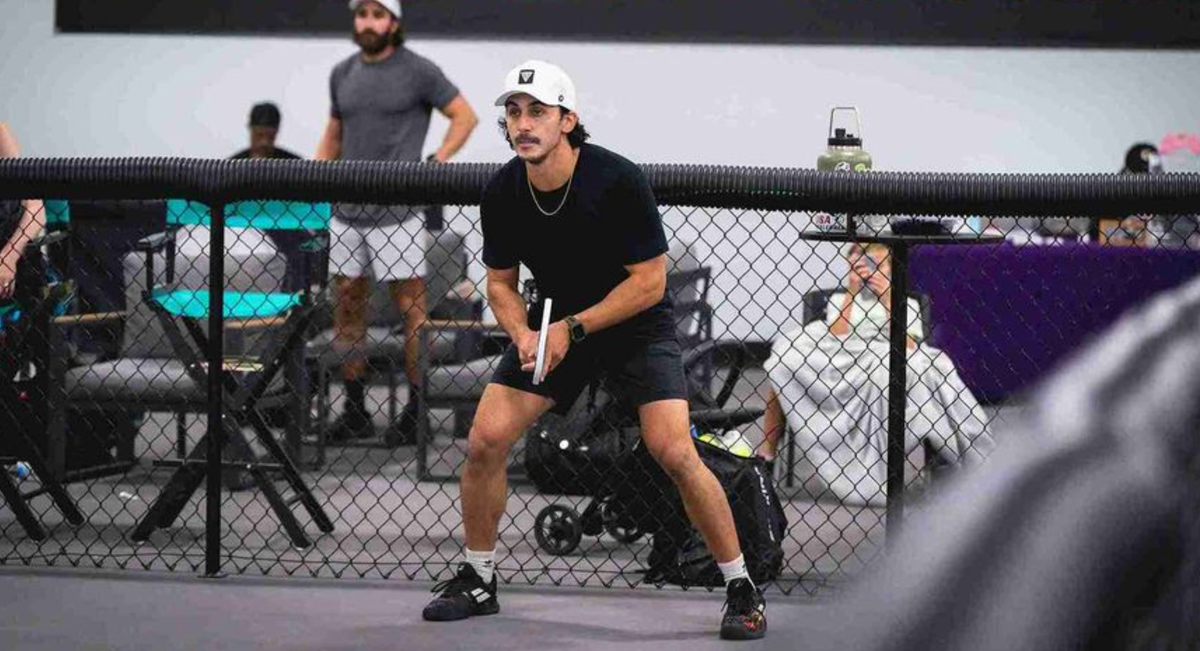
Move as a Pair, Not Two Singles Players
Your partner's position is your problem.
If they back up and you stay, you've handed the other team a diagonal lane straight through the middle, and they will find it.
Stay connected. Think of a rope between you, about eight to ten feet long: when one moves, the other moves the same direction.
The rope rule is the simplest way to stop ball watching, and correct spacing at the kitchen line closes the gap that most rec teams leave wide open.When a lob goes up, switch. Whoever has the better angle takes it, and the other slides across.
Fighting over it or backpedaling in a straight line is how good points get thrown away, and senior players have smart options against the lob if they plan for it in advance.Honestly, the teams that win at 60 aren't the ones hitting hardest.
They're the ones who never leave the line. Every one of these pickleball tips for seniors points back to that.
Competitive Doubles Strategy 4.0 Pickleball: Patterns That Win
Competitive doubles strategy 4.0 pickleball is less about hitting harder and more about controlling patterns, court positioning, and forcing opponents into losing situations.
 The Dink PickleballThe Dink Media Team
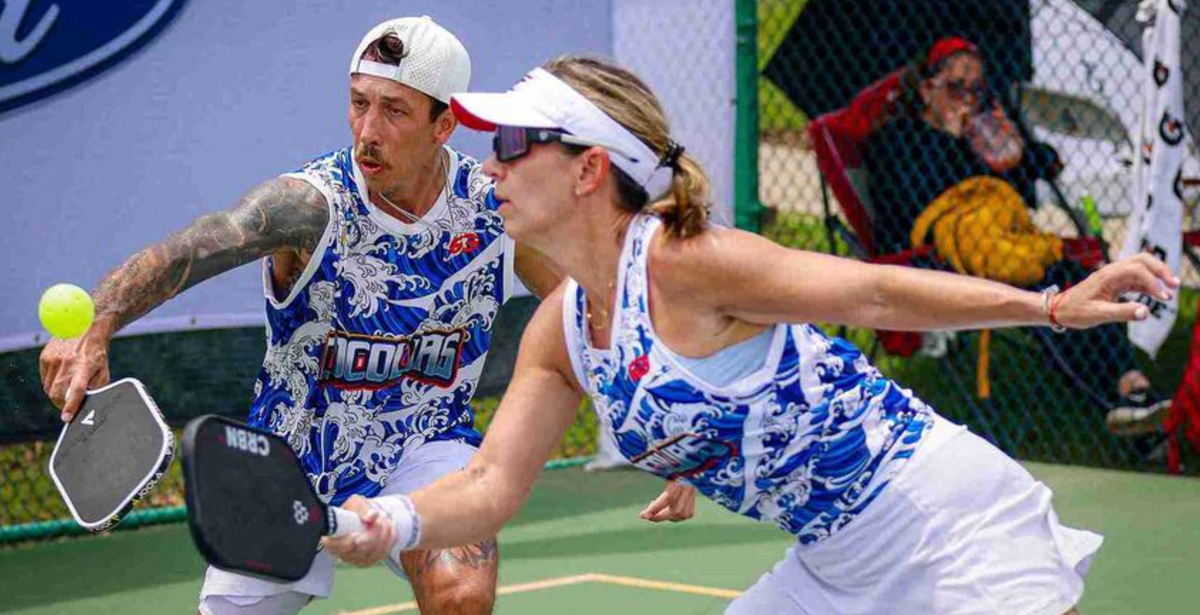
Key Takeaways
- The best pickleball tips for seniors start with position: the kitchen line neutralizes speed, which is why it's the highest-value real estate for senior players.
- Arrive early and plant your feet. Hitting on the move is what causes pop-ups.
- Paddle up between waist and chest, contact in front, no backswing on dinks.
- Dink placement and the reset are the only two shots you need to hold the line.
- Move with your partner, not independently. Eight to ten feet of spacing, always.
💡
Heads up: hundreds of thousands of pickleballers read our free newsletter.
Subscribe herefor cutting edge strategy, insider news, pro analysis, the latest product innovations and more.
Frequently Asked Questions
What are the best pickleball tips for seniors just starting out?
Get to the kitchen line and stay there. Hit deep returns, move up as a unit with your partner, and keep your paddle up. Positioning wins rec games immediately and keeps working as you improve. Our strategy guide for senior players covers the rest.
Can you step on the kitchen line in pickleball?
You can step on it and stand in it, but you cannot volley while any part of you is touching the line or the zone. Both feet have to be fully outside the non-volley zone before you volley again. Letting the ball bounce first is always legal.
How close should I stand to the kitchen line?
As close as you can get without touching it. Your toes should be an inch or two behind the line, which keeps you in range for dinks and legal on volleys. Standing a foot back gives opponents angles they haven't earned. Five tips for leveling up your kitchen play goes deeper on the details.
What should senior players avoid at the net?
Reaching instead of stepping, swinging at dinks, and backpedaling for lobs. All three cost you balance and control. There's a longer list of things senior pickleball players should actually avoid if you want to audit your own game.
How do I stop popping the ball up at the kitchen?
Keep contact in front of your body, open the paddle face slightly, and lift rather than swing. Most pop-ups come from late contact, not bad technique. Our breakdown of grip, footwork, and net play mechanics walks through the adjustment.
Anuncie Aqui / Advertise Here
Sua marca para o mundo Pickleball! / Your brand for the Pickleball world!




 English (US) ·
  Portuguese (BR) ·