
 English
  Spanish
  Portuguese
  German
  Italian
  Japanese
  French
  Polish
  Russian
  Netherlands
  Hungarian
  Turkish
  Videos
  Thedink Pickleball

Pickleball trash talk works by stealing your attention, not by exposing a real flaw in your game. Here's how to shut it down, reset between points, and know when it crosses into a rules violation.
Pickleball trash talk is the cheapest shot in the sport, and it works far more often than anyone wants to admit. Somebody chirps after a net cord.
Somebody asks if your paddle is legal. Somebody stage-whispers a targeting strategy loud enough for you to hear it.
Suddenly you're playing two matches at once: the one on the scoreboard and the one in your head.Here's the thing. You can't control what comes out of the other side of the net. You can absolutely control how long it lives in your skull.
That's the whole game, and it's a skill you can drill like any reset off a bad mistake.
Love pickleball? Then you'll love our free newsletter. We send the latest news, tips, and highlights for free each week.
What Actually Counts as Pickleball Trash Talk?
Pickleball trash talk is any on-court speech aimed at getting inside an opponent's head rather than communicating with a partner.
That's the working definition, and the key word is aimed. Your partner yelling "bounce it!" is communication.The guy across the net announcing your backhand is a liability is something else.
The line sits in three places: who it's directed at, whether it's personal, and whether it interrupts play.Friendly ribbing between regulars in open play is part of the culture.
Commentary designed to rattle a stranger mid-rally is not, and most of the unwritten rules of pickleball exist to police exactly that gap.
Rec courts handle pickleball trash talk on vibes. Tournament courts handle it with a rulebook. Know which one you're standing on.
Why Does Smack Talk Get Under Your Skin?
Pickleball trash talk works because it steals attention, not because it changes the truth about your game.
Every second you spend composing a comeback is a second you're not reading your opponent's paddle face.
Experimental research on competitive settings found that verbal insults degraded performance through cognitive distraction, which is a formal way of saying: you got busy being mad.
The Pickleball Trash Talk Distraction Loop
Watch how it actually unfolds. Somebody says something. You replay it.
You start hunting for a point that proves them wrong instead of playing your strengths, which usually means swinging at a ball you should have reset into the kitchen.
You miss. Now they've got evidence, and you've got a hole in your game that wasn't there four points ago.That's the loop. The comment doesn't beat you. Your response to the comment beats you.
The elite players know this cold, which is why what 6.0 players think during every dink is mostly boring shot-selection math, not revenge planning.
💡
Need some new pickleball gear? Get 20% off select paddles, shoes, and more with code THEDINK at
Midwest Racquet SportsHow Do You Handle Pickleball Trash Talk in the Moment?
The counter to pickleball trash talk is giving it nothing. No eye contact, no reply, no face.
A player chirping at you wants a reaction, the same way a banger wants you to swing back at their pace, and the fastest way to make the chirping stop is to make it unrewarding.
Three points of total non-response and most of them quit on their own.
Then get back to your routine. Not a vague "stay calm" mantra, an actual physical sequence you run between every point to get your focus back on the court.
Pickleball Mental Game: Stay Calm Under Pressure and Win
The mental game competitive pickleball demands is just as important as your backhand or your third shot drop. Learn how top players stay calm under pressure, reset after errors, and build the focus that wins matches.
 The Dink PickleballThe Dink Media Team
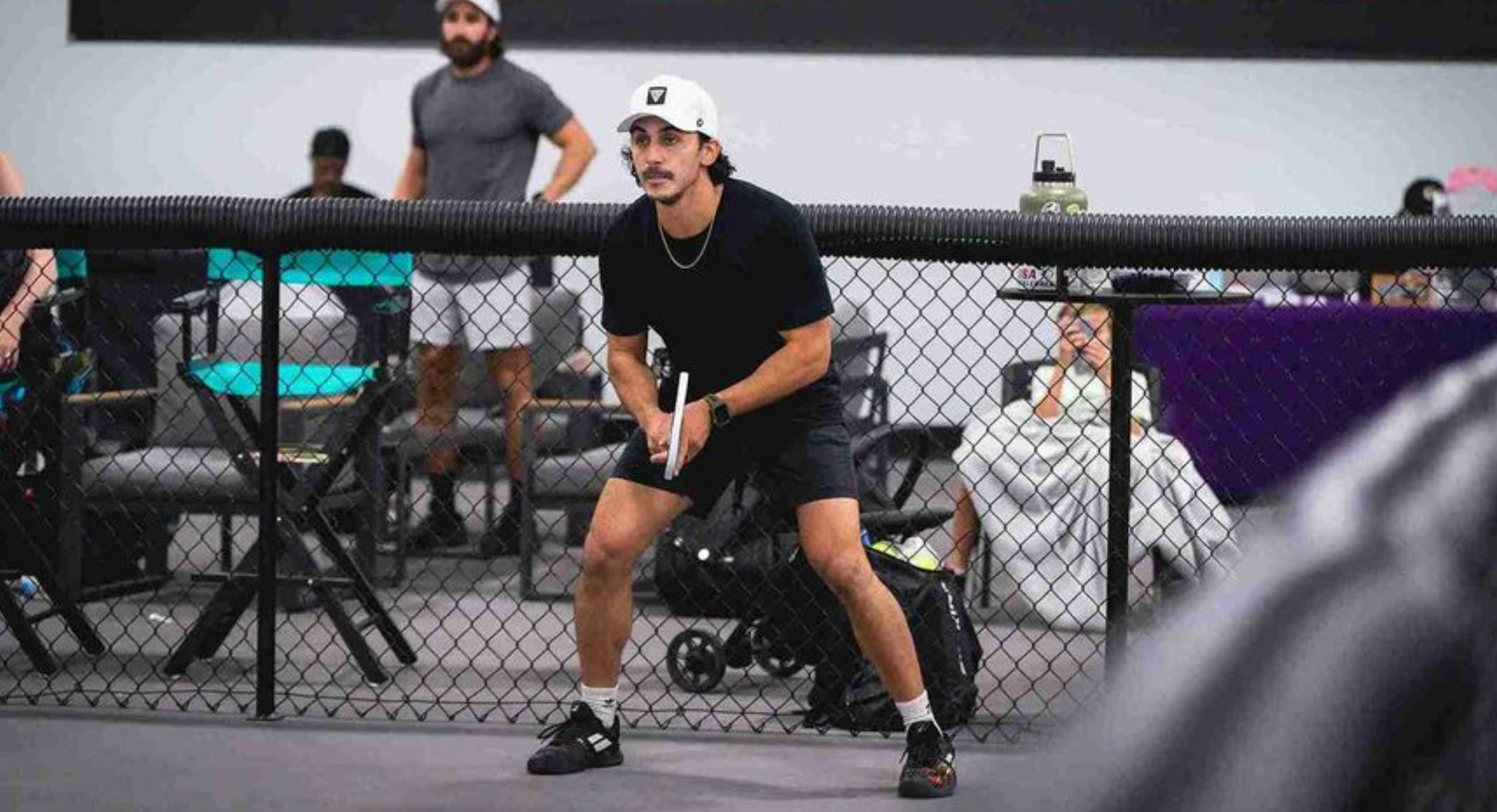
Build a Reset You Can Run on Autopilot
Pick three cues and use them every single point, win or lose:
- Turn your back to the net. Walk to the baseline side of your position. Physically leave the spot where the last point happened.
- Do one thing with the paddle. Spin it, tap your shoe, adjust your grip. The motion is a switch, and it should be identical every time.
- Say one instructional word to yourself. "Low." "Soft." "Feet." Instruction, not encouragement.
That third one matters more than it looks, and it's the same muscle you use to push through a mental wall mid-tournament.
Research on athletes found positive self-talk predicted better performance while negative self-talk predicted worse, and the effect runs both directions.Calling yourself an idiot after a shanked drive does measurable damage. So does narrating what the guy across the net just said.
If your routine falls apart under stress, that's a separate problem worth fixing on its own, and mental clarity before a match is where that work starts.
Answer Pickleball Trash Talk With Your Paddle
The only comeback that changes the score is a shot. And the right shot is almost never the one you want to hit while annoyed.
Annoyed players drive. They swing at shoulder-height dinks, they go for the ATP that isn't there, they try to hit through a banger instead of absorbing the pace. Every one of those is a gift.Do the opposite. Slow the point down. Hit two extra dinks than you think you need.
Make them beat you with patience and grit, which is the exact quality a player who's busy talking usually doesn't have.
Add a serve-and-return pattern you've drilled and trust, then pick your pressure points deliberately instead of emotionally.
And if the talk is coming with a side of sketchy calls?That's not a mental game problem anymore. Bad line calls get handled by asking once, clearly, and moving on.
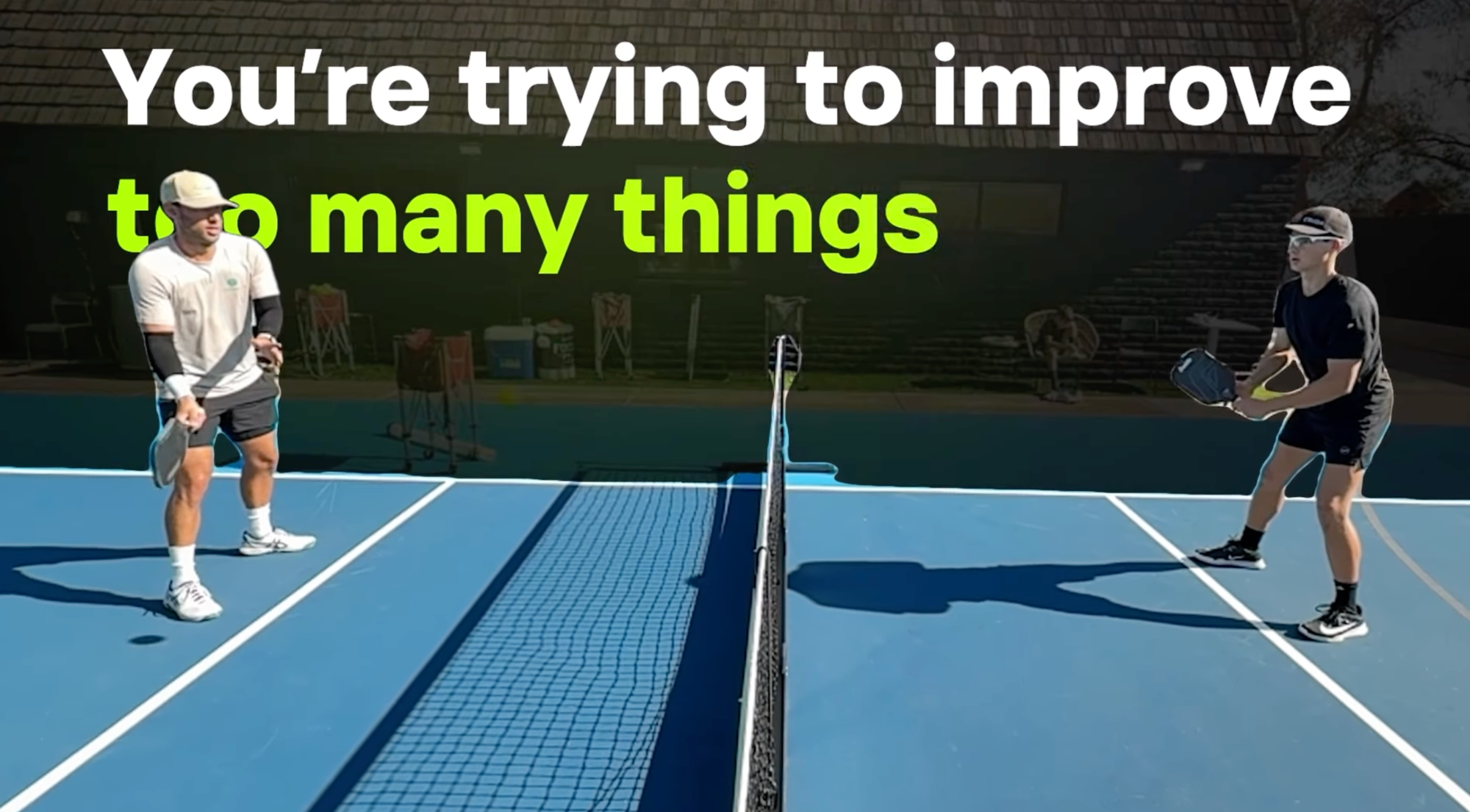
The 6-Second Mental Reset for Getting Past a Bad Pickleball Mistake
You miss a shot. You’re frustrated or angry. You’ve got about 6 to 8 seconds to assess what went wrong and get over it before the next point starts.
 The Dink PickleballThe Dink Media Team
When Pickleball Trash Talk Crosses Into a Rules Problem
In sanctioned play, it stops being banter the moment it becomes personal, profane, or disruptive.
USA Pickleball's rulebook covers unsportsmanlike conduct in Section 22, and it names objectionable language directed at a person, audible or visual profanity, and aggressive arguing that disrupts play as behavior a referee can penalize.
You can read the full rulebook at USA Pickleball.Referees are trained for this, and the escalation ladder is worth knowing:
- Verbal warning: a caution, no score change
- Technical warning: punitive, still no score change
- Technical foul: one point off the offender, or one point added to the opponent if the offender is at zero
So yes, pickleball trash talk has an actual price tag attached in tournaments, which is worth remembering if you're playing your first events.
Two technical fouls forfeits the match. A verbal warning plus a technical warning forfeits the game.
Referees can also issue warnings before the match starts, including during warmups, so the player mouthing off on the practice court is already on the clock.
Rec play has no referee, so the enforcement mechanism is you and the unwritten standards you bring to the courts.
Say something once, directly, without heat: "Let's keep it to the pickleball." If it continues, stop playing with that person. That's it.That's the whole enforcement system, and pickleball etiquette only works because enough people are willing to use it.
Pickleball Rules Explained for Beginners (2026)
Pickleball rules can feel overwhelming at first, but they break down into a handful of core concepts that click fast. This guide covers every rule you need to know to step on the court with confidence in 2026.
 The Dink PickleballThe Dink Media Team
Should You Ever Talk Back?
Only if you can do it without spending any focus on it, which most players can't. Some pros genuinely run on it.
Jay Devilliers has never been shy about answering back, and the sport has produced some memorable exchanges, including the time Anna Bright agreed to a singles match after trash talk escalated.
Here's my honest take on trading pickleball trash talk: those are professionals with thousands of competitive hours and a paycheck riding on their composure.
At 3.5 open play, engaging is almost always a downgrade. You're trading attention for the satisfaction of a line nobody will remember.Save it. Go win the point instead, and if the whole thing left you rattled for a week, that's usually a sign of something deeper worth addressing, like getting your confidence back after a rut.
How to Stay Focused During a Pickleball Match
Learning how to stay focused during a pickleball match is the difference between players who choke under pressure and players who thrive. These 5 in-game mental techniques give you the tools to stay locked in from the first serve to the final point.
 The Dink PickleballThe Dink Media Team
Key Takeaways
- Pickleball trash talk works by stealing attention, not by exposing a real weakness in your game
- Non-response is the fastest counter: no eye contact, no reply, no reaction for three straight points
- Run an identical three-cue reset between every point so your routine holds under pressure
- Keep self-talk instructional ("low," "soft," "feet") rather than emotional
- Slow the point down instead of swinging harder, because annoyed players over-hit
- In sanctioned play, personal or profane language can draw a technical foul worth one point
💡
Heads up: hundreds of thousands of pickleballers read our free newsletter.
Subscribe herefor cutting edge strategy, insider news, pro analysis, the latest product innovations and more.
Frequently Asked Questions
Is pickleball trash talk against the rules?
Pickleball trash talk isn't banned outright, but it depends on the setting. In USA Pickleball sanctioned play, objectionable language directed at a person, profanity, and aggressive arguing that disrupts play are all covered under unsportsmanlike conduct and can draw a verbal warning, technical warning, or technical foul. In recreational play there's no referee, so the standard is social rather than official.
What should I say when someone trash talks me during a match?
Say as little as possible. A flat "good shot" or nothing at all removes the reward they're looking for. If it keeps up in rec play, one direct, unemotional sentence asking them to keep it to the game is enough, and if that doesn't work, stop playing with them.
Can my partner and I talk during a point?
Yes. Partner communication is expected and encouraged, and calling "yours," "bounce it," or "switch" is a normal part of doubles. The line is whether your talking is aimed at your partner or at distracting your opponent, because deliberate distraction is a different thing entirely.
Does trash talk actually affect performance?
Research in competitive settings suggests it does, mainly through cognitive distraction rather than any real damage to skill. The mechanism is attention: energy spent processing an insult is energy not spent tracking the ball. The good news is that the effect shrinks fast when you refuse to engage.
How do I stop getting tilted after a bad point?
Build a physical reset you run every single point regardless of the outcome. Turn away from the net, do one small repeatable action with your paddle, and give yourself one instructional word before you set up again. Consistency is what makes it work under pressure, not intensity.
Anuncie Aqui / Advertise Here
Sua marca para o mundo Pickleball! / Your brand for the Pickleball world!



 English (US) ·
  Portuguese (BR) ·