
 English
  Spanish
  Portuguese
  German
  Italian
  Japanese
  French
  Polish
  Russian
  Netherlands
  Hungarian
  Turkish
  Videos
  Thedink Pickleball

Anna Leigh Waters has 192 gold medals, 44 triple crowns, and a DUPR rating that ranks her fourth overall in the world. Here is a complete breakdown of what makes her nearly impossible to beat.
Anna Leigh Waters is the most dominant player in pickleball right now, and it is not particularly close.
At just 19 years old, she has 192 gold medals, 44 triple crowns, and a DUPR rating that ranks her fourth in the world overall, behind only Ben Johns, JW Johnson, and Andre Dascu.
Her last singles loss came on June 2nd, 2024. She has won 125 consecutive singles matches since then.This full breakdown comes from Zane Navratil Pickleball on YouTube, who spent two years as her teammate on the New Jersey 5 in MLP and watched her game up close.
We are covering her biggest strengths, her few real weaknesses, and a complete Madden-style stat card for every part of her game.
Love pickleball? Then you'll love our free newsletter. We send the latest news, tips, and highlights for free each week.
The Strength Nobody Can Copy: Anticipation
You cannot see anticipation directly.
You see the result of it: impossible positioning, hands that arrive before the ball, and counters that seem to come from nowhere.Anna Leigh Waters has played competitive pickleball since age 12. That means she has logged more hours reading live game situations than almost any player alive.
She does not react to shots. She already knows what is coming.Zane Navratil has said that when practicing against her, she knew what shot he was going to hit before he had decided himself.
She reads the smallest tells in a player's stroke, the tiny hitches before a dink or a speed up.She also knows the percentages, which is the same instinct behind the four key strategies to winning in 2026.
That is a competitive advantage that cannot be recreated through drilling alone. Anna Bright cannot go back in time and start playing at 12. Neither can you.
But understanding that this is what separates elite from very good is worth knowing.
What Makes Her Two-Handed Backhand So Hard to Stop?
The two-handed backhand is her signature weapon, and it works because of three specific technical choices that stack on top of each other.
- First, the grip. She holds the paddle slightly past continental, approaching an eastern grip, which opens the face just enough to get underneath low dinks cleanly. It also lets her take the ball slightly later, giving it more time to rise toward its peak before contact.
- Second, the finger position. She uses a shorter grip and rests one finger up the back of the paddle rather than on the edge, which increases stability and maneuverability. It reduces wrist snap slightly, but her swing mechanics more than cover the trade-off.
- Third, the swing shape. She prepares every backhand in a way that lets her speed the ball up if she sees an opportunity, or convert it into an aggressive topspin dink instead. Her left hand drops the paddle head below the ball and brushes up the back side, similar to the way Gabe Tardio works his forehand.
That is how she generates spin, power, and deception from the same motion.
If you want to build a more consistent version of this shot yourself, these backhand dink drills are a strong starting point.
For the full technical picture, Connor Garnett's two-handed backhand tips break down the mechanics in detail.
💡
Need some new pickleball gear? Get 20% off select paddles, shoes, and more with code THEDINK at
Midwest Racquet SportsHer Movement Is Better Than You Think It Is
Anna Leigh Waters is not the fastest player on tour at top speed.
Players like Tyra Black, Catherine Pinto, Kaitlyn Christian, and Lane Sleath have more raw acceleration over distance.
But top speed is mostly irrelevant in pickleball.
What actually matters is how fast you reach top speed, whether you stay balanced while hitting, and how quickly you recover for the next shot.
She is the best on tour at all three of those things combined.It is also not accidental.
She brings a physio to every event and puts in serious body maintenance work year-round, which matters given how much injury research on racquet sports points to workload management.
That discipline is what makes her movement sustainable across long tournament weeks.
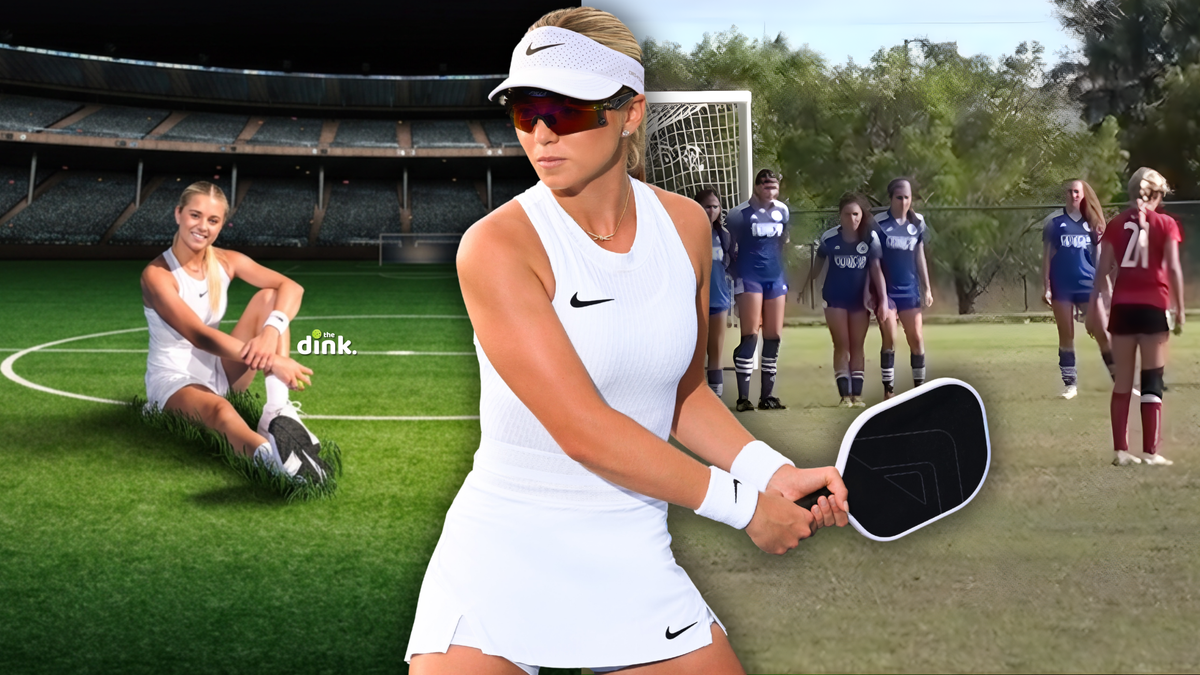
Anna Leigh Waters, the Soccer Prodigy Who Pickleball Stole
The greatest pickleball player in the world was a soccer prodigy with pro potential. Then another sport came calling, and it was too loud to ignore.
 The Dink PickleballThomas Shields
Where Can You Actually Attack Her?
This is where it gets honest. There are weaknesses, but they require precision to find.
Here are the two most exploitable areas in her game right now:
- The backhand flick. She hits it occasionally but does not look fully comfortable with it. The problem is that targeting it is a trap for most opponents. Hit the ball too short and it becomes a sitter for her two-handed backhand off the bounce. Hit it too far and it turns into an easy two-handed backhand attack out of the air. The margin for error is almost nonexistent. If you want to understand the mechanics of a solid flick yourself, this breakdown of flick tip position is worth reading.
- The overhead. This is her most real weakness and the one the rest of tour is starting to figure out. She does not snap the forearm and hand through at the top of the swing the way the best overhead players do. It looks more like she is guiding the ball. At 5'7, she also cannot angle overheads off the court as effectively as taller players. Increasing lobs against her is a legitimate strategic play, and smart lob coverage matters even more when your partner is the one getting lobbed.
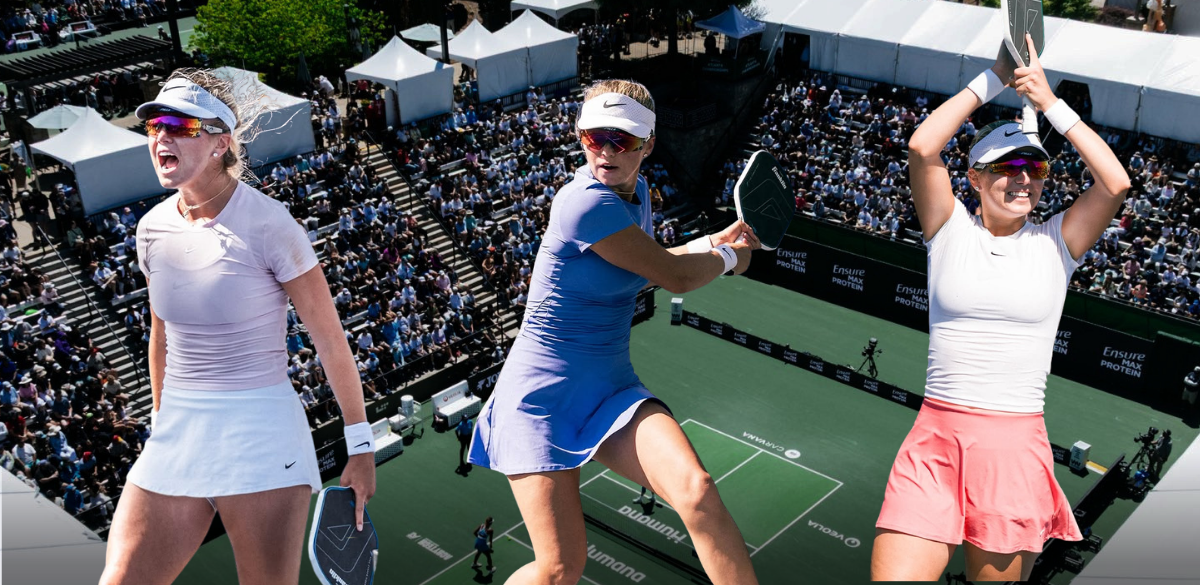
Anna Leigh Waters’ Undefeated Singles Streak by the Numbers
Is it hyperbolic to say Anna Leigh Waters has one of the most dominant undefeated streaks in sports history? The numbers tell a convincing story.
 The Dink PickleballErik Tice
What About Shot Selection Under Pressure?
Even at her level, there are moments where shot selection slips.
When she is overextended on a forehand drive, she occasionally makes poor decisions about when to attack versus reset.
It is a small crack in an otherwise airtight game. But even the best players in the world deal with shot selection problems under pressure.Recognizing the right ball to attack is something every player has to keep sharpening.
How to Stay Solid Under Pickleball Pressure
The gap between pros and amateurs isn’t skill—it’s how they handle pickleball pressure. PPA pro Ashley Griffith breaks down five critical habits that separate champions from the rest.
 The Dink PickleballThe Dink Media Team

The Full Stat Card: Madden Style Ratings for Every Part of Her Game
Here is how her complete game grades out, using the ratings from Zane Navratil's breakdown:
- Serve: 90. Virtually never misses, but only her lob serve creates real problems for opponents.
- Return: 99. The best returner on the women's side by a wide margin. Heavy groundstrokes to precise locations.
- Drives: 95. The backhand is a 99. The forehand is around a 90, strong but not exceptional, with occasional shot selection issues when overextended.
- Drops: 99. The most aggressive and most consistent drops in the sport. She can go ultra-aggressive or ultra-reliable from the same motion. Studying third shot drop placement shows you what that standard actually looks like.
- Dinks: 98. Best backhand dink in the sport. The forehand is slightly less consistent and less heavy, but still well above tour average. For a real look at two-handed backhand dink mechanics, there is a full breakdown worth reading.
- Speed-ups: 96. The best off-bounce speed-ups regardless of gender. Slightly limited by not being quite as dominant out of the air on either side.
- Hands: 99. Best hands in women's doubles. Heavy, fast, and technically clean.
- Finishing: 85. The overhead brings this number down. There are also occasional overcooking errors on put-away shots. Improving your own finishing starts with these put-away fixes.
- Defense: 98. Tyra Black is probably the only player on the women's side who is better at pure defense.
- Movement and positioning: 99. Always balanced, always in position. Never out of place.
- Court IQ: 99. She sees five shots ahead. Her court IQ is the clearest separator between her and the field.
- Mental toughness: 99. Described as Michael Jordan and Kobe Bryant level competitive. She does not flinch.
- Overall: 99.
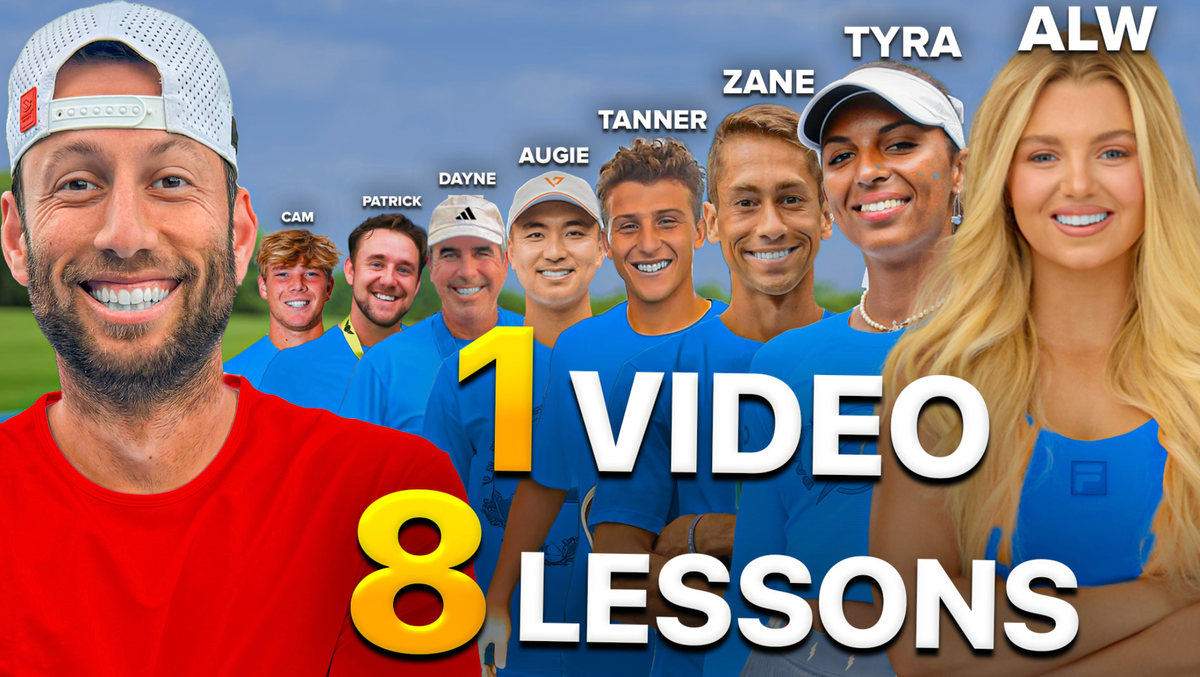
8 Pickleball Pro Tips from World-Class Players
Advanced pickleball is about understanding that you’re not playing against your opponent; you’re playing with your partner and the geometry of the court.
 The Dink PickleballThe Dink Media Team
What Can You Actually Take From Her Game?
You will never replicate the anticipation she built over seven-plus years of competitive play starting at age 12.
That ship has sailed for most players reading this.But the technical habits are transferable.
Her grip adjustment, her paddle finger position, and her preparation that allows both a speed-up and a dink from the same swing shape are things any serious player can work on.
Understanding how to use the off-bounce speed-up the way she does is a real skill that changes how opponents defend against you.
So is committing to the essential shots worth mastering for 2026.
Her physical commitment is also a lesson. She does not just practice her shots. She maintains her body like an athlete.If you are taking your game seriously, the physical side is not optional.
The durability question will be the most interesting thing to watch as her career continues, and it shows up in plenty of pro pickleball predictions for 2026.
Three matches on Wednesday through Saturday, then up to five hours on championship Sunday, is a brutal load on any body.
She is fighting that proactively, which is the right call.Pickleball has never produced a player quite like this before.
Watching how Anna Leigh Waters combines anticipation, technical precision, and relentless physical preparation is the most useful education available in the sport right now.
💡
Heads up: hundreds of thousands of pickleballers read our free newsletter.
Subscribe herefor cutting edge strategy, insider news, pro analysis, the latest product innovations and more.
Frequently Asked Questions
How many gold medals does Anna Leigh Waters have?
Anna Leigh Waters has 192 gold medals as of the time of this breakdown. She also has 44 triple crowns, which means winning singles, women's doubles, and mixed doubles at the same event.
What makes Anna Leigh Waters's two-handed backhand so effective?
Her grip, finger position, and swing shape all work together to let her hit a speed-up or a topspin dink from the same preparation. Her left hand drops below the ball and brushes up the back side, generating spin and deception that most opponents cannot read in time.
Her overhead is her most noticeable weakness. She does not snap the forearm through at the top of the swing the way the best overhead players do, and her height limits her ability to angle overheads off the court. Lobs are a legitimate tactic against her.
She holds the fourth highest DUPR rating overall in the sport, behind Ben Johns, JW Johnson, and Andre Dascu. That ranking includes all genders, which makes it one of the most impressive individual accomplishments in pickleball history.
How long has Anna Leigh Waters been playing pickleball?
She started playing competitively at age 12 and is currently 19. That means she has roughly seven years of high-level competitive experience, which is the foundation of her extraordinary court anticipation and pattern recognition.
Anuncie Aqui / Advertise Here
Sua marca para o mundo Pickleball! / Your brand for the Pickleball world!




 English (US) ·
  Portuguese (BR) ·