
 English
  Spanish
  Portuguese
  German
  Italian
  Japanese
  French
  Polish
  Russian
  Netherlands
  Hungarian
  Turkish
  Videos
  Thedink Pickleball

Kitchen positioning is one of the most misunderstood fundamentals in pickleball. Cori Elliott's latest coaching breakdown reveals why recreational players stay stuck and how to move your feet instead of reaching.
If you've ever found yourself frozen at the kitchen line, desperately reaching for a dink that's just out of arm's reach, you're not alone.
Kitchen positioning is one of the most overlooked fundamentals in recreational pickleball, and it's costing players consistency, court control, and winning opportunities.
In a recent coaching session, Cori Elliott worked with a player named Elaine to diagnose and fix one of the biggest mistakes recreational players make at the net: staying stuck instead of moving their feet.
The breakdown reveals exactly why this happens and how to build better habits that will transform your dink game.
Love pickleball? Then you'll love our free newsletter. We send the latest news, tips, and highlights for free each week.
The Problem: Why You're Reaching Instead of Moving
Here's the thing about kitchen positioning: most recreational players don't realize they're doing it wrong until someone points it out.
Elaine's biggest issue wasn't her paddle skills or her shot selection.
It was that she stayed rooted to the spot where she'd just hit the ball, then reached desperately when the next ball came in.
"She had a tendency to stay stuck in the mud, not moving in general and then not moving correctly," Elliott explained during the session.This creates a cascade of problems. When you don't move your feet, you can't create space from the ball. When you can't create space, you're forced to reach.
US Senior Pickleball: The Only Tour Built by Seniors for Seniors
Everything you need to know about US Senior Pickleball, how to get involved, and why this year’s National Championship will be their biggest one yet
 The Dink PickleballAlex E. Weaver

And when you reach, your balance suffers, your recovery time increases, and your next shot becomes a scramble instead of a setup.
The root cause? Kitchen positioning requires constant micro-adjustments.
Most players think they can hit a dink and then wait passively for the next one. That's the trap.
If you're serious about breaking the 5.0 barrier, fixing your net positioning is one of the fastest ways to close the gap between your current level and where you want to be.
It's not about hitting harder. It's about standing smarter.
Moving Your Feet: The Drop Step Solution
The solution Elliott introduced is deceptively simple: the drop step.
This is a small lateral movement that creates space between you and the incoming ball, allowing you to hit from your sweet spot instead of reaching.
"If I hit it to your backhand, you're going to open up like this," Elliott demonstrated. "You're creating the space for the ball."The drop step works on both sides of the court. On your forehand side, you step forward and slightly right. On your backhand, you open up to the left.
The movement is small, controlled, and deliberate. What makes this so effective is that it solves multiple problems at once.
By stepping into the ball, you're not just creating space.
You're also positioning yourself to see the court better, react faster to popups, and recover more efficiently after your shot.
Improving your kitchen line technique is about layering small adjustments on top of each other.
The drop step is the first layer, and it changes everything downstream.
💡
Need some new pickleball gear? Get 20% off select paddles, shoes, and more with code THEDINK at
Midwest Racquet SportsKitchen Positioning Starts Before You Hit
Most players only think about positioning after the ball is already on their side. That's too late. Good kitchen positioning is proactive, not reactive.
The moment your opponent makes contact, your feet should already be reading the trajectory.
Where is the ball going? How high will it bounce? Do I need to move left or right?These micro-reads happen fast, and they only work if you're already in a neutral, balanced stance.
This is exactly the kind of court awareness that modern pickleball strategy is built on.
The players winning at the kitchen line aren't just reacting quicker. They're starting from a better position every single time.
Pickleball Shot Placement: Complete Winning Guide
Whether you’re serving, returning, dinking, or driving, knowing where to aim gives you control over the rally and keeps your opponent reacting instead of attacking.
 The Dink PickleballThe Dink Media Team
Recovery: The Forgotten Step After Every Shot
Here's what separates good kitchen positioning from great kitchen positioning: what you do after you hit the ball matters just as much as how you hit it.
"You move, you hit the ball, then you want to come back," Elliott said. "Recover ready into the ready position."This means that immediately after striking the dink, you need to reset your feet back toward the center of your side of the court.
You're not sprinting back. You're taking one or two quick steps to return to a balanced, neutral stance.
Elaine struggled with this at first. She'd hit a good dink and then stay where she finished the shot, leaving herself vulnerable to the next ball.
Once she started recovering immediately after every shot, her entire game tightened up.
She was moving better, recovering faster, and making much cleaner decisions at the kitchen.
The recovery step is also where kitchen positioning becomes a rhythm.
Hit, recover, reset. Hit, recover, reset. It's almost meditative once you build the habit.
Think of it this way: every shot at the net is only as good as the position you recover to afterward.
The 12 drills you need for your best pickleball in 2026 include net recovery work for exactly this reason. It doesn't get the attention it deserves.
Recovery Position After a Pickleball Attack: Full Guide
Recovery position after attack pickleball strategy is what separates players who win one rally from players who win the whole game. Here’s exactly how to get back in position after you pull the trigger, stay balanced, and keep the pressure on.
 The Dink PickleballThe Dink Media Team
Paddle Position: Bringing It Back to Center
One detail Elliott emphasized repeatedly was paddle position. After hitting a dink, Elaine had a habit of leaving her paddle where she'd finished the previous shot.
This is a common mistake that costs players reaction time.
"Bring your paddle back to center," Elliott instructed. "Up meaning neutral."A neutral paddle position means your paddle is held at chest height, roughly in the middle of your body, ready to move in any direction.
It's not extended to the side where you just hit. It's not dropped low. It's centered and ready.
This small adjustment has a huge impact on your ability to react to the next ball.
When your paddle is in the neutral position, you can take a ball out of the air or let it bounce with equal ease.
You're not caught off-guard. You're not scrambling. You're prepared.
This same principle shows up across 6 essential pickleball shots you need to master. Paddle readiness connects every shot in your arsenal.
Stop Popping the Ball Up: Modern Pickleball Hand Speed and Paddle Positioning
Winning the kitchen today isn’t about swinging harder—it’s about creating space with your coil and controlling contact with smarter paddle positioning
 The Dink PickleballThe Dink Media Team
When to Volley vs. When to Let It Bounce
Reading the Ball: Kitchen Positioning and Decision-Making
The title of Elliott's video asks the central question: "Stop Guessing Which Dinks to Volley."The answer lies in your positioning and your ability to read the ball's trajectory.
"If the ball is below your knees, let it bounce," Elliott explained. "Above the knee, look for it."But here's the nuance: this rule only works if you're in the right position to see it.
If you're standing where you just hit the ball, you can't see the height of an incoming dink. You're blind to the opportunity.
Once Elaine started moving her feet and recovering to the center, something clicked. She could suddenly see popups that she'd been missing.
She could make the decision to volley or let it bounce with confidence instead of panic.
The decision-making wasn't the problem. The positioning was.
"When you're already here, you can see and you're in the right position," Elliott said. "Like physically, you're already here. Now look, I can see the height to take advantage of that."A simple 4-step system to win more games covers this concept as one of its core decision-making pillars. Read it alongside this breakdown for the full picture.
Knock Out Your Opponent With This Punch Volley Pickleball Technique
The punch volley is your secret weapon for dominating at the net and finishing points decisively. Nail the technique, and you’ll see the difference in your game. Fast.
 The Dink PickleballThe Dink Media Team
The Kitchen Line: Your Real Estate at the Net
Why Kitchen Positioning Is the Game Within the Game
Understanding kitchen positioning means understanding the kitchen itself. The kitchen is the seven-foot non-volley zone on both sides of the net.
It's also the most valuable real estate on the court.
When you're at the kitchen line, you're controlling the point. You're dictating the pace. You're in position to attack any popup.
But only if you're positioned correctly. Elliott emphasized staying about in the middle of the kitchen, not too close to the net and not too far back.
"So you want to be about here to get something on the ball, but you don't want to hit it too late," Elliott said. "And you don't want to be falling over."This balance is crucial. Too close to the net and you can't react to balls that land short. Too far back and you're reaching again.
The goal is to find that sweet spot where you can hit the ball at the peak of its bounce, with your feet balanced and your paddle ready for the next shot.
That's where kitchen positioning becomes a competitive advantage.
Why professional pickleball players abandoned the slice shot in 2025 offers a perfect companion read on how net positioning decisions are shifting at the highest level.
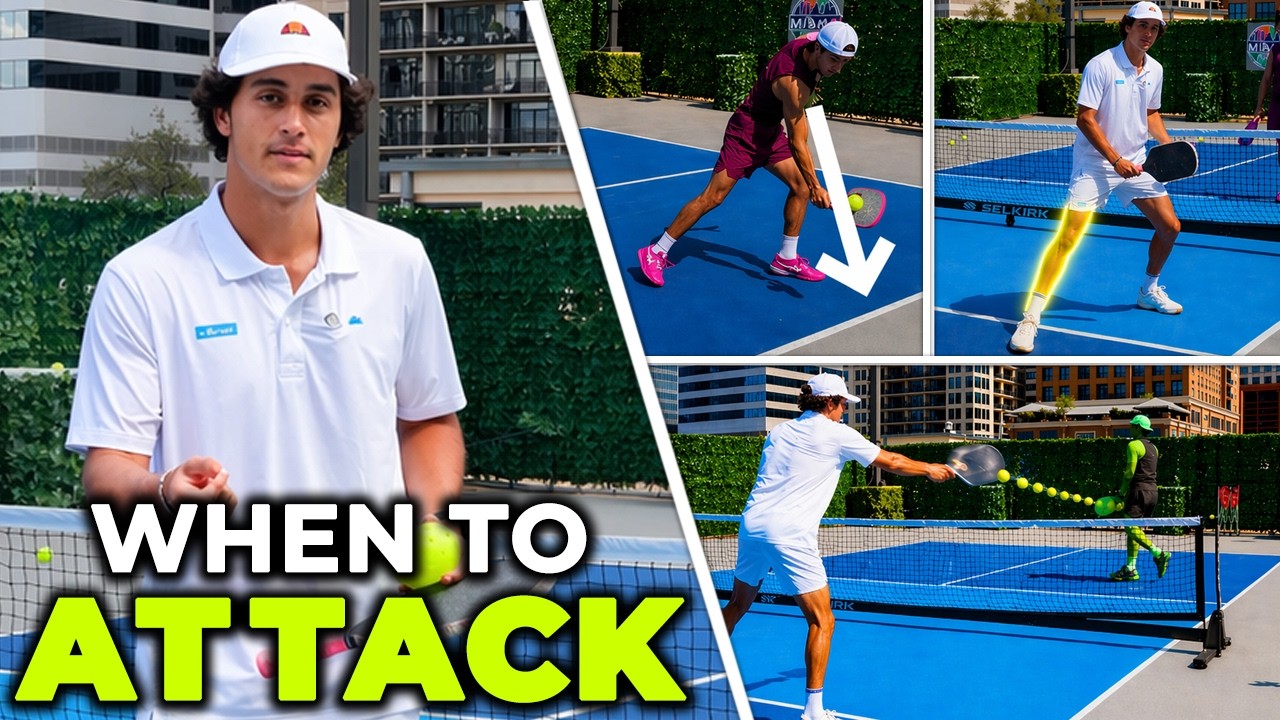
Kitchen Line Aggression: When to Attack in Pickleball
Jack Munro, the #1 player on the APP tour in mixed and men’s doubles, breaks down the exact signals that tell you when your opponent is vulnerable and ready to be attacked.
 The Dink PickleballThe Dink Media Team
Building the Habit: Repetition and Awareness
How to Develop Proper Kitchen Positioning Through Consistent Drill Work
By the end of the session, Elaine's movement had transformed.
She was stepping into balls, recovering quickly, and making confident decisions about when to volley.
But this didn't happen by accident. It happened through focused repetition and Elliott's constant feedback.
"Move your feet. Good. Move. Move. Move," Elliott coached during a rally.The repetition matters. Your brain needs to build a new pattern. Your muscles need to develop the habit. One coaching session isn't enough.
You need to practice these movements in your own games and drills. The good news is that kitchen positioning improvements show up immediately.
Once you start moving your feet instead of reaching, your consistency goes up.
Your confidence goes up. Your opponents start noticing that you're harder to beat at the net.
The common trap all rec pickleball players fall into is worth reading right after this.
The pattern Elaine broke is the same one most 3.5 and 4.0 players are still stuck in.
💡
Heads up: hundreds of thousands of pickleballers read our free newsletter.
Subscribe herefor cutting edge strategy, insider news, pro analysis, the latest product innovations and more.
Frequently Asked Questions
What exactly is kitchen positioning in pickleball?
Kitchen positioning refers to how you place and move your feet relative to the non-volley zone line during a dink exchange at the net. Good kitchen positioning means staying balanced, recovering to center after every shot, and moving laterally to create space rather than reaching for the ball.
What is the difference between a dink and a volley?
A dink is a soft shot that lands in the kitchen and bounces low. A volley is hitting the ball before it bounces. In pickleball, you can't volley inside the kitchen, but you can volley anywhere else on the court. Knowing when to take a ball out of the air versus letting it bounce depends on the ball's height and your positioning.
Why is the drop step important for kitchen positioning?
The drop step creates space between you and the incoming ball, allowing you to hit from your sweet spot instead of reaching. It's a small lateral movement that improves your balance, reaction time, and recovery. Without it, you're forced to reach, which compromises your shot quality and leaves you vulnerable to the next ball.
How do I know if I'm in the right position at the kitchen line?
You're in the right position when you can see the height of incoming dinks, react to popups, and hit the ball at the peak of its bounce without falling forward or backward. You should be roughly in the middle of the kitchen, with your paddle in a neutral position and your feet ready to move in any direction.
What should my paddle position be between shots?
Your paddle should be held at chest height in a neutral position, roughly in the middle of your body. This allows you to react quickly to any incoming ball, whether you need to volley or let it bounce. Avoid leaving your paddle extended to the side where you just hit.
How often should I practice kitchen positioning drills?
Kitchen positioning should be practiced in every session. Start with slow dink rallies where you focus on footwork and recovery. As you build the habit, increase the pace and complexity. The goal is to make proper net positioning automatic so you don't have to think about it during matches.
Anuncie Aqui / Advertise Here
Sua marca para o mundo Pickleball! / Your brand for the Pickleball world!






 English (US) ·
  Portuguese (BR) ·