
 English
  Spanish
  Portuguese
  German
  Italian
  Japanese
  French
  Polish
  Russian
  Netherlands
  Hungarian
  Turkish
  Videos
  Thedink Pickleball

Third shot placement is not a guessing game. These 3 simple rules give you a specific target based on what the return looks like.
Most players treat third shot placement like a coin flip. They pick a spot, swing, and hope for the best.
The problem is not your technique. It is that you are not reading the return before you decide where to aim.Your target should change based on what the ball is doing, and if you are using the same aim point every single time, you are leaving a lot of free points on the table.
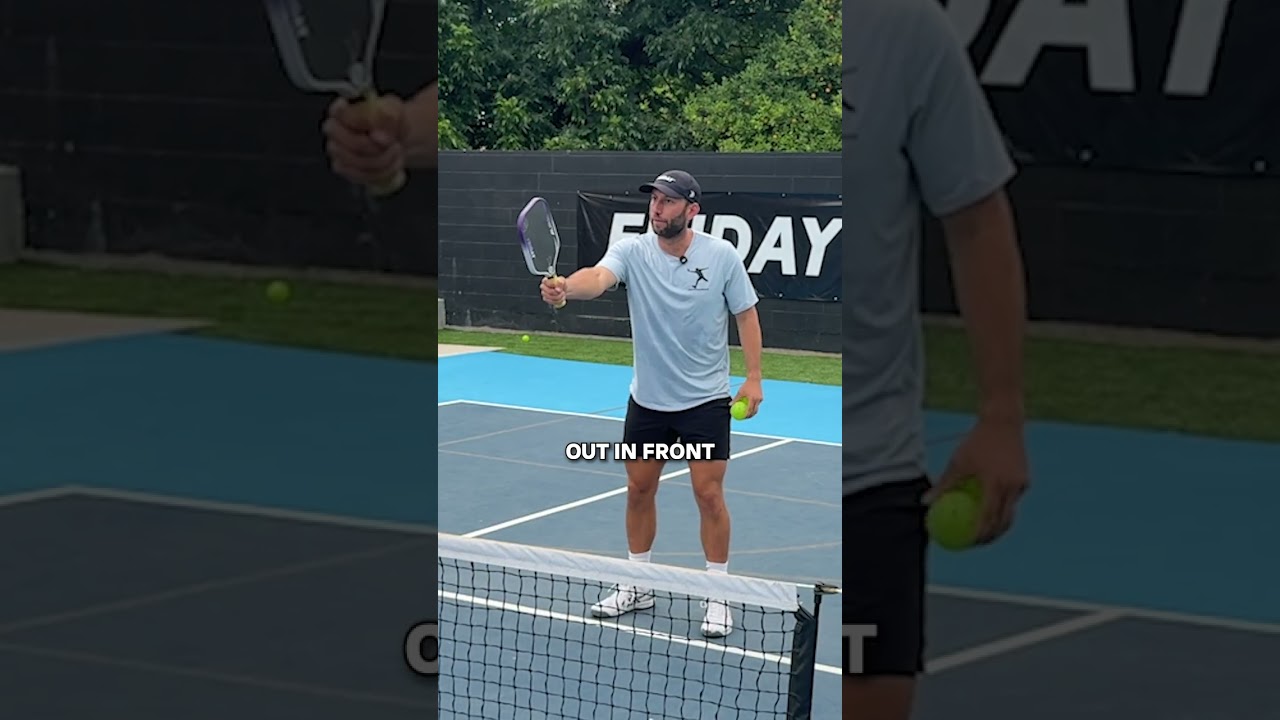
These three placement rules come from Tanner Tomassi on YouTube, and they give you a clear framework for picking the right target before you ever start your swing.
Love pickleball? Then you'll love our free newsletter. We send the latest news, tips, and highlights for free each week.
Why Third Shot Placement Matters More Than Power
Players obsess over how to hit it. Topspin, drive, drop, speed. But the where matters just as much.
A perfect third shot drop that lands in the wrong spot is still a gift. A sharp drive aimed at nobody accomplishes nothing.Pickleball third shot placement is about reading the situation, not executing on autopilot.
These three rules give you a decision tree you can actually run in real time.
Rule 1: Got a Lofty Return? Go Cross Court Toward the Middle
When your opponent gives you a high, slow return, the best pickleball third shot is almost always cross court toward the middle.
Here is why it works.
Per the official USA Pickleball rulebook, the net measures 36 inches at the sidelines and 34 inches at the center, so the middle sits a full two inches lower.
That margin matters more than you think when you are trying to keep a drop or a drive in play.
You also get more court. The diagonal from corner to corner is longer than the straight line ahead, which means more room for the ball to land safely inside the baseline.A lofty return is your invitation to be aggressive. Do not waste it punching down the line into the tightest part of the court.
- Net height advantage: the center is lower, shrinking your error margin on drops and drives
- Court length advantage: cross court pickleball angles give you the longest landing zone
- Angle advantage: a well-placed cross court third pulls your opponent out of position
This is also the situation where a third shot drop with precise placement becomes a genuine weapon rather than just a neutral reset.
💡
Need some new pickleball gear? Get 20% off select paddles, shoes, and more with code THEDINK at
Midwest Racquet SportsWhat Does "Lofty Return" Actually Mean?
A lofty return is any return of serve that travels high and slow, giving you extra time and a comfortable contact point.
It is the opposite of a low, fast, skidding return that jams you or forces a difficult read.When the ball is floating toward you with pace you can control, that is your green light.
Go cross court, aim toward the middle, and take advantage of every geometric edge the court gives you.
If you are not sure how to read returns before you commit to a target, this shot selection framework is worth your time.
The Return Plus One: Mastering the Transition from Baseline to Kitchen Line
The return and fourth shots aren’t glamorous; they’re the shots that determine whether you’re winning matches or wondering why you keep losing to players you think you should beat.
 The Dink PickleballThe Dink Media Team
Rule 2: Tough Return? Drive It at the Transitioning Player
Not every return sits up nicely. When you get a genuinely difficult one, your pickleball third shot priority shifts completely.
Drive it at the player who is still moving toward the kitchen.This is the most underused tactic in recreational doubles. After the return is hit, one or both returners start jogging toward the non-volley zone.
They are mid-transition, weight shifting, feet not planted.A hard drive at a player in motion is far tougher to handle than a drive at someone locked in and ready.
- Identify which player is moving toward the net after their return
- Aim your third shot drive directly at their body or feet
- Force them to volley or half-volley while still transitioning
- Even a weak pop-up gives you an easy put-away
This pairs naturally with understanding how the transition zone works and why players in it are so vulnerable.
The key mental shift here is recognizing that a tough return does not mean you default to a soft drop. Sometimes the right answer is pressure, not patience.
How to Hit a Slice Return Like a Pickleball Pro
Most players think a slice return needs a big wrist snap. Mari Humberg’s 6.042 DUPR slice return proves the opposite, and here’s exactly how she does it.
 The Dink PickleballThe Dink Media Team
Why Targeting the Transitioning Player Is So Effective
A player mid-transition cannot split step properly. They cannot reset their feet between shots.
Their paddle position is often compromised because they are focused on moving, not on defending.
When you drive at someone in that state, you are attacking a structural weakness in their positioning, not just hitting hard for the sake of it.Smart targeting beats raw power every time.
If your drive game needs work, fixing your forehand drive mechanics will make this strategy even more effective.
Master the Pickleball Transition Zone: Attack or Reset
The best players in the world aren’t just comfortable in the transition zone – they actively use it to their advantage
 The Dink PickleballThe Dink Media Team
Rule 3: Opponent Cheating Toward the Middle? Drop Behind Them
This one requires you to watch your opponents instead of the ball. When a player at the kitchen line starts shading toward the middle, they open a gap behind themselves.
Drop behind them.
This is pure pickleball IQ. If someone is leaning or stepping toward center, they have committed, and they cannot reverse direction to cover the sideline.
A drop that lands behind them, near their original spot, is close to unreachable.- Watch the feet and shoulders of the kitchen player, not just the paddle
- The moment they cheat middle, the wide drop becomes available
- A short, angled drop behind them beats a straight drive at them
- It forces them to abandon the middle or concede the open court
Players who do this well read the court before the ball is in the air.
It is the same instinct that separates 5.0 players from 4.0 players at almost every level.
How to Hit the Middle Court Drop Shot in Pickleball
Most pickleball players make the same mistake when they find themselves in the middle of the court with an easy ball. Instead of hitting an aggressive shot out wide, the middle court drop shot is the smarter play that gains ground and wins points.
 The Dink PickleballThe Dink Media Team
How Do You Train Yourself to See This in Real Time?
Start by committing to one simple habit during your next few games.
Before you swing on the third shot, take one quick look at where the kitchen players are standing. Not a long look.A snapshot.
Ask yourself: is anyone moving toward the middle? That single question is enough to trigger the right placement decision without overthinking it.
If you want to build this kind of court awareness faster, how 5.0 players read the court breaks down exactly what to look for and when.
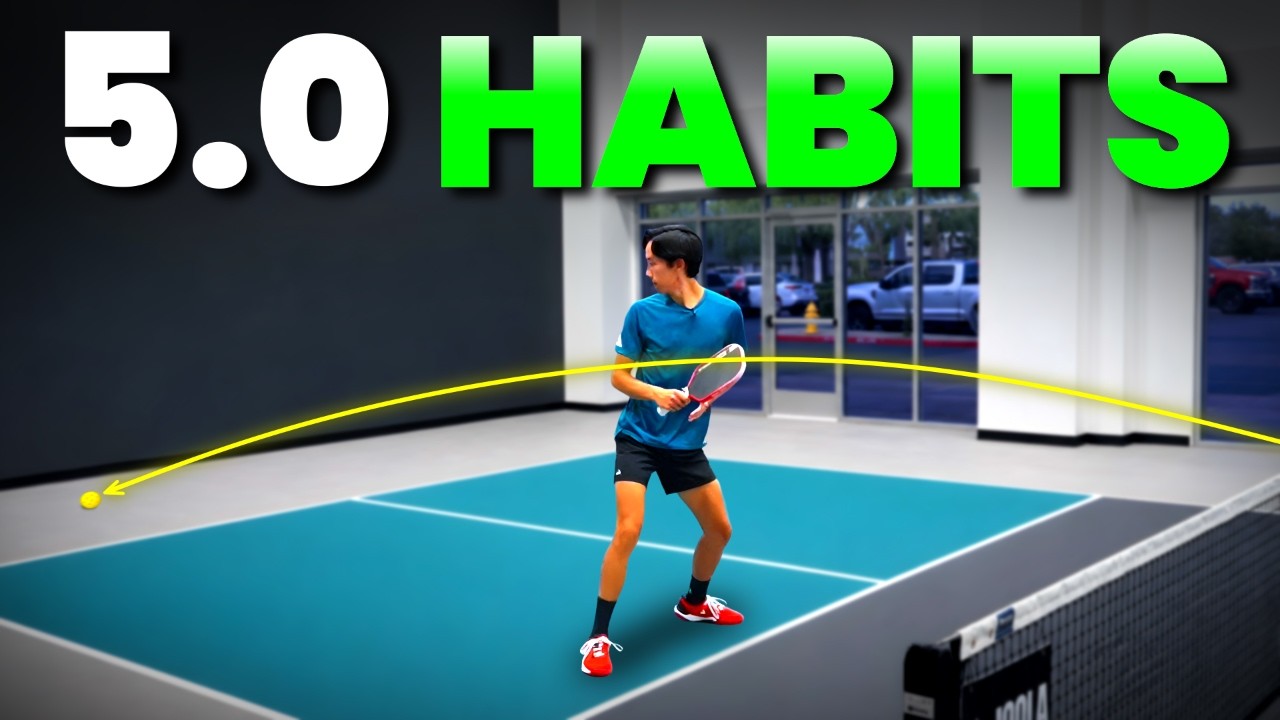
7 Habits of Every 5.0 Pickleball Player
Becoming a 5.0 pickleball player is less about hitting harder and more about playing smarter. These 7 habits will change the way you approach every single rally.
 The Dink PickleballThe Dink Media Team
Putting All Three Rules Together
These three rules are not random tips. They form a decision sequence you can run through every time you face a third shot.
- First, read the return. Is it lofty or tough? That tells you whether to drop cross court toward the middle or drive at the transitioning player.
- Second, scan the kitchen. Is anyone cheating toward center? If yes, that sideline drop is waiting for you.
Once you have that framework in your head, third shot placement stops being a guess and starts being a read.
You do not need perfect mechanics to benefit from this.Even a decent third shot aimed at the right spot will outperform a technically clean shot aimed at the wrong one.
This also changes how you think about the third shot drive as a strategic tool rather than just a power option.
The drive and the drop become two branches of the same decision tree, not separate shots you pick based on habit.
Master the Drive-Drop Combo in Pickleball
The drive-drop combo is the number one way to get to the kitchen line consistently in pickleball. Learn how to execute this high-percentage strategy that even world number one players rely on.
 The Dink PickleballThe Dink Media Team

Common Mistakes That Kill Your Third Shot Placement
Most players miss on third shot placement because they decide where to aim before they see the return.
They pick cross court or down the line before the ball even bounces, and then they are committed regardless of what the return actually does.
The other common mistake is ignoring the transitioning player entirely.
Players spend so much mental energy thinking about the kitchen line opponents that they forget one of those opponents just hit the ball and is now walking toward the net with their feet scrambling.
A well-timed drive at a moving target is one of the easiest free points in the game, and most rec players never use it.Shot selection mistakes like this compound over an entire match and cost you more points than you realize.
The third mistake is purely reactive positioning at the kitchen.
Watching the kitchen players long enough to see when someone cheats middle takes discipline. Build that habit one game at a time and it will become automatic.
For a deeper look at where exactly your drop needs to land once you have picked the right target, this breakdown of third shot drop aim points covers the specifics.And if you want to understand the full sequence from serve through kitchen arrival, kitchen arrival percentage is the stat that ties all of this together and reveals your real skill level.
💡
Heads up: hundreds of thousands of pickleballers read our free newsletter.
Subscribe herefor cutting edge strategy, insider news, pro analysis, the latest product innovations and more.
Frequently Asked Questions
Where should I aim my third shot drop in pickleball?
When you get a lofty return, aim cross court toward the middle because the net is lower there and you have more court to work with. The center strap sits about two inches lower than the posts, which reduces your error margin significantly. That cross court angle also gives you the longest possible landing zone on the court.
Should I drive or drop on the third shot?
Read the return first. If the return is high and slow, a drop cross court toward the middle is the higher percentage play. If the return is tough and fast, driving at the transitioning player is often the smarter option because they are mid-movement and difficult to hit through.
What does it mean to drive at the transitioning player?
After a player hits their return, they typically start moving toward the kitchen. During that movement they are not set, not balanced, and not in a strong defensive position. A drive aimed directly at their body or feet during that transition is much harder to handle than a drive aimed at a stationary, prepared opponent.
How do I know when to drop behind my opponent?
Watch the feet and shoulders of the kitchen player before you swing. If they are shading or stepping toward the middle of the court, they have opened up space behind them near the sideline. A well-placed drop into that vacated area is very difficult to retrieve in time.
Why does cross court third shot placement work better than down the line?
Cross court gives you two geometric advantages at once. The net is lower at the center, and the diagonal distance across the court is longer than the straight line, meaning more room for error on both height and depth. Down the line shots must clear a higher part of the net and have a shorter landing zone, making them lower percentage choices in most situations.
Anuncie Aqui / Advertise Here
Sua marca para o mundo Pickleball! / Your brand for the Pickleball world!




 English (US) ·
  Portuguese (BR) ·