
 English
  Spanish
  Portuguese
  German
  Italian
  Japanese
  French
  Polish
  Russian
  Netherlands
  Hungarian
  Turkish
  Videos
  Thedink Pickleball

Most 3.5 players lose points not at the kitchen line but on the walk up to it. This pickleball transition zone strategy uses three drop shots to get you there safely every time.
If the pickleball transition zone is where your points keep dying, you are not alone.
Most 3.5 players serve well, dink well, and then fall apart the moment they try to move forward from the baseline.
The ball finds their feet. They pop it up. The point is over before they ever reach the kitchen.This breakdown comes straight from Cliff Pickleball on YouTube, where the concept of using multiple drop shots to move safely through each zone of the court is laid out in a way that actually works for average players who are not sprinting around like they are 25.
Love pickleball? Then you'll love our free newsletter. We send the latest news, tips, and highlights for free each week.
Why the Transition Zone Destroys 3.5 Players
The transition zone is the stretch of court between your baseline and the non-volley zone.
It has a second name that tells you everything: no man's land.When you are caught there, your feet are exposed and the net is not protecting you.
Any ball hit at your feet forces a very difficult low contact shot while you are still moving.
Most players try to solve this by rushing. That works sometimes at 5.0. It does not work consistently at 3.5.The real fix is slowing the whole thing down and controlling the ball on your terms instead of reacting to whatever your opponent throws at you.
What Does a Drop Shot Actually Buy You?
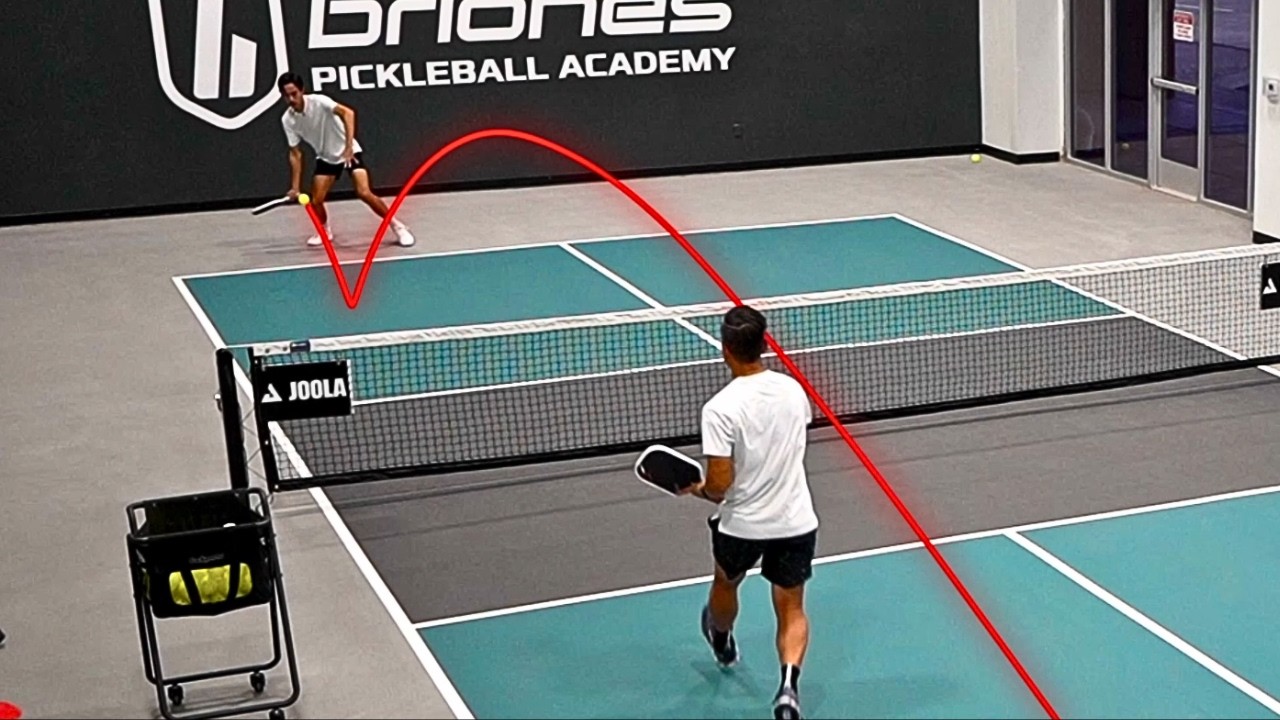
A well-placed drop shot into the kitchen forces your opponent to let the ball bounce.
That bounce creates time, and that time is what lets you take two or three steps forward without your feet being targeted by a drive.
Think of the drop shot as a pause button. Every time you hit one into the kitchen, you are buying yourself a window to advance.That is the core idea behind the three-drop transition.
Instead of covering the entire court in one burst, you break the court into three zones and earn your way through each one with a drop shot.
Check out this breakdown of why rushing the kitchen costs you points and what to do instead.
💡
Need some new pickleball gear? Get 20% off select paddles, shoes, and more with code THEDINK at
Midwest Racquet SportsHow Do You Break the Court Into Zones?
Picture the court split into three horizontal sections from baseline to net.
- Zone 1: The baseline area where you start after the serve or return
- Zone 2: The middle of the court, traditionally called no man's land
- Zone 3: The non-volley zone kitchen area where you want to end up
The goal is simple. Hit a drop shot, move forward into the next zone, hit another drop shot, move forward again, and repeat until you are safely at the kitchen line.
You do not need to cover all three zones in exactly three shots. The number three is a target, not a rule. If it takes you five drops or even ten, that is completely fine.
Master the Pickleball Transition Zone: Attack or Reset
The best players in the world aren’t just comfortable in the transition zone – they actively use it to their advantage
 The Dink PickleballThe Dink Media Team
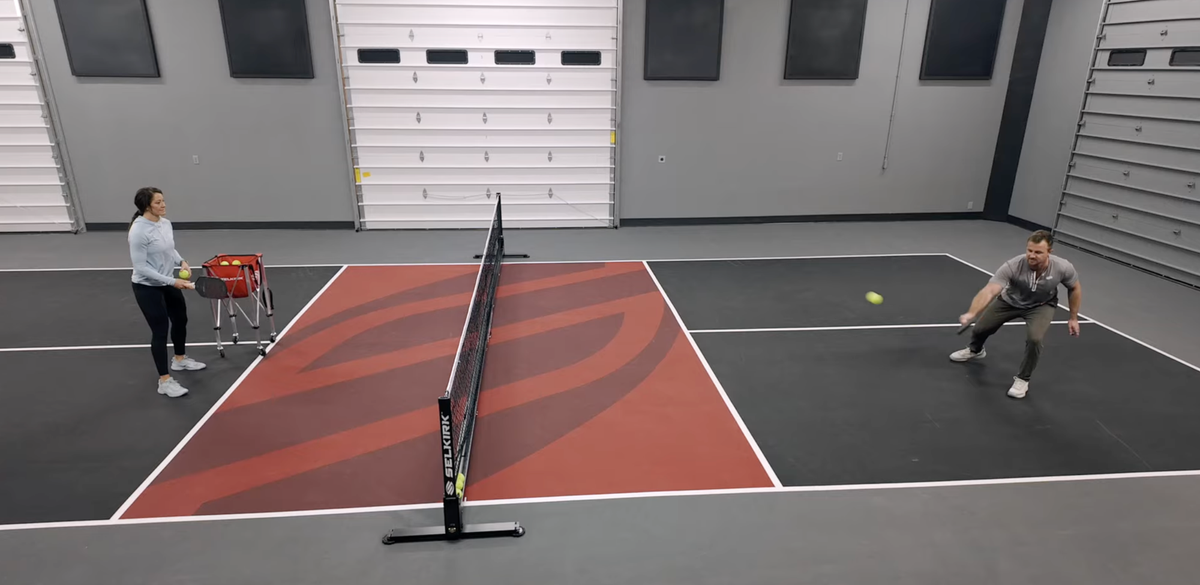
The Step-by-Step 3-Drop Transition
Here is the sequence as it actually plays out on the court.
- Drop Shot 1 from Zone 1: Hit your first drop from the baseline. Focus on getting it to land in the kitchen so the ball bounces. As you complete your swing and your paddle finishes, let that forward momentum carry your first step naturally toward Zone 2.
- Move to Zone 2 and pause: Take one or two steps forward and stop. Do not hit while your feet are moving. Pausing to hit is non-negotiable here.
- Drop Shot 2 from Zone 2: Hit your second drop from no man's land. Same goal, same finish. Let the paddle follow-through lead your next steps forward.
- Move to the edge of Zone 3: You are almost there. Take two more steps toward the kitchen line and pause again.
- Drop Shot 3 into the kitchen: Hit your final drop and arrive at the kitchen line ready to dink.
Once you reach the kitchen, the net becomes your protection.
Balls at your feet are no longer a threat because you are positioned to handle low balls at the non-volley zone.This connects directly to the three keys to mastering the transition zone that serious players use to eliminate errors in that middle stretch of court.
5 Drop Shot Techniques to Elevate Your Pickleball Game
The drop shot is one of pickleball’s most essential skills, yet it’s also one of the most misunderstood.
 The Dink PickleballThe Dink Media Team
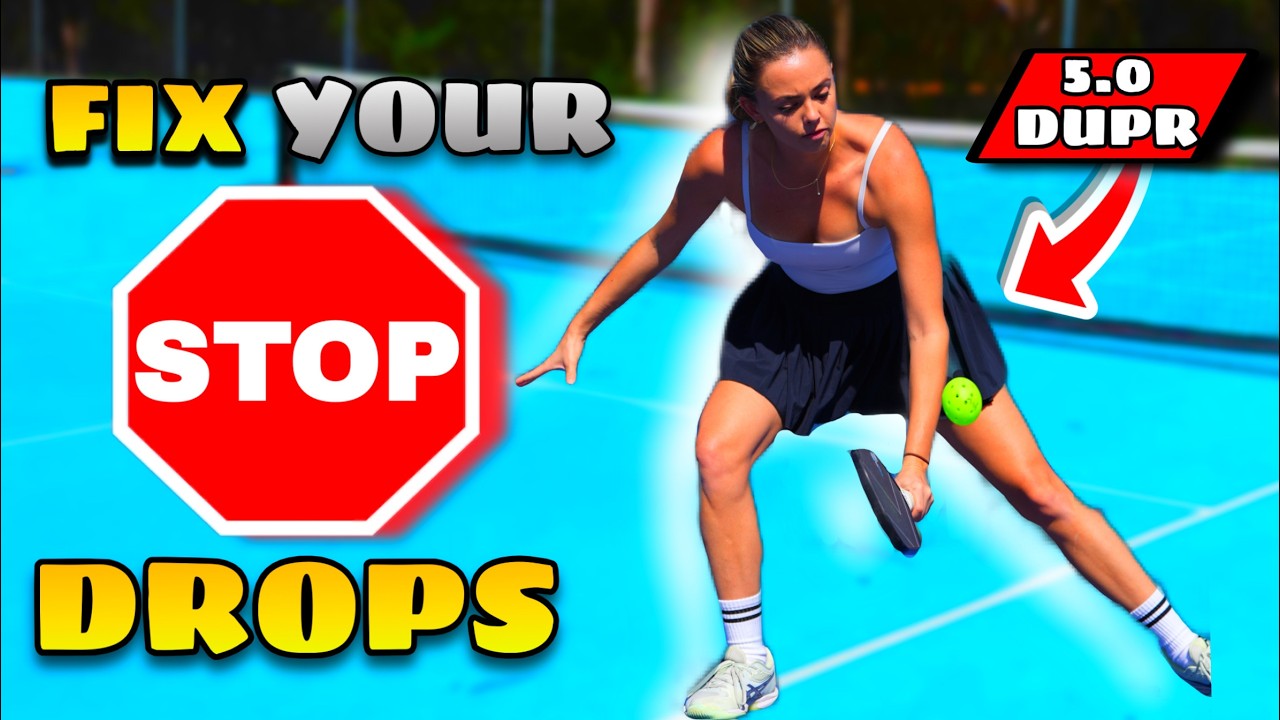
Why Do You Have to Pause Before Every Shot?
Hitting while moving is one of the most common mistakes in the transition zone.
When your feet are still shuffling as you contact the ball, you have almost no control over depth, direction, or softness.
The pause does not need to be long. A split step, a brief moment of stillness, and then you swing.That small habit is the difference between a drop that lands softly in the kitchen and one that floats up into an easy attack.
This is also why the drop shot follow-through matters so much.
A proper finish with your paddle pointing forward creates natural forward momentum. You are not wasting energy.
The shot itself drives your next step.
5 Common Drop Shot Mistakes in Pickleball
From not getting behind the ball to using too much arm, these are the mistakes most rec players make when hitting a drop shot in pickleball.
 The Dink PickleballThe Dink Media Team
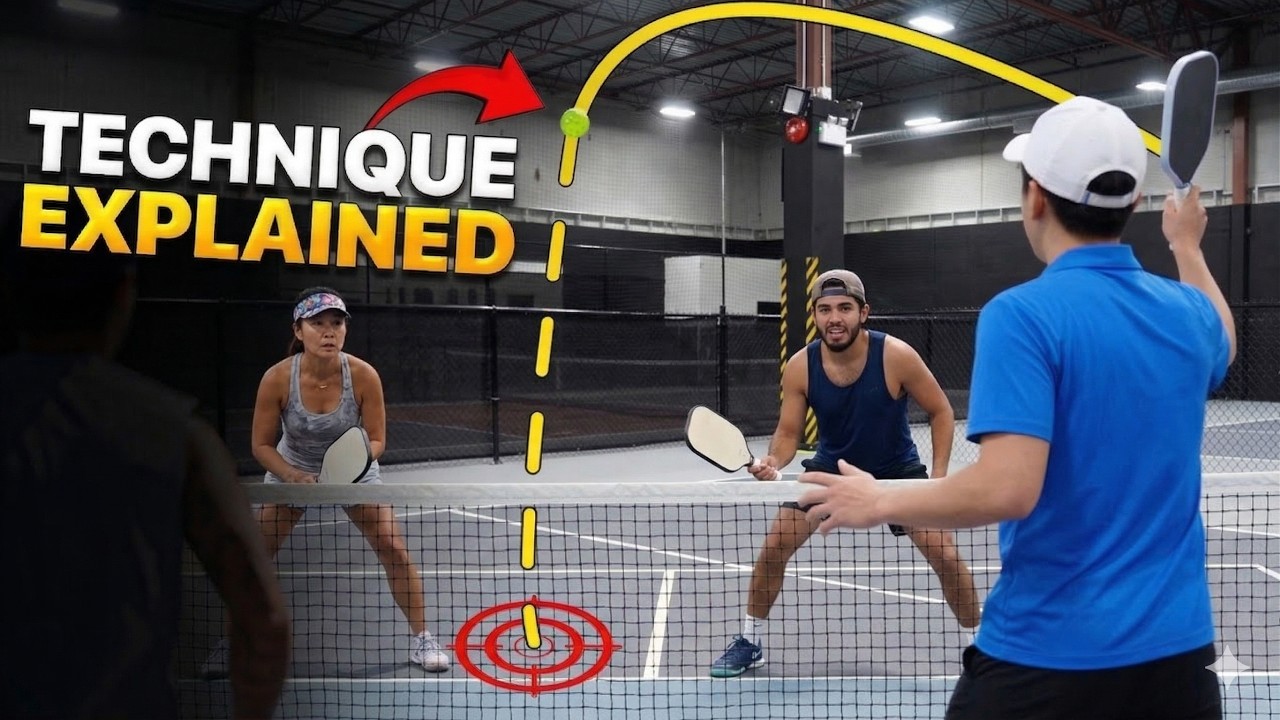
What If You Can't Make It in Three Shots?
You do not have to. This is where the strategy is more forgiving than most players realize.
If you have had a hip replacement, a knee replacement, or you are simply not feeling explosive that day, take four drops or five. The only rule is to keep the ball soft and keep it in front of you.Keeping the ball in front of you is the golden rule of moving through the pickleball transition zone.
Your opponent's entire goal is to pin you back near the baseline.
If the ball lands behind you or at your feet, you are in trouble. If it stays in the kitchen and bounces, you stay in control.
For players focused on winning points without relying on power, this fits naturally, because the whole approach is built around patience and placement.
The 3 Shots That Win 70% of Points in Pickleball
The counterattack cancels your opponent’s attacks. The deceptive speedup ends rallies in your favor. The strategic third shot gets you into the kitchen where you belong.
 The Dink PickleballThe Dink Media Team
Why You Should Stand Back From the Line
One positioning mistake trips up a lot of players before they even start transitioning. They stand right on top of their baseline with no room behind them.
When your opponent hits deep, you have nowhere to retreat.The ball is suddenly behind you or jammed into your body, and your only option is a forced, rushed shot.
Taking a step or two back from the baseline gives you the projection room to keep the ball in front of you.
You need enough space to read the incoming ball and let it come to you rather than reacting in a panic.This pairs directly with fixing your third shot drop so you are not chopping at the ball from a bad position from the very first shot of the transition.
7 Pickleball Positioning Mistakes Hurting Your Game
Most pickleball positioning mistakes have nothing to do with your strokes. Fix these 7 court positioning errors and you will win more points immediately.
 The Dink PickleballThe Dink Media Team
The Mental Side of the Transition
Staying calm through the transition zone is a skill on its own.
The moment you feel rushed, you start overswinging, lifting the ball, or abandoning the drop shot entirely and driving when you should not.
Remind yourself before every rally: soft ball, pause to hit, move forward one zone at a time.That internal cue keeps the brain from going into panic mode when the pressure builds.
It is also worth noting that your opponent will sometimes give you a ball that feels attackable while you are still in transition. Resist. Your feet are exposed.Any ball hit at speed toward your midsection or ankles while you are mid-court is a losing trade.
Understanding the power threshold rule helps you recognize exactly which balls deserve a soft reply versus which ones are genuinely attackable from a safe position.
Mental Warfare: What Elite 6.0 Pickleball Players Think During Every Dink
What separates good from great in pickleball is the split-second mental shift that happens the moment the ball leaves the paddle
 The Dink PickleballThe Dink Media Team
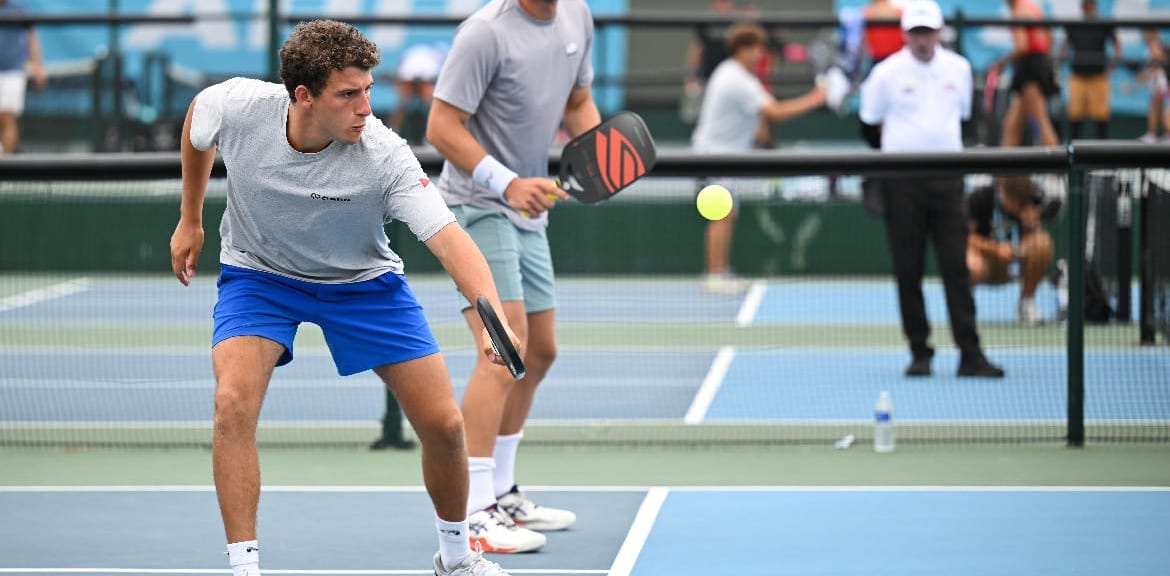
How Owning the Pickleball Transition Zone Changes Your Whole Game
Once you own the pickleball transition zone, your entire pickleball game shifts.
Points that used to end in no man's land now end at the kitchen line where you have real options.
The third shot drop accuracy drill will sharpen the first drop in this sequence faster than almost anything else you can work on.Combine that with solid dinking mechanics once you arrive, and you have a complete system from baseline to non-volley zone.
Add lateral movement footwork so your steps between zones stay quick and balanced instead of lunging.Players making the jump from 3.5 to 4.0 consistently report that the transition zone was the wall they finally had to break through.
The four fixes that move you from 3.5 to 4.0 overlap heavily with everything covered here.
If you have been grinding in open play and losing those mid-rally points, the answer is almost always the pickleball transition zone.
Use the three-zone framework. Drop the ball. Pause to hit. Arrive at the kitchen calm and in control.
💡
Heads up: hundreds of thousands of pickleballers read our free newsletter.
Subscribe herefor cutting edge strategy, insider news, pro analysis, the latest product innovations and more.
Frequently Asked Questions
What is the pickleball transition zone and why is it so difficult?
The pickleball transition zone is the stretch of court between the baseline and the non-volley zone, commonly called no man's land. It is difficult because your feet are exposed to balls hit low and fast, and you are usually moving while trying to make contact. Without a plan to control the ball during movement, errors multiply quickly in that zone.
How many drop shots do I need to get from the baseline to the kitchen?
Three is the target, but there is no rule saying it has to be exactly three. If your mobility is limited or the ball is being hit deep, take four, five, or however many you need to arrive at the kitchen safely. The goal is always to keep the ball soft and in front of you, not to hit a specific number of shots.
Why should I pause before hitting during the transition?
Hitting while your feet are moving destroys your control over depth and direction. A brief pause before contact gives you a stable base so the drop lands softly in the kitchen rather than floating up for an easy attack. Even a split-second of stillness makes a measurable difference in shot quality.
What is the biggest mistake players make when transitioning forward?
Rushing is the number one mistake. Players try to cover the entire court in one sprint and end up hitting on the run with no balance. Slowing down, taking one zone at a time, and pausing to hit eliminates the frantic energy that causes errors in the transition zone.
Should I ever drive the ball instead of dropping when I am in the transition zone?
Not while your feet are exposed in no man's land. Until you reach the safety of the kitchen line, the net is not protecting your feet, so any drive invites a ball right back at your ankles. Once you are settled at the kitchen, your options open up considerably.
Anuncie Aqui / Advertise Here
Sua marca para o mundo Pickleball! / Your brand for the Pickleball world!






 English (US) ·
  Portuguese (BR) ·