
 English
  Spanish
  Portuguese
  German
  Italian
  Japanese
  French
  Polish
  Russian
  Netherlands
  Hungarian
  Turkish
  Videos
  Thedink Pickleball

Not every pickleball overhead should be hit the same way. Learn the three overhead types that match your court position and keep your opponents guessing.
Most players treat every pickleball overhead the same way: wind up and hammer it.
That works sometimes, but it leaves a lot of points on the table and causes a lot of errors when your position is less than perfect.The smarter play is matching your overhead to where you are on the court. Three specific overhead variations cover nearly every situation you'll face in a match.
This breakdown comes from tanner.pickleball on YouTube, who laid out these three shots in a clean, practical tip that is worth expanding on in detail.
Love pickleball? Then you'll love our free newsletter. We send the latest news, tips, and highlights for free each week.
Why Your Overhead Isn't Working
Here's the honest truth: most players miss overheads because they try to hit one shot from every position on the court.
They set up at the kitchen line and try to slice. They're caught deep and try to smash angled winners.Neither shot works well out of position.
The pickleball overhead shot is not one-size-fits-all. Your court position, your timing, and the trajectory of the lob all change what the right shot actually is.
When you treat overheads as a category with distinct options, you make fewer errors, create more pressure, and stop giving opponents free points on lobs that should be easy putaways.
Shot 1: The Angled Overhead at the Kitchen Line
When you're set at the kitchen line, the angled overhead is your go-to weapon. This is the shot that ends rallies.
You have time, you have position, and the ball is sitting up where you can do real damage.
The goal is to direct the ball sharply to one side of the court, pulling your opponent wide and off balance.Think about hitting toward the sideline opposite where your opponent is standing.
What Separates the Angled Overhead From a Basic Smash
- Contact point is slightly in front of your body, not directly above your head
- You're redirecting the ball at an angle rather than hitting it straight back
- Wrist snap at contact drives the sharp angle and adds pace
- Target the sideline or the opponent's hip, not just the open court generally
Players comfortable at the kitchen line often skip this in favor of a straight-ahead blast. That's a missed opportunity, because angles beat raw power on almost every putaway.
A sharp angle from the kitchen line is nearly impossible to retrieve.
If you want to understand how shot selection changes based on position and height, this piece on pickleball shot selection using three height targets is worth reading alongside this.
💡
Need some new pickleball gear? Get 20% off select paddles, shoes, and more with code THEDINK at
Midwest Racquet SportsWhat Does the Slice Overhead Actually Do?
The slice overhead is the most underused shot in recreational pickleball. It is also the most valuable when you're caught deep in the court.
When a lob pushes you back past the transition zone, you have two problems: you don't have enough time to set up a full swing, and a hard smash from deep tends to sit up and come back as a drive.The slice solves both problems.
A slice overhead uses a brushing motion across the ball rather than through it. This does a few things at once:
- It keeps the ball lower and faster through the court
- It adds sidespin that makes the bounce unpredictable
- It allows you to make solid contact even when you're off-balance or still moving
- It buys you time to recover position while still creating pressure
Think of it like a slice return of serve but from above your head. The mechanics are similar: paddle moving across the ball, not through it.
The common mistake players make when they're deep is trying to go for the same big angled smash they hit from the kitchen.
That shot from deep usually floats, lands short, and becomes a setup for your opponent. The slice removes that risk entirely.Being deep in the court also means you need to think about your recovery.
Mastering the transition zone is directly connected to how well you handle lobs, because your path back to the kitchen starts the moment you make contact on that overhead.
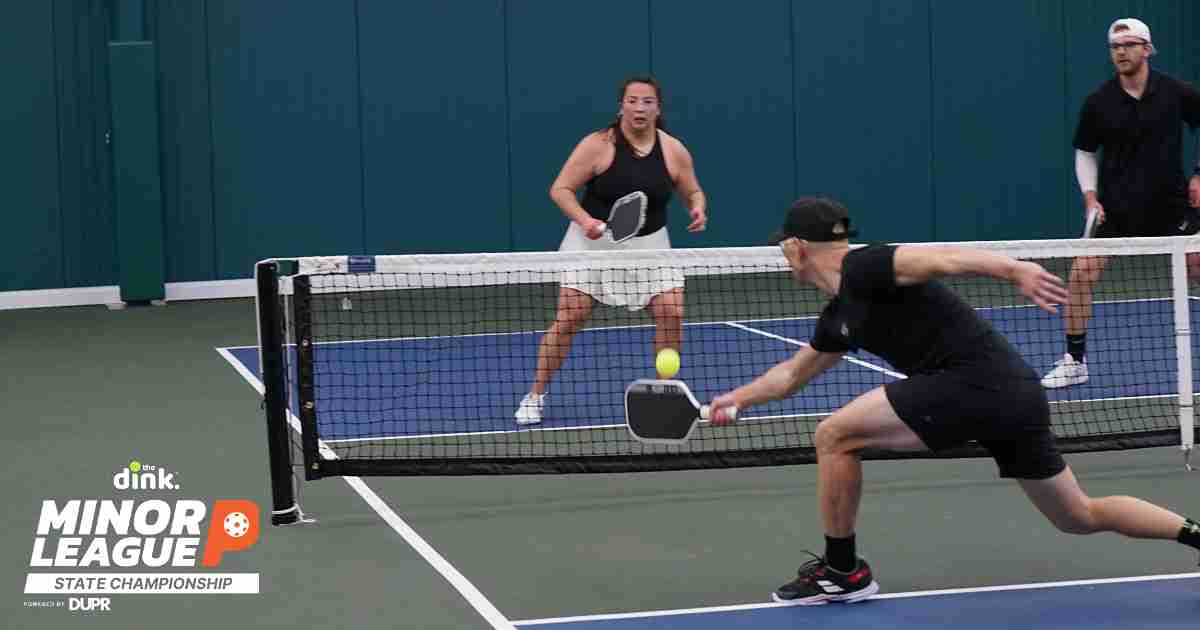
How to Hit a Slice in Pickleball Without Losing Control
Learning how to hit a slice in pickleball starts with grip, paddle angle, and swing path, not raw arm speed. This guide breaks down the mechanics, the drills, and the exact moments a slice wins you the point.
 The Dink PickleballThe Dink Media Team
Is the Hook Overhead Legal?
Yes. The hook overhead is completely legal under the official USA Pickleball rules, and it's the shot most players have never been taught.
It is specifically designed for when you are late to the ball. Being late means the ball has dropped lower than you want, often to shoulder height or below.A traditional overhead swing at that height is awkward and usually produces a pop-up.
The hook gives you a way to still generate a sharp, downward pickleball overhead shot.
The Hook Overhead Mechanics
Instead of a straight overhead motion, you loop your paddle around the outside of the ball with a curved, hooking swing.
The ball comes off at an angle that dips toward the sideline corner.
The key reason to use it when you're late: it prevents the ball from bouncing first. Once a lob bounces deep, you've lost control of the rally.The hook lets you intercept it before it bounces and keep the point moving in your favor.
Players who avoid this shot when they're late either let the ball bounce and hit a weak drive, or sky a standard overhead out of bounds.
Neither outcome is good.
If your timing is consistently off, check whether a bigger overswing problem is affecting your contact point across the board.
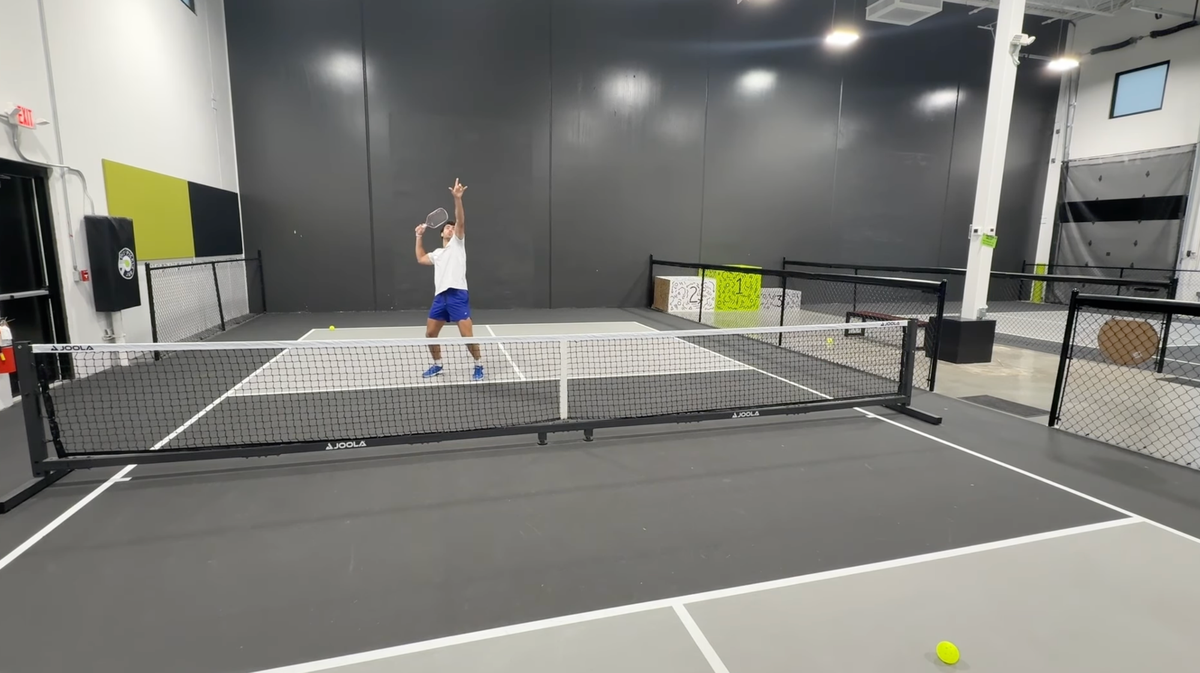
The Key to a Killer Overhead: Angles, Not Power
Too many players focus on hitting harder instead of hitting smarter. The overhead isn’t just about power; it’s about placement, timing, and court geometry.
 The Dink PickleballThe Dink Media Team
How Do You Know Which Overhead to Hit?
The decision tree is simpler than it sounds. Your position on the court tells you almost everything you need to know.
- Set at the kitchen line, ball sitting up: angled overhead, go for the winner
- Caught deep or still moving backward: slice overhead, add variety and recover
- Late to the ball, can't let it bounce: hook overhead, keep the point alive
The other variable is timing. If you have time to set your feet and get your body fully positioned, you can almost always go with the angled smash regardless of position.
It's the situations where timing gets taken away from you that require the slice or the hook.Good footwork separates players who always have time from players who are always scrambling.
The ones who hit clean overheads in every situation aren't more athletic. They're moving to the ball earlier.
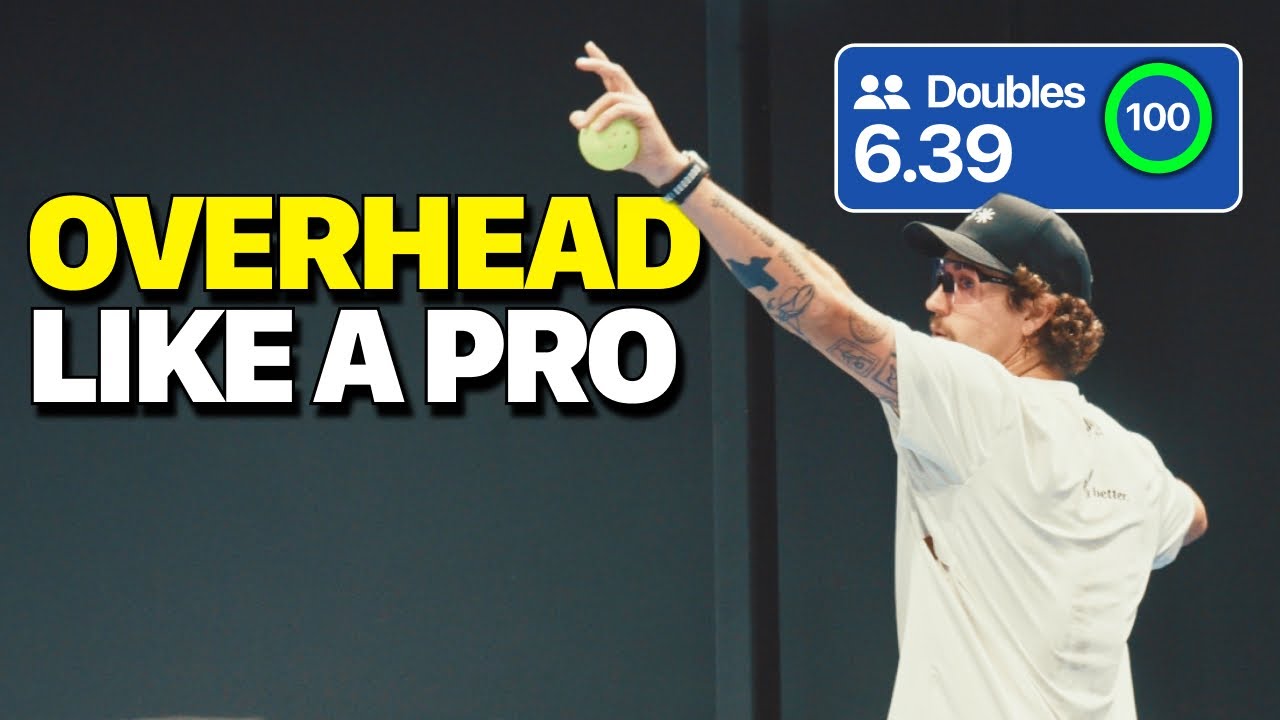
Use This 3-Part Motion to Master Overhead Smashes in Pickleball
Separate your elbow and load up on your shoulder; reach toward the ball; follow through all the way toward the ground. But before all that: footwork.
 The Dink PickleballThe Dink Media Team
Drilling Your Pickleball Overhead Shot the Right Way
You cannot learn the hook overhead in a live game and expect it to work. These shots need to be drilled before they show up under pressure.
Have a partner feed lobs from different positions while you start from a specific court location.
Start at the kitchen for angled smash reps, then have your partner move you back with a deeper lob so you practice transitioning into the slice.Then drill late arrivals specifically for the hook.
For a structured plan that covers overhead work alongside other court skills, check out the 12 drills you need to play your best pickleball.
It'll help you prioritize where overhead practice fits into your routine.
Most players also benefit from slowing down their mechanics before speeding them up.
Deliberate contact practice at half speed builds the muscle memory that holds up at full speed.
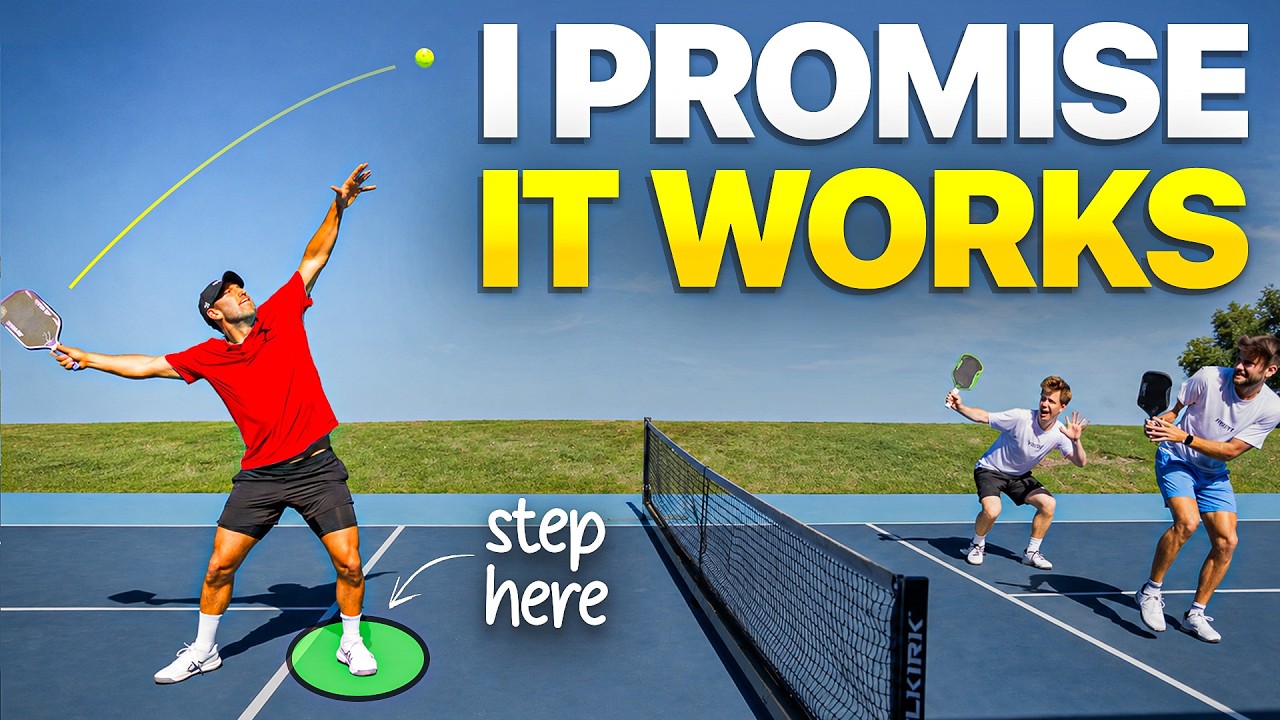
3 Pickleball Overhead Shots That Turn Lobs Into Easy Points
The pickleball overhead does not have to be a scramble. Learn the three-shot system that handles any lob safely and turns it into offense.
 The Dink PickleballThe Dink Media Team
The Pickleball Overhead Shot Mistake That Kills Your Putaways
One error shows up constantly in rec play: trying to hit the same maximum-power shot from every position.It creates inconsistency because the mechanics of a full smash change depending on where you are on the court.
Variety creates a different kind of pressure than pure power. When opponents know you only have one overhead, they can position for it.
When you mix angled smashes with slices and occasional hooks, they have to guess. Unpredictability is a weapon.It's also worth understanding how opponents defend the overhead smash, because knowing their defensive habits helps you aim better.
The same applies to defending lobs yourself when the roles reverse.
Your pickleball overhead shot is one of the few shots where you have a genuine chance to end the rally outright.
Learn all three versions, match the shot to your situation, and you'll put away lobs with consistency that actually holds up in games.
💡
Heads up: hundreds of thousands of pickleballers read our free newsletter.
Subscribe herefor cutting edge strategy, insider news, pro analysis, the latest product innovations and more.
Frequently Asked Questions
What is the best pickleball overhead shot for beginners?
The angled overhead from the kitchen line is the best starting point because it gives you the most time and the clearest target. Focus on hitting it with a wrist snap toward the sideline rather than just swinging straight down. Once that feels reliable, add the slice for when you're pushed back.
When should I use a slice overhead in pickleball?
Use the slice overhead when you're deep in the court and don't have a clean setup for a full smash. It keeps the ball low and adds spin that makes the bounce tricky for your opponent. It also lets you make solid contact even when you're still moving backward.
What is the hook overhead in pickleball?
The hook overhead is a curved, looping swing used when you're late to the ball and can't reach it with a standard motion. You brush around the outside of the ball to generate a sharp angle, which prevents it from bouncing and keeps the rally under your control. It is not commonly taught but is completely legal.
Why do my overheads keep going long in pickleball?
Overheads usually go long when you make contact too far behind your body or swing too flat without any downward angle. Try moving your contact point slightly forward and snapping your wrist through the ball. Overswinging is also a major culprit, so focus on controlled acceleration rather than raw power.
How do I stop letting lobs bounce before I hit an overhead?
The hook overhead is specifically designed to solve this problem by letting you make contact on a ball that has dropped below ideal overhead height. Better footwork also helps: moving to the ball earlier means you arrive with more time and fewer awkward adjustments. Practice reading lobs off your opponent's paddle earlier so your feet start moving before the ball peaks.
Anuncie Aqui / Advertise Here
Sua marca para o mundo Pickleball! / Your brand for the Pickleball world!




 English (US) ·
  Portuguese (BR) ·