
 English
  Spanish
  Portuguese
  German
  Italian
  Japanese
  French
  Polish
  Russian
  Netherlands
  Hungarian
  Turkish
  Videos
  Thedink Pickleball

Lea Jansen has cycled through four different pickleball paddles, and each switch had a specific reason behind it. Here's what she learned from each one and how it applies to your game.
Most players pick a paddle and stick with it until something breaks or a friend loans them something new.
But the players who actually improve treat paddle selection like a technical decision, not a shopping habit.
Lea Jansen is one of the clearest examples of a pro who has been deliberate about every switch she's made.She didn't change paddles because a sponsor told her to. She changed because her game evolved and she needed tools that matched where she was going.
This breakdown covers every paddle Lea has used, why she made each switch, and what the logic behind her choices can teach you about your own setup.
The insights come straight from JOOLA Pickleball on YouTube, where Lea walks through her full paddle history in her own words.
Love pickleball? Then you'll love our free newsletter. We send the latest news, tips, and highlights for free each week.
Why Paddle Shape Actually Matters
Most recreational players think about weight and grip size, and that's about it. Shape is an afterthought. That's a mistake.
Pickleball paddle shape determines where your hitting zone lives, how much reach you have, how the ball responds on off-center contact, and how much spin you can generate with a given swing.Lea Jansen's entire paddle story is really a story about shape, not brand loyalty.
She joined JOOLA in January 2023, but the reason had nothing to do with a contract.
It had everything to do with what she felt the first time she hit with a friend's paddle.
That tells you she was paying attention to feedback, not marketing.Paddle 1: The Scorpius (The One That Fixed Her Defense)
The JOOLA Scorpius is a wide-body shape, sometimes called a "frying pan" because of how broad the face is.
Lea's first reaction was skepticism. Then she hit with it and barely missed a ball.That's not a coincidence. The wide shape creates a larger hitting zone across the entire face, which means off-center contact still produces controlled results.
For someone working on their defensive game, that's a huge deal.
Here's what the Scorpius specifically did for Lea's game:
- Improved her third shot drops by giving her more margin on mishits
- Made her mid-court resets more consistent because even reaching balls stayed in the rally
- Added spin she wasn't expecting, which changed how she thought about shot shape
- Built confidence from the back court, an area she admitted was a weakness
The key insight here is forgiveness. When you're out of position or reaching for a ball, you rarely hit it square on the face.
A wide-body paddle gives you a buffer. If your resets keep breaking down, shape might be part of the problem you haven't considered.
She also noted you can wind up and counter hard with the Scorpius. The wide body doesn't just help defensively. It produces real pop when you want it.
💡
Need some new pickleball gear? Get 20% off select paddles, shoes, and more with code THEDINK at
Midwest Racquet SportsDoes Paddle Shape Help More Than Technique?
No. But shape can make technique easier to execute. That's the honest answer.
If you're technically sound but losing balls on mishits, a more forgiving shape removes a variable. If your mechanics are broken, no paddle fixes that.
Third shot placement still requires intention. The paddle just gives you more room to work with.Lea never says the Scorpius made her good. She says it helped her evolve. That's an important distinction for any player evaluating gear.
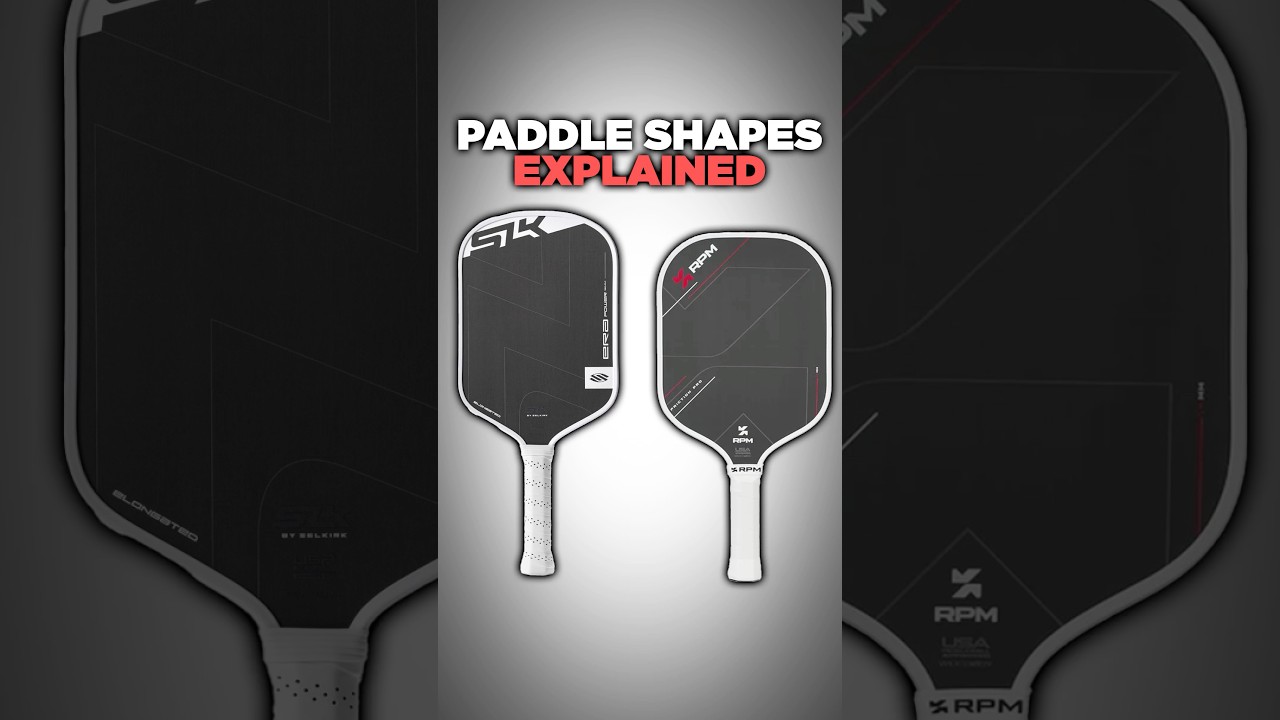
Pickleball Paddle Shapes Explained: Widebody vs. Hybrid vs. Elongated
Pickleball paddles come in three main shapes, and picking the right one can make a real difference in how you play.
 The Dink PickleballThe Dink Media Team
Paddle 2: The Perseus (The Singles Upgrade)
When Lea started investing more in singles play, she moved to the JOOLA Perseus.
The Perseus is an elongated shape, giving her an extra half inch of length compared to the Scorpius.That half inch sounds small. It isn't.
Here's what that extra length actually changed for her:
- More reach on stretch volleys at the kitchen line
- More whip on drives, letting her wrap around the ball longer
- A slight power bump over the Scorpius without losing the drop game she'd built
- Better fit for her playing style of holding the line and flicking
If you play a lot of singles or like to hold the line and attack, reach matters more than you think.
A proper flick becomes more effective when you have the length to generate whip at the end of your swing.
The Perseus gave her a better blend of control and power than the Scorpius, leaning slightly more toward the offensive side while still maintaining what she'd built defensively.
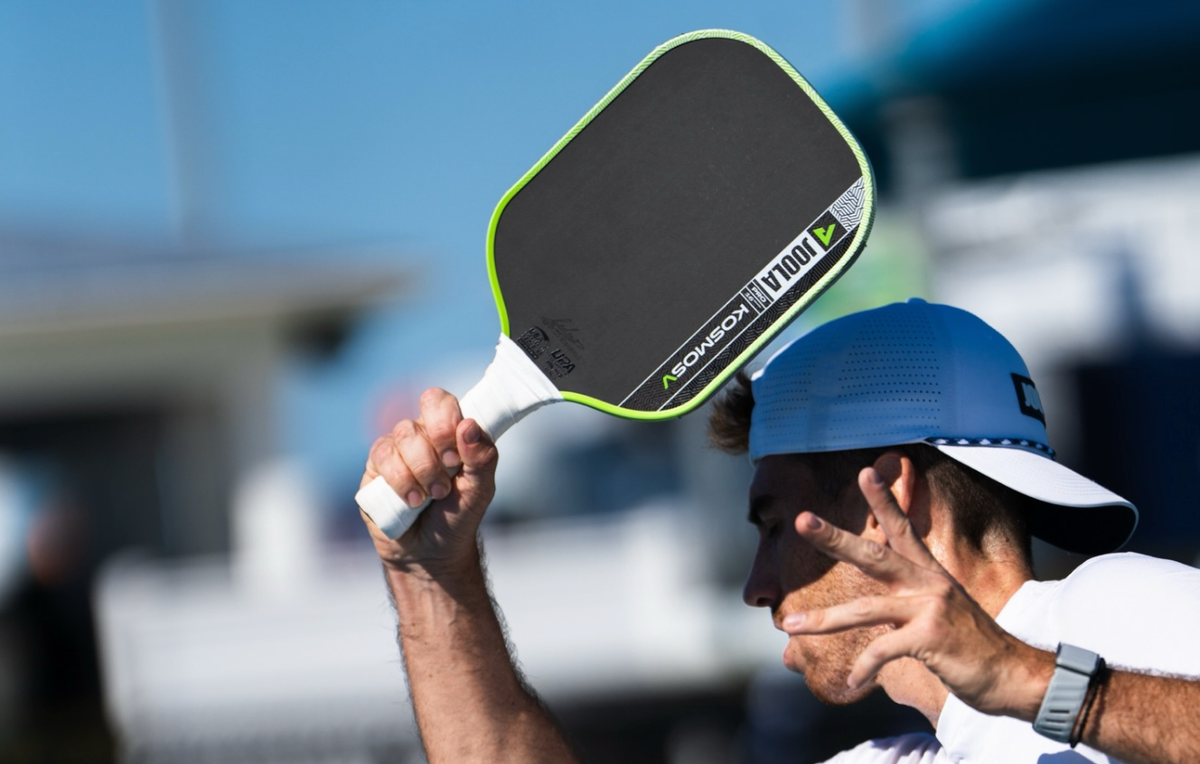
First Look: JOOLA Is Releasing a Hybrid Shape Pickleball Paddle — Meet ‘Kosmos’
The paddle is part of next month’s Pro V launch and fuses two popular shapes – the Perseus and Scorpius – into a new form that will serve as the signature shape for both Federico Staksrud and Tyson McGuffin
 The Dink PickleballAlex E. Weaver
Paddle 3: The Agassi (Built for Where Singles Is Going)
Lea's move to the JOOLA Agassi was driven by something bigger than personal preference. It was driven by how the game itself is changing.
Singles pickleball is starting to look a lot like tennis. The ball changes have made the game faster and more spin-dependent.
Players who can generate heavy topspin on drops and drives are winning points they used to lose.Lea saw that shift and picked a paddle built for it.
The Agassi has a rounded top, more length than the Scorpius, and a flexible feel that replicates a tennis racket's response.
Lea specifically mentions that the rounded top helps her snap around the ball and generate more spin, though she admits she can't fully explain the physics behind it.
She just knows it works for her swing.
What changed with the Agassi compared to the Perseus:
The hitting zone sits higher on the paddle face, which matches how singles players contact the ball. More reach. More spin.And she didn't give up power to get those things.
If you're serious about singles, spin on your drives is becoming non-negotiable. A paddle that helps you snap around the ball is worth evaluating seriously.
Pickleball Singles Strategies Beginners Can Actually Use
The right pickleball singles strategy beginners can rely on starts with better court coverage, not a bigger swing. This guide breaks down the serve, return, and shot selection habits that actually hold up once the rallies get long.
 The Dink PickleballThe Dink Media Team
What Does "Hitting Zone" Actually Mean?
If you're newer to paddle specs, the hitting zone refers to the area of the paddle face where contact produces the best combination of power, control, and spin.
Hit in that zone and the ball does what you want. Hit outside it and results become unpredictable.
Different shapes position the hitting zone in different places. Wide-body paddles like the Scorpius spread that zone across a wider area.
Elongated paddles like the Perseus and Agassi push the zone higher and give more reach.
Knowing where your paddle's sweet spot lives changes how you set up for shots.Lab-tested paddle data can help you identify this before you buy. Don't just rely on how a paddle looks in your hand.
Pickleball Transition Zone: 3 Keys to Master It
The pickleball transition zone kills more rallies than any other part of the court. This 3-zone system tells you exactly where to stand, what shots to hit, and how to stop guessing.
 The Dink PickleballThe Dink Media Team
Paddle 4: The Hyperion (The Best of Both Worlds)
Lea's current paddle, the JOOLA Hyperion, is where her thinking lands right now. She describes it as the middle ground between the Perseus and the Agassi.
It has the curved top of the Agassi, which helps her generate spin from the back court. It performs in doubles. It holds up in singles.
It's the paddle she reaches for when she doesn't want to compromise either game.Specifically, she finds:
- A little less raw power than the Agassi
- More power than the Perseus
- Significantly more spin than either predecessor
- Strong performance from the back court, which matters most in singles rallies
The Hyperion is her answer to a real problem that advanced players face: you often need one paddle that works in both formats.
As your game grows, the gap between your doubles and singles needs shrinks, and a versatile paddle helps close it faster.
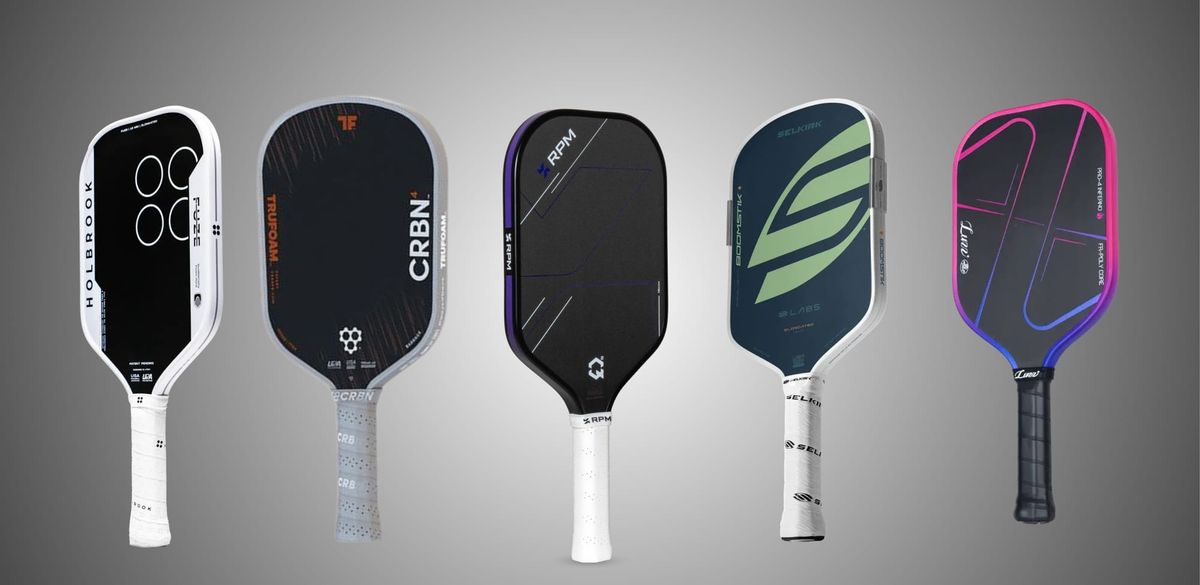
Full-Foam Pickleball Paddles: Options for Max Power
Foam-core pickleball paddles offer the sweet-spot of performance and durability. Here are five that tip the scales toward maximum power.
 The Dink PickleballAlex E. Weaver
What Should You Take From Lea's Paddle Choices?
The biggest lesson isn't about which JOOLA paddle to buy. It's about why to change paddles at all.
Lea made every switch based on a specific gap in her game. The Scorpius fixed her defense. The Perseus gave her singles reach.
The Agassi matched the spin demands of a changing game. The Hyperion balanced everything she'd learned.Each choice was tied to a real, identifiable problem. That's the standard you should hold yourself to.
Shot selection and paddle selection share the same logic: be intentional, and know what you're trying to solve.
If your drops are inconsistent, look at your paddle's hitting zone and width. Drop mechanics and paddle shape work together.
If your singles game feels limited, check your reach and whether your swing can generate the spin the modern game demands.
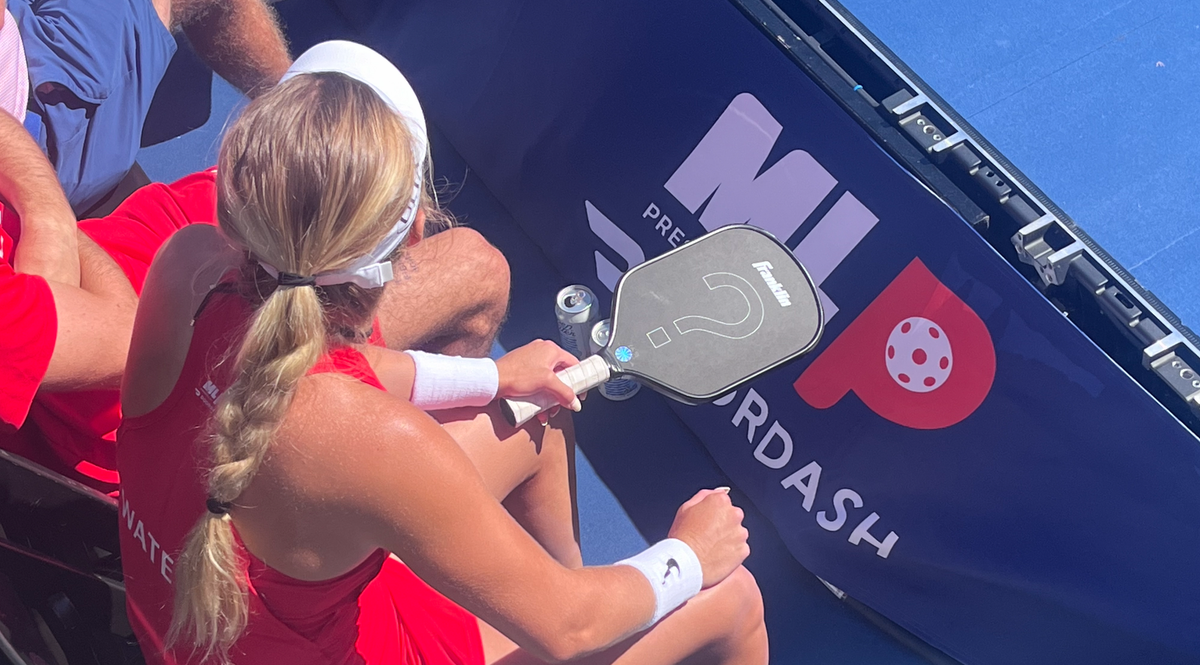
What We Know About Anna Leigh Waters’ Mysterious New Paddle
Spoiler alert: Not a whole lot. At least not yet.
 The Dink PickleballAlex E. Weaver
One more thing Lea never says: she never says she needed an expensive paddle to compete.
She says she needed the right shape for her game at that time. That's a different conversation entirely.
Also worth noting: Lea's practice approach is just as deliberate as her gear choices. The paddle matters, but the work you put in matters more.
If you're playing more singles and want to understand how spin is reshaping the format, the relationship between tennis design and pickleball paddle engineering is worth understanding.
The Agassi isn't an accident. It's a response to where competitive singles is heading.
And if you're still on a wide-body paddle because of forgiveness, don't rush to change.Resets and defensive control are real skills that wide shapes genuinely support.
Lea used the Scorpius for a reason, and it wasn't just because she was new to JOOLA.
Figure out what your game is missing. Then find the shape that closes that gap. That's the Lea Jansen approach, and it works.
💡
Heads up: hundreds of thousands of pickleballers read our free newsletter.
Subscribe herefor cutting edge strategy, insider news, pro analysis, the latest product innovations and more.
Frequently Asked Questions
What pickleball paddle does Lea Jansen currently use?
Lea Jansen currently uses the JOOLA Hyperion, which she describes as a blend between the Perseus and the Agassi. She likes it because it works for both doubles and singles without forcing her to sacrifice spin or control. It produces more spin than the Perseus while giving up a small amount of the raw power she found in the Agassi.
Why did Lea Jansen switch from the Scorpius to the Perseus?
She switched because singles play demands more reach, and the Perseus gave her an extra half inch of length. That added length improved her stretch volleys and gave her more whip on drives. The Perseus also leaned slightly more toward power without sacrificing the defensive feel she'd built with the Scorpius.
Is a wide-body pickleball paddle better for beginners?
A wide-body paddle is better for players who need forgiveness on off-center contact, which includes many beginners but also advanced players working on their defensive game. The larger hitting zone means mishits are less punishing, which helps with drops and resets. It is not automatically worse at higher levels, as Lea used the Scorpius as an established pro and credited it with improving her back-court play.
What is the difference between an elongated and wide-body pickleball paddle?
A wide-body paddle has a broader face that spreads the hitting zone across a larger surface area, which increases forgiveness. An elongated paddle is narrower and longer, pushing the hitting zone higher and giving the player more reach and potential for spin generation. Which is better depends on your playing style, whether you prioritize defensive stability or offensive reach and spin.
How do you know when to change your pickleball paddle?
Change your paddle when you can identify a specific gap it isn't filling, not just because something newer is available. If your drops feel inconsistent on reaching balls, a wider shape might help. If your singles game feels limited by reach or spin, an elongated or rounded-top shape could be the right move.
Anuncie Aqui / Advertise Here
Sua marca para o mundo Pickleball! / Your brand for the Pickleball world!




 English (US) ·
  Portuguese (BR) ·