
 English
  Spanish
  Portuguese
  German
  Italian
  Japanese
  French
  Polish
  Russian
  Netherlands
  Hungarian
  Turkish
  Videos
  Thedink Pickleball

Every shot your opponent hits puts you in a different situation – now you have five different answers to survive to fight another point
If you're stuck using the same dink over and over, you're leaving points on the table.
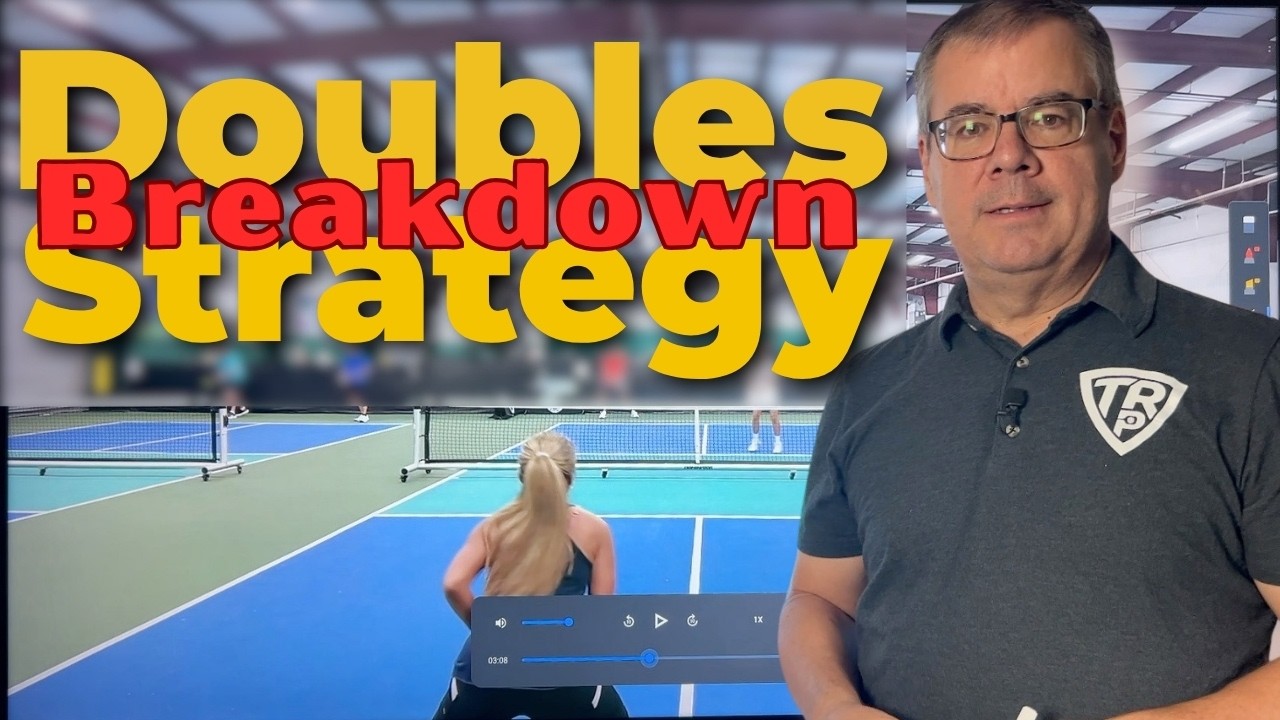
There's a better way: John Cincola has the five essential dink styles that will transform how you handle pressure at the kitchen line and help you dominate modern pickleball rather than just survive it.
Love pickleball? Then you'll love our free newsletter. We send the latest news, tips, and highlights for free each week.
Why One Dink Isn't Enough Anymore
The kitchen line has evolved. What worked five years ago won't cut it today because opponents are more aggressive, more mobile, and more creative with their shot placement.
Most players learn one dink style early on and try to force it into every situation. That's a losing strategy. You need different tools for different moments, and that's exactly what Cincola teaches in this breakdown.
The Simple Drill to get Lightning-Fast Hands in Pickleball
You’re not just getting quicker hands. You’re getting smarter hands. And in pickleball, that’s the real difference.
 The Dink PickleballThe Dink Media Team
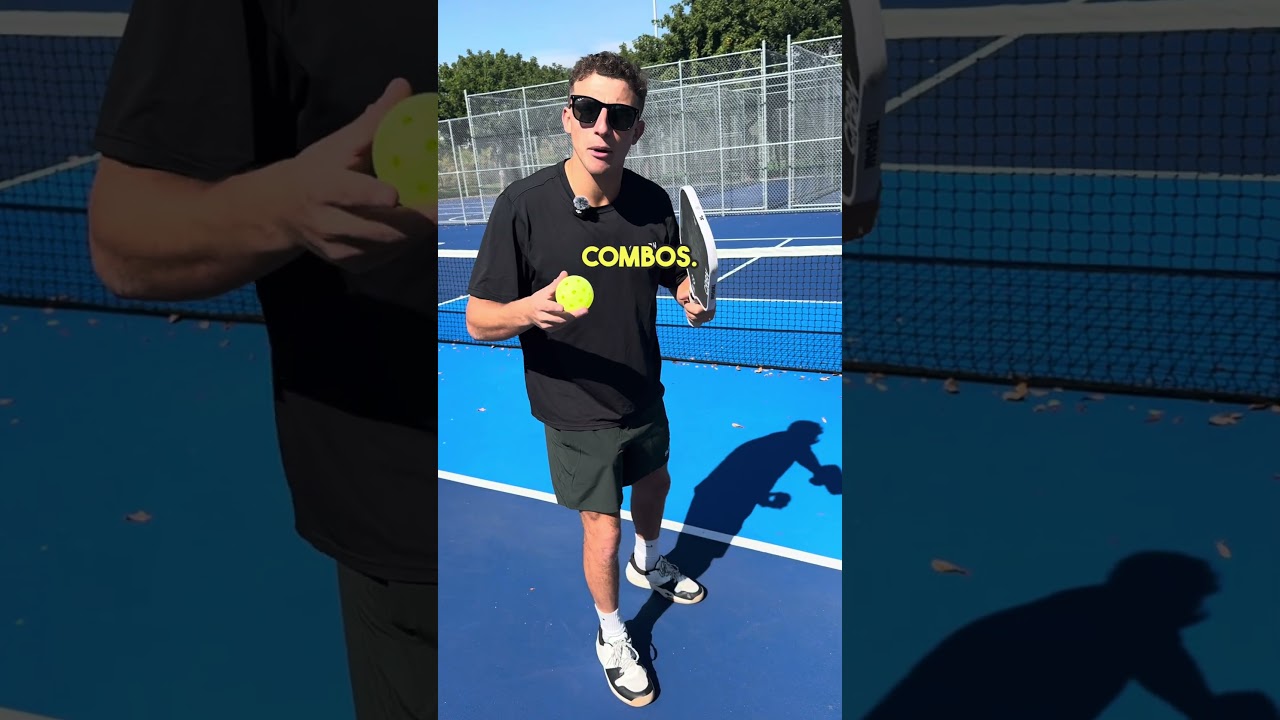
1. The Top Spin Push Dink: Your Offensive Foundation
This is your go-to when you can get your feet set and position yourself behind the ball. The key is the word "push," not "top spin."
Here's the technique: set your wrist early with the paddle tip pointing down, lock that angle, and then push from your shoulder. No wrist movement. Your finish position should match your starting wrist angle exactly.
The goal is to get the ball moving low over the net and deep in the kitchen so you can pressure your opponent. If you're hitting this on the backhand, make it a two-hander for more control and offensive pop.
2. The Slice Dink: When the Ball Goes Wide
When the ball moves outside your foot line and you can't get behind it, the slice dink is your answer. This one uses an open paddle face instead of a square one.
Keep your swing plane level and let the paddle do the work of lifting the ball over the net. You'll get a little underspin, but that's not the priority. The priority is getting the ball back in play when you're stretched.
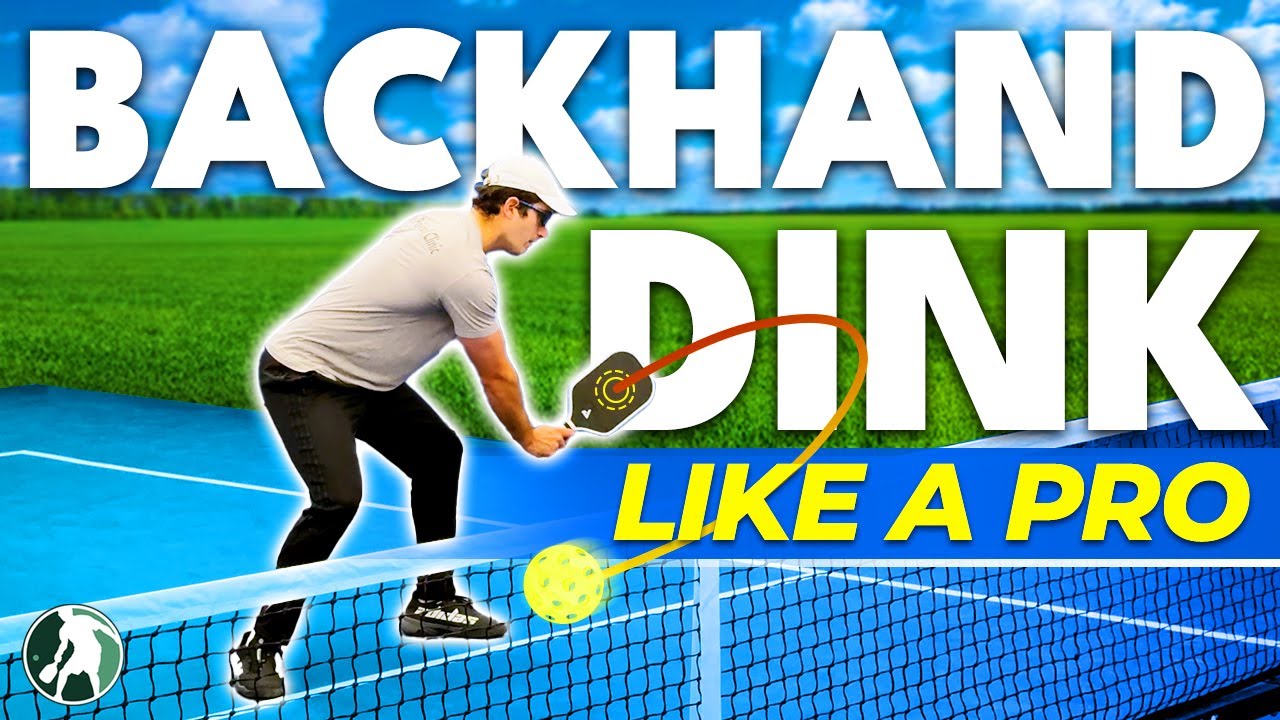
Perfect the Backhand Slice Dink with These 3 Essential Tips
When you’re locked in a tight dinking battle, this shot is your insurance policy
 The Dink PickleballThe Dink Media Team
3. The Half Volley Dink: Your Last Resort
Nobody wants to hit a half volley, or short hop. It means your opponent hit such a good shot that you couldn't back up or move your feet, so you're forced to take the ball right off the bounce near your feet.
Here's the reality: this shot can't be offensive. You have to play it defensively and try to keep it shallow. But if you must hit it, get your paddle low, get your body low, and softly come up with the ball as it bounces. Match the upward movement to soften the contact.
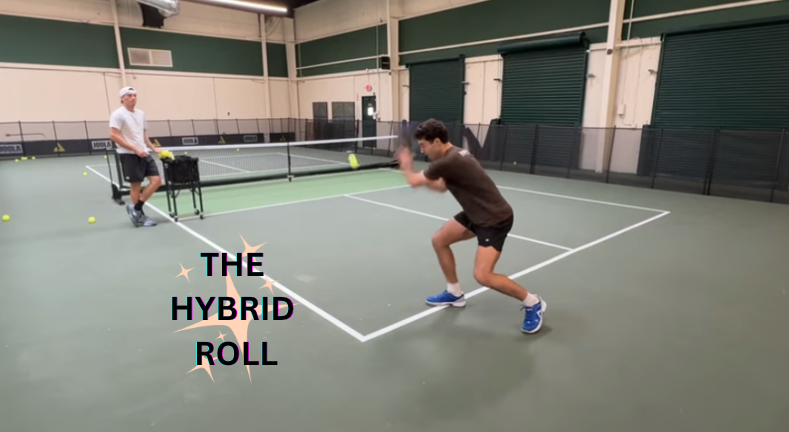
Master the Hybrid Roll: The New Essential Third-Shot Drop in Advanced Pickleball
Having this shot in your arsenal is typically worth three points per game, a massive advantage when you’re playing to 11
 The Dink PickleballThe Dink Media Team
4. The Cup Dink: Saving Yourself When You're Pushed Back
The cup dink handles the toughest situation: the ball is wide and behind you. This is purely defensive, and your only goal is to get it over the net and shallow.
You need an open paddle face because you want minimal swing. Look at your wrist position for the push dink (laid back), then do the opposite for the cup dink (bring your wrist forward to open the face). Bump the ball with virtually no spin and hope to live another point.
💡
Need some new pickleball gear? Get 20% off select paddles, shoes, and more with code THEDINK at Midwest Racquet Sports
5. The Volley Dink: Control the Tempo
The volley dink works both offensively and defensively.
- Offensively, you take your opponent's time away by reaching out and taking the ball out of the air
- Defensively, you intercept a good shot before it gets behind you, so you don't have to scramble or give up position
The secret is a flat wrist position. If you have a V between your paddle and your arm, you'll end up slicing or chopping. Get your wrist flat, open your paddle face slightly, and use just a six-inch motion to bump it back.
Read it early and have your paddle waiting for the ball.
Heads up: hundreds of thousands of pickleballers read our free newsletter. Subscribe here for cutting edge strategy, insider news, pro analysis, the latest product innovations and more.
Putting It All Together
The real skill isn't mastering one perfect dink. It's knowing which dink to use when. Every shot your opponent hits puts you in a different situation, and now you have five different answers.
Start practicing these in drills so they become automatic. When you're in a match and the pressure's on, you won't have time to think. You'll just react with the right tool for the moment.
Anuncie Aqui / Advertise Here
Sua marca para o mundo Pickleball! / Your brand for the Pickleball world!





 English (US) ·
  Portuguese (BR) ·