
 English
  Spanish
  Portuguese
  German
  Italian
  Japanese
  French
  Polish
  Russian
  Netherlands
  Hungarian
  Turkish
  Videos
  The Pickler

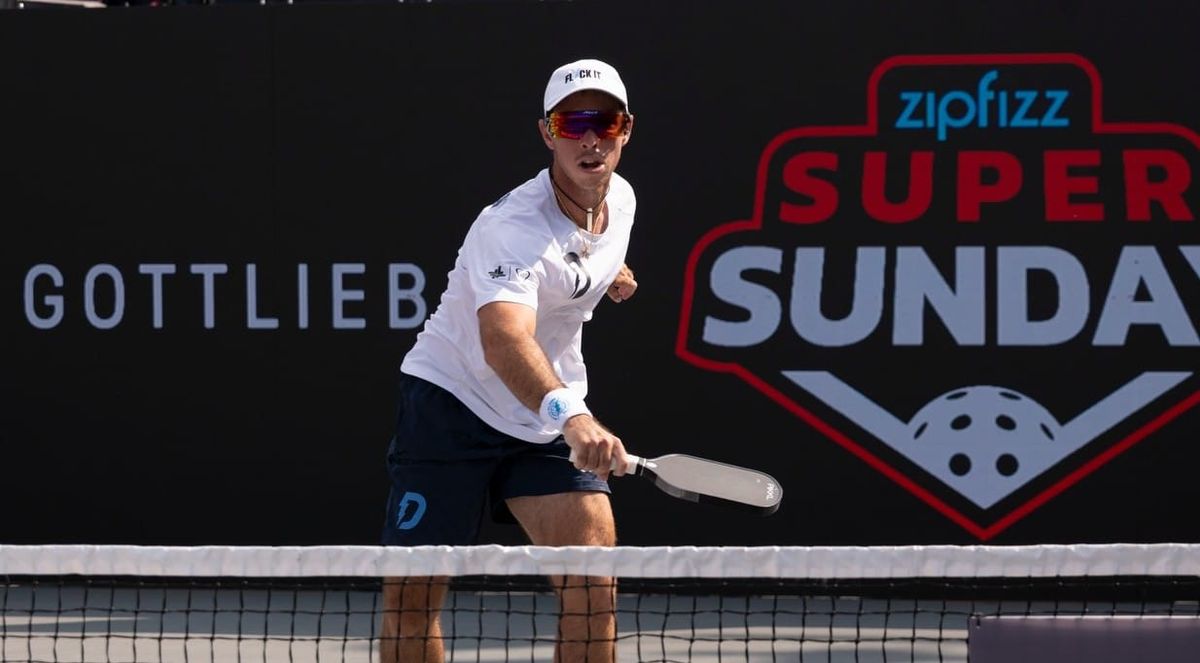
When you’re faced with a fastball at the Non-Volley Zone, your goal isn’t to win the point outright; it’s to absorb, stabilize, and reset. When you’re looking to calm the chaos at the Kitchen Line, use the block volley to neutralize the pace, push the rally back toward neutral, and win more exchanges.
When & Why to Use a Block Volley
A block volley is your go-to when the ball is hit hard at your body on either your paddle side (forehand block) or non-paddle side (backhand block). It’s especially useful when the ball sits low above the net, giving you no safe height for a full swing. Instead of forcing offense, the block volley lets you:
- Absorb pace instead of feeding it back
- Redirect the ball to your opponent’s feet
- Reset the point back to neutral
- Stay balanced and in the rally
Start in the Pickleball Ready Position
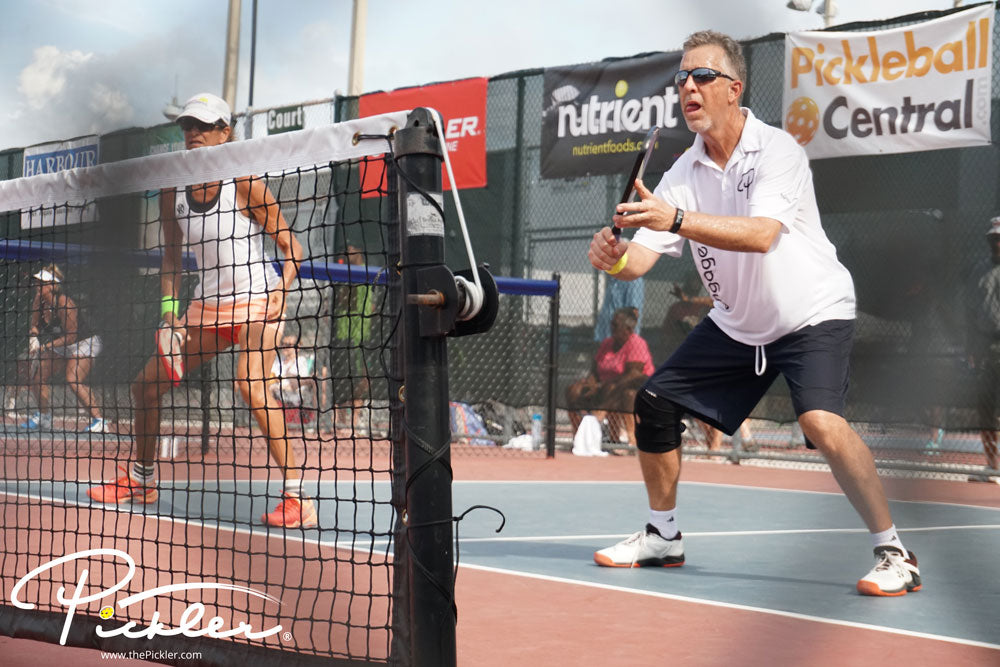
Every quality block volley begins before the ball even leaves your opponent’s paddle. Staying in a strong ready position ensures you’re prepared for speed. Think of your setup as your first line of defense. If your paddle sits too low, too far back, or too close to your body, you’ll lose time that your opponents won’t give you.
Freeze Your Elbow (Your Non-Negotiable Foundation)
The essential component of a reliable block volley is a frozen elbow. This doesn’t mean your arm is rigid; it means your elbow stays anchored in the same position it occupies in your ready stance.
Many players struggle here, either flaring their elbow outward like a chicken wing or tucking it too tightly into their ribcage. Both errors reduce control and cause mishits. One of the best ways to feel proper positioning is to use your non-paddle hand during drilling: lightly hold your elbow in place while practicing soft blocks. Once the muscle memory forms, remove the support hand and maintain the same elbow stability.
This elbow freeze matters because it forces the motion to come from your shoulder, ensuring a compact, controlled reset rather than a swinging or slapping motion.
Paddle Rotation and Body Weight Transfer
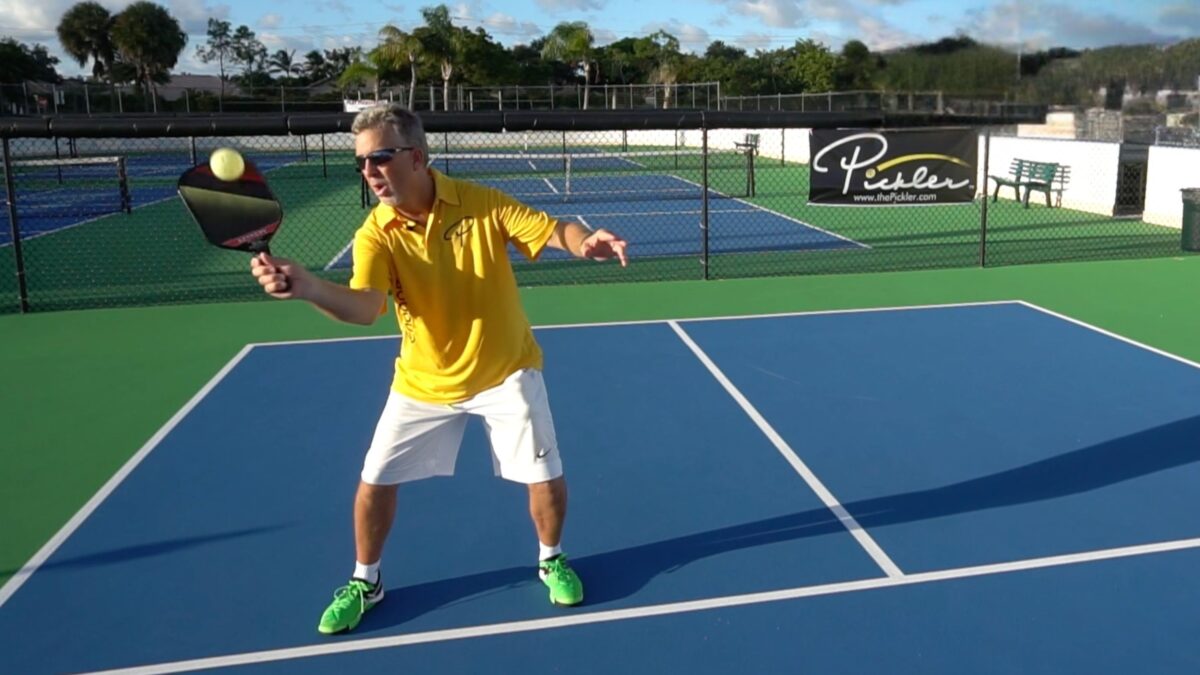
Instead of swinging, the block volley is more of a paddle “presentation.” On the forehand side, the movement starts by rotating the paddle from your semi-backhand ready position (10 o’clock for righties, 2 o’clock for lefties) to a flat, square forehand position out in front.
As you rotate the paddle, your weight naturally shifts toward your paddle-side hip. This subtle transfer stabilizes the shot and helps you angle the ball down toward your opponents’ feet.
Touch, Hold, and Reset
The heart of the block volley is the moment of contact. Think “touch and hold” rather than “hit.” If your opponent has hit a heavy drive, their power should do the work while your job is simply to guide the ball to a neutral, low target. The 3–6 Inch Rule is the essence of the block volley:
- Touch the ball softly with the center of your paddle
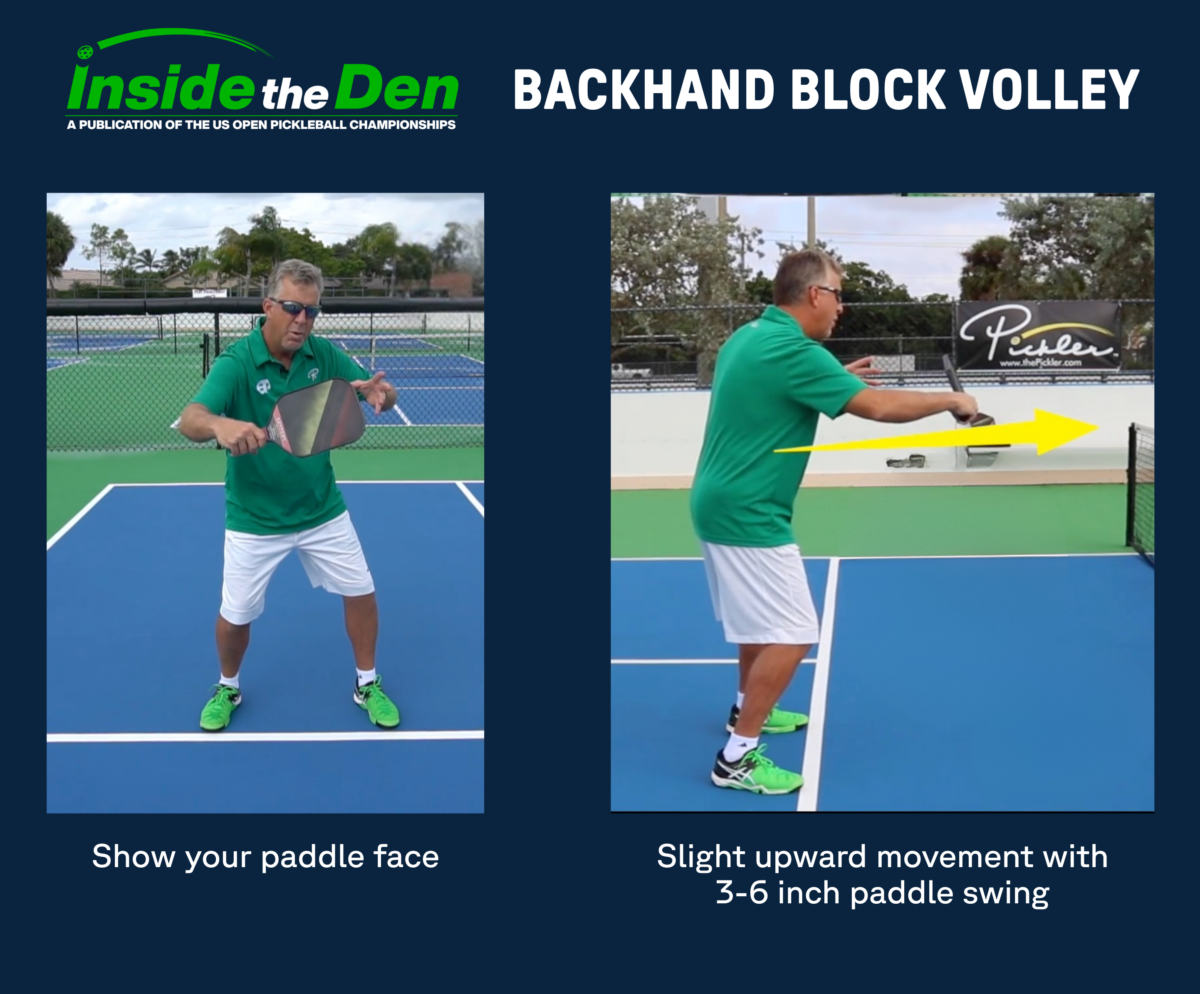
- Use a tiny, shoulder-driven 3–6 inch motion
- No wrist flicks
- Minimal arm movement
Remember, with the block volley, you’re not hitting the ball; you’re receiving it.
Understanding the Backhand Block (Your Most-Used Defensive Tool)
The block volley is most often hit as a backhand because it’s the fastest way to react when the pickleball is speeding at your body.
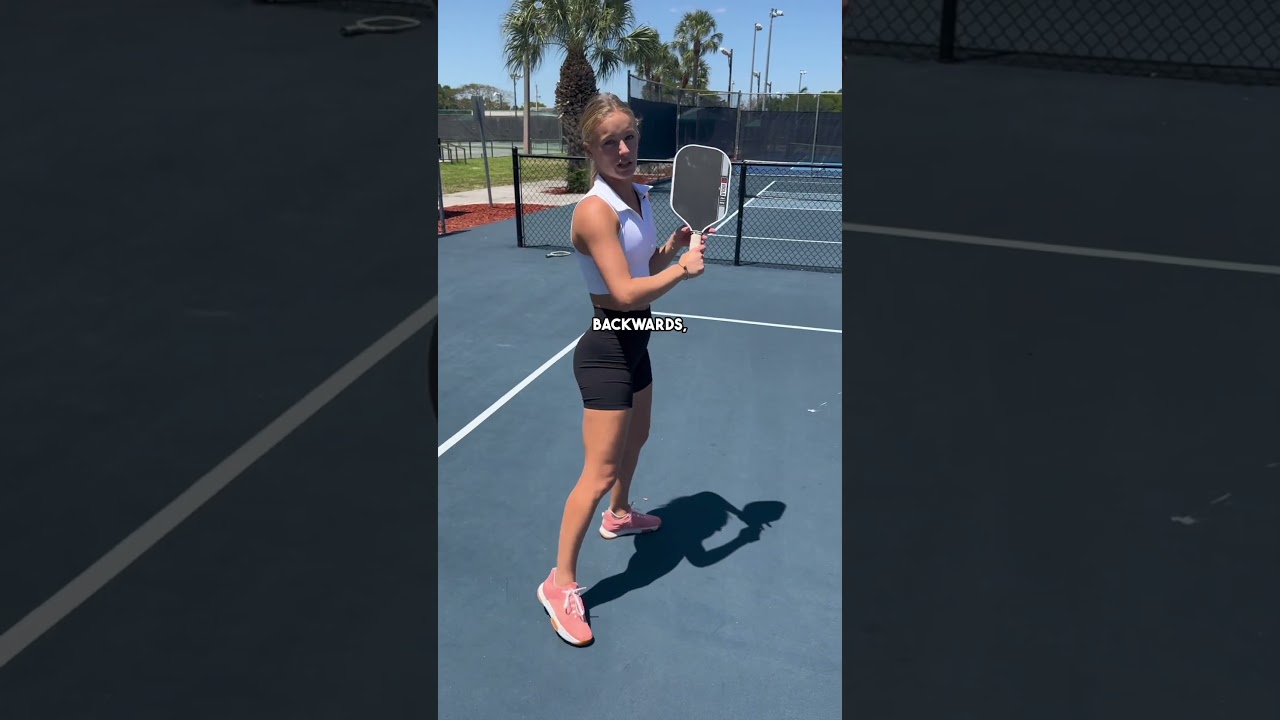
For the backhand block, your paddle should face the net more directly. As the ball arrives, shift your paddle angle into a 9 o’clock position (3 o’clock for lefties), allowing your opponents to “read” the paddle face. Similar to the forehand block, contact with the ball should stay soft, controlled, and compact.
Bonus Technique: Advanced players can use their non-paddle fingertips on the upper corner of the paddle during preparation to guide micro-adjustments. This helps keep the paddle out in front while stabilizing the paddle during quick exchanges. Just remember: the non-paddle hand must release fully before contact.
Absorb the Power & Take Control on the Court
Mastering the block volley helps you neutralize hard hitters and regain control at the kitchen line. Focus on touching, holding, and absorbing the ball so you can stay calm under pressure. When you can slow the game down on demand, every exchange becomes one you can win.
WANT MORE PICKLEBALL TIPS AND STRATEGIES?
Want to set yourself up for success at the Kitchen Line? Check out our tips to Improve Your Pickleball Ready Position and Own the Kitchen Line.
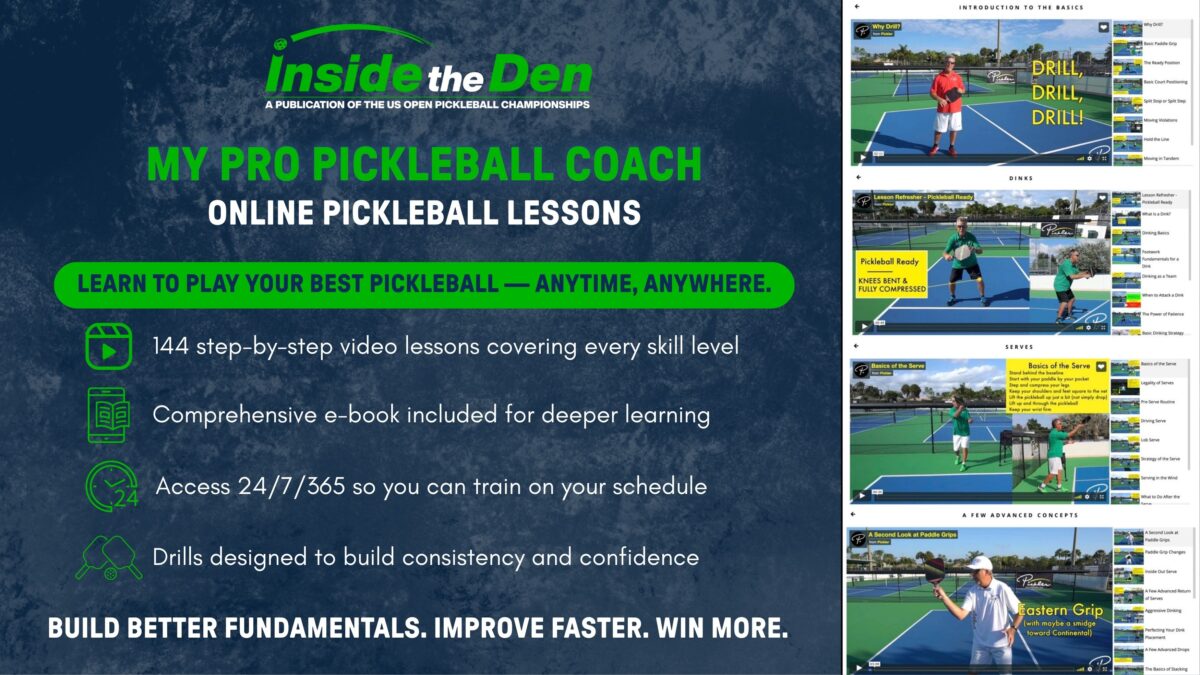
If you want more pickleball tips and strategies on every aspect of your pickleball game, check out Inside the Den’s online video lesson collection called My Pro Pickleball Coach. My Pro Pickleball Coach is a fraction of the price of one clinic or even one lesson, and features over 140 video lessons (over 7 hours of instruction!), as well as a corresponding e-book. These online video lessons are available on demand 24/7 and breakdown every aspect of the sport of pickleball, including pickleball drills, strategy, and advanced concepts, so you will play your best pickleball.
Anuncie Aqui / Advertise Here
Sua marca para o mundo Pickleball! / Your brand for the Pickleball world!



 English (US) ·
  Portuguese (BR) ·