
 English
  Spanish
  Portuguese
  German
  Italian
  Japanese
  French
  Polish
  Russian
  Netherlands
  Hungarian
  Turkish
  Videos
  Thedink Pickleball

The backhand volley is actually three distinct shots, each with different setups, mechanics, and strategic applications
The backhand volley is one of the most misunderstood shots in pickleball.
Most players think they know the difference between the punch, roll, and flick, but they're actually hitting them the same way every time.
That's why these shots feel so inconsistent in matches.
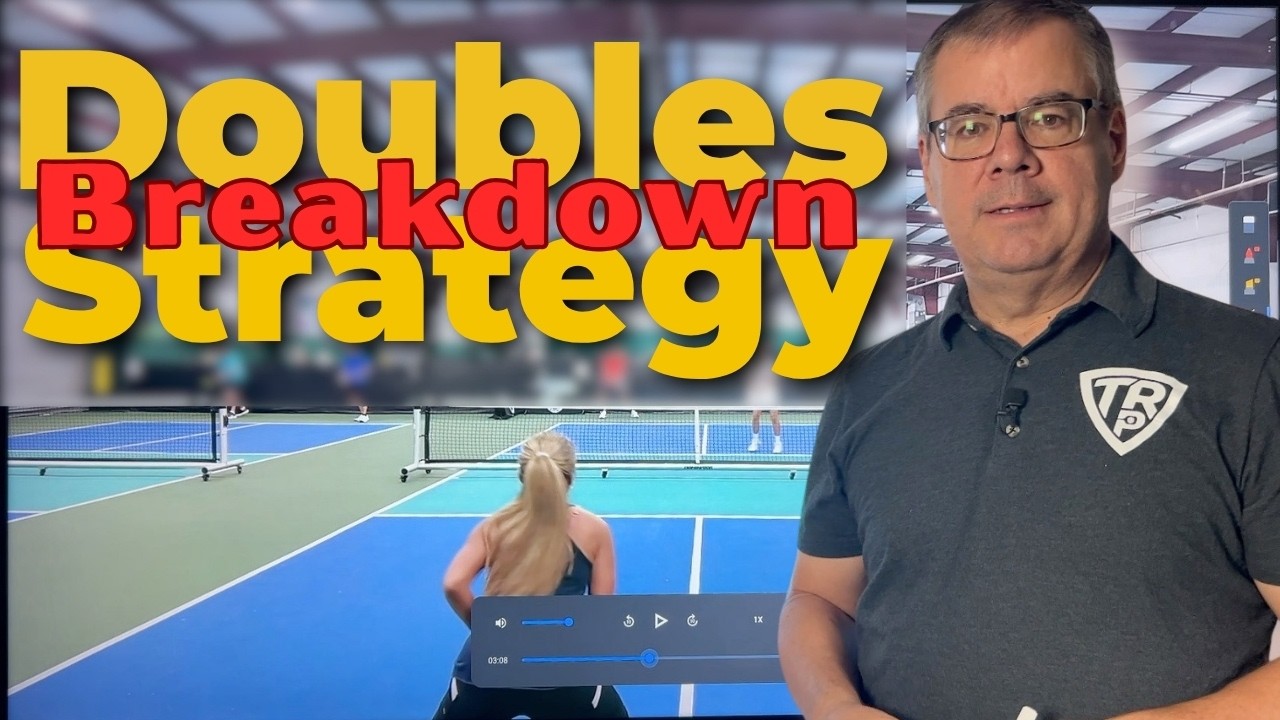
According to Dr. Michael Oakson, known as The Pickleball Chiropractor, the key to fixing your backhand volley game is understanding that each shot requires a completely different setup and technique.
In a comprehensive breakdown of all three variations, Oakson reveals the precise mechanics that separate a reliable backhand volley from one that pops up or lacks power.
Love pickleball? Then you'll love our free newsletter. We send the latest news, tips, and highlights for free each week.
Why Your Backhand Volley Feels Inconsistent
Here's the thing: most players approach all three backhand volley variations with the same fundamental motion.
They drop the paddle, swing up, and hope for the best. But that's not how the game works at higher levels.
The backhand volley isn't one shot. It's three completely different shots that require distinct setups, contact points, and swing paths.When you treat them as one generic motion, you lose the ability to control the ball, generate power, or disguise your intentions.
This is one of the key pickleball techniques that separates mid-level players from elite ones.
Oakson emphasizes that understanding the setup and technique for each variation is what separates consistent players from those who struggle.
The setup determines your positioning, footwork, and paddle angle. The technique determines how your body moves through the shot.
If you're serious about leveling up your overall game alongside your volley work, the 6 essential pickleball shots to master for 2026 is a solid companion read.
Getting all your fundamentals dialed in together compounds fast.
The Backhand Punch: Your Safest Backhand Volley Attack Option
The backhand punch is the slowest and most controlled of the three backhand volley variations.
It's designed to attack balls that sit below net height while keeping the ball low and predictable.
The setup for a backhand punch starts with your footwork. You want to position yourself close to the kitchen line to maximize your reach into the kitchen.
This positioning allows you to attack volleys from deeper in the court while still maintaining control.
How to Set Up the Punch Backhand Volley
The most critical element of the punch setup is dropping your paddle tip down to the floor.
Since you're attacking from below net height, you need to get beneath the ball.
Your wrist and shoulder do the work here, not your elbow. Notice how your elbow stays locked throughout the entire motion.
On contact, you're looking for a snap of the wrist, but here's the key: you're flicking through the ball, not up the ball.Many players make the mistake of opening their paddle face toward the sky, which sends the ball high and gives your opponent an easy put-away.
Instead, think about pushing the ball forward with a slight wrist snap.
Your shoulder also plays a role. You're essentially shoving your shoulder through the ball at the same time as your wrist snap.
This combination creates a consistent, low-to-net attack that's difficult for opponents to punish.
The result is a relatively slow ball that sits low to the net. It won't win the point outright, but it catches your opponent off balance and sets you up for the next shot.
Because the technique is so consistent, you can attack from way below the net in a stable position without worrying about popping the ball up.
Understanding how to attack drives and beat bangers builds the same low-risk, high-reward mindset.
💡
Need some new pickleball gear? Get 20% off select paddles, shoes, and more with code THEDINK at
Midwest Racquet SportsThe Backhand Roll: Maximum Topspin and Backhand Volley Control
The backhand roll is Oakson's favorite shot, and for good reason. It generates more topspin than the punch and more control than the flick.
It's the middle ground that works in most game situations.
The setup for a backhand roll is different from the punch in one critical way: you drop the paddle corner below the ball, not the entire paddle tip.
This distinction matters because dropping the entire tip encourages excessive wrist action, which turns the roll into a wrist-dominant shot.
But the backhand roll is a shoulder-dominant shot.
By dropping only the corner, you limit the amount of wrist movement available. You also want to drop your whole hand below the ball.
Since you're attacking from below net height, you need to sink into your legs and get that corner down low.
This approach mirrors what the pros use to master topspin in pickleball at the kitchen line.
Master the Backhand Roll Dink: 3 Keys for Seniors
The backhand roll dink is one of pickleball’s trendiest shots, but it’s also one of the most misunderstood. Here are the three specific things you need to fix to make this shot reliable and consistent.
 The Dink PickleballThe Dink Media Team

Finding the Right Contact Point on the Backhand Roll
The contact point is where the backhand roll gets interesting. You want to feel a bit of elbow extension as you make contact.
If you contact the ball with a bent elbow, you'll get jammed and pop the ball up without much power.
But overreaching is equally problematic.
If you're breaking your body position or arm position, you're setting yourself up for failure.The key is finding that athletic position where your arm reaches out naturally without jolting forward.
Your hips should stay relatively still, and your weight should stay centered on your midfoot.
If you feel your weight shift forward onto your toes, you're probably overreaching.
Your shoulder's job is to lift your paddle from your knee up to your shoulder. Your wrist's job is simply to open the paddle face slightly through contact.
Here's the critical ratio: your shoulder motion should be double that of your wrist motion.
If you're getting wristy on backhand rolls, you're doing something wrong.
The 12 drills you need to play your best pickleball in 2026 includes targeted rep work that trains exactly this kind of shoulder-dominant muscle memory.
A great practice drill is to apply light pressure to your wrist, almost like a cast, so you can't move it much.
This forces you to work your shoulder to get under and up the ball.
Once you've practiced this way a few times, you can add back some wrist motion, but you'll have trained the proper ratio.
The swing path is also important. Many players fall into what Oakson calls the "elevator swing," where they set too close to the ball and swing too high.
This generates no action on the ball and results in lots of net errors. You need to strike a balance between extension and lift.
Think about extending through the ball slightly, then lifting up with your shoulder.
Master the Third Shot Drop in Pickleball
The third shot drop is one of pickleball’s most critical shots, and most players are making a fundamental mistake. Richard from Engage Pickleball reveals the contact point hack that will transform your consistency and get you to the kitchen line every time.
The Dink PickleballThe Dink Media Team
The Backhand Flick: Maximum Power and Aggression
The backhand flick is the most powerful of the three backhand volley variations.
It generates significantly more power than both the punch and the roll, which is what sets it apart.
The flick requires a ball that's above net height.
If the ball is below net height, you don't have enough room to generate the power that makes this shot effective.The nature of the flick is aggressive, and there are more moving pieces involved, so it takes more training to master.
Your footwork should position you as close to the kitchen line as possible without foot faulting.
You want your chest engaged over that kitchen line because you're about to generate serious power.
How to Develop a Backhand Flick in Pickleball
Anna Bright went from zero one-handed ability to developing one of the best backhand flicks in women’s pickleball. Here’s exactly how she did it and how you can too.
The Dink PickleballThe Dink Media Team

How to Generate Power with the Backhand Volley Flick
The flick is the only backhand volley variation where your elbow comes into play. To generate more power, you need more joints working in your favor.
You're using your wrist, elbow, shoulder, and midback to create a coordinated explosion through the ball.
Start with your wrist. From your traditional handshake grip, point your paddle tip off to the side. This is called hinging your wrist, and you're storing up energy here.
When you go to hit the ball, you'll snap that wrist through to generate power.
Your elbow is next. Instead of keeping it extended like in the roll, you're pointing your elbow toward your target.
This stores energy that you'll release when you snap your wrist and elbow together.
Finally, your shoulder and midback contribute rotation.
As much as you want to bring your elbow to your opponent, you also want to bring your shoulder if you have time.
This rotation helps you unload and snap through the ball with maximum power.Pros who dominate with speed-up attacks rely on this same rotational chain, as explored in this breakdown of pro speed-up strategy at the kitchen line.
The result is a shot that generates significant topspin and power. You're focusing on extension through the ball because it's above net height.
You want to punch through and get real pace on the ball.
Here's the power difference: if you use only your wrist and elbow, you'll get a certain amount of power.
But the second you add your shoulder and midback rotation, you'll double your power on the shot.
The amount of rotation available depends on the ball you're receiving. If it's really high, you have more time to rotate.
If it's a decent ball, you might have to rely more on your wrist and elbow.
Advanced Pickleball Strategy: How to Hit a Harder Backhand Volley
Stop thinking of the backhand volley as a flick or a wave. It’s a punch. Lock your wrist, lead with your paddle tip, and push forward.
The Dink PickleballThe Dink Media Team
Speed Differences Matter More Than You Think
One of the most overlooked aspects of the backhand volley is the speed difference between the three variations.
Each shot should have a distinctly different pace.
The punch has the least amount of motion happening on contact, so it should be your slowest backhand volley.
You're just trying to keep it super low to the net and catch your opponent off balance. Think of it as a speed of around 30-40 mph.
The roll might be a little bit faster, maybe 40-50 mph, and it definitely has the most topspin out of all three shots.
You can pick it up and trust that the topspin will bring it back down into the court.
The flick is your fastest option. If the ball comes up, you want to hinge everything and rotate to really unlock maximum power through that ball.
You're looking at 50-60+ mph depending on how much rotation you can generate.Professional players have increasingly weaponized this speed gap, and why professional pickleball players abandoned the slice shot in 2025 explains exactly how shot selection at the pro level has evolved around pace variation.
Understanding these speed differences helps you disguise your intentions.
If you're hitting all three shots at the same pace, your opponent can read your setup and prepare for the same response every time.
But if you're varying the speed based on the shot selection, you keep them guessing.
Hand Speed Drill: The 5-Step System to Win Net Battles
A hand speed drill isn’t just about moving your paddle faster—it’s about training your entire body to react with precision at the net.
The Dink PickleballThe Dink Media Team
Game Strategy: Where to Attack With Your Backhand Volley
Knowing how to hit the three backhand volley variations is one thing. Knowing where to hit them in a match is another.
Oakson runs clinics all over the country, and he always asks players the same question: if a ball is passively hit to your forehand and you're about to rocket it at your opponent's body, where would they set?
Almost 99% of players raise their hand and vote backhand.
This insight reveals a critical strategic principle. Most players set backhand when they're protecting their bodies.
So the most logical place to attack early in a match off a backhand roll is down the line of your opponent. This forces them into two bad options.
For a wider tactical picture, six spots to attack your opponents in pickleball lays out the full court targeting framework.
Option one is to slide into the chicken wing position, which is extremely difficult to execute and makes their counter location predictable.
Option two is to open and extend on a forehand, where they basically have to punch through the ball.
If they get wristy from that position, it's a very low percentage counter.When you attack down the line, you're going to open up your paddle that way and lean toward that line to get onto the next ball.
Either way, if they slide on a backhand or open on a forehand, you're expecting that next ball to come back somewhere in a predictable area.
This is more of a linear pattern than the triangle theory you might have heard about. If you attack to the inside of your opponent, the ball is more likely to come back to your forehand next.
But with the down-the-line attack, you're essentially going backhand to backhand.Once you hit that roll, you're just staying on your backhand, so you can get set for the next ball super quick.
The 4 offensive tactics from modern kitchen strategy digs deeper into how to chain these patterns into sustained offensive pressure.
Players looking to put together a complete system should also check out a simple 4-step system to win more pickleball games in 2026.
💡
Heads up: hundreds of thousands of pickleballers read our free newsletter.
Subscribe herefor cutting edge strategy, insider news, pro analysis, the latest product innovations and more.
Frequently Asked Questions
What's the difference between a backhand punch and a backhand roll?
The backhand punch uses a wrist snap with a locked elbow and is designed for balls below net height. The backhand roll uses shoulder rotation with minimal wrist motion and generates more topspin. The punch is slower and safer; the roll is faster and more aggressive.
When should I use the backhand flick instead of the roll?
Use the backhand flick when the ball is above net height and you want to generate maximum power. The flick requires more moving pieces and more training, but it's your most aggressive option. The roll is better for balls at or slightly below net height.
How do I stop popping up my backhand volley?
The most common cause is opening your paddle face toward the sky. Instead, think about flicking or pushing through the ball, not up the ball. Also make sure you're getting beneath the ball with proper setup and not overreaching on contact.
Can I use the same technique for all three backhand volleys?
No. Each variation requires a different setup, contact point, and swing path. Treating them as one generic motion is why most players struggle with consistency. Spend time drilling each variation separately before combining them in live play.
What's the most important thing to focus on when learning the backhand volley?
Start with the setup. Your footwork, paddle position, and hand placement determine everything that comes next. Once your setup is solid, the technique becomes much easier to execute consistently.
For everything else we do, visit linktr.ee/dinkfam
Anuncie Aqui / Advertise Here
Sua marca para o mundo Pickleball! / Your brand for the Pickleball world!






 English (US) ·
  Portuguese (BR) ·