
 English
  Spanish
  Portuguese
  German
  Italian
  Japanese
  French
  Polish
  Russian
  Netherlands
  Hungarian
  Turkish
  Videos
  Thedink Pickleball

The fourth shot pickleball volley trips up more players than almost any other shot in the game. Here is the simple sweep volley technique that stops the pop-ups for good.
Your fourth shot pickleball volley should be one of the simpler shots in the game.
But for most players, it turns into a pop-up, a mishit, or a ball that sails long because the swing mechanics are completely wrong.
The culprit is almost always the same thing: too much motion.Players are wrapping the paddle around their body, adding unnecessary wrist action, and treating the volley like a full groundstroke.
This article breaks down the sweep volley technique, why it works, what you are doing wrong right now, and how to build the habit so your fourth shot stops costing you points.
The instruction here comes directly from Richard Livornese Pickleball on YouTube, who makes a convincing case that this is truly one of the simplest shots in the game once you strip away the chaos.
Love pickleball? Then you'll love our free newsletter. We send the latest news, tips, and highlights for free each week.
What Is the Pickleball Fourth Shot Volley?
The fourth shot is the ball the returning team hits after the serving team's third shot.
If that third shot is a drop, the returning team standing at the kitchen line usually gets a volley on it.
That ball can be attacked, reset, or redirected depending on its height and speed. The problem is that most players swing at it like it's a groundstroke.That extra motion is exactly what creates pop-ups, errors, and lost points. You don't need a big swing.
You need a compact, flat, controlled stroke that keeps the paddle face steady through contact.If your pickleball fourth shot volley keeps failing, the answer comes back to swing mechanics far more often than footwork or timing.
It is also one of the three shots that quietly decide most rec-level points.
What Is the Sweep Volley?
The sweep volley is a flat, controlled volley where the paddle moves laterally through the contact zone with no torque, flick, or wrap-around follow-through.
Think of it as moving the paddle from one flat position to another flat position.
No loop. No wrist snap. The paddle face stays consistent before, during, and after contact.Richard Pickleball describes it in four words: flat here, flat there.
That is genuinely the whole shot, and it is why the most overlooked shot in pickleball is also one of the most fixable.
💡
Need some new pickleball gear? Get 20% off select paddles, shoes, and more with code THEDINK at
Midwest Racquet SportsWhy Are You Hitting Your Volleys Wrong?
Most bad volley habits come from one of two places: tennis, or trying to add power to a shot that doesn't need any.The result is a swing that's too long, too fast, or too wristy.
Here's what the bad version looks like in real time:
- The paddle winds back past your body before contact
- The wrist snaps or rolls through the ball
- The follow-through wraps all the way across your chest
- The paddle face changes angle from backswing to finish
- You generate the pace yourself instead of using the incoming ball's
Every one of those adds a variable. More variables mean more chances for the ball to go somewhere you never intended.
Cleaning up the pickleball fourth shot volley tends to fix multiple problems at once, because the sweep forces you to simplify everything.
4 Pickleball Volley Mistakes Amateurs Make Every Game
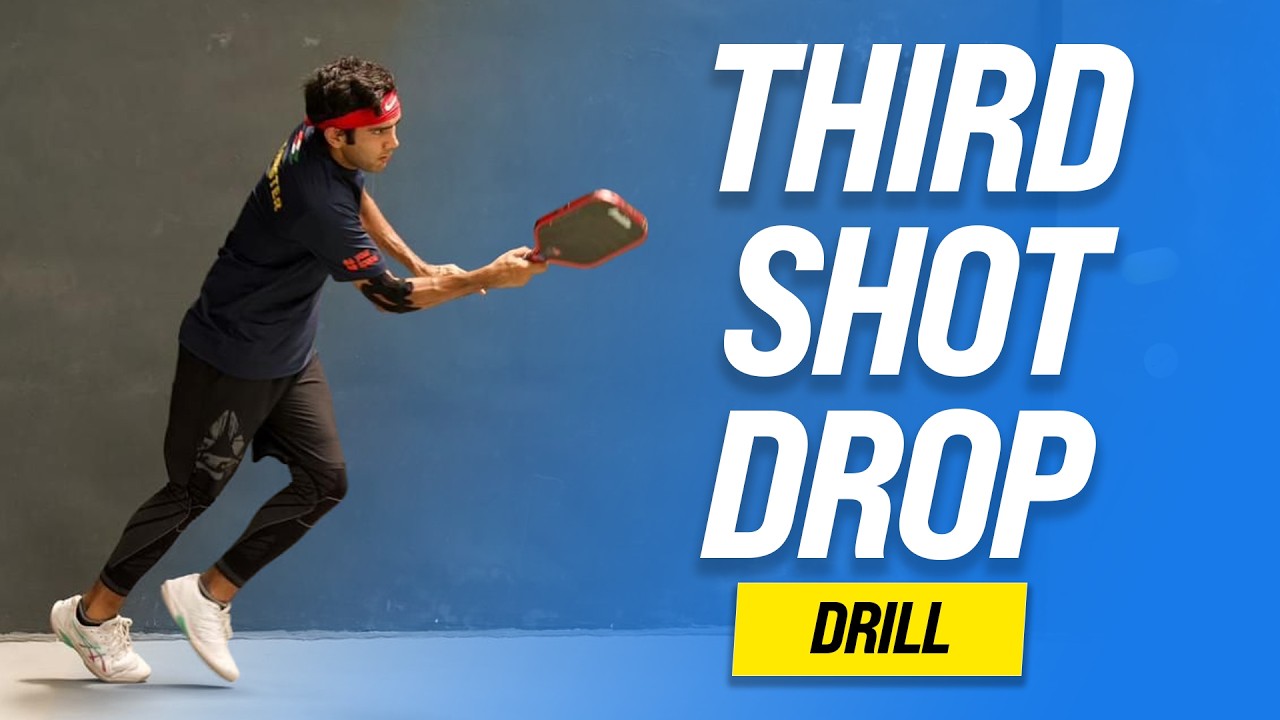
Most players lose the net battle before the ball even arrives. Here are four pickleball volley fixes that turn your hands into a weapon.
 The Dink PickleballThe Dink Media Team
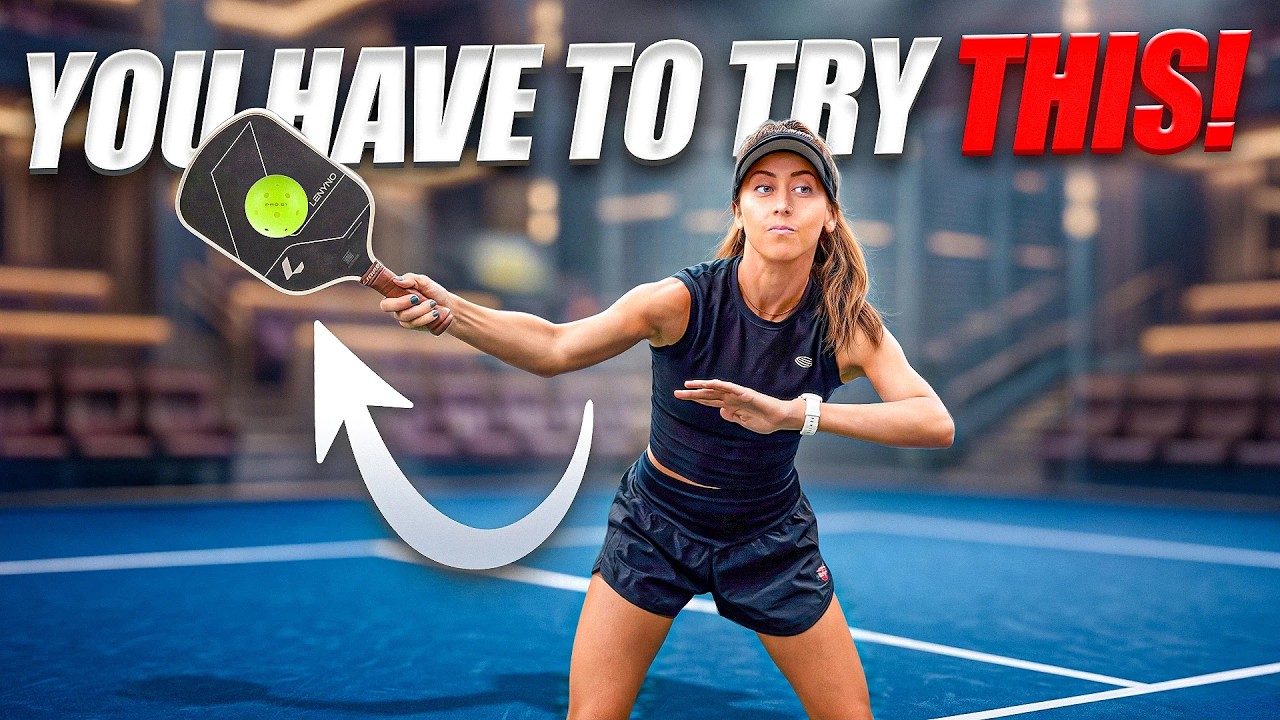
How Do You Hit the Pickleball Fourth Shot Volley?
The mechanics are straightforward. Five steps, and none of them are athletic feats.
- Start in a neutral ready position. Paddle out front, face slightly open, weight on the balls of your feet. A sloppy ready position breaks the shot before it starts.
- Keep the backswing minimal. The paddle moves back a few inches, never past your hip.
- Move the paddle forward on a flat plane. Straight through the ball, not up or around it, with the face parallel to the net.
- Finish flat. The follow-through stops shortly after contact, paddle still in front of your body.
- Let the ball do the work. You're redirecting pace, not creating it.
That's the entire shot. It sounds almost too simple, and that's exactly the point.
Remove the unnecessary motion and what's left is a volley you can hit at 4-4 in the third.
Your grip pressure and grip style matter here too, because a tight grip reintroduces the wrist you just took out.
The Fourth Shot in Pickleball: 3 Variations That Win Points
The fourth shot in pickleball is where rallies get decided. Most players obsess over the serve, return, and third shot, but if your fourth shot is weak, everything falls apart.
 The Dink PickleballThe Dink Media Team
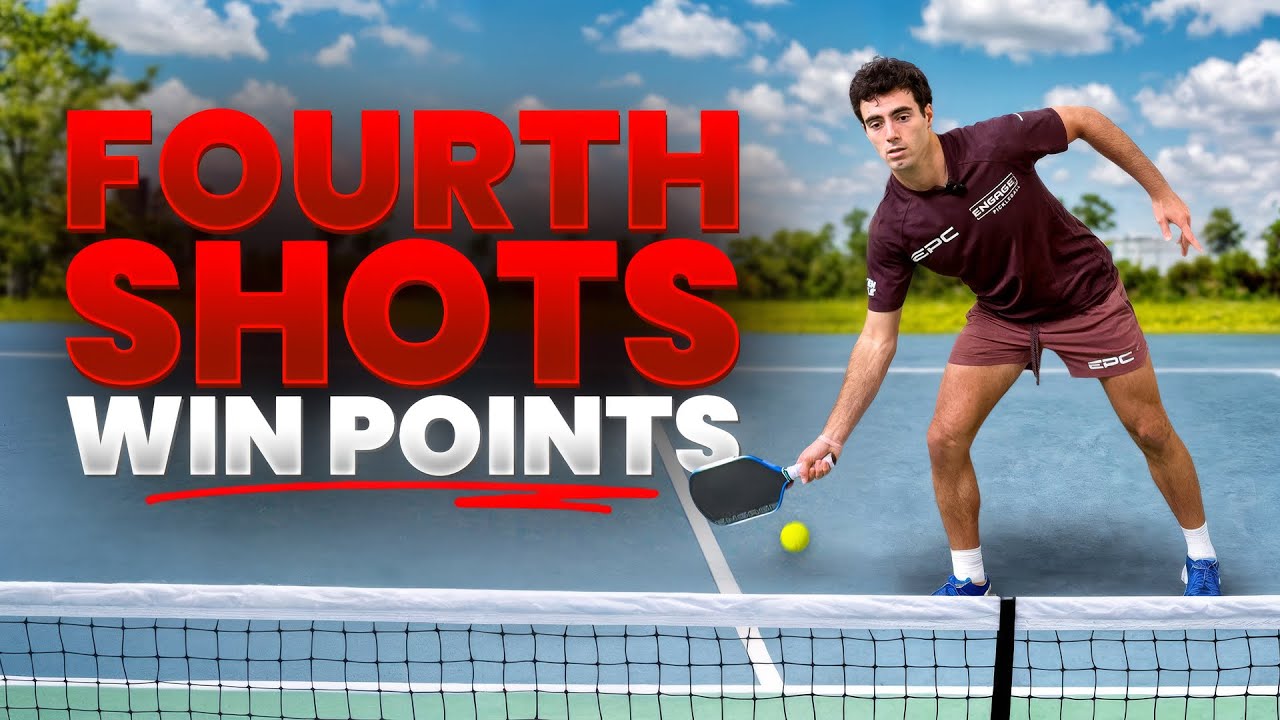
Why Does a Flat Paddle Path Work So Well?
When the paddle stays on one plane through contact, the ball leaves the face at a predictable angle every single time.
That predictability is what gives you accuracy and depth control without thinking about it.Introduce a wrist roll or a body wrap and you change the face angle mid-swing. Even a small change at contact sends the ball somewhere different.
At the kitchen line, where margins are tiny and hands battles happen in a blink, that inconsistency gets punished immediately.
The sweep volley takes the variable off the table.Topspin Pickleball Technique: Brush Angle & Paddle Path
Topspin pickleball technique is built on two fundamentals: a steep brush angle and a low-to-high paddle path. Nail both, and you’ll hit shots that land deep, kick high, and force your opponents into uncomfortable defensive positions.
 The Dink PickleballThe Dink Media Team
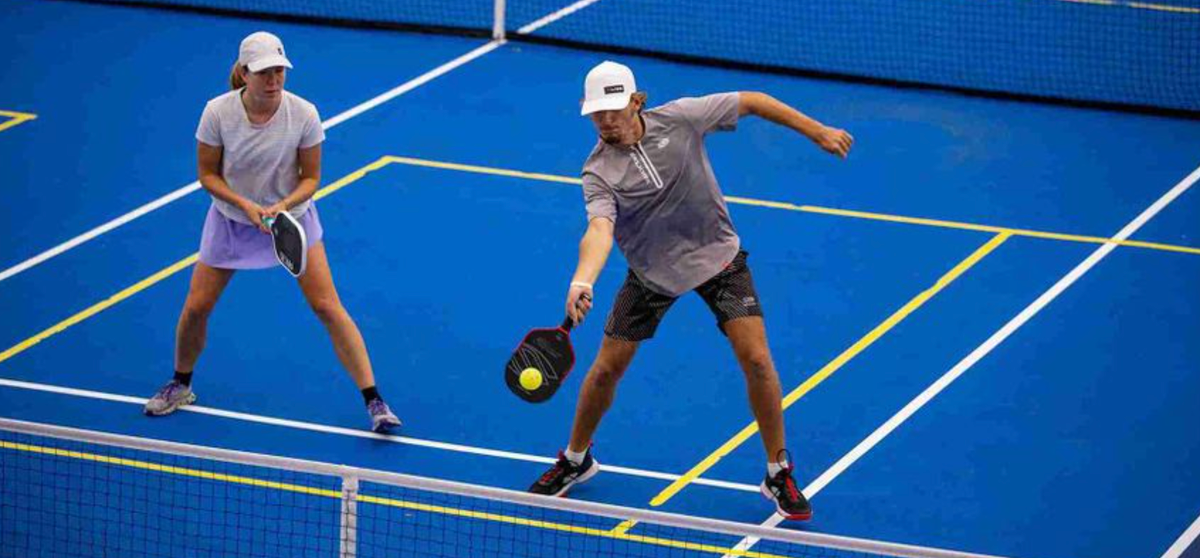
What Common Mistakes Should You Watch For?
Even after you understand the sweep volley concept, a few habits will try to creep back into your stroke.
Watch for these specifically:
- Dropping the elbow. When your elbow drops, the paddle face opens too much and the ball floats high. Keep the elbow up and out in front of your body.
- Gripping too hard. A tight grip encourages the wrist to snap through the ball. Keep grip pressure moderate and let the arm guide the shot.
- Leaning back at contact. If you are falling backward when you hit the ball, you are scooping it upward. Step into the shot or at least stay balanced.
- Rushing the swing. The sweep volley works partly because it is calm. If you are panicking and swinging fast, you reintroduce the chaos you are trying to eliminate.
- Taking a full backswing on fast balls. When the ball comes at you quickly, the instinct is to swing harder. Do the opposite. Shorten the swing even more and absorb the pace.
Understanding why hitting hard costs you points will make this easier to accept. Pace is rarely the answer at the kitchen line.
3 Pickleball Volley Mistakes and How to Fix Them
These three pickleball volley mistakes show up in almost every player’s game. Fix your targeting, your backswing, and your foundation and your volleys will look completely different.
 The Dink PickleballThe Dink Media Team
How Does a Clean Fourth Shot Change Your Strategy?
Once the pickleball fourth shot volley is reliable, your options expand. You're no longer just keeping the ball in play, you're directing it with purpose.
A flat, controlled volley can go at the feet, cross-court with angle, or low and straight to neutralize the rally.
All of that unlocks when the mechanics are clean, and it pairs directly with the three fourth shot variations that actually win points.Players who own this shot are also much harder to speed up on, because they absorb pace instead of adding to it.
Layer in a real ball height and court position checklist and your shot selection stops being a guess.
There's a mindset shift buried in here too.
When you stop inviting your opponents to the kitchen line with floaty fourth balls, their free points disappear.
5 Fourth Shot Decisions That Keep You in Control
The fourth shot is where rallies are won or lost. Here is how to read the ball, choose between the air and the bounce, and keep your opponents on defense.
 The Dink PickleballThe Dink Media Team
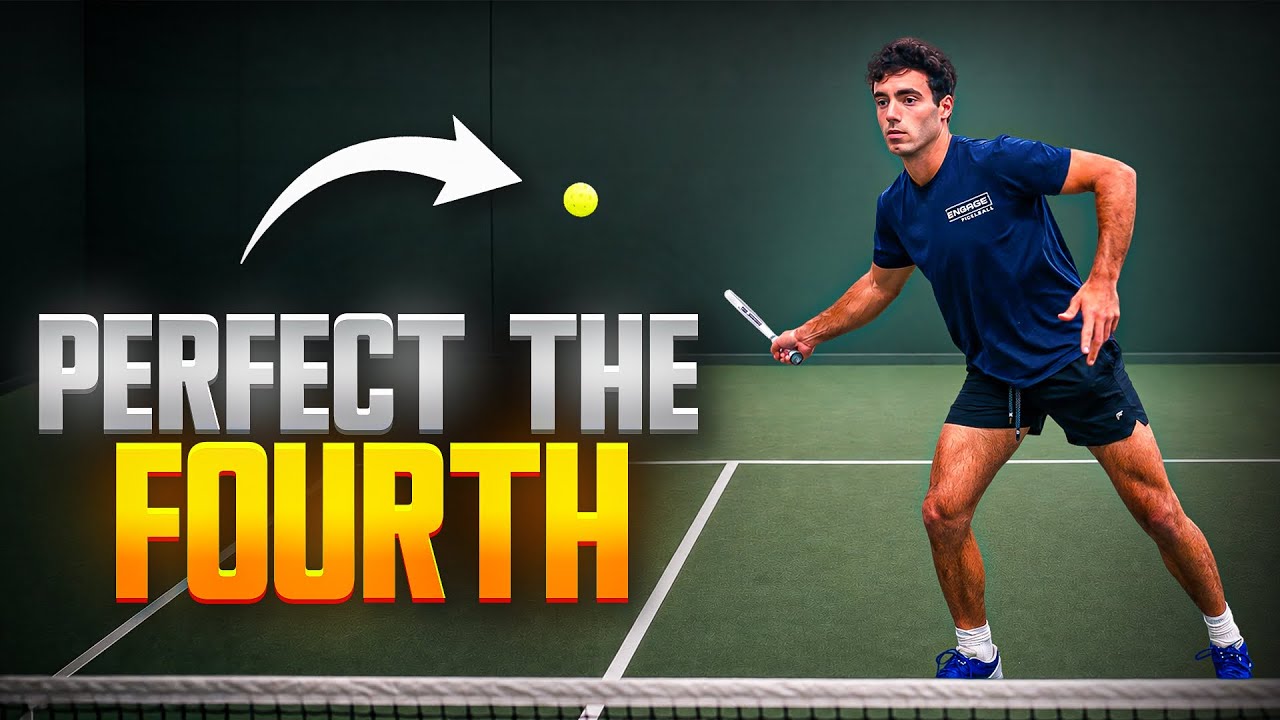
How Do You Practice the Sweep Volley?
You do not need a partner to start building this habit. Here are the most effective ways to ingrain it:
- Shadow swings in front of a mirror. Watch your paddle path. Make sure it stays flat on both sides of contact, with no wrap or roll.
- Wall drills at close range. Stand two to three feet from a wall and hit slow, controlled volleys using only the sweep motion. The wall gives instant feedback if you are generating too much pace or changing the face angle. Wall practice done right builds real game skills faster than most people expect.
- Partner feed drill. Have a partner hand feed balls at medium pace from close range. Focus only on the paddle path, not on placement or power.
- Live rally with a cue word. During play, pick a cue word like "flat" and say it to yourself as you make contact. It interrupts the habit of over-swinging.
The goal is to make the compact, flat motion feel more natural than the big swing.
That takes repetition, but it happens faster than you think because the results are immediately better.Pairing this with an understanding of when to use a roll volley versus a punch volley will give you a complete picture of your options at the net.
Pickleball Fourth Shot Playbook: 6 Ways to Stay on Offense
Your fourth shot is the moment the serving team either takes over the point or gets stuck on defense. This playbook covers what to hit on every ball your opponents send back.
 The Dink PickleballThe Dink Media Team
What Does This Mean for Your Game Overall?
Cleaning up your fourth shot volley has a cascading effect on the rest of your game. When you are not popping balls up or spraying them wide, you stay in more rallies.
More rallies means more opportunities to win points through strategy rather than luck.
You will also put more pressure on opponents who rely on your errors after their third shot drop.
When those free points disappear, they are forced to earn every point the hard way.The sweep volley isn't a fancy shot.
It's a disciplined one, and discipline at the kitchen line is what separates players who plateau from players who keep climbing.
For the broader version of that climb, start with these tips that build real game improvement.
💡
Heads up: hundreds of thousands of pickleballers read our free newsletter.
Subscribe herefor cutting edge strategy, insider news, pro analysis, the latest product innovations and more.
Frequently Asked Questions
What is the fourth shot in pickleball?
The fourth shot is the shot hit by the returning team after the serving team's third shot, often a volley opportunity at the kitchen line. If the third shot is a drop, the fourth shot is your chance to attack or redirect the ball before it bounces. Most players hit this volley with too much swing, which is why it pops up so often.
What is a sweep volley in pickleball?
A sweep volley is a flat, compact volley where the paddle moves through the contact zone on a consistent plane without wrist roll or follow-through wrap. The paddle stays flat before contact and flat after contact, which keeps the ball low and on target. It is one of the most reliable volleys at the kitchen line because it removes unnecessary variables from the shot.
Why does my fourth shot keep popping up?
Your fourth shot pops up because your paddle face is opening at contact, usually caused by a wrist snap, dropped elbow, or scooping motion. The fix is to keep the paddle face steady and move it through the ball on a flat path. Shortening your backswing also removes the momentum that causes the face to rotate through contact.
How much follow-through should a volley have?
A volley follow-through should be short, stopping shortly after the contact point with the paddle still in front of your body. The paddle should not wrap around to your opposite shoulder or chest. Think of the follow-through as an extension of the flat swing plane, not a full finish like a groundstroke.
Can the sweep volley be used on fast balls too?
Yes, and it actually works better on fast balls because you are absorbing and redirecting pace rather than generating your own. When the ball comes quickly, shorten the swing even further and let the incoming pace do the work. A calmer, more compact motion on fast balls gives you far more control than trying to swing harder to match the speed.
Anuncie Aqui / Advertise Here
Sua marca para o mundo Pickleball! / Your brand for the Pickleball world!



 English (US) ·
  Portuguese (BR) ·