
 English
  Spanish
  Portuguese
  German
  Italian
  Japanese
  French
  Polish
  Russian
  Netherlands
  Hungarian
  Turkish
  Videos
  Thedink Pickleball

One of the most common mistakes in pickleball is the pop-up shot, which gives your opponent an easy put-away opportunity. Here's how to eliminate this costly error from every part of the court.
If you've played pickleball for more than a few weeks, you've probably experienced the frustration of a pop-up shot.
You're trying to keep the ball low and controlled, and instead it floats up to your opponent's chest level, begging to be put away.
It's one of the most costly mistakes in the sport, and it happens to players at every level.
The good news? It's fixable. And the fix isn't complicated.
It comes down to three core technical issues: how you use your wrist, how tightly you grip the paddle, and where you make contact with the ball.
Universal Rackets, a leading pickleball coaching channel, recently released a comprehensive breakdown of why players keep popping the ball up and exactly how to eliminate the problem from every part of the court.
The video covers everything from dinks and resets to drives and volleys, offering a masterclass in ball control that applies whether you're a beginner or someone trying to break through a plateau.
Love pickleball? Then you'll love our free newsletter. We send the latest news, tips, and highlights for free each week.
The Wrist Problem: Why Your Arm Motion Kills the Pop-Up Shot
Here's the thing about pop-up shots: most players blame the ball, the court, or bad luck. The real culprit is almost always the wrist.
When you move your wrist upward during a shot, the ball goes up. It's that simple.
The wrist acts like a hinge, and if that hinge opens upward, you're lifting the ball instead of controlling it. The solution is to stop thinking about hitting and start thinking about pushing.
Instead of using your wrist to generate power or lift, you need to rely on your arm and shoulder.
Think of it like throwing a cornhole bag or tossing a bean bag, not flipping a burger.
Your arm extends forward, your shoulder drives the motion, and your wrist stays stable. No flipping. No lifting. Just forward momentum.
This applies across every shot in pickleball.
Whether you're dinking at the net, resetting a hard shot, or driving from the baseline, the principle is the same: push forward, not upward.
Grip Pressure: Why Holding Tight Creates the Pop-Up Problem
Most players grip their paddle too tightly.
On a scale of one to ten, where one is barely holding the paddle and ten is squeezing it like you're angry at it, you should be around a two or three.
When you grip the paddle too tightly, you can't absorb the ball's energy. Instead, you hit it, and hitting creates pop-ups.
A loose grip allows the paddle to act like a shock absorber, dampening the ball's momentum and keeping it low.Think about fielding a ground ball in baseball. You don't clench your glove. You relax into it, let the ball settle, and then toss it back.
Pickleball should feel the same way. Your paddle should be an extension of a relaxed arm, not a weapon you're strangling.
Understanding the right pickleball grip pressure is one of those fundamentals that pays off in every single rally. Get this right and everything else gets easier.
💡
Need some new pickleball gear? Get 20% off select paddles, shoes, and more with code THEDINK at
Midwest Racquet SportsHere's something that separates good players from great ones: contact point is everything.
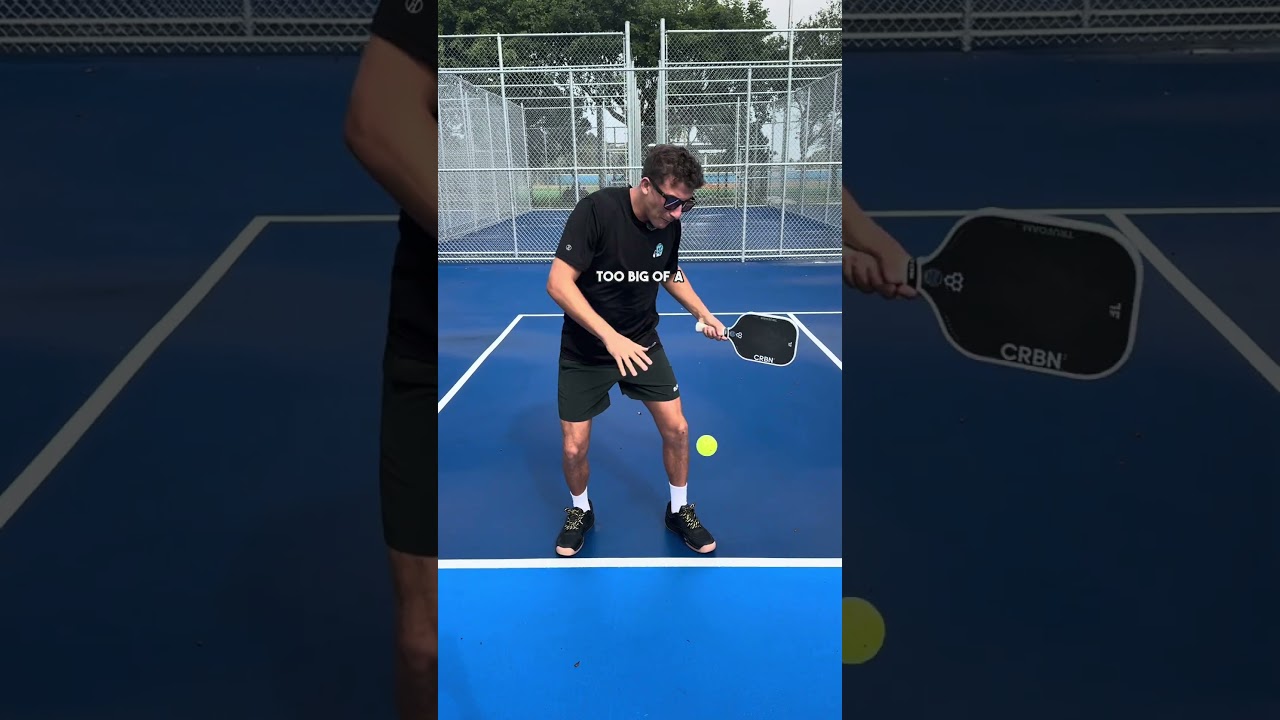
You need to make contact with the ball out in front of your body. The moment the ball gets behind you, you're going to pop it up. It's physics.
When the ball is behind you, you have to swing upward to get it over the net, and that is exactly how the pop-up shot is born.
When the ball is in front, you can push forward and keep it low.
This means three things: take the ball out in front, take it out of the air when possible, or move your feet backward so you can get the ball in front of you.
There's no shortcut here. If you're reaching for the ball, you're already losing.Master the Third Shot Drop in Pickleball
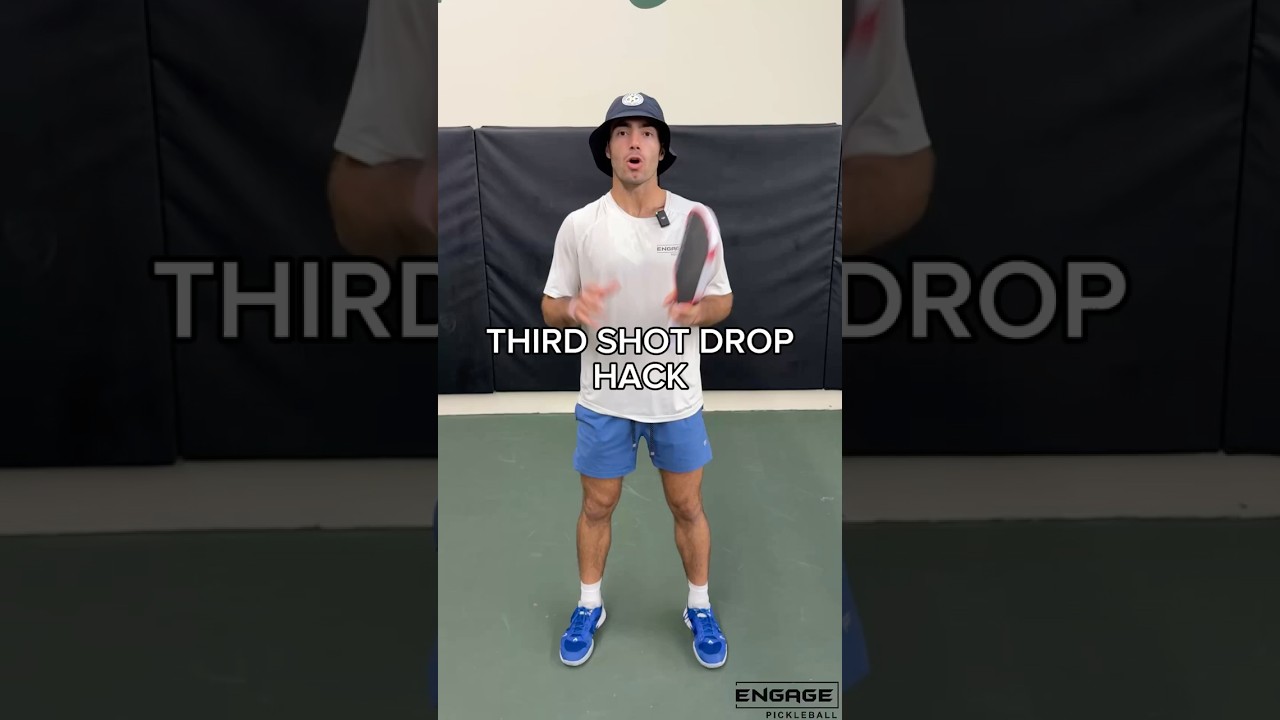
The third shot drop is one of pickleball’s most critical shots, and most players are making a fundamental mistake. Richard from Engage Pickleball reveals the contact point hack that will transform your consistency and get you to the kitchen line every time.
 The Dink PickleballThe Dink Media Team
The Dink: Where Most Pop-Up Shots Happen
The dink is where pop-up shots are most common, and it's also where they're most costly.
A dink that pops up gives your opponent an easy attack opportunity, and the point is often over.
To keep your dink low, hold your paddle loose and move it as little as possible.
You're not taking a giant swing. You're keeping the paddle out front and moving it from point A to point B with minimal motion. Less is more.Open your paddle face slightly. This automatically makes the ball go over the net without you having to hit it upward.
You don't need to worry about the ball clearing the net if your paddle face is open. It will.
You can also add topspin to your dinks, which naturally drives the ball downward. Start with your paddle down and finish up, brushing the back of the ball.
You're not turning your wrist. You're just moving your arm from low to high, creating spin that makes the ball dip at your opponent's feet.
Mastering dink placement at the kitchen line is what separates reactive players from players who control the entire rally.
The dink isn't defensive. In the right hands, it's a weapon.
Pickleball Dinking Technique: The Complete Beginner’s Guide
This guide breaks down everything you need to know about proper dinking form, grip, stance, and drills to dominate at the kitchen line.
The Dink PickleballThe Dink Media Team

The Reset: Holding, Not Swinging, to Kill the Pop-Up
A reset is different from a dink. You're not pushing. You're holding.
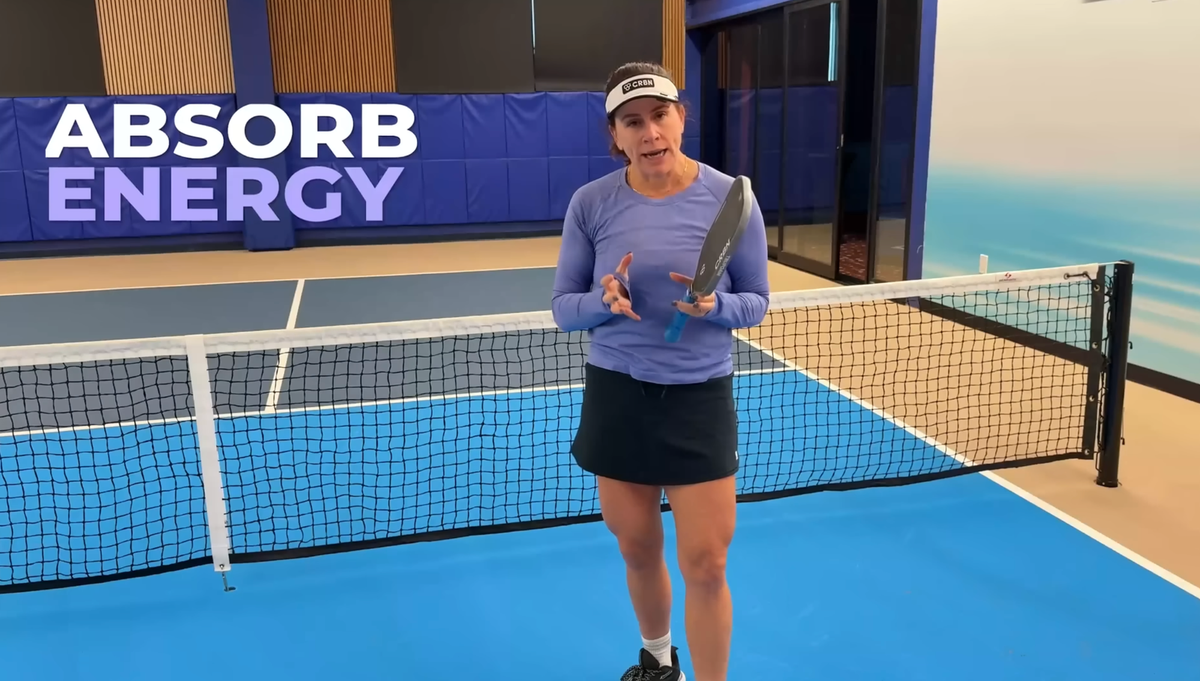
When your opponent hits a hard shot at you, your job is to absorb their pace and return the ball low.
To do this, get low into your legs, drop your center of gravity, and hold your paddle out in front. That's it.
You're not swinging. You're not trying to hit the ball hard. You're just holding the paddle there and letting the ball settle into it.Players pop up resets because they swing too much or they have a narrow stance. Widen your stance, sit down, and stay down.
Your paddle should freeze at contact. The less movement you make, the better your reset will be.Think of it like fielding a ground ball again. You get low, you get your glove out, and you catch and toss. No extra motion. No swinging. Just absorption and return.
If the reset is still giving you trouble, the midcourt forehand reset drill is one of the fastest ways to clean it up. It isolates exactly the movement pattern you need.
The Pickleball Reset: The One Skill That Takes You Beyond 3.5
By softening pace, controlling trajectory, and stabilizing through transition, players can use the reset to regain the kitchen and compete with stronger opponents
The Dink PickleballThe Dink Media Team
Drives and Volleys: Keeping Your Body Down to Eliminate the Pop-Up Shot
At the baseline, pop-up shots happen because players pick their body up and their head up.
The moment your head goes up, the ball goes up. It's a direct connection.
When you hit a drive, keep your body down and forward.
Your head should be forward, your chest should be downward, and your finish should be forward, not upward.
Hold your finish and feel your body staying low even after you've made contact.
Your paddle should always be tilted downward. If you open your paddle face or use your wrist, the ball will go up.
Tilt it down so you can hit topspin and make the ball go down.
Think of brushing the back of the ball from low to high, like you're swinging from six o'clock to twelve o'clock.Volleys follow the same rule. Swing forward, not upward. Your volley should be out in front and moving forward.
The moment you go upward, you pop the ball up. The moment you go forward, the ball goes down.
If you want to take your net game further, these six critical mistakes hurting your volley are worth reviewing alongside this guide.
The same body mechanics apply across all of them.
Why You Pop Up Dinks in Pickleball: 3 Fixes
Popping up dinks is one of the most common mistakes in pickleball, and it’s costing you points. Here are the three main reasons you pop up dinks and exactly how to fix each one.
The Dink PickleballThe Dink Media Team
The Drill That Changes Everything
Here's a simple drill that works: hit a few balls, and after each shot, freeze and pause for a split second.
Feel your body staying down. Feel your head forward. Feel your chest forward.
Do this with your forehand and backhand. Turn, hit, and pause. Make sure your whole body is downward. Your head, your chest, your legs. All down.
Then go out and play a normal game. Pay attention to where you end up after each shot.
Are you falling out of your shot? Is your body tilted over? Or is your body down and forward?
Where you end up tells you everything about what you did wrong.The 12 drills you need to play your best pickleball in 2026 include several that reinforce these same body mechanics.
If you're serious about wiping the pop-up shot from your game for good, that's your next stop.
If you do this drill consistently, you'll develop the muscle memory to stay down and forward naturally. It becomes automatic.
5 Pickleball Drills That Will Transform Your Game in 2026
Five simple yet powerful pickleball drills can completely reshape how you play. These mechanics focus on consistency, footwork, and positioning to help you see immediate results on the court.
The Dink PickleballThe Dink Media Team

The Bigger Picture: Consistency First, Precision Second
Here's something important that often gets overlooked: getting the ball in is more important than keeping it low.
If you're a newer player, pop a ball a little higher and make your opponent hit another ball. That's a win.
Don't try to keep everything at ankle height if it means hitting the ball into the net. You'll lose more points that way.
But once you're consistently getting every ball in, that's when you start focusing on keeping the ball lower.The lower you can make your opponent take the ball, the more opportunities you'll create.
That's when these technical fixes for the pop-up shot become game-changers.
The 6 essential pickleball shots to master for 2026 gives you a full picture of where ball control fits inside the larger skill set.
Eliminating the pop-up shot is one piece of a bigger, more rewarding puzzle.
💡
Heads up: hundreds of thousands of pickleballers read our free newsletter.
Subscribe herefor cutting edge strategy, insider news, pro analysis, the latest product innovations and more.
Frequently Asked Questions
Why do I keep hitting a pop-up shot on my dinks?
The most common reason is using your wrist to lift the ball instead of pushing forward with your arm and shoulder. You're also likely gripping the paddle too tightly, which prevents you from absorbing the ball's energy. Focus on a loose grip, a stable wrist, and pushing forward rather than hitting upward.
What's the difference between a dink and a reset?
A dink is an offensive shot where you're pushing the ball forward with control. A reset is a defensive shot where you're absorbing your opponent's pace and returning the ball low. With a dink, you're actively pushing. With a reset, you're holding your paddle still and letting the ball settle into it.
How do I know if my contact point is causing my pop-up shot?
If you're consistently floating the ball up, your contact point is probably behind you. The fix is simple: move your feet. Step back so the ball is in front of you, or take it out of the air before it gets behind you. If you're reaching for the ball, you're already in trouble.
Can I fix pop-up shots just by changing my grip pressure?
Grip pressure matters, but it's not the only factor. You also need to fix your wrist motion and your contact point. All three work together. A loose grip alone won't fix the problem if you're still using your wrist to lift the ball or making contact too far back.
Should I try to add topspin to every shot to avoid the pop-up shot?
Topspin is a great tool for keeping the ball low, especially on dinks where you have less distance to work with. But the foundation is always the same: push forward, not upward. Once you master that, adding topspin becomes easier and more effective.
Anuncie Aqui / Advertise Here
Sua marca para o mundo Pickleball! / Your brand for the Pickleball world!





 English (US) ·
  Portuguese (BR) ·